


Orontium aquaticum
Common Name(s):
- Phonetic Spelling
- oh-RON-tee-um a-KWA-tih-kum
- This plant has low severity poison characteristics.
- See below
- Description
-
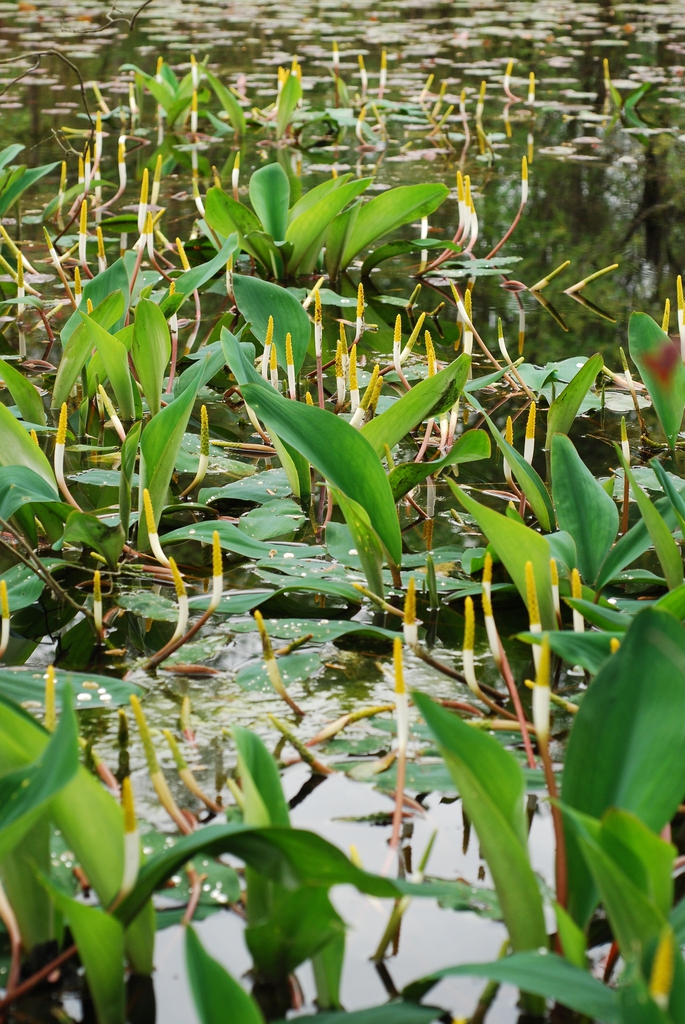
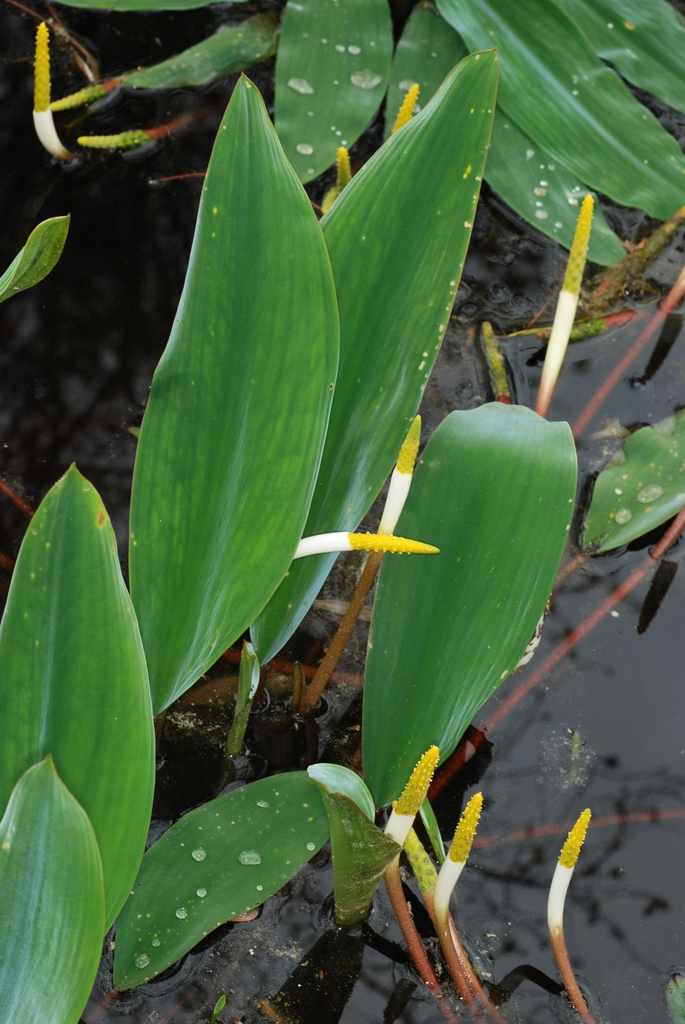
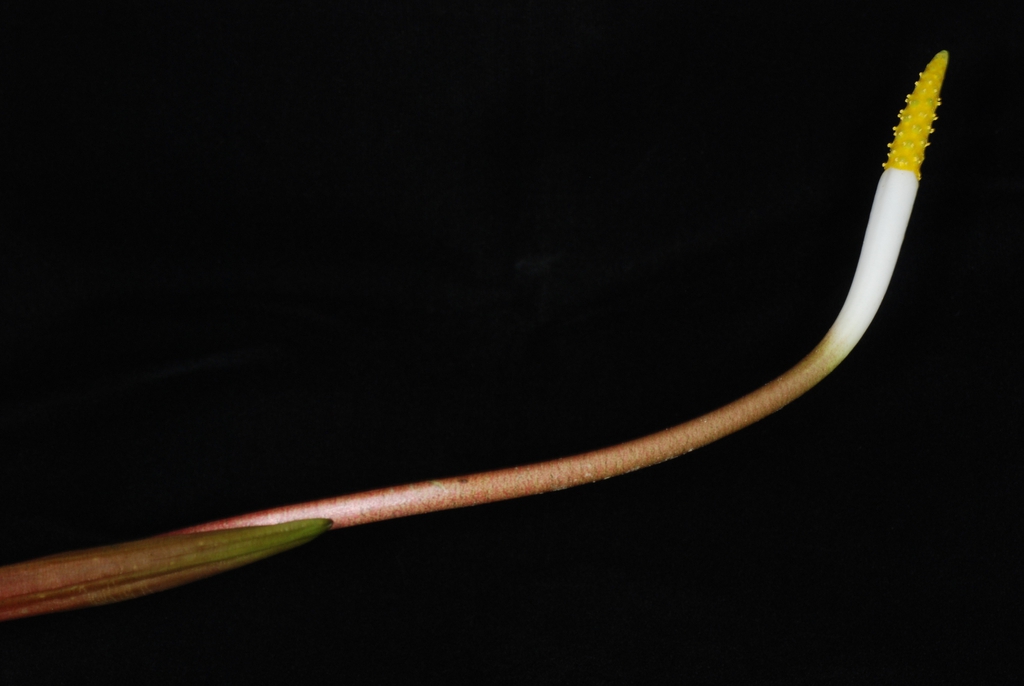
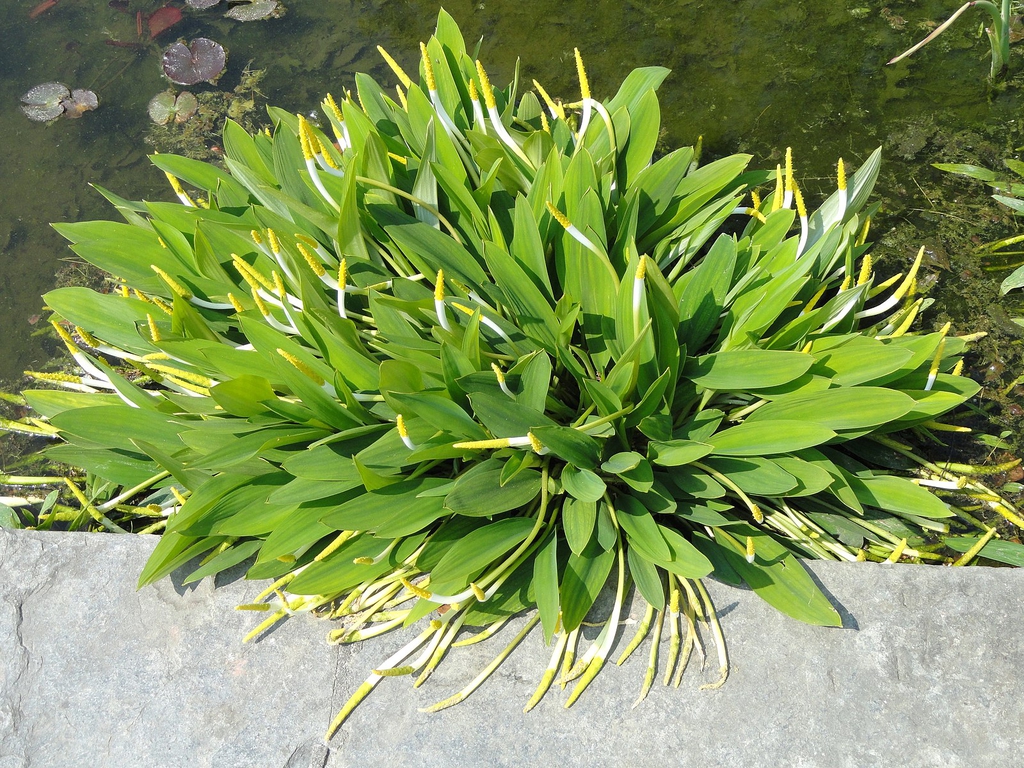
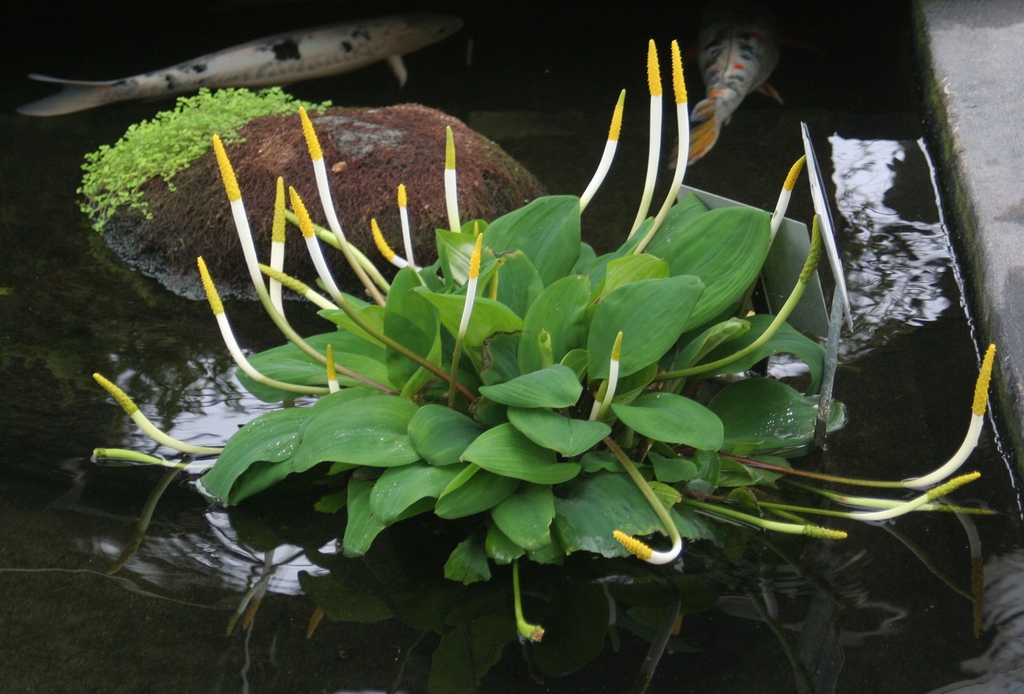
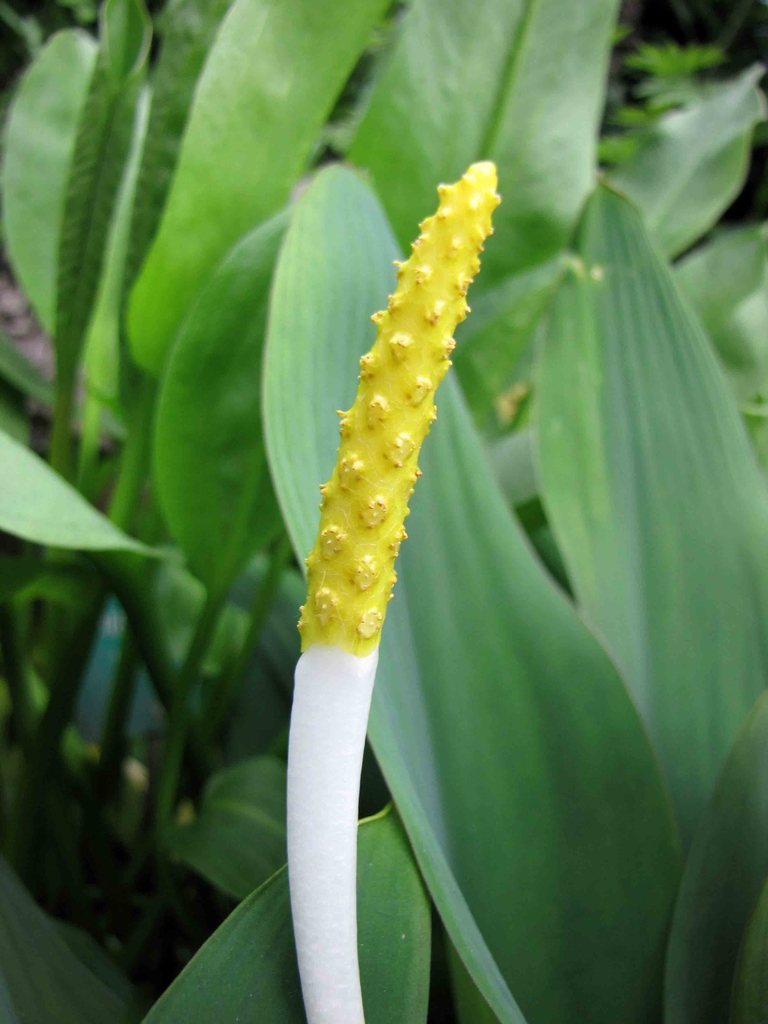
Golden Club is a flowering, aquatic, herbaceous perennial native to the eastern United States in the arum family. In nature, it is most often found in bogs or shallow water, along the margins of slow-moving streams, swamps, and ponds. The blue-green leaves emerge in shallow water. In deeper water, the leaves float on the surface. The tiny yellow flowers appear in club-like 8 inch spadixes from April to June. At maturity (five to ten years), the plant will reach a height of 2 feet. This plant can be striking, especially when seen against the dark open waters of a southern swamp.
Golden Club does best in acidic, organically rich, loamy soil in shallow, moving water. It will do well grown in a container as a water garden in 6 to 18 inches of water and exposed to full sun. It will tolerate partial shade, but leaf color may suffer. You can also plant it, 18 inches deep, in the muddy edge of a pond. Remove the short-lived flower spikes as they fade and leaves when they turn yellow.
The plant is common in the North Carolina Sandhills, the southern Coastal Plain, and the southeastern Piedmont. It is uncommon in the mountains.
Note that Golden Club is slow to become established, but once comfortable in an environment, it will spread by stout, creeping rhizomes. The plant requires moving water, so when grown in a water garden, the plant may require a re-circulation pump.
Diseases, Insect Pests, and Other Plant Problems:
No known diseases or insect pests.
- See this plant in the following landscape :
- Cultivars / Varieties:
-
- Tags:


- Cultivars / Varieties:
-
- Tags:
-
-
Attributes:
- Genus:
- Orontium
- Species:
- aquaticum
- Family:
- Araceae
- Life Cycle:
- Perennial
- Recommended Propagation Strategy:
- Division
- Seed
- Country Or Region Of Origin:
- Easterm United States, New England to Texas.
- Distribution:
- Introduced into Britain.
- Edibility:
- EDIBLE PARTS: Roots and seeds HARVEST TIME: Only collect roots and seeds from areas you know have NOT been treated with pesticides. Collect roots in spring. SAFE HANDLING PROCEDURES: Scrub roots and soak seeds thoroughly with warm water to remove dirt and debris. Do not use dish detergent or any type of sanitizer. These products can leave a residue. NEVER eat roots raw -- they can be very bitter. Boil for at least 30 minutes, changing the water several times during boiling. Serve with butter or lemon juice. Dry collected seeds in the same manner as you would dried peas or beans. Boil for at least 45 minutes, changing the water often. Serve like peas.
- Dimensions:
- Height: 1 ft. 0 in. - 2 ft. 0 in.
- Width: 1 ft. 0 in. - 2 ft. 6 in.
-
-
Whole Plant Traits:
- Plant Type:
- Edible
- Herbaceous Perennial
- Native Plant
- Poisonous
- Water Plant
- Wildflower
- Woody Plant Leaf Characteristics:
- Deciduous
- Habit/Form:
- Clumping
- Creeping
- Erect
- Spreading
- Growth Rate:
- Medium
- Maintenance:
- Low
- Texture:
- Medium
-
-
Cultural Conditions:
- Light:
- Full sun (6 or more hours of direct sunlight a day)
- Partial Shade (Direct sunlight only part of the day, 2-6 hours)
- Soil Texture:
- Clay
- Loam (Silt)
- Soil pH:
- Acid (<6.0)
- Soil Drainage:
- Frequent Standing Water
- Moist
- Occasionally Wet
- NC Region:
- Coastal
- Mountains
- Piedmont
- USDA Plant Hardiness Zone:
- 5a, 5b, 6a, 6b, 7a, 7b, 8a, 8b, 9a, 9b, 10a, 10b
-
-
Fruit:
- Fruit Color:
- Green
- Fruit Value To Gardener:
- Edible
- Display/Harvest Time:
- Spring
- Fruit Type:
- Berry
- Fruit Description:
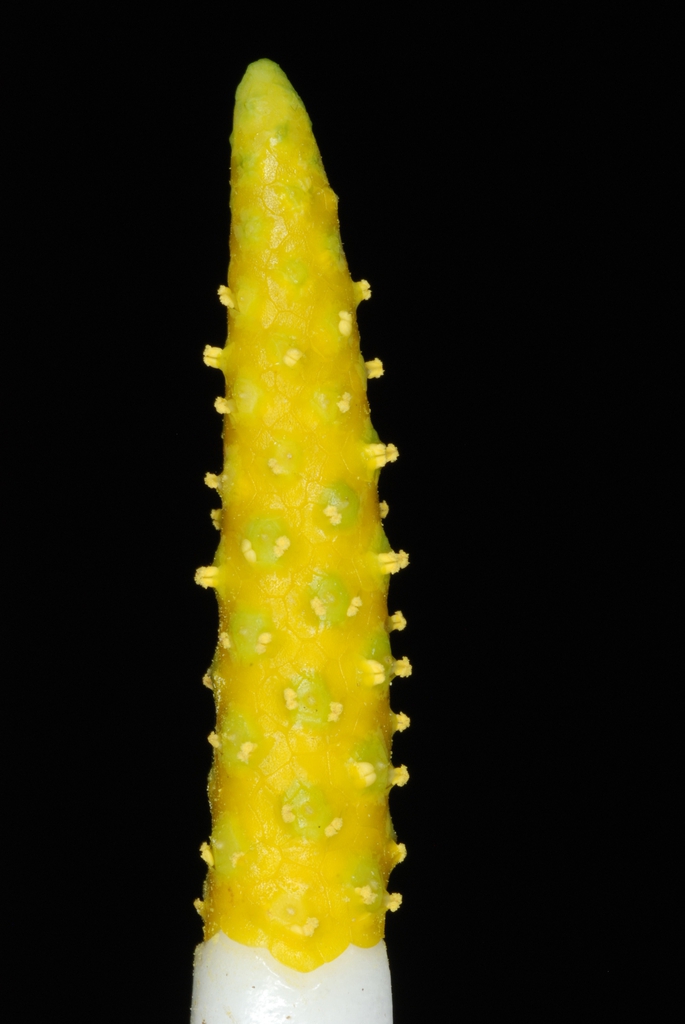
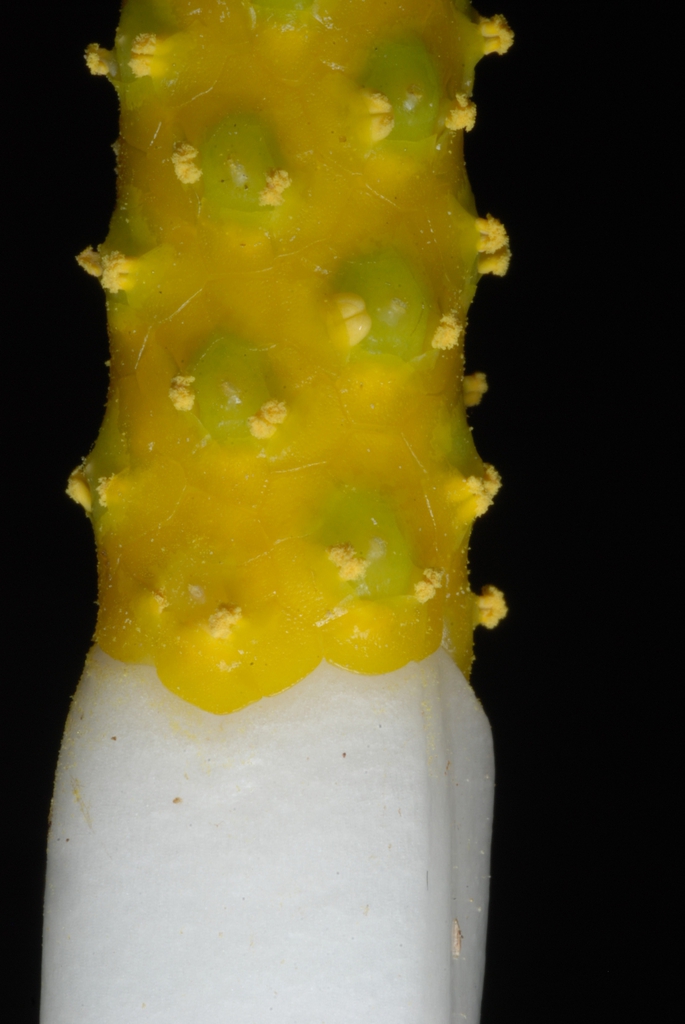
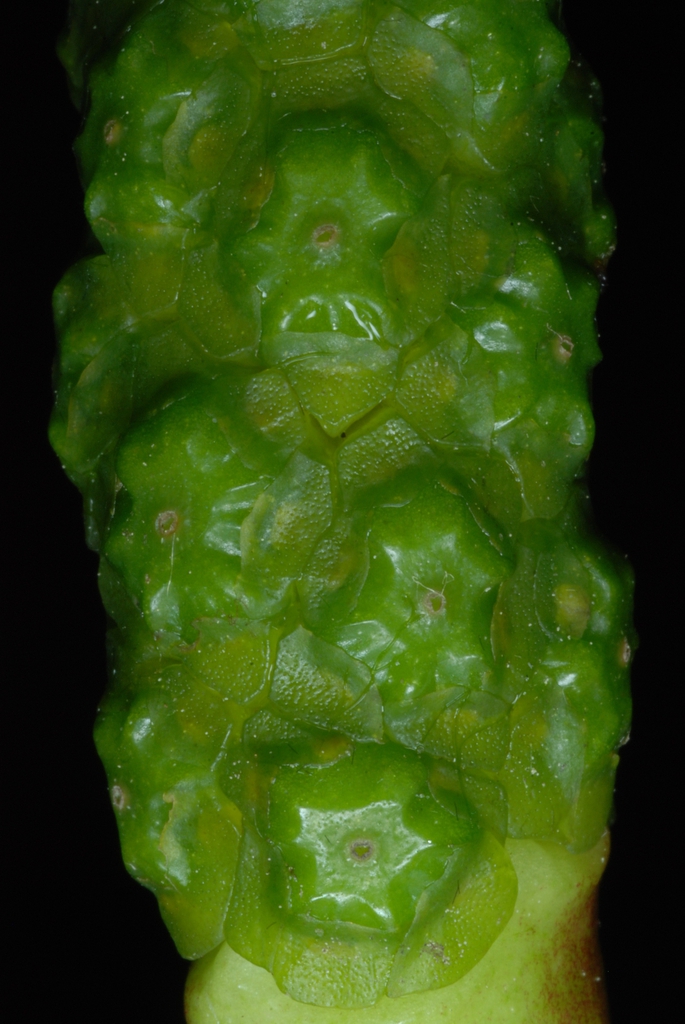
- Bumpy green fruit. Seeds are edible once thoroughly cooked. Displays in May.
-
-
Flowers:
- Flower Color:
- Gold/Yellow
- Green
- White
- Flower Inflorescence:
- Spadix
- Flower Value To Gardener:
- Showy
- Flower Bloom Time:
- Spring
- Summer
- Flower Size:
- 1-3 inches
- Flower Description:
- Flowers are white and golden yellow, club-like and spadix, but not enclosed by a spathe. The terminal 2 to 4 inch section of the plant produces many small, greenish yellow, fertile flowers. Blooms from April into June. Spathes of this Arum family member are small, non-showy and wither rapidly.
-
-
Leaves:
- Woody Plant Leaf Characteristics:
- Deciduous
- Leaf Color:
- Blue
- Gray/Silver
- Green
- Leaf Feel:
- Velvety
- Waxy
- Leaf Type:
- Simple
- Leaf Shape:
- Elliptical
- Leaf Margin:
- Entire
- Hairs Present:
- No
- Leaf Length:
- > 6 inches
- Leaf Description:
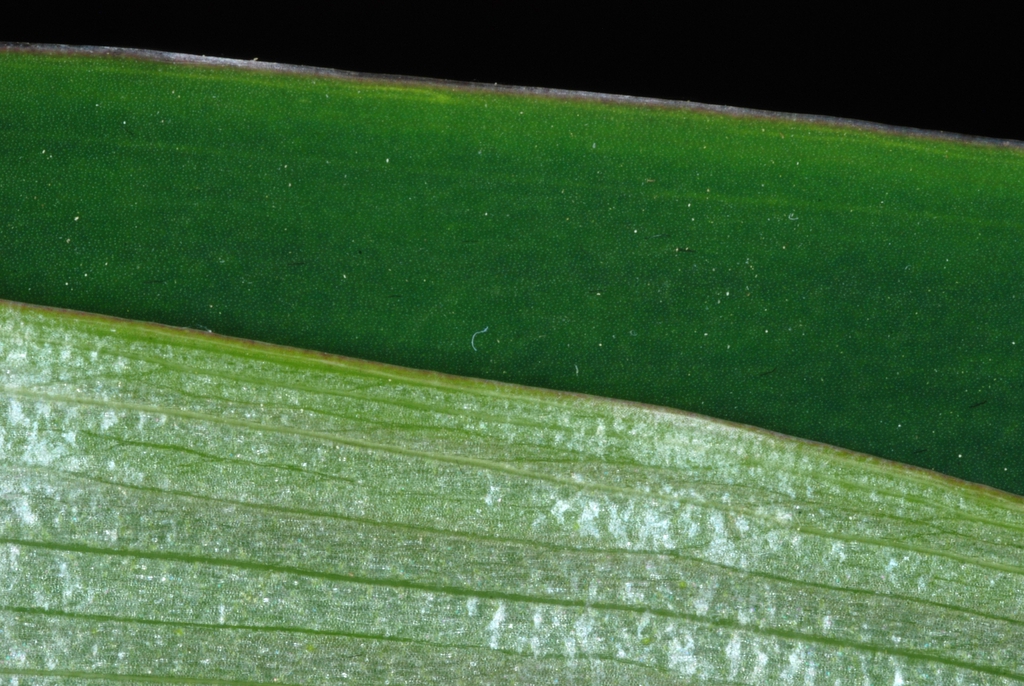
- Long, 5 to 18 inch, stalked, dark bluish-green 12 invh long leaves are submerged, floating or aerial. If removed from water, submerged leaves appear dry because of their waxy surface, hence the common name of "never-wet".
-
-
Stem:
- Stem Is Aromatic:
- No
-
-
Landscape:
- Landscape Location:
- Container
- Naturalized Area
- Pond
- Woodland
- Landscape Theme:
- Edible Garden
- Native Garden
- Water Garden
- Design Feature:
- Specimen
- Resistance To Challenges:
- Wet Soil
- Problems:
- Contact Dermatitis
- Poisonous to Humans
-
-
Poisonous to Humans:
- Poison Severity:
- Low
- Poison Symptoms:
- The plant is rich in calcium oxylate, which is toxic and can irritate the mouth and digestive tract. However, calcium oxylate is easily destroyed by thoroughly cooking or drying the plant.
- Poison Toxic Principle:
- Calcium oxalate crystals
- Causes Contact Dermatitis:
- Yes
- Poison Part:
- Bark
- Flowers
- Fruits
- Leaves
- Roots
- Sap/Juice
- Seeds
- Stems