



Muhlenbergia expansa
Common Name(s):
Previously known as:
- Agrostic trichopodes
- Muhlenburgia capillaris var. trichopodes
- Stipa expansa
- Phonetic Spelling
- mew-len-BERG-gee-uh ek-SPAN-sa
- Description
-
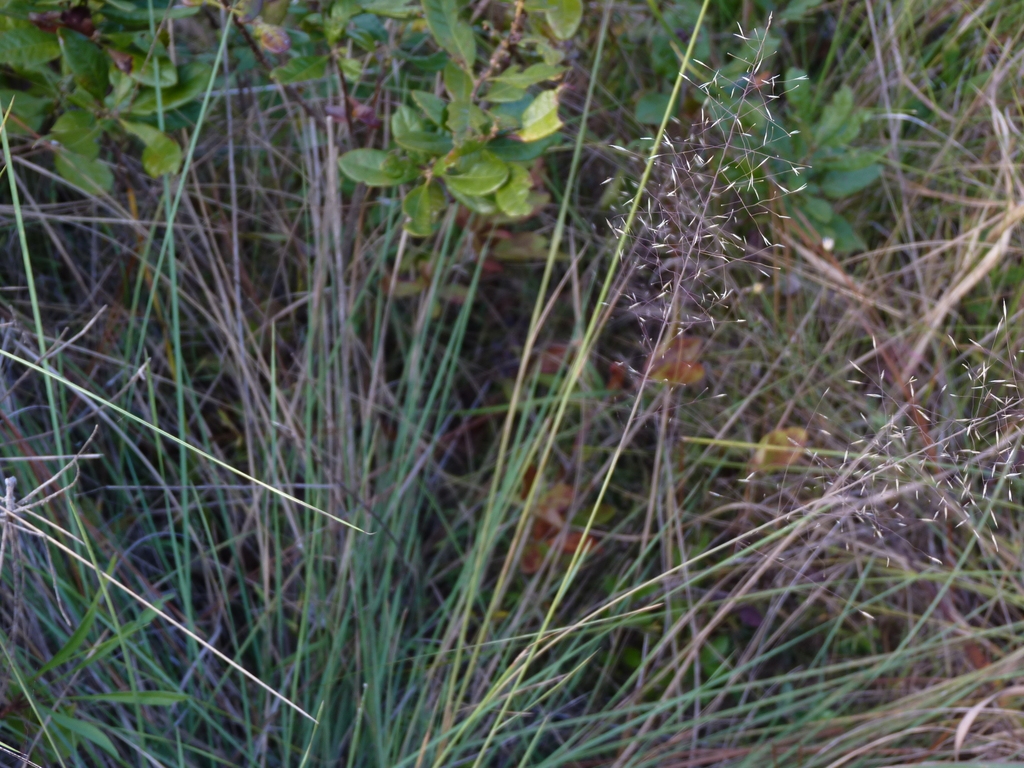
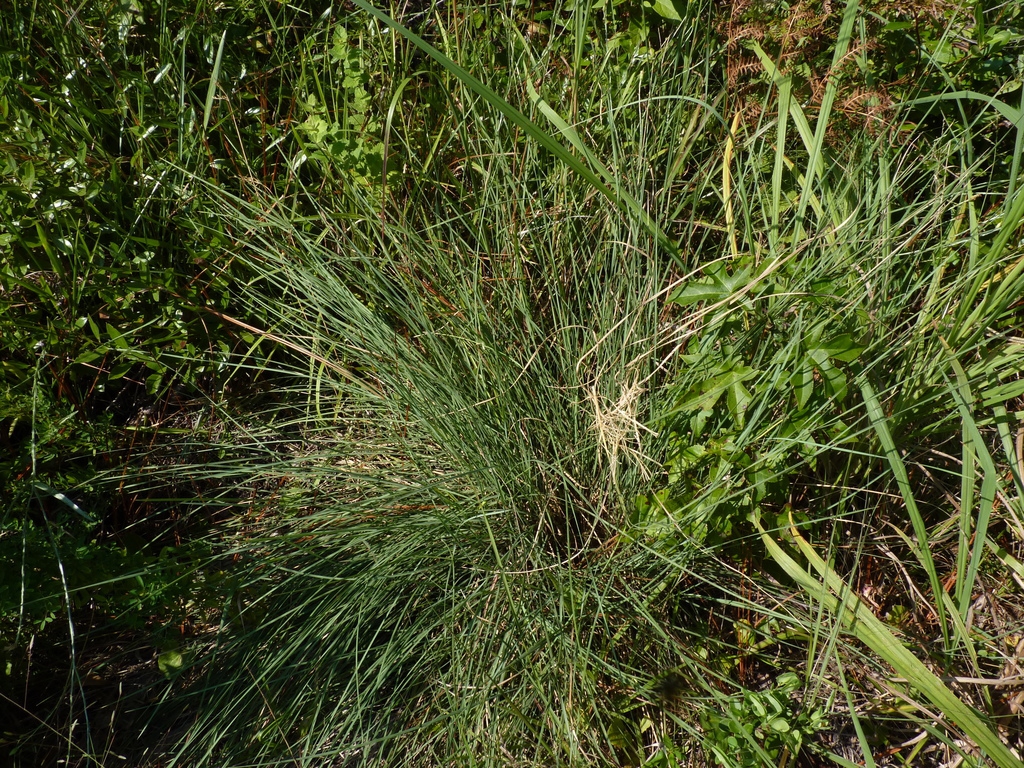
Savannah hairgrass, or cutover muhly, is a native, warm-season perennial grass found primarily in the coastal regions of the southeastern United States and eastern Texas, in bogs, flatwoods, and other wet sites with acidic sandy soil. Cattle, sheep, and other herbivores graze this plant. It grows in dense clumps and is 1 to 3 feet tall, sometimes up to 5 feet, and 1 to 3 feet wide. The green leaf blades are wiry and narrow, up to 12 to 14 inches long, and have a rounded sheath. Panicles of purplish-brownish-copper flowered seedheads, measuring 14 to 20 inches long, bloom from August to October. The seed stalks can persist through the winter and into early spring. The genus Muhlenbergia is named in honor of an amateur botanist and Lutheran minister from Pennsylvania, Gotthif Henry Muhlenberg. The specific epithet expansa is Latin and means "spread out."
Prefers full sun to partial sun and moist to wet, well-drained sandy, loamy, acidic soils. This grass tends to thrive in warm and humid coastal climates and may be controlled by fire or grazing. The flower seedheads attract butterflies and birds.
Distinguishing features include fibrous old leaf bases, ligules measuring 1 to 3 mm long, and fragile panicles that break over winter.
Use this plant in native coastal gardens in wet to boggy sites. It is unclear if Savannah hairgrass is available commercially. Consider a reputable native plant source.
Insects, Diseases, and Other Plant Problems: Most muhly grasses typically have no significant insect pest or disease problems. Monitor for mealybugs.
- See this plant in the following landscape :
- Cultivars / Varieties:
-
- Tags:


- Cultivars / Varieties:
-
- Tags:
-
-
Attributes:
- Genus:
- Muhlenbergia
- Species:
- expansa
- Family:
- Poaceae
- Life Cycle:
- Perennial
- Recommended Propagation Strategy:
- Seed
- Country Or Region Of Origin:
- Southeastern United States to Eastern Texas
- Distribution:
- Native: Alabama, Florida, Georgia, Kentucky, Louisiana, Mississippi, North Carolina, South Carolina, Texas, and Virginia
- Wildlife Value:
- Attracts butterflies and birds. Seeds are eaten by sparrows and other birds
- Play Value:
- Attracts Pollinators
- Colorful
- Wildlife Food Source
- Dimensions:
- Height: 1 ft. 6 in. - 5 ft. 0 in.
- Width: 1 ft. 0 in. - 3 ft. 0 in.
-
-
Whole Plant Traits:
- Plant Type:
- Native Plant
- Ornamental Grasses and Sedges
- Perennial
- Habit/Form:
- Clumping
- Maintenance:
- Low
- Texture:
- Coarse
-
-
Cultural Conditions:
- Light:
- Full sun (6 or more hours of direct sunlight a day)
- Partial Shade (Direct sunlight only part of the day, 2-6 hours)
- Soil Texture:
- Loam (Silt)
- Sand
- Soil pH:
- Acid (<6.0)
- Soil Drainage:
- Good Drainage
- Moist
- Occasionally Wet
- Available Space To Plant:
- 3 feet-6 feet
- NC Region:
- Coastal
- USDA Plant Hardiness Zone:
- 6a, 6b, 7a, 7b, 8a, 8b, 9a, 9b
-
-
Fruit:
- Fruit Color:
- Brown/Copper
- Display/Harvest Time:
- Fall
- Fruit Type:
- Caryopsis
- Fruit Length:
- < 1 inch
- Fruit Width:
- < 1 inch
- Fruit Description:
- The caryopsis is brownish, narrow, and elliptical, measuring about 0.125 inches long.
-
-
Flowers:
- Flower Color:
- Brown/Copper
- Purple/Lavender
- Flower Inflorescence:
- Panicle
- Spike
- Flower Bloom Time:
- Fall
- Summer
- Flower Description:
- The inflorescence is diffuse, 3 to 12 inches long, with primary branches 1 to 8 inches, pedicels longer than spikelets. The spikelets measure less than 0.25 inches long and are purplish, brownish, or bronze. Blooms from August through October.
-
-
Leaves:
- Leaf Color:
- Green
- Leaf Feel:
- Rough
- Leaf Type:
- Sheath
- Simple
- Leaf Arrangement:
- Alternate
- Leaf Shape:
- Linear
- Leaf Margin:
- Entire
- Hairs Present:
- Yes
- Leaf Length:
- > 6 inches
- Leaf Width:
- < 1 inch
- Leaf Description:
- The leaf blade is 12 to 14 inches long, narrow, wiry, rough, twists slightly at maturity, and the margins fold or roll inward. The leaf sheath is rounded, mostly basal, and curls into a fibrous mass when mature.
-
-
Stem:
- Stem Is Aromatic:
- No
- Stem Form:
- Straight
- Stem Surface:
- Smooth (glabrous)
- Stem Description:
- The culms are erect, mostly smooth, but sometimes hairy below the nodes, and measure 2 to 3 feet tall.
-
-
Landscape:
- Landscape Location:
- Coastal
- Meadow
- Woodland
- Landscape Theme:
- Butterfly Garden
- Native Garden
- Pollinator Garden
- Rain Garden
- Attracts:
- Butterflies
- Small Mammals
- Songbirds
- Resistance To Challenges:
- Wet Soil

