


Melampodium cinereum
Common Name(s):
Previously known as:
- Melampodium cinereum var. ramosissimum
- Phonetic Spelling
- mel-am-POH-dee-um sin-ER-ee-um
- Description
-
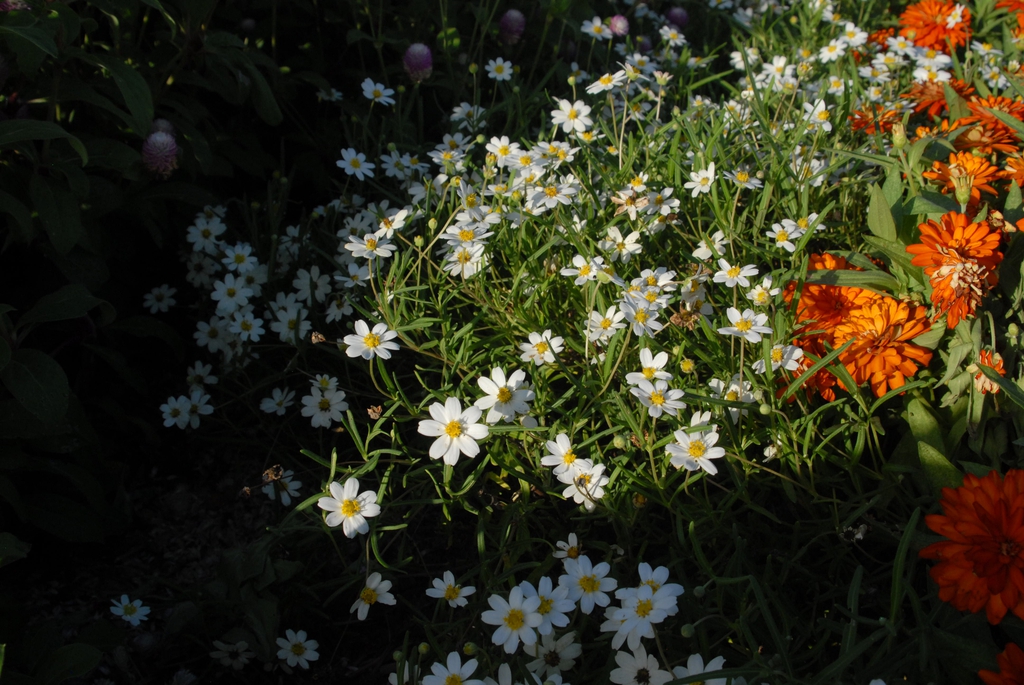
Hoary Blackfoot it s a small, perennial, flowering subshrub native to Texas and Mexico in the daisy family. In its native habitat, the plant is often found in open sites with sand, gravel, loam, or clay soils. At maturity, the shrub will only reach a height of 8 inches. It has white flowers with yellow centers that appear constantly from mid-winter through mid-summer.
Hoary Blackfoot is a hardy plant that is easy to grow in full sun in average, well-drained soil, but can also grow on rocky soil in deserts or in clay. It is moderately to highly drought and heat tolerant. It is usually grown from a container plant or by direct seeding in the garden. It is fast-growing and reaches flowering maturity within six to eight weeks. It does tend to self-seed.
No pruning or dead-heading is required; however, deadheading spent flowers will prevent self seeding.
Diseases, Insect Pests, and Other Plant Problems:
Susceptible to powdery mildew if planted in a humid environment.
- See this plant in the following landscape :
- Cultivars / Varieties:
-
- Tags:

- Cultivars / Varieties:
-
- Tags:
-
-
Attributes:
- Genus:
- Melampodium
- Species:
- cinereum
- Family:
- Asteraceae
- Life Cycle:
- Perennial
- Recommended Propagation Strategy:
- Seed
- Country Or Region Of Origin:
- Texas, Northern Mexico
-
-
Whole Plant Traits:
- Plant Type:
- Perennial
- Shrub
- Wildflower
- Habit/Form:
- Mounding
- Rounded
- Growth Rate:
- Rapid
- Maintenance:
- Low
-
-
Cultural Conditions:
- Light:
- Full sun (6 or more hours of direct sunlight a day)
- Soil Texture:
- Clay
- Loam (Silt)
- Sand
- Shallow Rocky
- Soil pH:
- Acid (<6.0)
- Alkaline (>8.0)
- Soil Drainage:
- Good Drainage
- Occasionally Dry
- USDA Plant Hardiness Zone:
- 2a, 2b, 3a, 3b, 4a, 4b, 5a, 5b, 6a, 6b, 7a, 7b, 8a, 8b, 9a, 9b, 10a, 10b, 11a, 11b
-
-
Fruit:
- Fruit Type:
- Achene
- Fruit Description:
- Fruit is technically a cypsela, although it is often referred to as an achene.
-
-
Flowers:
- Flower Color:
- Gold/Yellow
- White
- Flower Inflorescence:
- Head
- Flower Value To Gardener:
- Long Bloom Season
- Showy
- Flower Bloom Time:
- Spring
- Summer
- Winter
- Flower Shape:
- Radial
- Flower Petals:
- 7 - 20 petals/rays
- Flower Size:
- < 1 inch
- Flower Description:
- Daisy like flowers appear from January through July. Flower heads are about an inch wide.
-
-
Leaves:
- Leaf Color:
- Green
- Leaf Type:
- Compound (Pinnately , Bipinnately, Palmately)
- Leaf Shape:
- Linear
- Oblong
- Leaf Margin:
- Entire
- Lobed
- Hairs Present:
- No
- Leaf Length:
- 1-3 inches
- Leaf Width:
- < 1 inch
- Leaf Description:
- Linear to linear-oblong leaves, bright green to gray green, up to 2 inches long and 1/2 inch wide.
-
-
Stem:
- Stem Is Aromatic:
- No
-
-
Landscape:
- Landscape Location:
- Container
- Slope/Bank
- Walkways
- Landscape Theme:
- Cottage Garden
- Drought Tolerant Garden
- Rock Garden
- Design Feature:
- Border
- Resistance To Challenges:
- Deer
- Drought
- Heat
- Poor Soil