


Medeola virginiana
Common Name(s):
- Phonetic Spelling
- med-EE-oh-luh vir-jin-ee-AN-uh
- Description
-
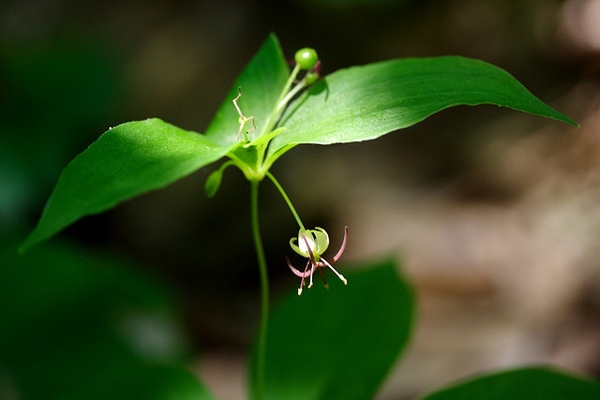
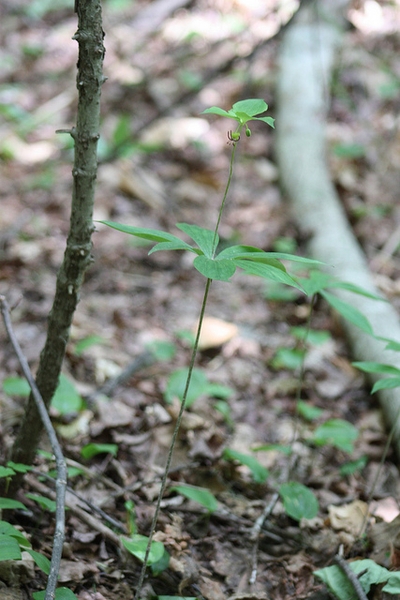
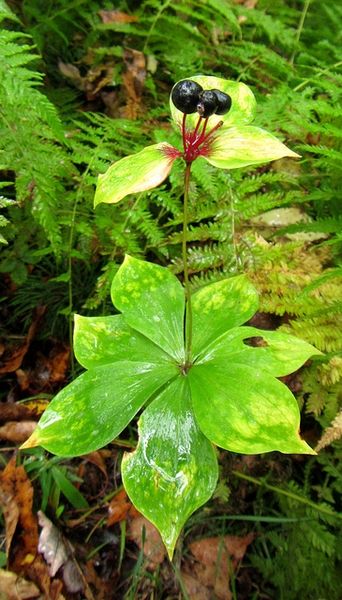
Medeola virginiana, commonly called Indian cucumber root, is a slender, upright perennial wildflower that typically grows 1-2.5’ tall on a single, unbranched stem rising up each year from a crisp, edible rhizome. It is native to rich moist woodlands with acidic soil in eastern North America. Leaves that grow below fruit develop red areas on the surface, matching the color of the dark fruit.
- See this plant in the following landscape :
- Cultivars / Varieties:
-
- Tags:


- Cultivars / Varieties:
-
- Tags:
-
-
Attributes:
- Genus:
- Medeola
- Species:
- virginiana
- Family:
- Liliaceae
- Life Cycle:
- Perennial
- Country Or Region Of Origin:
- Eastern Canada to Eastern Central & Eastern U.S.A
- Distribution:
- Canada to Florida in moist, deciduous woods
- Wildlife Value:
- Attracts birds.
- Edibility:
- The thickened rootstalk of this plant may be eaten raw, resembling somewhat the taste of cucumber. It may also be used in salads. Although Native Americans used the rootstalk for food, this is no longer recommended because plants are becoming quite scarce in many regions.
-
-
Whole Plant Traits:
- Plant Type:
- Native Plant
- Wildflower
- Habit/Form:
- Erect
- Maintenance:
- Low
-
-
Cultural Conditions:
- Light:
- Dappled Sunlight (Shade through upper canopy all day)
- Partial Shade (Direct sunlight only part of the day, 2-6 hours)
- Soil Texture:
- Loam (Silt)
- Sand
- Soil Drainage:
- Good Drainage
- Moist
- Available Space To Plant:
- 12 inches-3 feet
- NC Region:
- Coastal
- Mountains
- Piedmont
- USDA Plant Hardiness Zone:
- 3a, 3b, 4a, 4b, 5a, 5b, 6a, 6b, 7a, 7b, 8a, 8b
-
-
Fruit:
- Fruit Color:
- Blue
- Purple/Lavender
- Display/Harvest Time:
- Fall
- Fruit Type:
- Berry
- Fruit Length:
- < 1 inch
- Fruit Description:
- Dark blue berries with red pedicel- inedible. Fruits are available September-October.
-
-
Flowers:
- Flower Color:
- Gold/Yellow
- Green
- Flower Bloom Time:
- Spring
- Summer
- Flower Shape:
- Trumpet
- Tubular
- Flower Size:
- < 1 inch
- Flower Description:
- Nodding yellow-green flower on top of a slender, woolly unbranched stem; petals and sepals curve backward. Flowers bloom April-June
-
-
Leaves:
- Leaf Color:
- Green
- Deciduous Leaf Fall Color:
- Purple/Lavender
- Leaf Type:
- Simple
- Leaf Arrangement:
- Whorled
- Leaf Shape:
- Lanceolate
- Ovate
- Hairs Present:
- No
- Leaf Length:
- 3-6 inches
- Leaf Description:
- Upper whorl of three 1-3 in. leaves; lower whorl of 6-10 leaves, 2.5-5 in. long; all are ovate to lanceolate. They become purple-tinged when in fruit.
-
-
Stem:
- Stem Color:
- Gray/Silver
- White
- Stem Is Aromatic:
- No
- Stem Buds:
- Hairy
- Stem Form:
- Straight
- Stem Surface:
- Hairy (pubescent)
- Stem Description:
- White hairy when young
-
-
Landscape:
- Landscape Location:
- Woodland
- Landscape Theme:
- Native Garden
- Rain Garden
- Water Garden
- Design Feature:
- Mass Planting
- Specimen
- Attracts:
- Small Mammals
- Songbirds