



Magnolia kobus
Common Name(s):
- Phonetic Spelling
- mag-NO-lee-ah KOE-bus
- Description
-
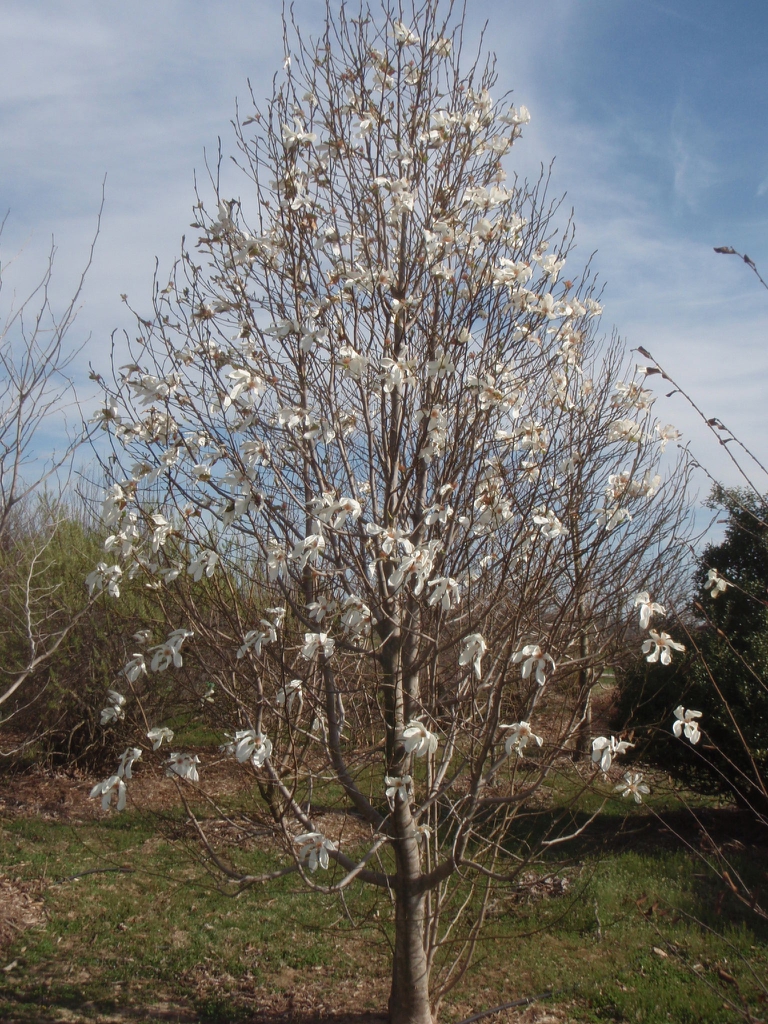
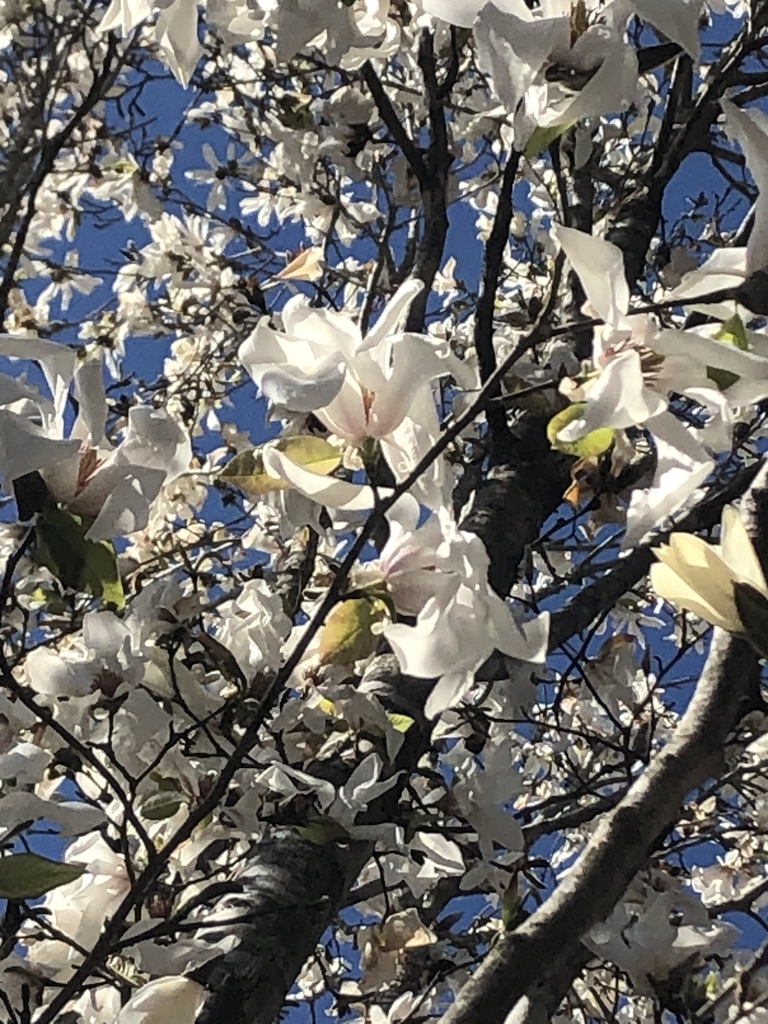
Kobus Magnolia is a deciduous, flowering tree and one of the earliest magnolias to flower in spring, with the caveat that it does not flower well when young. It can be grown as a large shrub or a medium sized tree and, as a tree, begins with a pyramidal form maturing to a branching, multi-stemmed, conical or domed form. Once mature, it can reach up to 30 feet tall with an equal spread. It is noted for its late winter to early spring bloom of cup-shaped, fragrant, often pink-tinged, white flowers that open in March or April before the foliage emerges. It may take up to 30 years for the tree to reach full flowering when planted from seed. The leaves are attractive throughout the growing season, but produce little fall color. The species name kobus comes from the Japanese kobushi, a word for fist in reference to the look of the opening flower buds.
Kobus Magnolia is a hardy tree best grown in moist, organically rich, well-drained loams in full sun to part shade. It is tolerant of high pH, the cold, and most soils, but generally intolerant of extremely wet or dry soil and most urban pollutants. It is easy to propagate from cuttings and is relatively pest free. Because the branches tend to be brittle, it is best sited in a location protected from high winds. You also want to avoid southern exposures in full sun where the buds may be induced to open too early in late winter.
These trees flower poorly when young and may need as much as 25 years before reaching best flowering status. Red seeds form in pods (to 3” long) that split open in fall, and are attractive to birds. Kobus Magnolia is similar to star magnolia (Magnolia stellata) except larger. Kobus Magnolia can be transplanted, however, the roots can be easily damaged and caution is advised.
Quick ID Hints:
- Petals have a faint purple line at the outside base
- Flower has 6-9 spatulate-obovate petal segments
- Large creamy blooms appear on naked branches in the early spring
- Bruised stems have foetid, pungeant odor
Diseases, Insect Pests, and Other Plant Problems:
No known diseases or insect pests. Because of the early blooms, a late frost can harm the flowers.
- See this plant in the following landscape :
- Cultivars / Varieties:
-
- Wada's Memory
- Wada's Memory
- Wada's Memory
- Tags:


- Cultivars / Varieties:
-
- Wada's Memory
- Wada's Memory
- Wada's Memory
- Tags:
-
-
Attributes:
- Genus:
- Magnolia
- Species:
- kobus
- Family:
- Magnoliaceae
- Uses (Ethnobotany):
- The wood is soft, close-grained, and a light yellow and is used for making matches and kitchen utensils.
- Life Cycle:
- Perennial
- Woody
- Recommended Propagation Strategy:
- Leaf Cutting
- Stem Cutting
- Country Or Region Of Origin:
- Korea and Japan
- Distribution:
- Ontario Canad, New York, and Pennsylvania
- Wildlife Value:
- Seeds attract birds.
- Dimensions:
- Height: 25 ft. 0 in. - 30 ft. 0 in.
- Width: 25 ft. 0 in. - 35 ft. 0 in.
-
-
Whole Plant Traits:
- Plant Type:
- Perennial
- Shrub
- Tree
- Woody Plant Leaf Characteristics:
- Deciduous
- Habit/Form:
- Conical
- Dense
- Horizontal
- Multi-stemmed
- Rounded
- Spreading
- Growth Rate:
- Slow
- Maintenance:
- Medium
-
-
Cultural Conditions:
- Light:
- Full sun (6 or more hours of direct sunlight a day)
- Partial Shade (Direct sunlight only part of the day, 2-6 hours)
- Soil Texture:
- Clay
- High Organic Matter
- Loam (Silt)
- Soil pH:
- Alkaline (>8.0)
- Neutral (6.0-8.0)
- Soil Drainage:
- Good Drainage
- Moist
- Available Space To Plant:
- 24-60 feet
- NC Region:
- Mountains
- Piedmont
- USDA Plant Hardiness Zone:
- 4a, 4b, 5a, 5b, 6a, 6b, 7a, 7b, 8a, 8b
-
-
Fruit:
- Fruit Color:
- Red/Burgundy
- Display/Harvest Time:
- Summer
- Fruit Type:
- Aggregate
- Follicle
- Fruit Length:
- 1-3 inches
- Fruit Description:
- Fruits are a cone-like aggregation of follicles (small red seeds).
-
-
Flowers:
- Flower Color:
- Pink
- Red/Burgundy
- White
- Flower Value To Gardener:
- Fragrant
- Showy
- Flower Bloom Time:
- Spring
- Flower Shape:
- Cup
- Flower Size:
- 3-6 inches
- Flower Description:
- Flowers bloom in April and May, are creamy white and often stained wine-red or pink. They have a 4 inch long diameter, are fragrant, and usually have 6 segments. Segments are spatulate to obovate, and are 3 inches long and 1 inch wide. Buds are pubescent, silky gray, and have an acute apex.
-
-
Leaves:
- Woody Plant Leaf Characteristics:
- Deciduous
- Leaf Color:
- Green
- Leaf Feel:
- Smooth
- Leaf Value To Gardener:
- Fragrant
- Leaf Type:
- Simple
- Leaf Arrangement:
- Alternate
- Leaf Shape:
- Elliptical
- Oblong
- Obovate
- Leaf Margin:
- Entire
- Hairs Present:
- Yes
- Leaf Length:
- > 6 inches
- Leaf Description:
- Leaves are alternate, aromatic, simple, oblong-elliptic to obovate, entire, acute, cuneate, glabrous dark green above, light green and pubescent underneath. They grow up to 7.5" long.
-
-
Bark:
- Bark Color:
- Light Brown
- Light Gray
- Surface/Attachment:
- Ridges
- Bark Description:
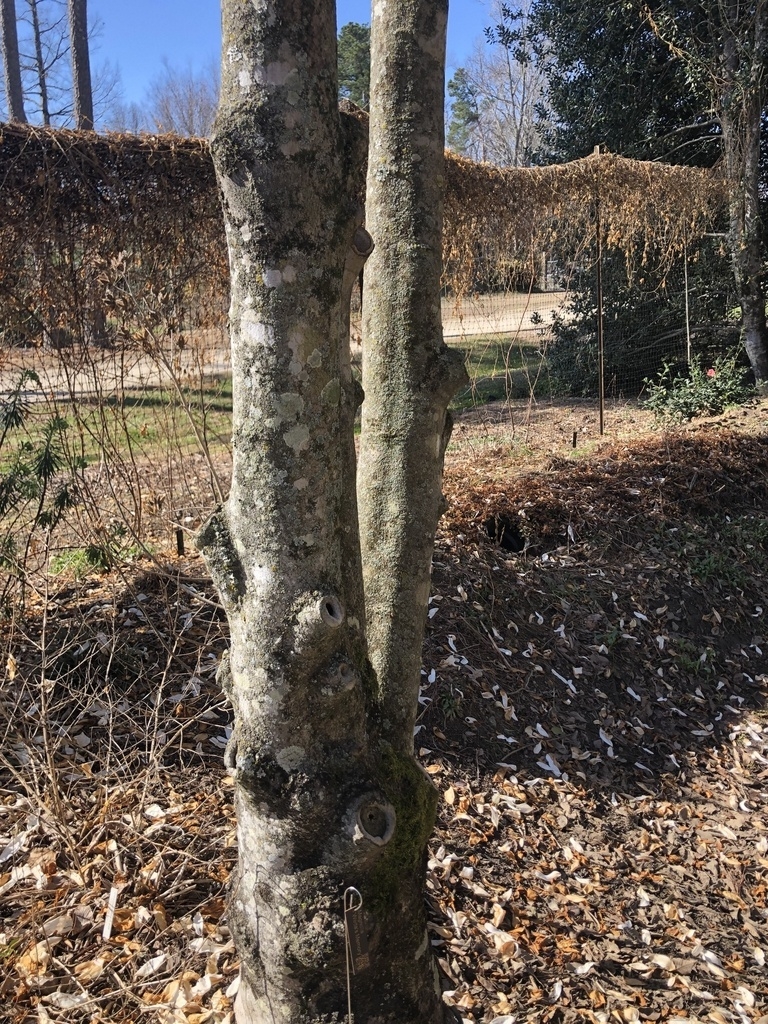
- Bark silvery or brownish-grey, warty, ridged on old trunks.
-
-
Stem:
- Stem Color:
- Green
- Stem Is Aromatic:
- Yes
- Stem Lenticels:
- Conspicuous
- Stem Description:
- Stems are slender and green with brownish splotches. Spotted with vertical grayish lenticels and have a strong turpentine odor when bruised.
-
-
Landscape:
- Landscape Location:
- Lawn
- Patio
- Landscape Theme:
- Asian Garden
- Design Feature:
- Flowering Tree
- Hedge
- Specimen
- Attracts:
- Songbirds
- Resistance To Challenges:
- Insect Pests
- Pollution



