


Lyonia mariana
Common Name(s):
Previously known as:
- Neopieris mariana
- Xolisma mariana
- Phonetic Spelling
- ly-OH-nee-ah may-ree-AH-nah
- This plant has high severity poison characteristics.
- See below
- Description
-
Fetterbush is a native deciduous shrub in the heath family common to moist sandy sites in the coastal plain of North Carolina. Despite the common name, Piedmont Staggerbush, the plant is rare in the Piedmont and mountains. It is listed as endangered in several northern states. This is a flowering shrub normally producing blooms in spring, but may flower in fall in recently burned areas.
Fetterbush is a hardy plant that does best in moist to wet, sandy or peaty, acidic soils in filtered shade to full sun. However, it is adaptable to loamy garden soils with consistent moisture.
It spreads by rhizomes. You can use this plant in naturalized areas, as a hedge or in wet sites. It blooms on previous years growth so prune after flowering. It is a decorative plant with a good display of flowers and bright red leaves in the autumn.
Diseases, Insect Pests, and Other Plant Problems:
No known diseases or insect pests.
- See this plant in the following landscape :
- Cultivars / Varieties:
-
- Tags:


- Cultivars / Varieties:
-
- Tags:
-
-
Attributes:
- Genus:
- Lyonia
- Species:
- mariana
- Family:
- Ericaceae
- Uses (Ethnobotany):
- The Cherokee use an infusion of the plant for toe itch, 'ground-itch' and ulcers.
- Life Cycle:
- Woody
- Recommended Propagation Strategy:
- Seed
- Stem Cutting
- Country Or Region Of Origin:
- Southeastern and central United States including North Carolina
- Distribution:
- East coast of United States, New York to Florida, west of the Mississippi, Texas, north to Ohio.
- Wildlife Value:
- Fetterbush is a nectar plant. Members of the genus Lyonia support the following specialized bees: Colletes productu and Melitta (Cilissa) melittoides.
- Play Value:
- Attracts Pollinators
- Wildlife Cover/Habitat
- Wildlife Food Source
-
-
Whole Plant Traits:
- Plant Type:
- Native Plant
- Perennial
- Poisonous
- Shrub
- Tree
- Woody Plant Leaf Characteristics:
- Broadleaf Evergreen
- Deciduous
- Habit/Form:
- Erect
- Multi-stemmed
- Spreading
-
-
Cultural Conditions:
- Light:
- Full sun (6 or more hours of direct sunlight a day)
- Partial Shade (Direct sunlight only part of the day, 2-6 hours)
- Soil Texture:
- Clay
- Loam (Silt)
- Sand
- Soil pH:
- Acid (<6.0)
- Soil Drainage:
- Good Drainage
- Moist
- Occasionally Dry
- Occasionally Wet
- NC Region:
- Coastal
- Piedmont
- USDA Plant Hardiness Zone:
- 5a, 5b, 6a, 6b, 7a, 7b, 8a, 8b, 9a, 9b
-
-
Fruit:
- Fruit Color:
- Black
- Brown/Copper
- Display/Harvest Time:
- Fall
- Fruit Type:
- Capsule
- Fruit Description:
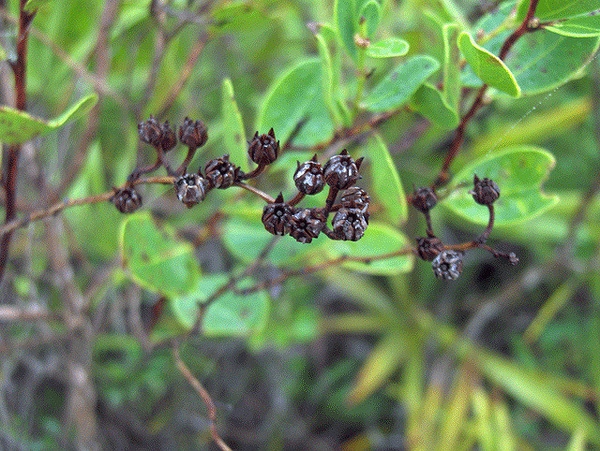
- Oval 5 parted seed capsule. Displays from September to October. The seed capsule is not edible and splits open when ripe.
-
-
Flowers:
- Flower Color:
- Pink
- White
- Flower Inflorescence:
- Umbel
- Flower Value To Gardener:
- Showy
- Flower Bloom Time:
- Spring
- Flower Shape:
- Tubular
- Urn
- Flower Petals:
- 4-5 petals/rays
- fused petals
- Flower Size:
- 1-3 inches
- Flower Description:
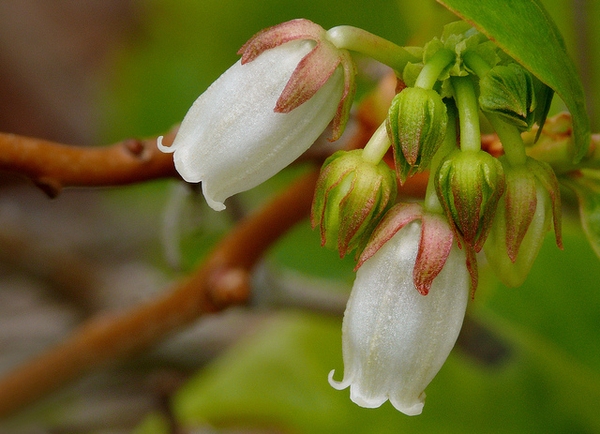
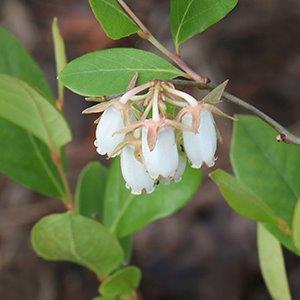
- White or pink, urn-shaped to tubular blooms that droop in umbellate terminal clusters. Blooms from April to May.
-
-
Leaves:
- Woody Plant Leaf Characteristics:
- Broadleaf Evergreen
- Deciduous
- Leaf Color:
- Green
- Leaf Feel:
- Leathery
- Leaf Value To Gardener:
- Showy
- Deciduous Leaf Fall Color:
- Red/Burgundy
- Leaf Type:
- Simple
- Leaf Arrangement:
- Alternate
- Leaf Shape:
- Elliptical
- Obovate
- Ovate
- Leaf Margin:
- Entire
- Hairs Present:
- Yes
- Leaf Length:
- 1-3 inches
- Leaf Width:
- 1-3 inches
- Leaf Description:
- Leathery green leaves with red fall color. Ovate leaves covered with fine hairs are 2 to 3 inches long with a pointed tip. Leaf buds are red.
-
-
Bark:
- Bark Color:
- Dark Brown
- Red/Burgundy
- Bark Description:
- Brown to reddish-brown with long horizontal splits developing.
-
-
Stem:
- Stem Color:
- Green
- Pink
- Red/Burgundy
- Stem Is Aromatic:
- No
- Stem Form:
- Zig Zags
- Stem Surface:
- Smooth (glabrous)
- Stem Description:
- Young shoots are either covered with a close soft down or nearly glabrous with a zigzag growth.
-
-
Landscape:
- Landscape Location:
- Coastal
- Naturalized Area
- Woodland
- Landscape Theme:
- Butterfly Garden
- Native Garden
- Pollinator Garden
- Rain Garden
- Design Feature:
- Border
- Hedge
- Attracts:
- Butterflies
- Pollinators
- Songbirds
- Specialized Bees
- Resistance To Challenges:
- Poor Soil
- Wet Soil
- Problems:
- Poisonous to Humans
- Problem for Cats
- Problem for Dogs
- Problem for Horses
-
-
Poisonous to Humans:
- Poison Severity:
- High
- Poison Symptoms:
- Signs of Toxicity occur usually within six hours of consuming the plant. Symptoms include lack of coordination, excessive salivation, abdominal pain, bloating, nausea, vomiting, diarrhea, headache, weakness, muscular spasms, watering of eyes and nose, slow pulse, colic, ataxia, depression, sweating, tingling of skin, convulsions, paralysis, coma, and sometimes even death. Toxicity in sheep, goats, cattle, and horses is most likely to occur in late winter or early spring when other forage is not available. Livestock are found down, unable to stand with their head weaving from side to side.
- Poison Toxic Principle:
- Andromedotoxin, Grayanotoxins
- Causes Contact Dermatitis:
- No
- Poison Part:
- Flowers
- Leaves
- Sap/Juice