



Lunaria annua
Common Name(s):
Previously known as:
- Lunaria biennis
- Lunaria inodora
- Phonetic Spelling
- loo-NAIR-ee-uh AN-yoo-uh
- Description
-
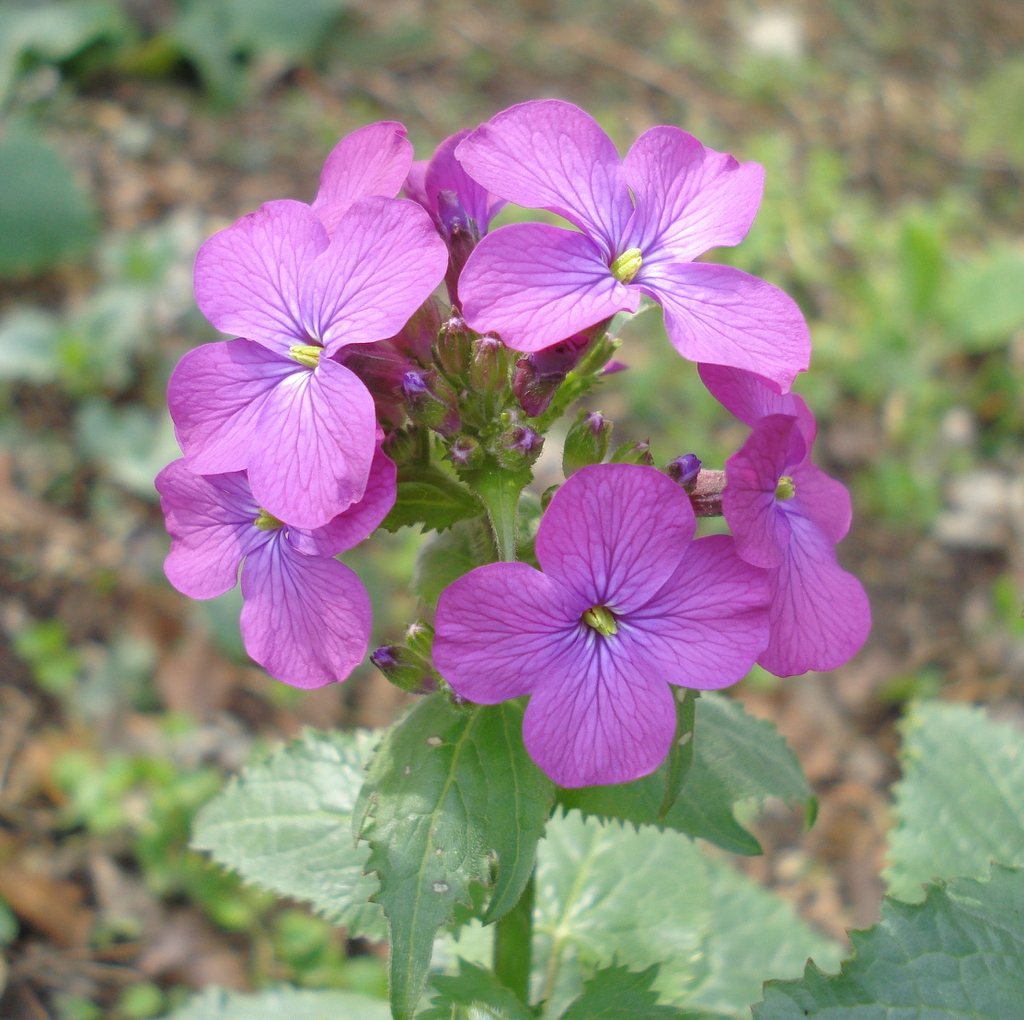
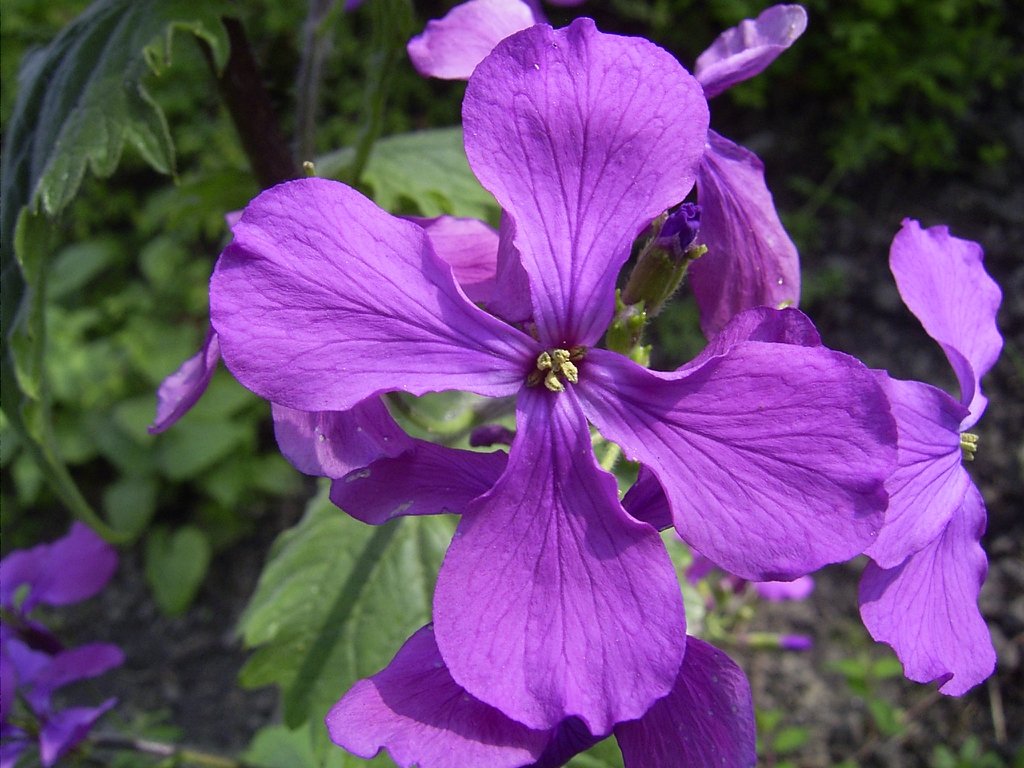
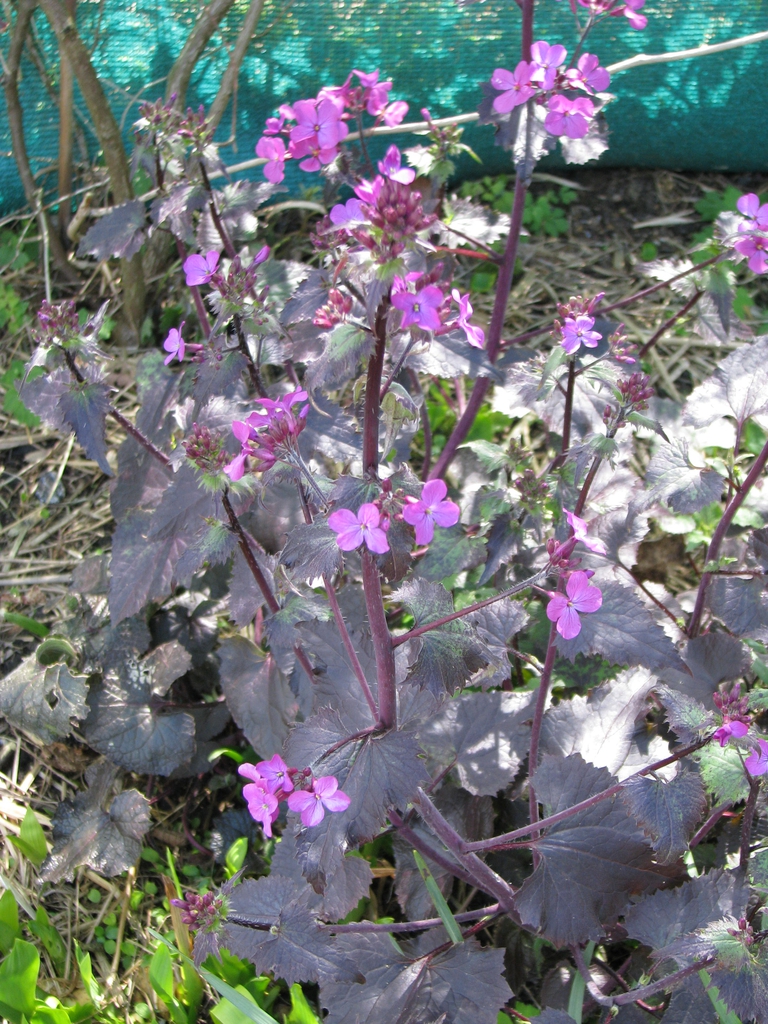
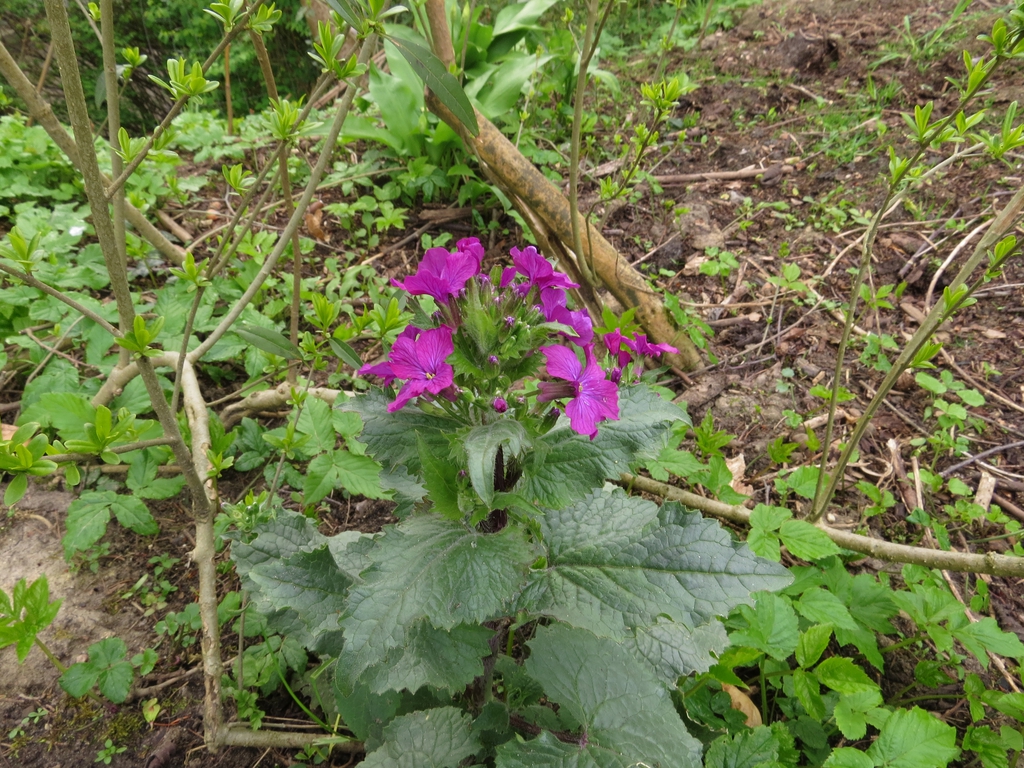
Silver dollar is a flowering, ornamental, herbaceous annual or biennial native to South Central and Southern Europe and is a member of the mustard family (Brassicaceae). It is typically found in disturbed areas, woodlands, and pasture margins. As a biennial, it is vegetative the first year and flowers and fruits the following spring. It grows erect, 2-3 feet tall and 1-2 feet wide, with green or reddish stems. Its leaves are green, heart-shaped, and coarsely toothed, and the flowers are purple, 4-petaled, and sweetly scented. The flat papery fruits are showy and the plant's most valued feature, often used in dried floral arrangements. Flowers bloom in late spring to summer, and the fruits appear in midsummer. The genus name Lunaria is Latin and derived from the word luna, the Latin name for moon. This refers to the fruit's flat, rounded seed cases. The specific epithet annua means annual.
This plant prefers full sun with some afternoon shade to partial shade, and moist, well-drained, slightly acidic to neutral, loamy, organic-rich soil. This plant flowers the 2nd year after propagation by seed. Be aware that if you start it in your garden, it will be there forever, as it freely seeds and can be weedy. It is winter hardy in zones 5-9. Interestingly, if seeds are sown in zones 8-10 in the fall, flowering will occur the following spring.
Silver dollar is grown for its attractive flowers and ornamental seedpods, but it can self-seed prolifically. May be used in a cottage, cutting, or pollinator garden. Consider an alternative native plant since there is concern about the invasive potential of this species.
Quick ID Hints:
- Fruit is orbicular, flat silicle with a papery septum
- Racemose flowers have 4 clawed petals
- Leaves are toothed, alternate, cordate
Insects, Diseases, and Other Plant Problems: No serious insect pests or disease problems. Monitor for aphids, and it may be susceptible to leaf spot and stem canker.
It is reported as invasive in some areas of the country.
- See this plant in the following landscape :
- Cultivars / Varieties:
-
- Lunaria annua var. alba
White flowers
- Lunaria annua var. alba
- Lunaria annua var. alba
- Tags:





- Cultivars / Varieties:
-
- Lunaria annua var. alba
White flowers
- Lunaria annua var. alba
- Lunaria annua var. alba
- Tags:
-
-
Attributes:
- Genus:
- Lunaria
- Species:
- annua
- Family:
- Brassicaceae
- Uses (Ethnobotany):
- The extracted seed oil has been studied for possible medicinal or cosmetic uses.
- Life Cycle:
- Annual
- Biennial
- Recommended Propagation Strategy:
- Seed
- Country Or Region Of Origin:
- South Central and Southern Europe
- Distribution:
- Native: Albania, Bulgaria, France, Greece, Italy, Northwest Balkan Peninsula, Romania, Spain, and Switzerland. Introduced: United States--CA, CO, CT, DE, ID, IL, IN, KY, MD, MA, MI, NH, NY, OH, OR, PA, RI, TN, UT, VT, and WA; Argentina South, Austria, Baltic States, Belarus, Belgium, British Columbia, Canary Islands, Central European Russia, Corsia, Czechoslovakia, Denmark, Germany, Great Britain, Hungary, Ireland, Japan, Madeira, Manitoba, Norway, Nova Scotia, Ontario, Pakistan, Québec, Sweden, Tasmania, and Ukraine.
- Wildlife Value:
- Nectar plant for butterflies and long-tongues bees. Larval host plant for the cabbage white butterfly.
- Play Value:
- Attractive Flowers
- Attracts Pollinators
- Colorful
- Textural
- Wildlife Food Source
- Wildlife Larval Host
- Dimensions:
- Height: 2 ft. 0 in. - 3 ft. 0 in.
- Width: 1 ft. 0 in. - 2 ft. 0 in.
-
-
Whole Plant Traits:
- Plant Type:
- Annual
- Weed
- Woody Plant Leaf Characteristics:
- Deciduous
- Habit/Form:
- Erect
- Growth Rate:
- Rapid
- Maintenance:
- Low
- Texture:
- Medium
-
-
Cultural Conditions:
- Light:
- Full sun (6 or more hours of direct sunlight a day)
- Partial Shade (Direct sunlight only part of the day, 2-6 hours)
- Soil Texture:
- High Organic Matter
- Soil pH:
- Acid (<6.0)
- Neutral (6.0-8.0)
- Soil Drainage:
- Good Drainage
- Moist
- Available Space To Plant:
- 12 inches-3 feet
- NC Region:
- Coastal
- Mountains
- Piedmont
- USDA Plant Hardiness Zone:
- 5a, 5b, 6a, 6b, 7a, 7b, 8a, 8b, 9a, 9b
-
-
Fruit:
- Fruit Value To Gardener:
- Good Cut
- Good Dried
- Showy
- Display/Harvest Time:
- Summer
- Fruit Length:
- 1-3 inches
- Fruit Width:
- < 1 inch
- Fruit Description:
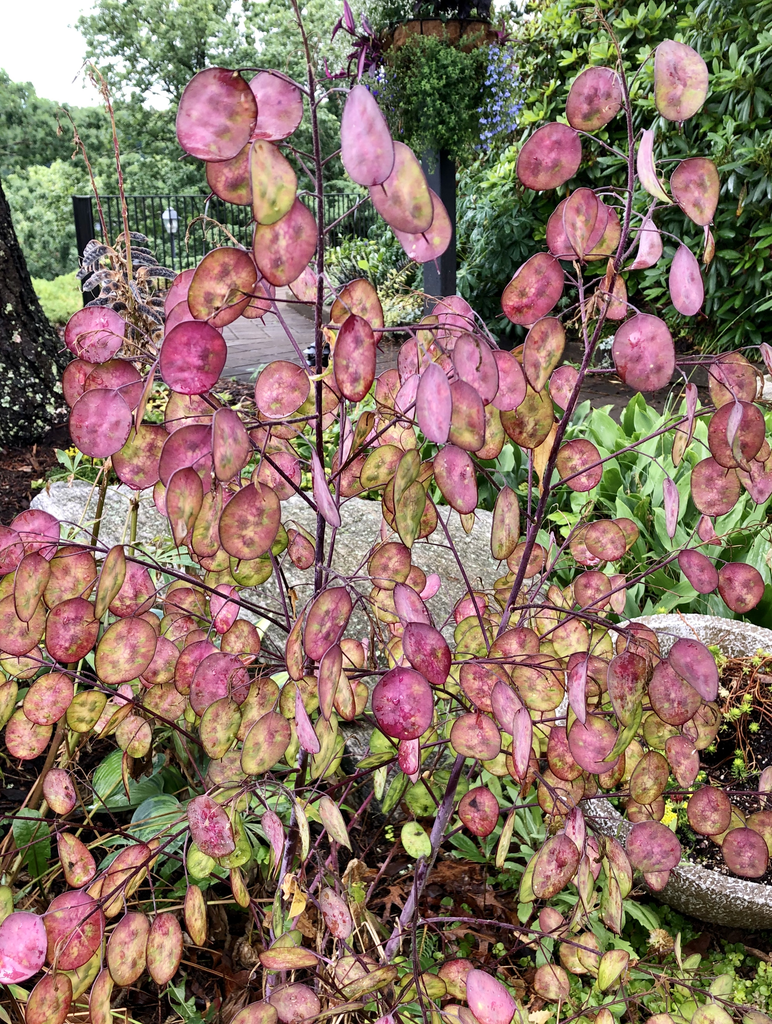
- Initially, the fruits are green seedpods, but become translucent with age and resemble a full moon; hence the common name, moonwort. The seed pods are known as silicles. They are pearly white, paper-thin, flat, orbicular, and silver dollar-sized. The fruits measure 1 to 1.75 inches by 0.75 to 1 inch. Each pod contains a few grayish-brown reniform seeds (kidney-shaped), measuring 7-10 mm long and 5-9 mm wide. The wind disperses the seeds.
-
-
Flowers:
- Flower Color:
- Pink
- Purple/Lavender
- Flower Inflorescence:
- Raceme
- Flower Value To Gardener:
- Fragrant
- Showy
- Flower Bloom Time:
- Spring
- Flower Shape:
- Saucer
- Flower Petals:
- 4-5 petals/rays
- Flower Size:
- < 1 inch
- Flower Description:
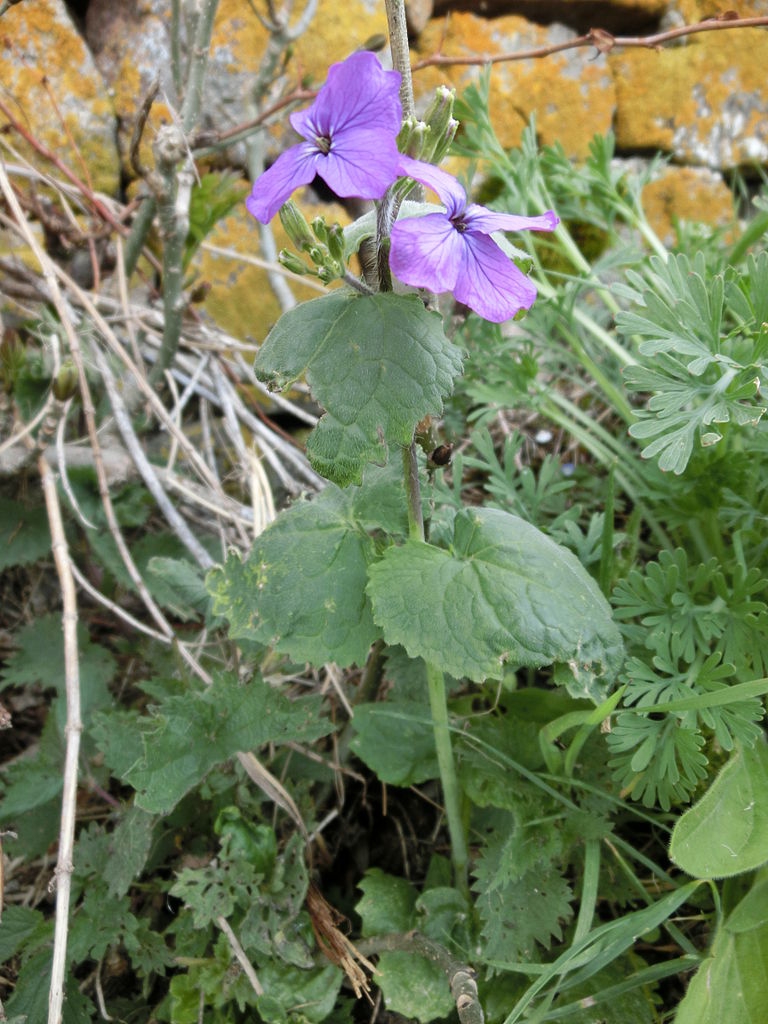
- The sweet-scented flowers are borne on 2- to 6-inch-long terminal racemes. Each bloom consists of 4 pinkish-purple petals and 4 pink or purple sepals. Each bloom measures about 0.5-0.75 inches in diameter. Blooms from April to May.
-
-
Leaves:
- Woody Plant Leaf Characteristics:
- Deciduous
- Leaf Color:
- Green
- Leaf Type:
- Simple
- Leaf Arrangement:
- Alternate
- Opposite
- Leaf Shape:
- Cordate
- Ovate
- Leaf Margin:
- Serrate
- Hairs Present:
- Yes
- Leaf Length:
- 3-6 inches
- Leaf Width:
- 1-3 inches
- Leaf Description:
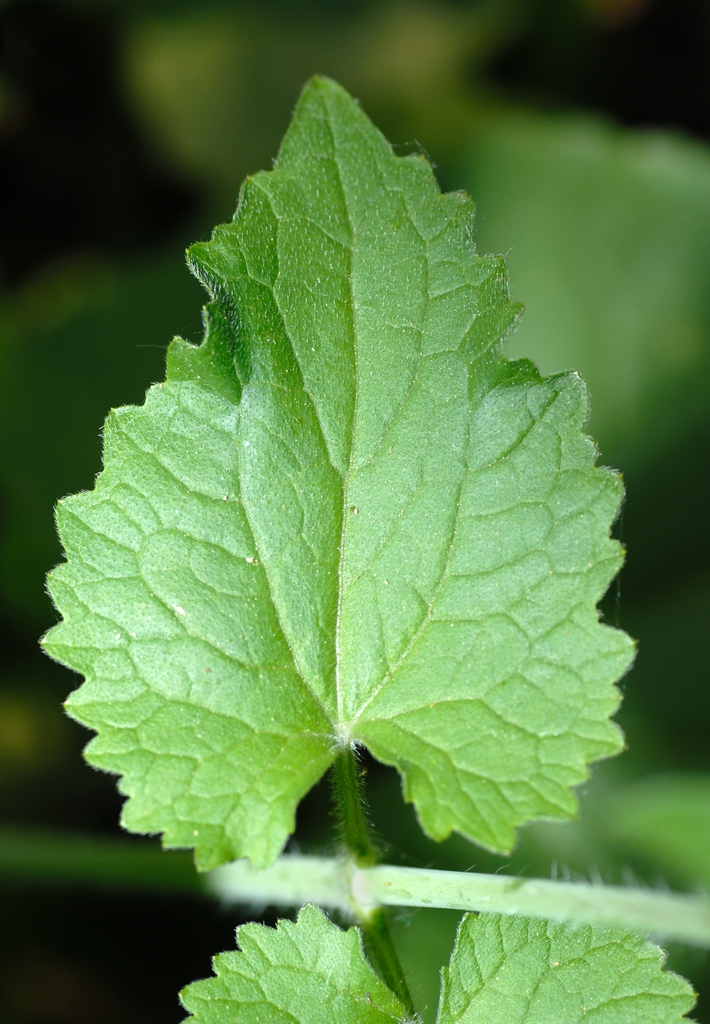
- The plant has a basal rosette of medium-green leaves, and each leaf is broadly cordate (heart-shaped) to cordate-ovate, measuring 1 to 4.5 inches long and 0.75 to 3 inches wide. The petioles measure 1 to 4 inches long. The cauline leaves resemble the basal leaves, but are simple, alternate, and sessile. The lower cauline leaves are opposite. The leaf margins are coarsely dentate, and the tip is pointed. The leaves are green, and fine scattered hairs are on the upper leaf surface.
-
-
Stem:
- Stem Color:
- Green
- Red/Burgundy
- Stem Is Aromatic:
- No
- Stem Form:
- Straight
- Stem Surface:
- Hairy (pubescent)
- Stem Description:
- The stems are tall, green to reddish-green, hairy, erect, and branching.
-
-
Landscape:
- Landscape Location:
- Naturalized Area
- Woodland
- Landscape Theme:
- Cutting Garden
- Shade Garden
- Design Feature:
- Border
- Attracts:
- Bees
- Butterflies
- Problems:
- Weedy



