


Canadian Toadflax Linaria canadensis
Other Common Name(s):
Previously known as:
- Anarrhinum canadense
- Antirrhinum canadense
- Nuttallanthus canadensis
- Phonetic Spelling
- ly-NAH-ree-ah ka-na-DEN-sis
- Description
-
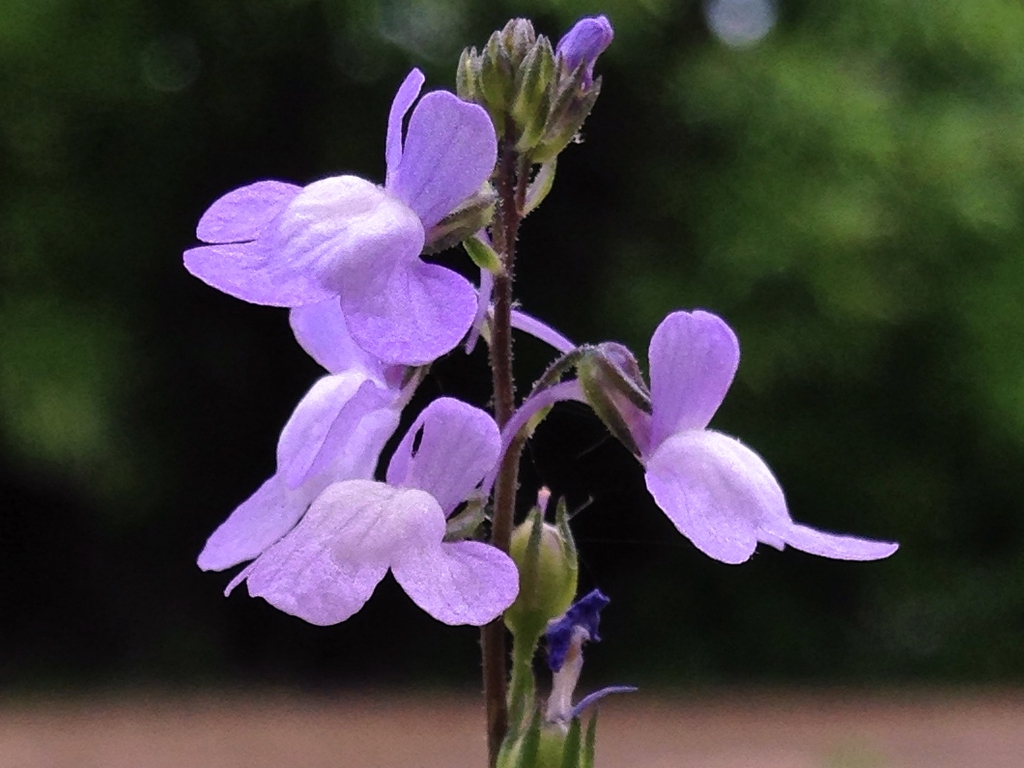
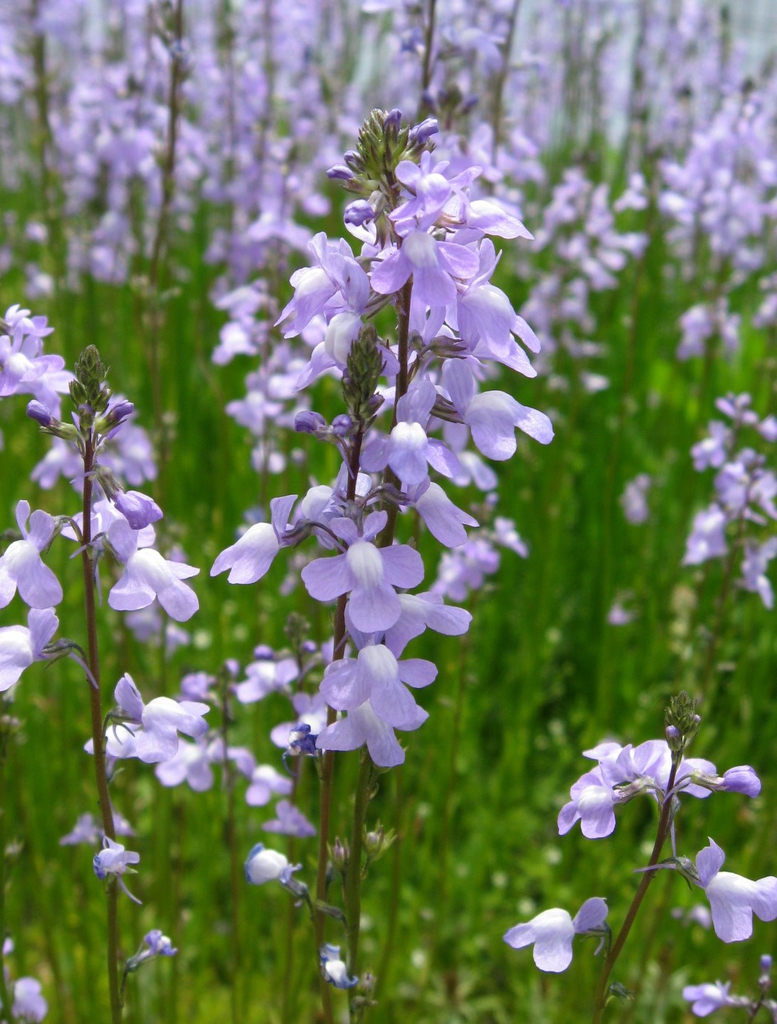
Blue toadflax is a native wildflower often found in pastures, old fields, and along roadsides in Southern Canada, the Eastern and Central United States, and parts of Central and South America. The specific epithet canadensis means "of Canada." It is a member of the plantain family (Plantaginaceae). It is an annual or biennial growing up to 1.5 feet tall, with slender, erect flowering stems. The flowers are blue to blue-violet, measuring 0.5 inches long, and present on an 8-inch-long spike-like raceme. Blooming occurs from mid-spring to late summer. There are several vegetative, prostrate stems at the base of the plant, and the leaves are green, linear to oblong, and sessile.
Prefers full sun and moist, well-drained, acidic, sandy or loamy soil with little competition from other plants. Rocky soil, mesic conditions, and a little shade are also tolerated. Bees and bumblebees pollinate the flowers, while the butterflies, moths, and skippers enjoy the nectar. Propagated by seeds.
This native wildflower is easy to care for and is sometimes cultivated as an ornamental. Consider blue toadflax in a wildflower, meadow, or native garden to support our pollinators. It does especially well in coastal locations.
Insects, Diseases, and Other Plant Problems: No known insect pests or diseases. Blue toadflax may become weedy; however, it is not as aggressive or invasive as Linaria vularis (Yellow Toadflax) or Linaria dalmatica (Dalmatian Toadflax)
- See this plant in the following landscape :
- Cultivars / Varieties:
-
- Tags:


- Cultivars / Varieties:
-
- Tags:
-
-
Attributes:
- Genus:
- Linaria
- Species:
- canadensis
- Family:
- Plantaginaceae
- Life Cycle:
- Annual
- Biennial
- Recommended Propagation Strategy:
- Seed
- Country Or Region Of Origin:
- Canada to Mexico, Dominican Republic, W. & S. South America.
- Distribution:
- Native: United States--AL, AR, CA, CT, DE, DC, FL, GA, IL, IN, IA, KS, LA, ME, MD, MA, MI, MN, MS, MO, MT, NE, NH, NJ, NY, NC, ND, OH, OK, PA, RI, SC, SD, TN, TX, VT, VA, WA, WV, and WI; Canada--British Colombia, New Brunswick, Nova Scotia, Ontario, Prince Edward Island, and Quebec; South America--Argentina, Bolivia, Colombia, Ecuador, Peru, Urugauy, and Venezuela; Central America and Caribbean-- Dominican Republic and Mexico. Introduced: Brazil, Central European Russia, Chile, Hawaii, India, Japan, Korea, and Taiwan.
- Wildlife Value:
- This plant supports Common Buckeye (Junonia coenia) larvae. Common Buckeye's flights generally occur between May and October, with 2-3 broods. In the Deep South, butterfly flights can occur all year. Caterpillars eat the host plant's leaves while adults feed on the nectar of composite flowers including aster, chicory, gumweed, knapweed, and tickseed sunflower. Nectar source to bees, bumblebees,, moths, skippers, and butterflies.
- Play Value:
- Attractive Flowers
- Attracts Pollinators
- Wildlife Larval Host
- Dimensions:
- Height: 1 ft. 0 in. - 1 ft. 6 in.
- Width: 0 ft. 6 in. - 0 ft. 9 in.
-
-
Whole Plant Traits:
- Plant Type:
- Annual
- Native Plant
- Wildflower
- Habit/Form:
- Erect
- Prostrate
- Maintenance:
- Low
-
-
Cultural Conditions:
- Light:
- Full sun (6 or more hours of direct sunlight a day)
- Soil Texture:
- Loam (Silt)
- Sand
- Shallow Rocky
- Soil pH:
- Acid (<6.0)
- Soil Drainage:
- Good Drainage
- Moist
- Occasionally Dry
- Available Space To Plant:
- Less than 12 inches
- 12 inches-3 feet
- NC Region:
- Coastal
- Mountains
- Piedmont
- USDA Plant Hardiness Zone:
- 8a, 8b, 9a, 9b, 10a, 10b
-
-
Fruit:
- Display/Harvest Time:
- Fall
- Spring
- Summer
- Fruit Type:
- Capsule
- Fruit Length:
- < 1 inch
- Fruit Width:
- < 1 inch
- Fruit Description:
- The fruit is a small, round to oval, dry capsule, measuring 2-4 mm, and containing multiple tiny seeds. The capsule splits open to release the flattened, smooth seeds, which are dispersed by the wind. Fruit displays from April to November.
-
-
Flowers:
- Flower Color:
- Blue
- Purple/Lavender
- White
- Flower Inflorescence:
- Raceme
- Spike
- Flower Value To Gardener:
- Showy
- Flower Bloom Time:
- Spring
- Summer
- Flower Petals:
- 4-5 petals/rays
- Flower Size:
- < 1 inch
- Flower Description:
- The blue or blue-violet flowers appear at the top of the flowering stem on an 8-inch spike-like terminal raceme. Each flower is about 0.5 inch long. The flower's upper lip has 2 upright, rounded lobes, and the lower lip has 3 rounded lobes. There is a white spot near the base of the lower lip. Blooms from March to August.
-
-
Leaves:
- Leaf Color:
- Green
- Leaf Type:
- Simple
- Leaf Arrangement:
- Alternate
- Opposite
- Whorled
- Leaf Shape:
- Linear
- Oblong
- Leaf Margin:
- Entire
- Hairs Present:
- No
- Leaf Length:
- 1-3 inches
- Leaf Width:
- < 1 inch
- Leaf Description:
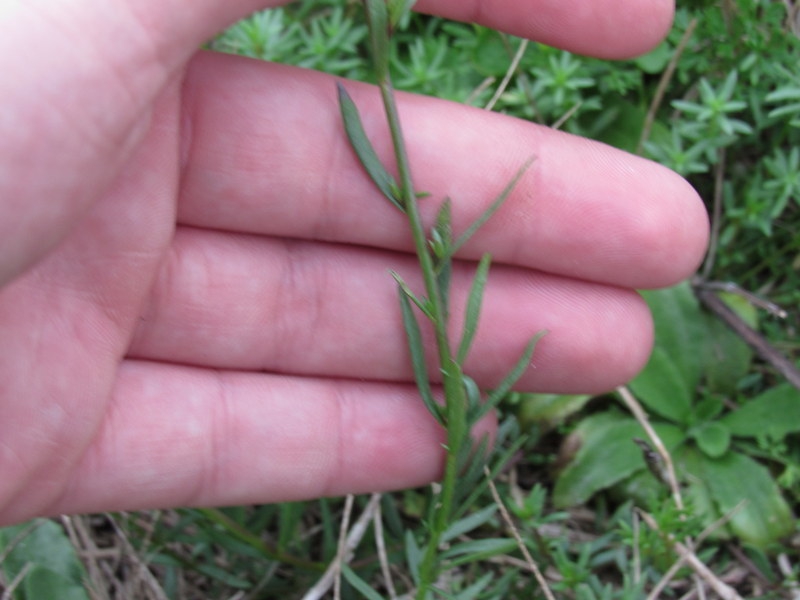
- The green leaves measure 1-1.5 inches long and 1/8 inch wide. They are linear to oblong-linear, glabrous, with entire margins, and sessile. The leaves form a basal rosette and appear opposite or whorled at the base of the stem, but they are alternate along the flowering stem.
-
-
Stem:
- Stem Color:
- Green
- Red/Burgundy
- Stem Is Aromatic:
- No
- Stem Description:
- The main stem is upright, slender, smooth, and green-to reddish-brown. The basal rosette stems are prostrate.
-
-
Landscape:
- Landscape Location:
- Coastal
- Meadow
- Naturalized Area
- Landscape Theme:
- Butterfly Garden
- Native Garden
- Pollinator Garden
- Attracts:
- Bees
- Butterflies
- Moths
- Pollinators
- Problems:
- Weedy