


Button Snake Root Liatris microcephala
Other Common Name(s):
Previously known as:
- Lacinaria microcephala
- Lacinaria polyphylla
- Phonetic Spelling
- ly-AY-tris my-kro-SEF-uh-luh
- Description
-
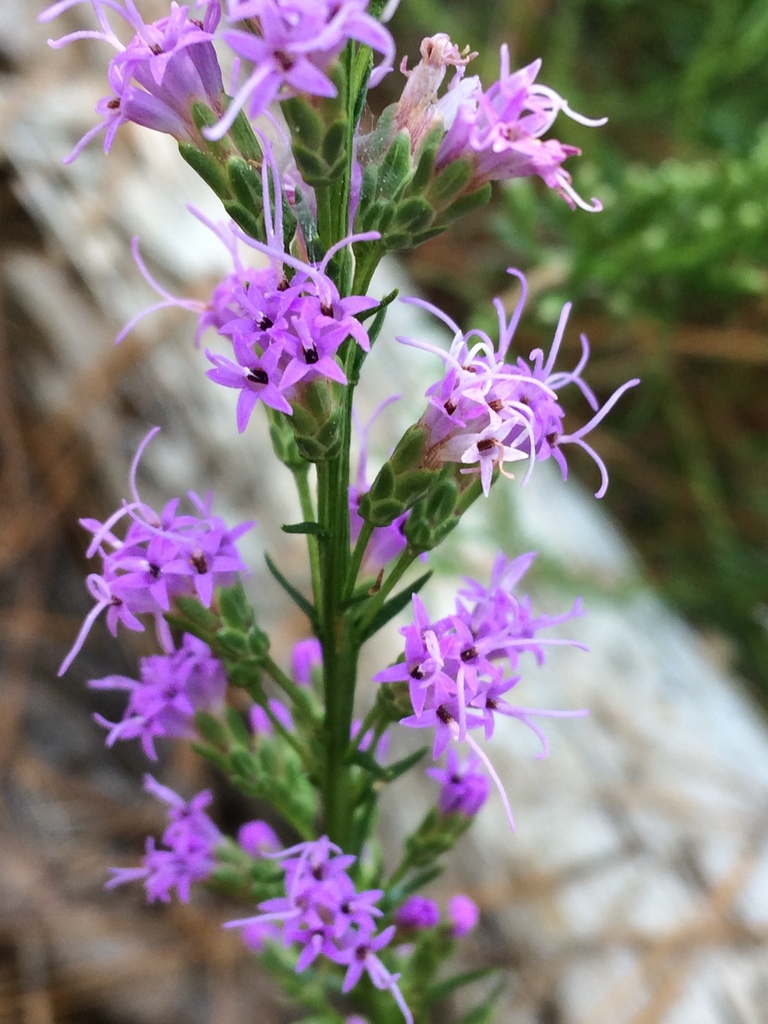
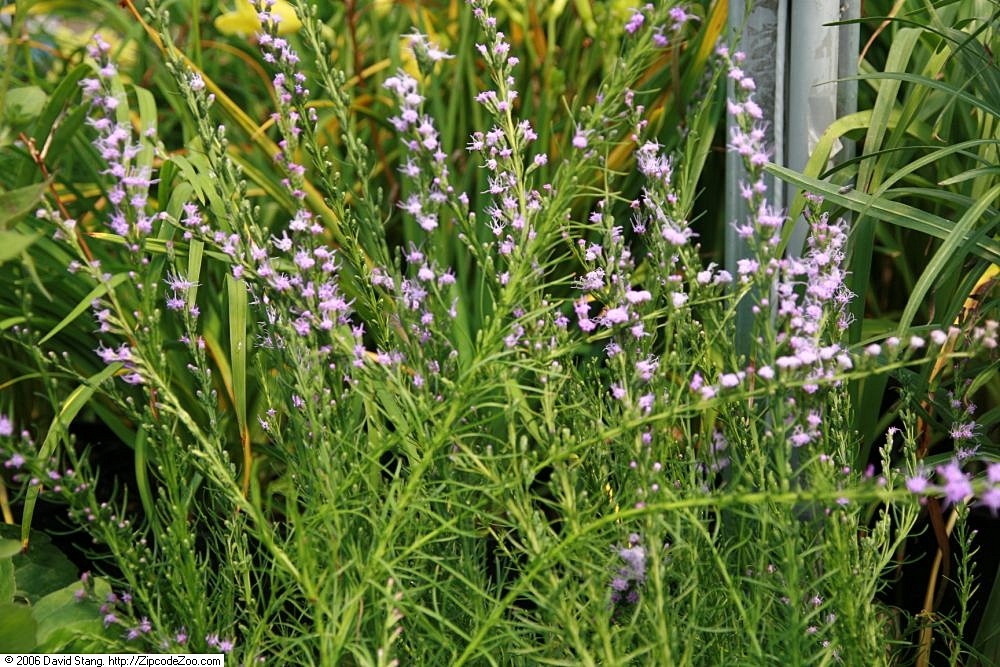
Dwarf blazing star is a small, upright, mounding, herbaceous perennial wildflower native to the Southeastern United States, found along the southern Appalachians. In North Carolina, this plant may be found in the western part of the state in acidic, rocky outcrops of granite or sandstone or in pine and oak barrens. Unfortunately, it is listed as critically imperiled in our state but is globally vulnerable. This plant grows 1.5-2 feet tall and up to 1 foot wide and has a woody corm. In the spring, it produces narrow, grass-like, deep green foliage. Erect, leafy stems develop in the late summer, producing terminal spikes with clusters of 4 to 6 rose-purple florets. Dwarf blazing star is a member of the daisy family (Asteraceae). The specific epithet microcephala means small head.
This plant prefers full sun and is adaptable to a variety of well-drained soils, but prefers a slightly acidic pH. It tolerates heat, humidity, drought, and poor soils. Dwarf blazing star is also deer- and rabbit-resistant. In wet winter areas, be sure to plant in well-drained soil to prevent the corms from rotting. It is winter-hardy in zones 6 to 9, but in colder regions, be sure to provide adequate winter mulch. Propagated by division in either the spring or fall. Deadhead spent flowers and cut back foliage in late winter or early spring.
Dwarf blazing star is appealing to pollinators such as hummingbirds and butterflies. It may be planted in butterfly and cutting gardens, native gardens, and naturalized areas. Consider planting as a vertical accent or mass planting along a border. Only purchase plants from a reputable nursery, and do not harvest plants in the wild.
Insects, Diseases, and Other Plant Problems: Generally no significant insect pests or diseases. Monitor for aphids. Overwatering or poorly drained soils can cause root rot.
- See this plant in the following landscape :
- Cultivars / Varieties:
-
- 'White Sprite'
Grows 2 ft. tall, hardy zones 4 to 8, with narrow green leaves and spikes of small white flowers in late June
- 'White Sprite'
- 'White Sprite'
- Tags:


- Cultivars / Varieties:
-
- 'White Sprite'
Grows 2 ft. tall, hardy zones 4 to 8, with narrow green leaves and spikes of small white flowers in late June
- 'White Sprite'
- 'White Sprite'
- Tags:
-
-
Attributes:
- Genus:
- Liatris
- Species:
- microcephala
- Family:
- Asteraceae
- Life Cycle:
- Perennial
- Recommended Propagation Strategy:
- Division
- Country Or Region Of Origin:
- Southeastern United States
- Distribution:
- Native: Alabama, Georgia, Kentucky, North Carolina, South Carolina, and Tennessee.
- Wildlife Value:
- Attracts butterflies and hummingbirds.
- Play Value:
- Attractive Flowers
- Attracts Pollinators
- Colorful
- Easy to Grow
- Textural
- Dimensions:
- Height: 1 ft. 6 in. - 2 ft. 0 in.
- Width: 0 ft. 9 in. - 1 ft. 0 in.
-
-
Whole Plant Traits:
- Plant Type:
- Herbaceous Perennial
- Native Plant
- Wildflower
- Habit/Form:
- Clumping
- Dense
- Erect
- Mounding
- Maintenance:
- Low
- Texture:
- Fine
-
-
Cultural Conditions:
- Light:
- Full sun (6 or more hours of direct sunlight a day)
- Soil Texture:
- Loam (Silt)
- Sand
- Shallow Rocky
- Soil pH:
- Acid (<6.0)
- Soil Drainage:
- Good Drainage
- Moist
- Occasionally Dry
- Available Space To Plant:
- 12 inches-3 feet
- NC Region:
- Coastal
- Mountains
- Piedmont
- USDA Plant Hardiness Zone:
- 6a, 6b, 7a, 7b, 8a, 8b, 9a, 9b
-
-
Fruit:
- Fruit Color:
- Cream/Tan
- Gold/Yellow
- Display/Harvest Time:
- Fall
- Fruit Type:
- Achene
- Fruit Description:
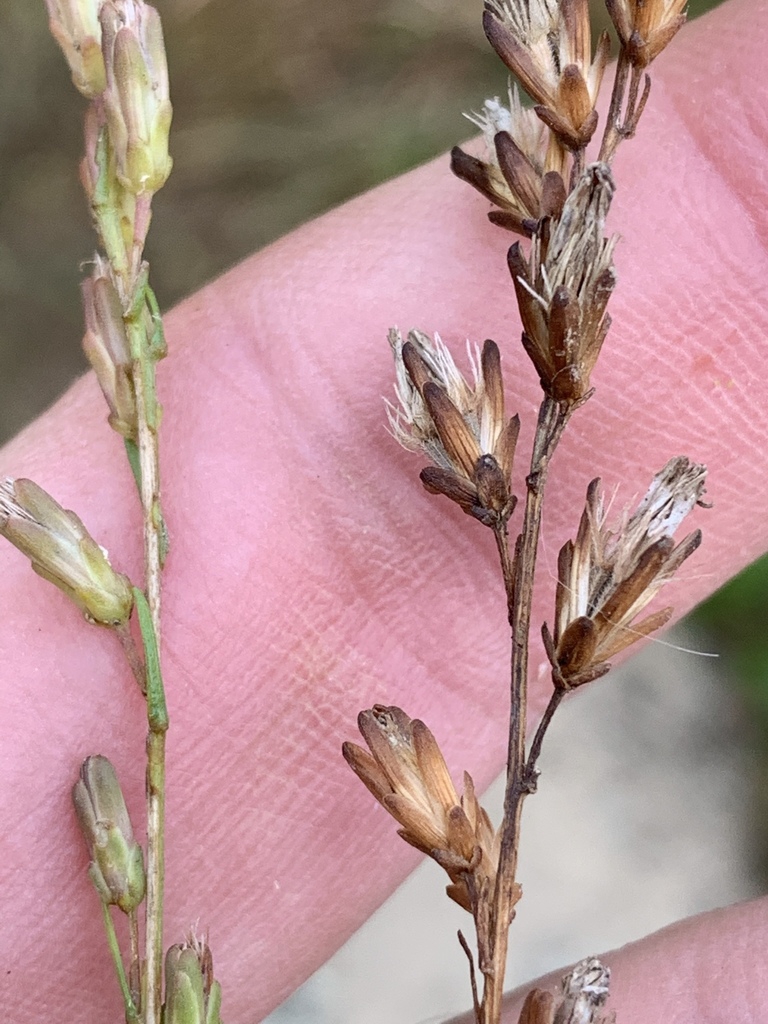
- The fruit is a golden brown cypsela, but it is often referred to as an achene. They appear after flowering has ended, and they are dispersed by the wind.
-
-
Flowers:
- Flower Color:
- Pink
- Purple/Lavender
- Flower Inflorescence:
- Spike
- Flower Value To Gardener:
- Good Cut
- Showy
- Flower Bloom Time:
- Fall
- Summer
- Flower Size:
- < 1 inch
- Flower Description:
- The inflorescence consists of rose-purple, fluffy disc flowers in small groups on terminal spikes. Blooms in July through October. The color of the flower varies from lavender to dark pinkish-purple, and occasionally white. The flowers are arranged in a small bundle of 4 to 6 disc florets at the top of the stalk. Blooming begins at the top of the spike and steadily blooms downward. The flowers are usually present for 3 to 4 weeks.
-
-
Leaves:
- Leaf Color:
- Green
- Leaf Type:
- Simple
- Leaf Arrangement:
- Alternate
- Leaf Shape:
- Lanceolate
- Linear
- Leaf Margin:
- Entire
- Hairs Present:
- No
- Leaf Length:
- 3-6 inches
- Leaf Width:
- < 1 inch
- Leaf Description:
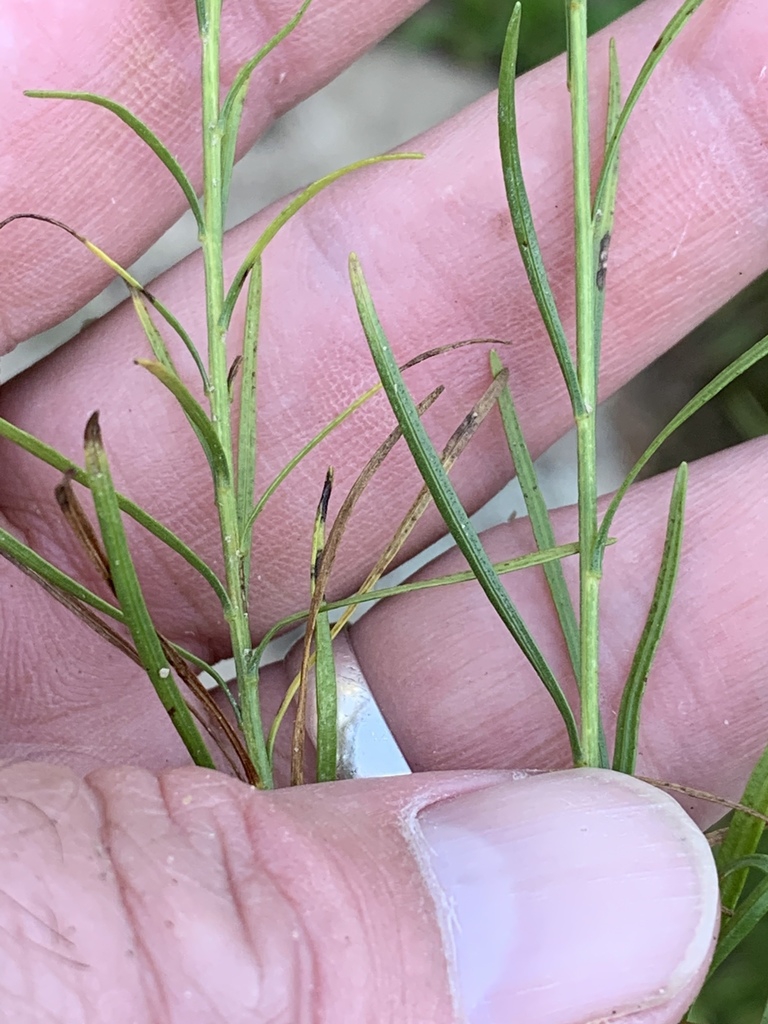
- The deep green basal leaves are smooth, linear to lanceolate, grass-like, measuring 6 inches long and 0.25 inches wide. The cauline leaves become progressively smaller as they go up the stem.
-
-
Stem:
- Stem Color:
- Brown/Copper
- Green
- Stem Is Aromatic:
- No
- Stem Surface:
- Smooth (glabrous)
- Stem Description:
- Smooth green to brownish stems.
-
-
Landscape:
- Landscape Location:
- Meadow
- Small Space
- Vertical Spaces
- Landscape Theme:
- Butterfly Garden
- Cottage Garden
- Cutting Garden
- Drought Tolerant Garden
- Native Garden
- Rock Garden
- Design Feature:
- Accent
- Border
- Mass Planting
- Attracts:
- Butterflies
- Hummingbirds
- Resistance To Challenges:
- Deer
- Drought
- Dry Soil
- Poor Soil
- Rabbits