


Algerian Iris Iris unguicularis
Other Common Name(s):
Previously known as:
- Iris stylosa
- Joniris stylosa
- Neubeckia stylosa
- Siphonostylis unguicularis
- Phonetic Spelling
- EYE-ris un-gwih-kew-LAR-iss
- This plant has low severity poison characteristics.
- See below
- Description
-
The Algerian Iris is a rhizomatous evergreen flowering plant in the iris family (Iridaceae) native to northern Africa and the western Mediterranean region.
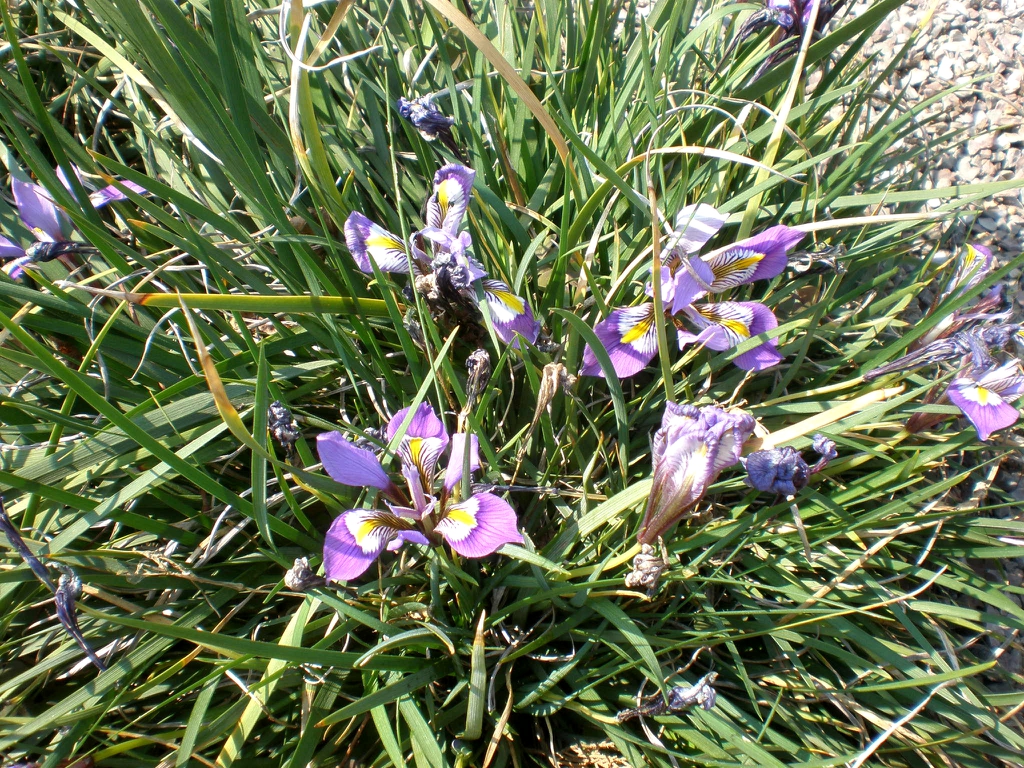
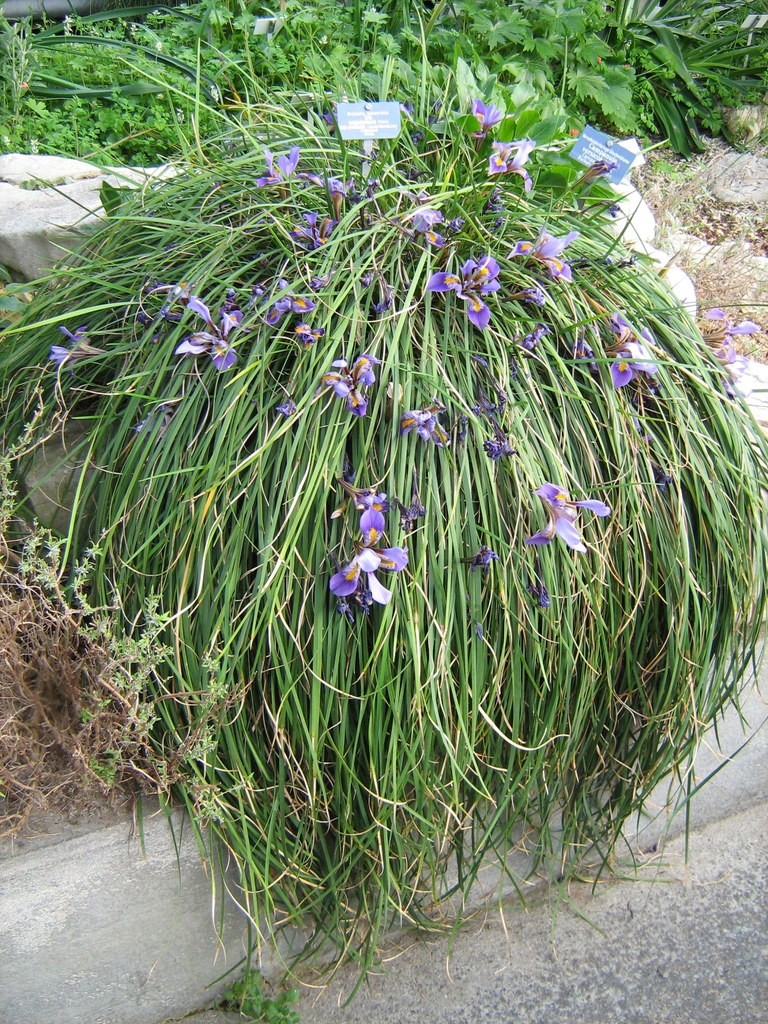
This plant grows up to 2 feet tall and wide and prefers a Mediterranean-type climate. In cooler summer areas it does well in full sun and in warmer climates, some afternoon shade is appreciated. Plant in well-drained average garden soil and don't disturb the roots unless necessary, as blooming may be delayed by years. Drought-tolerant once established and deer-resistant.
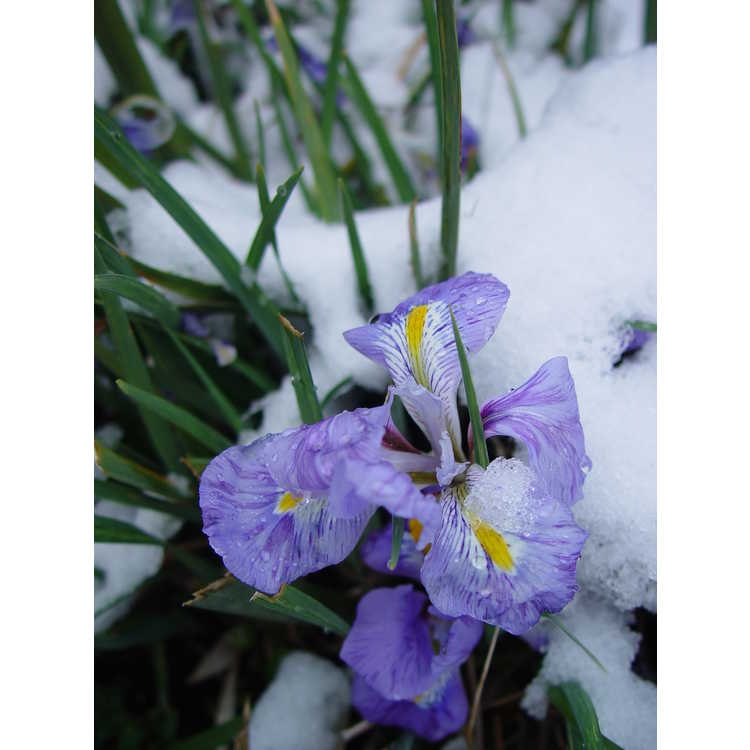
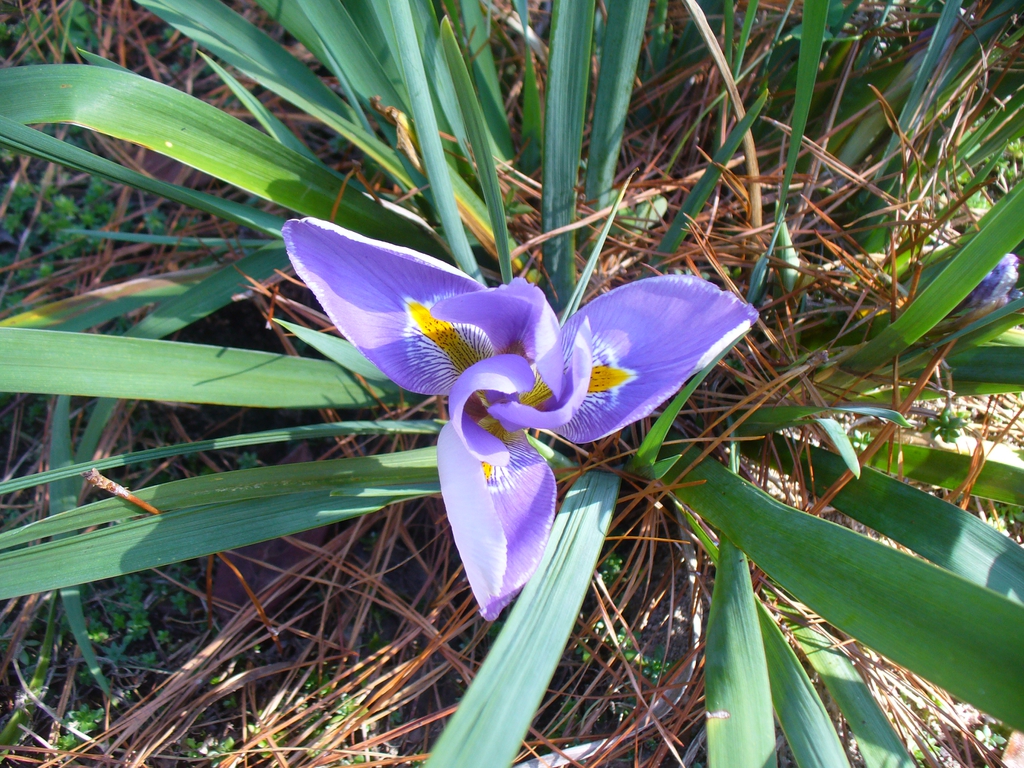
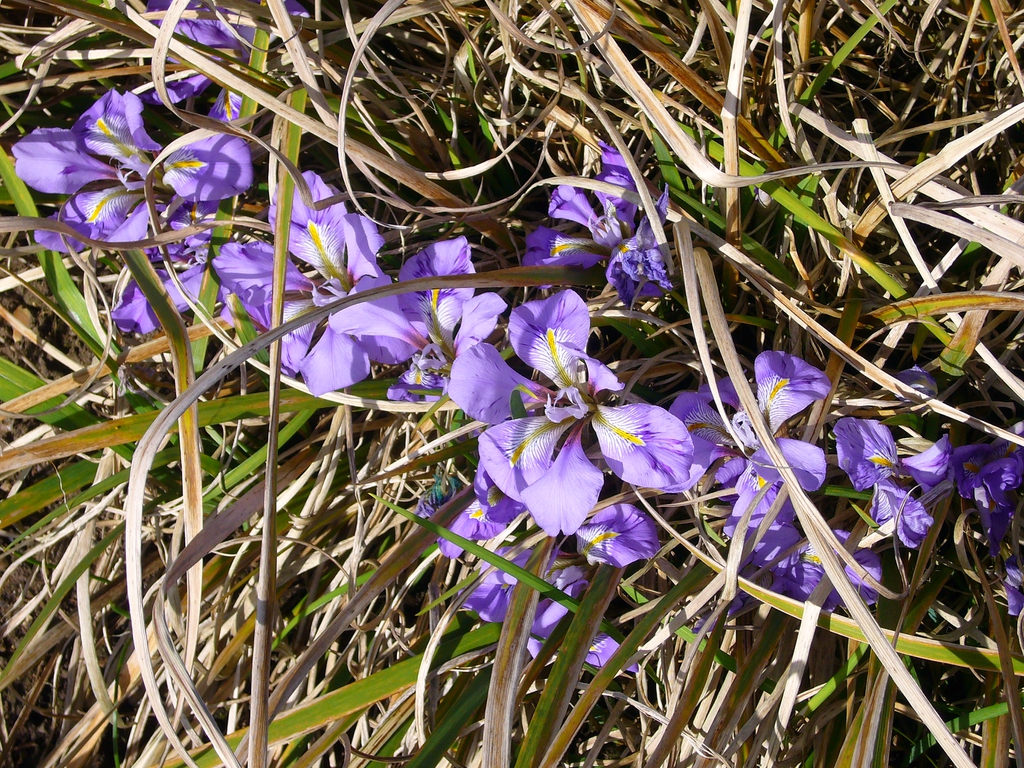
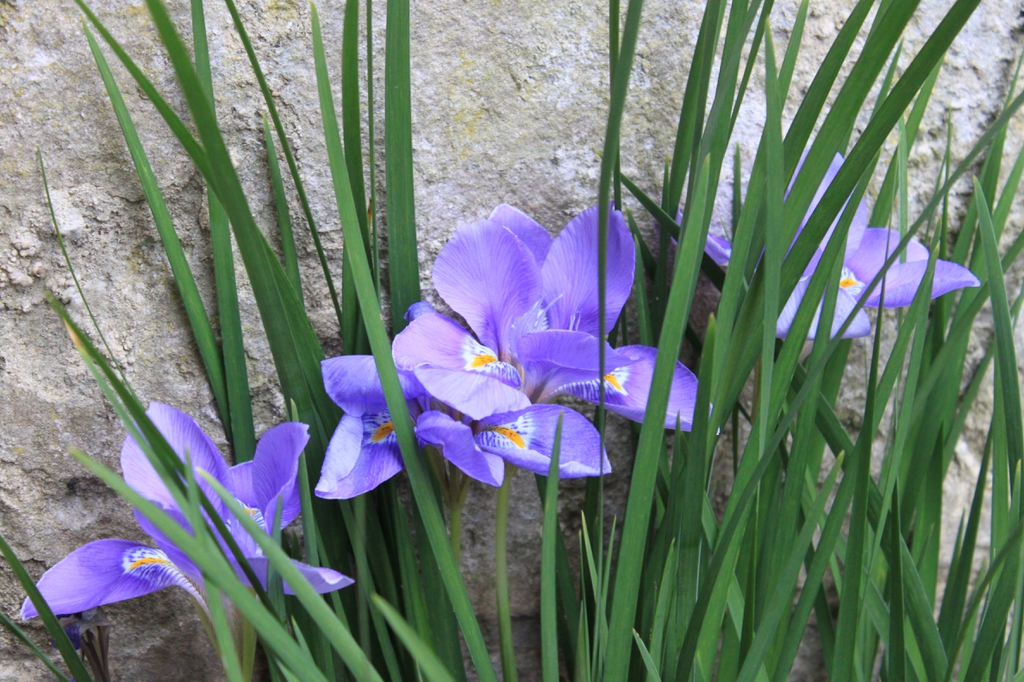
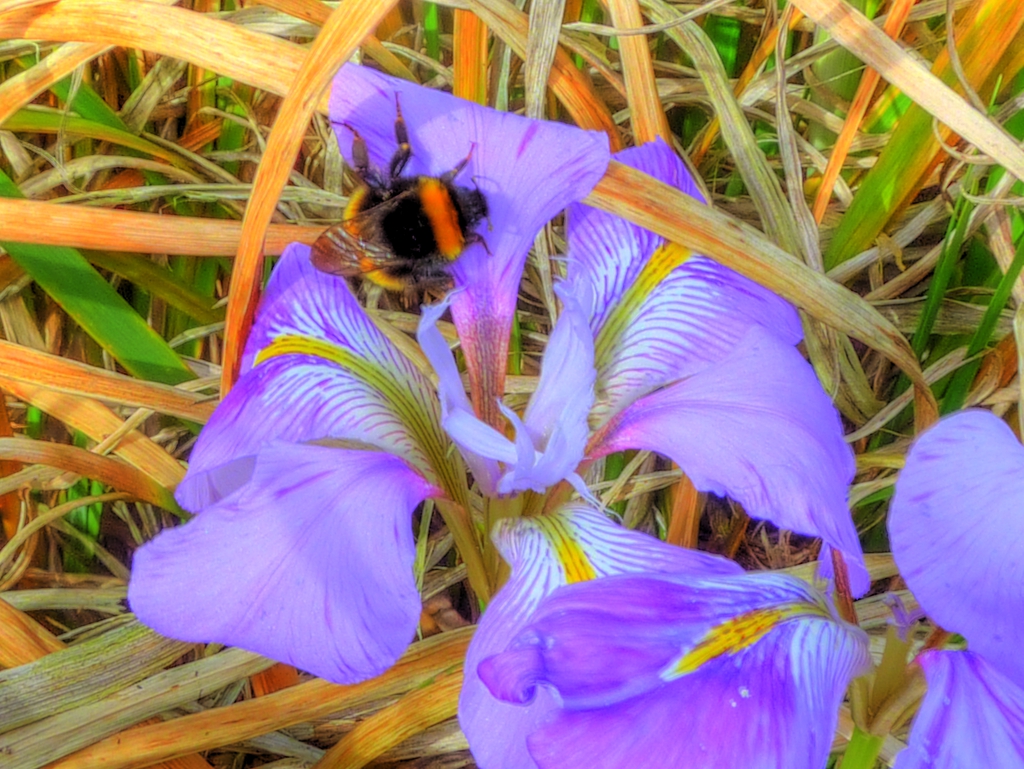
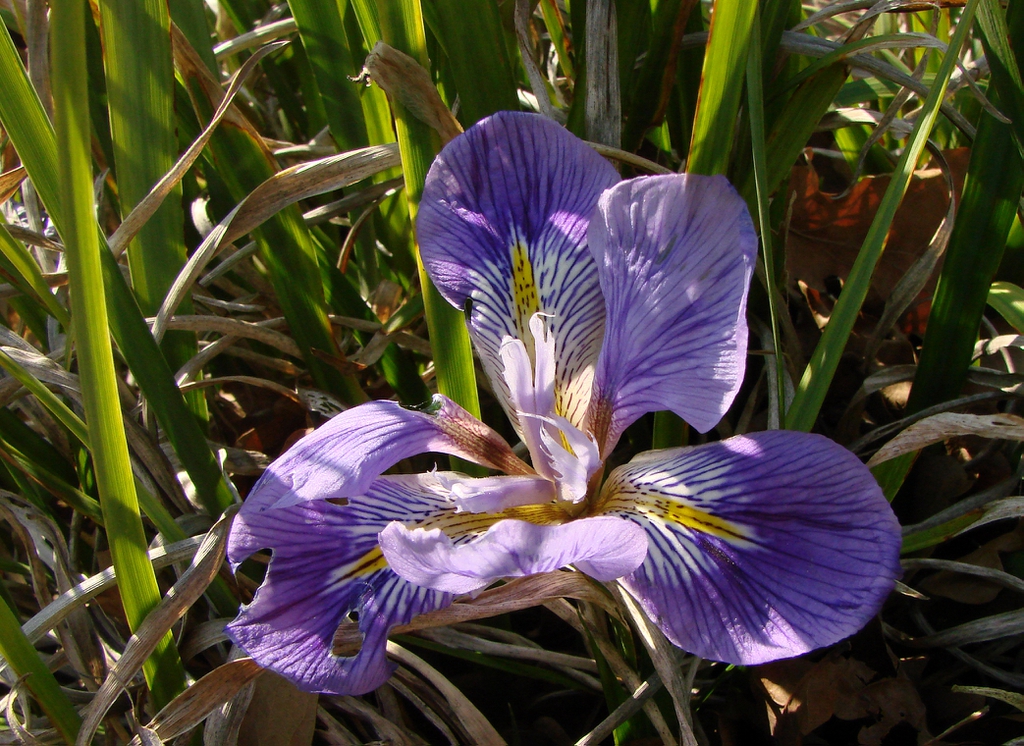
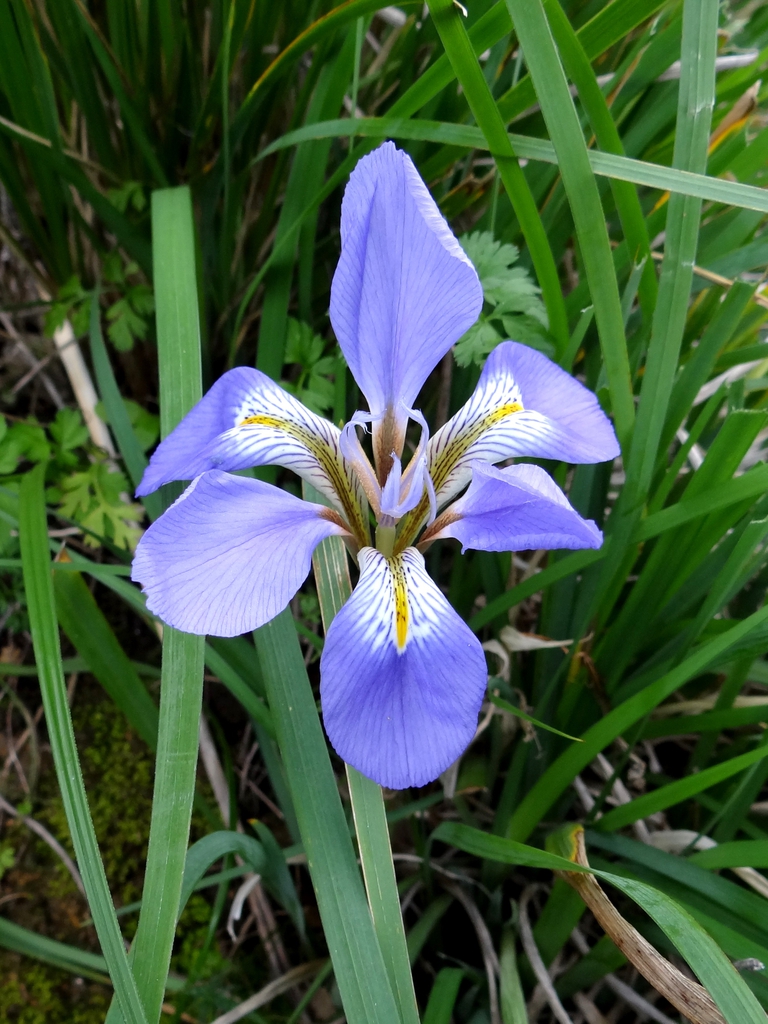
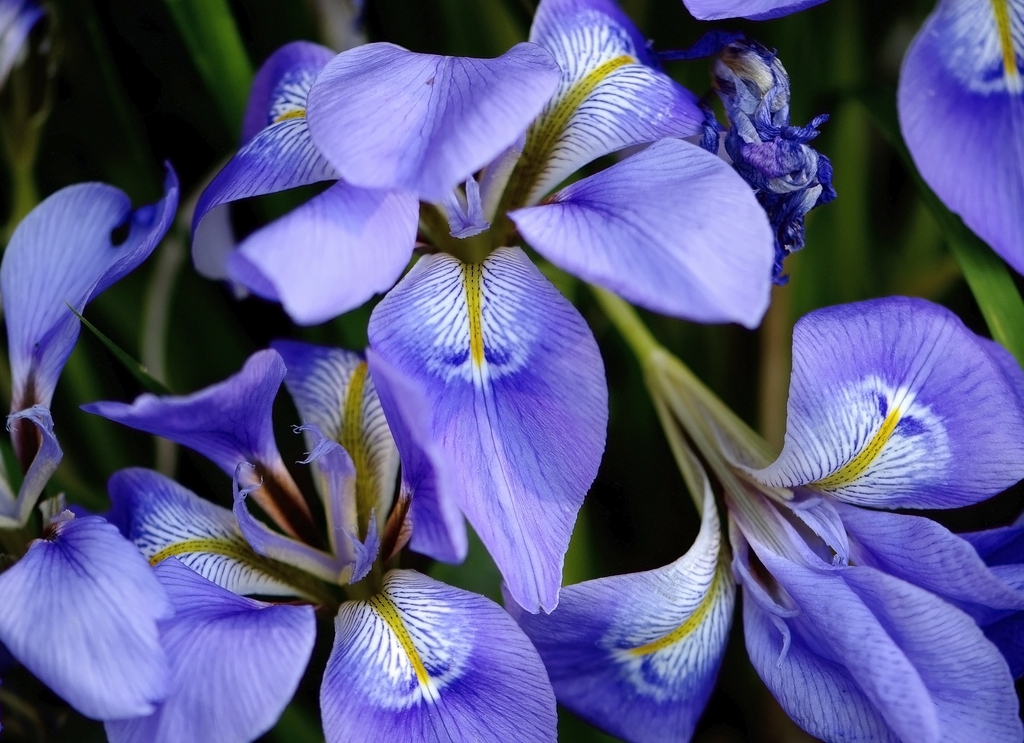
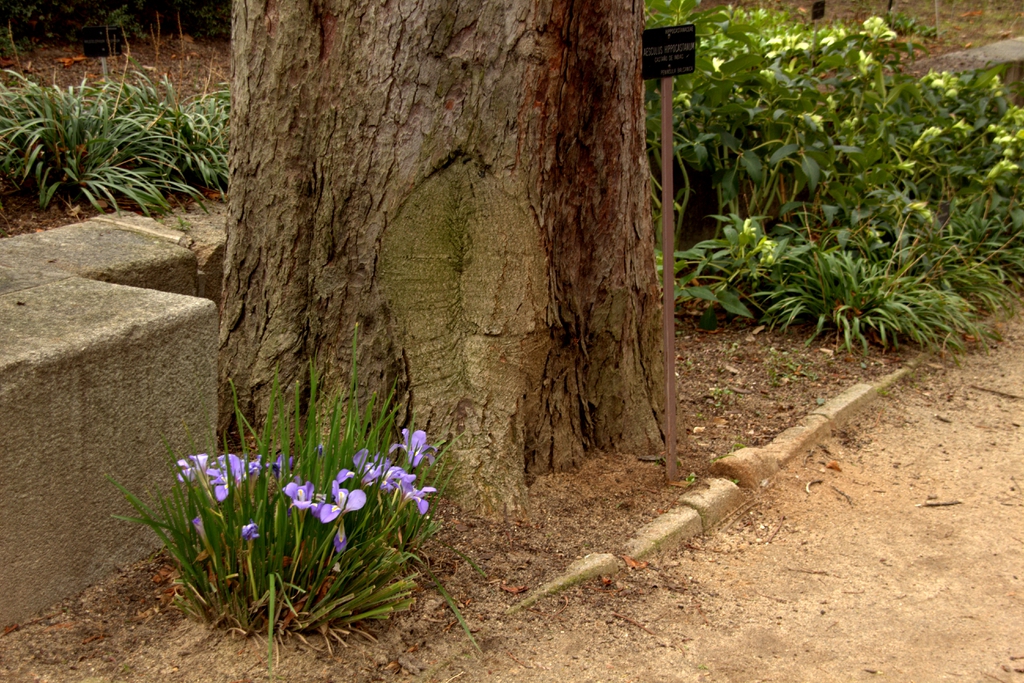
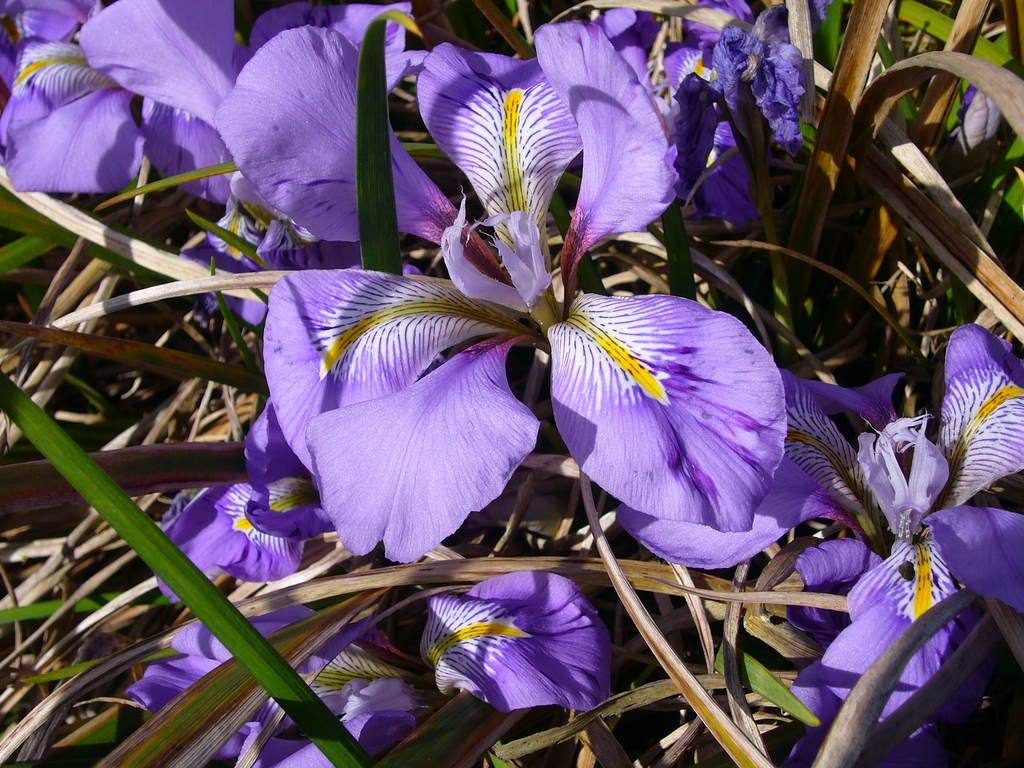
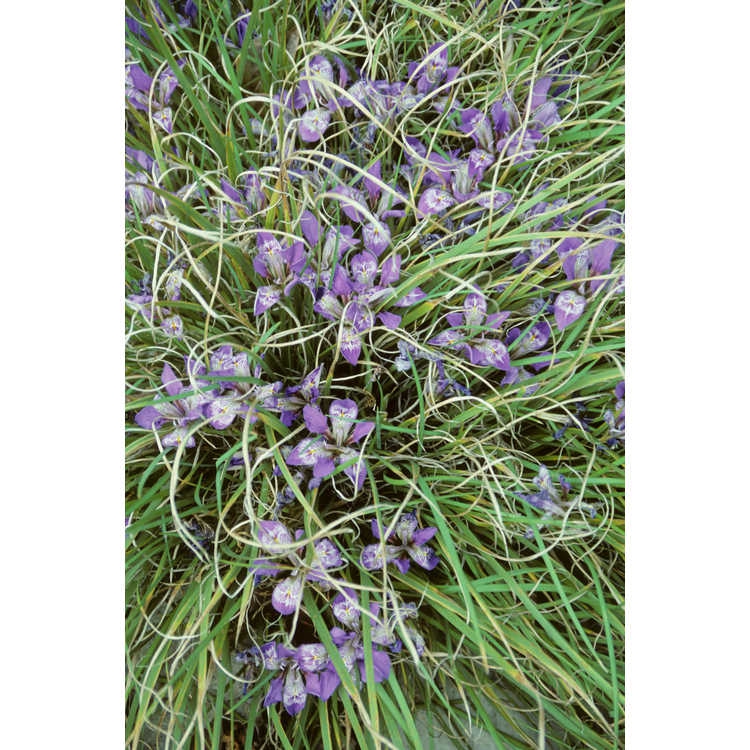
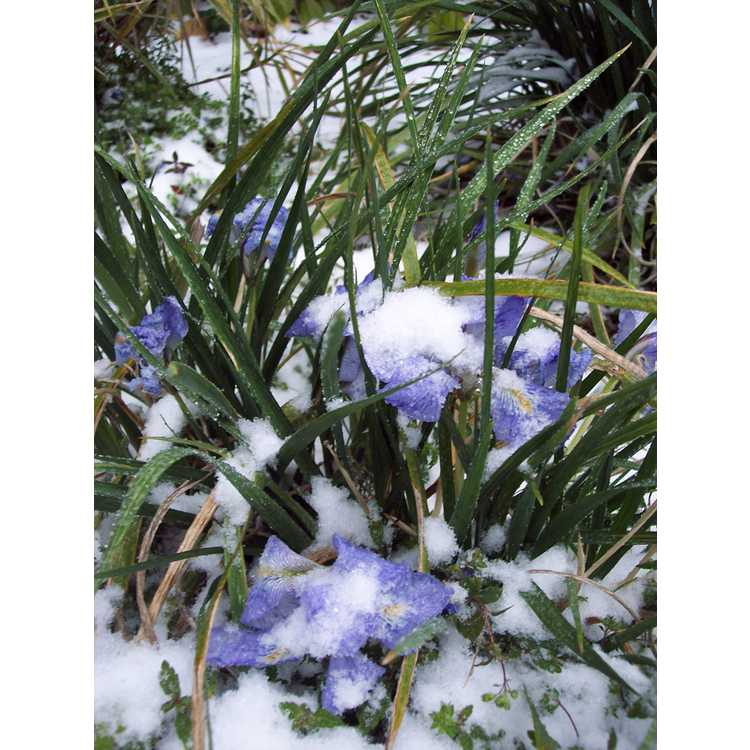
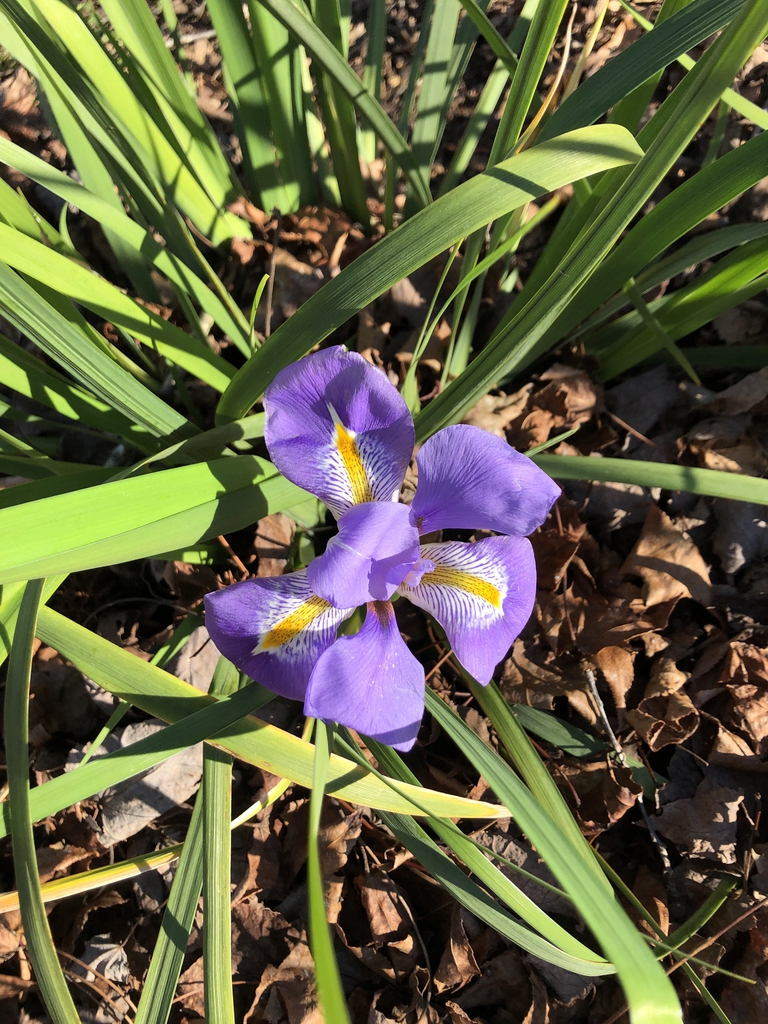
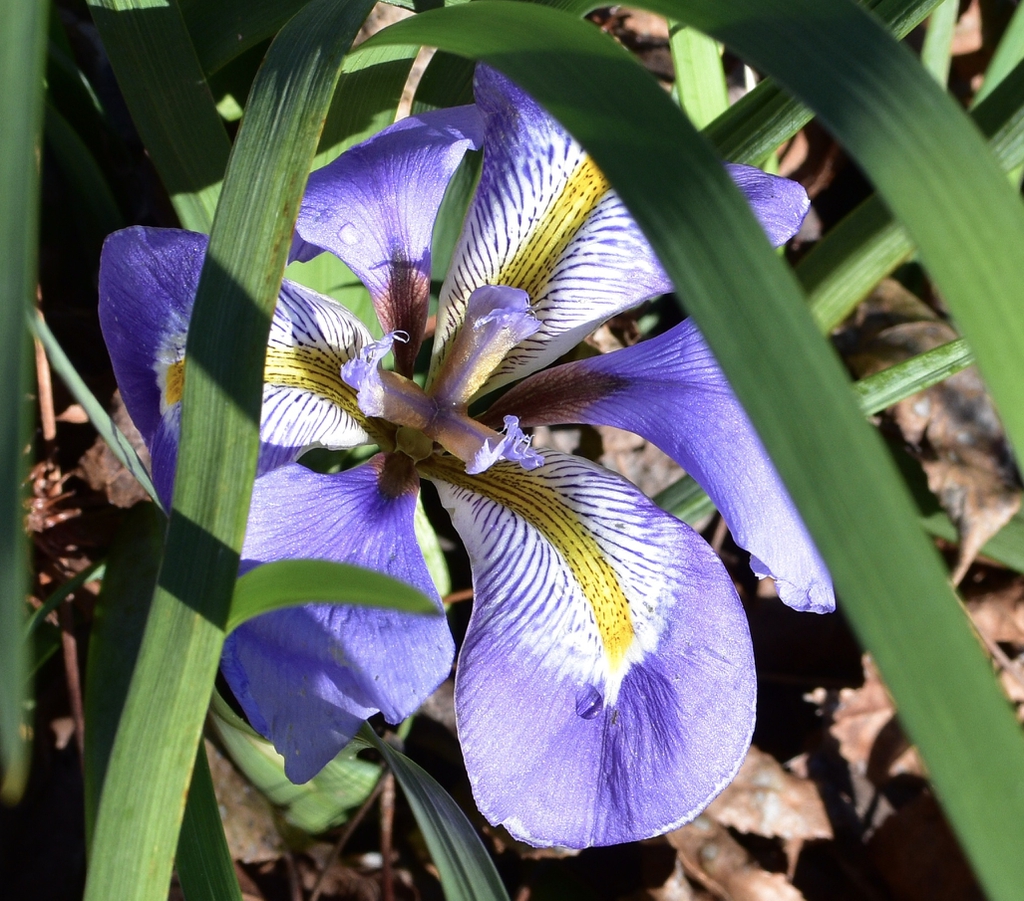
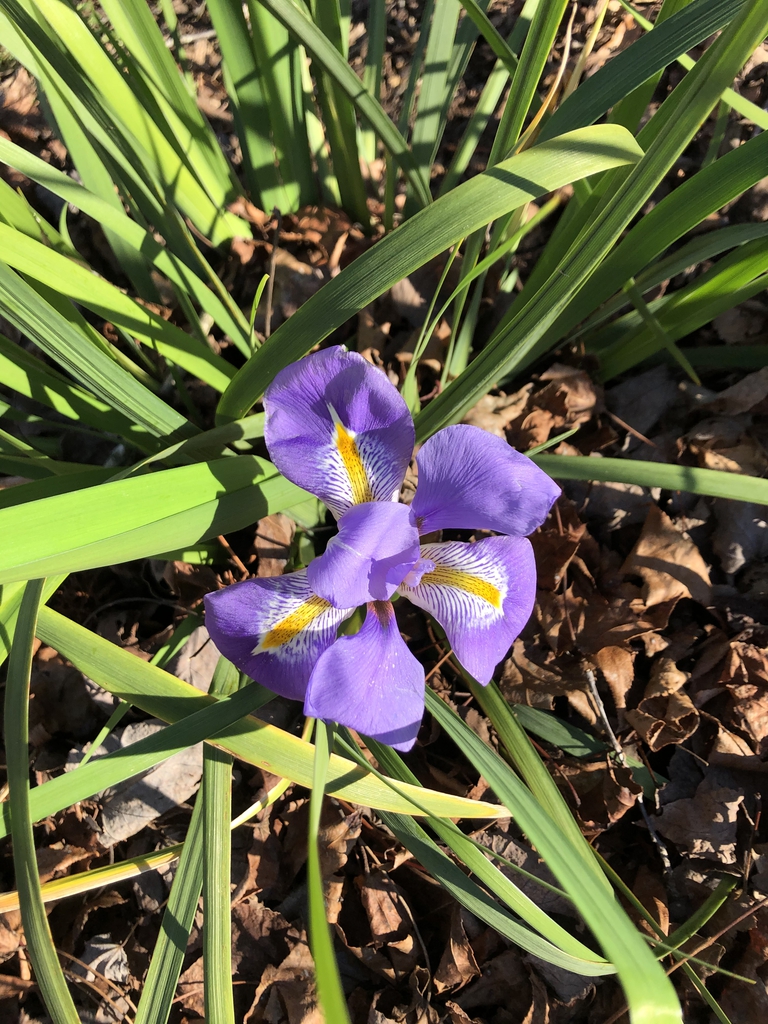
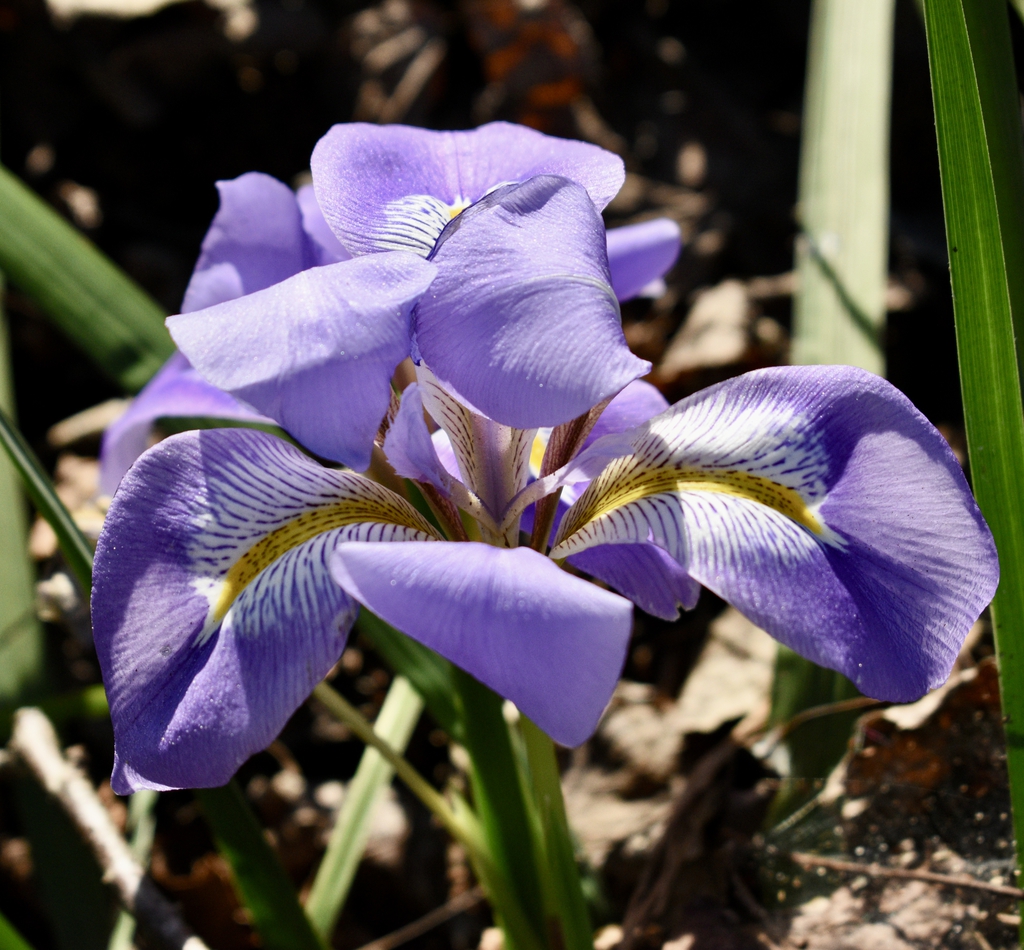
The blooms appear intermittently from November to spring. The intense blue-purple flowers have yellow and white markings on the falls and are 2 to 2.5 inches across. The leaves are grass-like up to 2 feet long.
Consider mass-planting it along borders, walkways, or near patios, where the fall and winter blooms can be enjoyed.
Insect, Diseases, and Other Plant Problems: Grey mold, bacterial soft rot, or a virus may occur. Watch for snails and slugs.
- See this plant in the following landscape :
- Cultivars / Varieties:
-
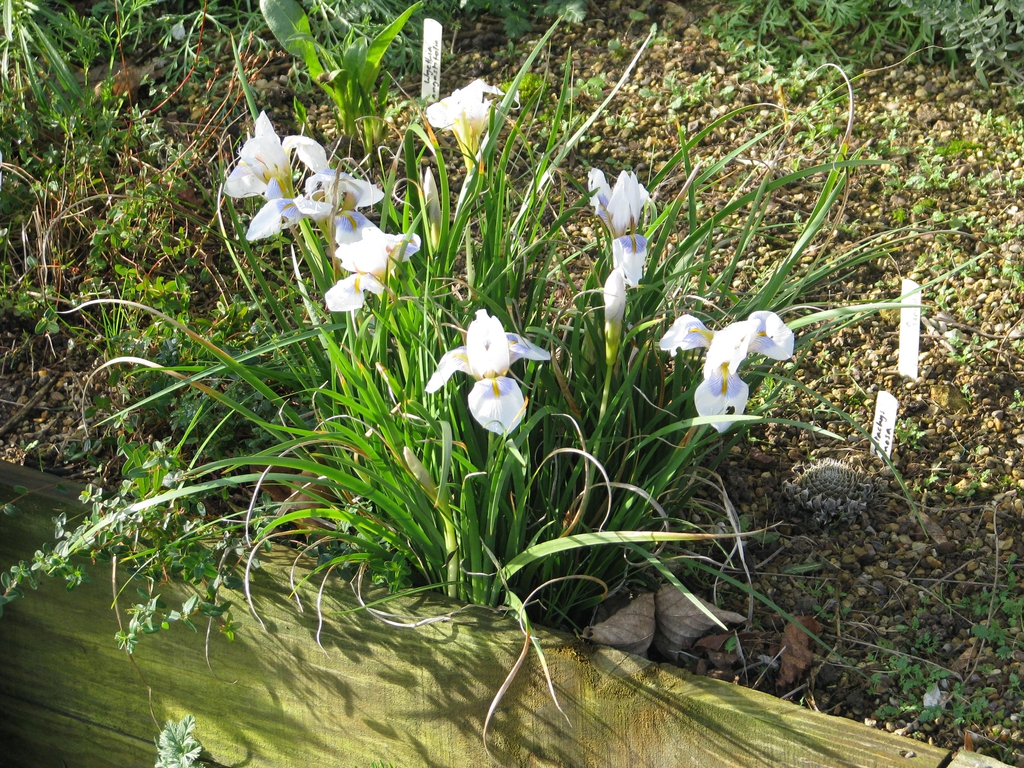
- 'Alba'
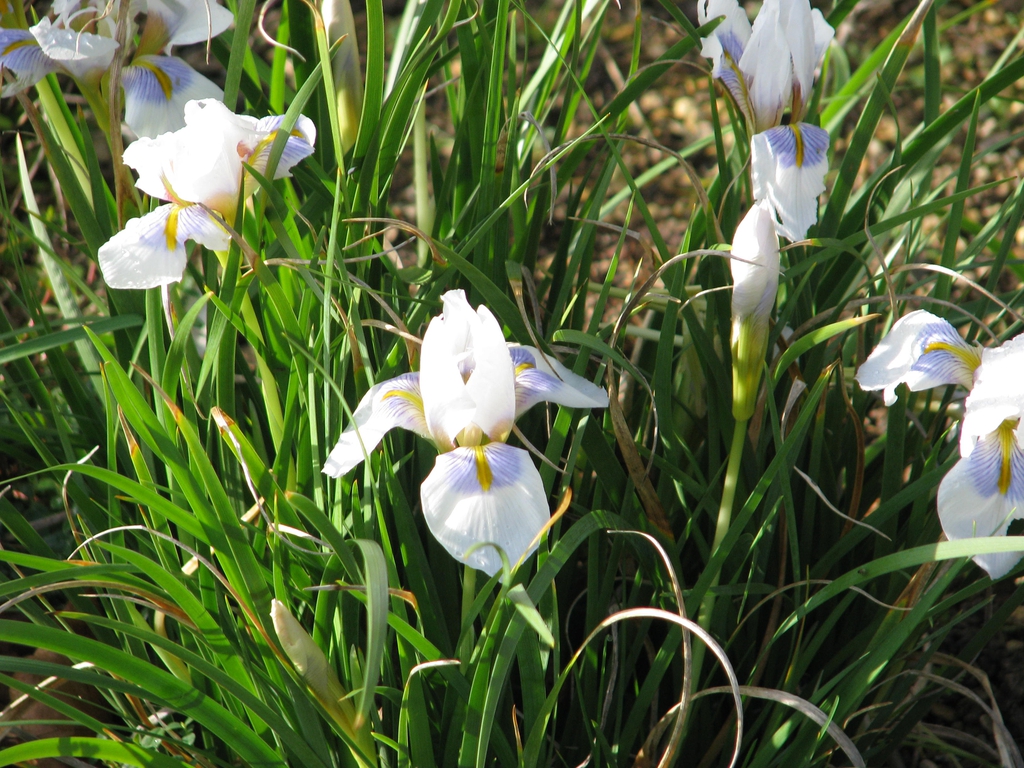
White flowers - 'Dazzling Eyes'
Blue-lavender flowers with better cold tolerance - 'Great White'
Large white flowers with yellow stripes down the center of the outter petals. - 'Logan Calhoun'
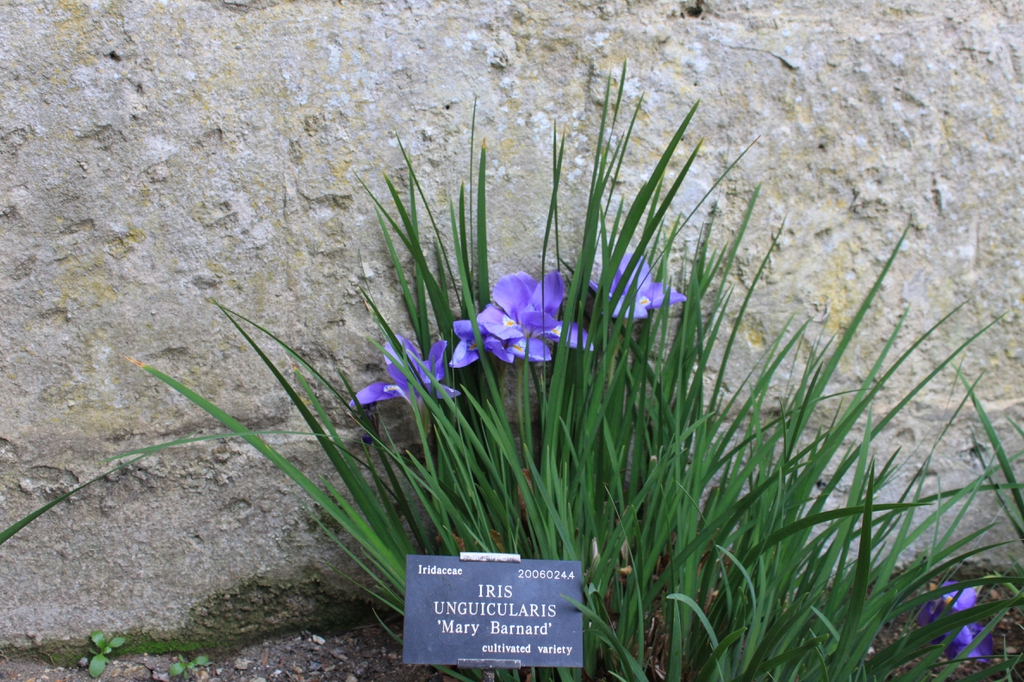
Vigorous plant with paler blue-lavender flowers - 'Mary Barnard'
Deep viotlet-blue fragrant flowers - 'Peloponnese Snow'
White flowers with hints of orange and purple - ‘Walter Butt’
Pale lavender fragrant flowers
- 'Alba'
- 'Alba', 'Dazzling Eyes', 'Great White', 'Logan Calhoun', 'Mary Barnard', 'Peloponnese Snow', ‘Walter Butt’
- Tags:
 Download Image
 Download Image
 Download Image


- Cultivars / Varieties:
-
- 'Alba'
White flowers - 'Dazzling Eyes'
Blue-lavender flowers with better cold tolerance - 'Great White'
Large white flowers with yellow stripes down the center of the outter petals. - 'Logan Calhoun'
Vigorous plant with paler blue-lavender flowers - 'Mary Barnard'
Deep viotlet-blue fragrant flowers - 'Peloponnese Snow'
White flowers with hints of orange and purple - ‘Walter Butt’
Pale lavender fragrant flowers
- 'Alba'
- 'Alba', 'Dazzling Eyes', 'Great White', 'Logan Calhoun', 'Mary Barnard', 'Peloponnese Snow', ‘Walter Butt’
- Tags:
-
-
Attributes:
- Genus:
- Iris
- Species:
- unguicularis
- Family:
- Iridaceae
- Life Cycle:
- Bulb
- Perennial
- Recommended Propagation Strategy:
- Division
- Country Or Region Of Origin:
- Africa and Mediterranean
- Distribution:
- Algeria, East Aegean Is., Greece, Kriti, Lebanon-Syria, Morocco, Tunisia, Türkiye
- Particularly Resistant To (Insects/Diseases/Other Problems):
- drought, deer
- Dimensions:
- Height: 1 ft. 0 in. - 1 ft. 6 in.
- Width: 2 ft. 0 in. - 2 ft. 0 in.
-
-
Whole Plant Traits:
- Plant Type:
- Perennial
- Habit/Form:
- Arching
- Clumping
- Erect
- Texture:
- Fine
-
-
Cultural Conditions:
- Light:
- Full sun (6 or more hours of direct sunlight a day)
- Partial Shade (Direct sunlight only part of the day, 2-6 hours)
- Soil Texture:
- Clay
- Loam (Silt)
- Sand
- Soil pH:
- Neutral (6.0-8.0)
- Soil Drainage:
- Good Drainage
- Moist
- Occasionally Dry
- Available Space To Plant:
- Less than 12 inches
- NC Region:
- Mountains
- Piedmont
- USDA Plant Hardiness Zone:
- 7a, 7b, 8a, 8b, 9a, 9b
-
-
Fruit:
- Fruit Color:
- Brown/Copper
- Green
- Fruit Type:
- Capsule
- Fruit Length:
- 1-3 inches
- Fruit Width:
- 1-3 inches
- Fruit Description:
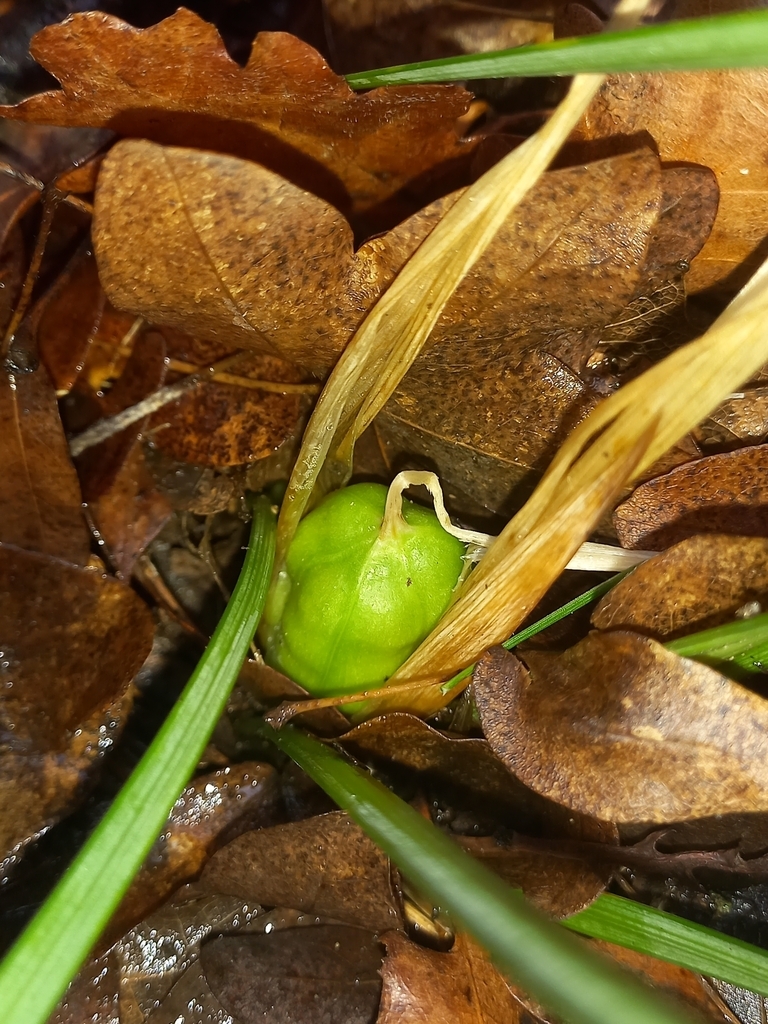
- Oblong, three-sided capsules up to 1.25 inch long are produced at the base of the plant. Initially green and matures to brown.
-
-
Flowers:
- Flower Color:
- Gold/Yellow
- Purple/Lavender
- White
- Flower Inflorescence:
- Solitary
- Flower Value To Gardener:
- Fragrant
- Good Cut
- Flower Bloom Time:
- Spring
- Winter
- Flower Shape:
- Saucer
- Flower Petals:
- 6 petals/rays
- Flower Size:
- 1-3 inches
- Flower Description:
- Showy lavendar-purple flowers with yellow and white banding on the falls appear in November through early spring. The flowers are on short stems so they are low in the clump of leaves.
-
-
Leaves:
- Leaf Color:
- Green
- Leaf Type:
- Simple
- Leaf Arrangement:
- Rosulate
- Leaf Shape:
- Linear
- Leaf Margin:
- Entire
- Hairs Present:
- No
- Leaf Length:
- > 6 inches
- Leaf Width:
- < 1 inch
- Leaf Description:
- Grass-like leaves are up to 2 feet long and 1/8 to 1/2 inch wide with lengthwise ridges and pointed tips.
-
-
Stem:
- Stem Color:
- Green
- Stem Is Aromatic:
- No
- Stem Description:
- Stems that hold the flower up can be as tall as 8 inches.
-
-
Landscape:
- Landscape Location:
- Coastal
- Container
- Patio
- Slope/Bank
- Small Space
- Woodland
- Landscape Theme:
- Cutting Garden
- Drought Tolerant Garden
- Winter Garden
- Design Feature:
- Accent
- Border
- Mass Planting
- Small groups
- Specimen
- Attracts:
- Bees
- Resistance To Challenges:
- Deer
- Drought
- Problems:
- Poisonous to Humans
- Problem for Cats
- Problem for Dogs
- Problem for Horses
-
-
Poisonous to Humans:
- Poison Severity:
- Low
- Poison Symptoms:
- Salivation, vomiting, drooling, lethargy, diarrhea. Highest concentration in rhizomes
- Poison Toxic Principle:
- Pentacylic terpenoids (zeorin, missourin and missouriensin)
- Causes Contact Dermatitis:
- No
- Poison Part:
- Flowers
- Fruits
- Leaves
- Roots
- Sap/Juice
- Seeds
- Stems