



Hamamelis mollis
Common Name(s):
- Phonetic Spelling
- ham-uh-MEE-lis MAW-liss
- Description
-
Chinese witchhazel is a deciduous, flowering shrub native to western China in the Hamamelidaceae family. The genus name comes from the Greek hama for "at the same time" and melon meaning apple in reference to the occurrence of both fruit and flowers at the same time on this shrub. The species name means soft with soft hairs.
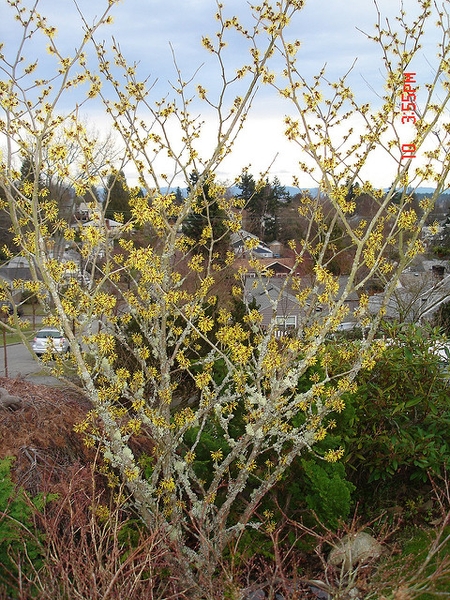
It can be grown as a large shrub or small tree reaching 10 to 15 feet tall and wide and should be pruned in spring after flowering to control the size and shape. When pruning, keep in mind that flowers will appear on old growth. Chinese witchhazel prefers moist, acidic, well-drained soil, full sun to partial shade, and tolerates clay soils as long as the drainage is good. However, it does best with consistent moisture and may suffer from leaf scorch in hot, dry summers. It spreads by root suckers, which should be pruned to restrain colonization.
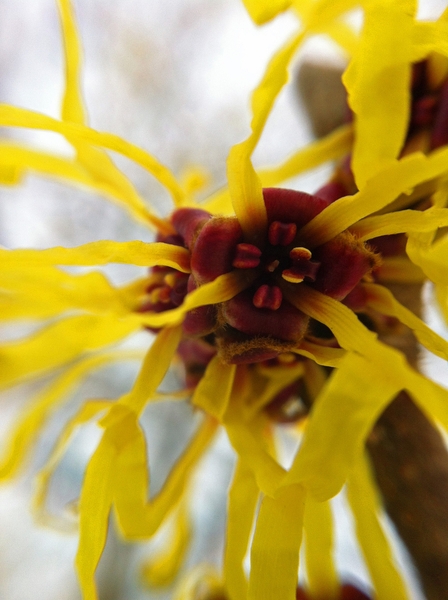
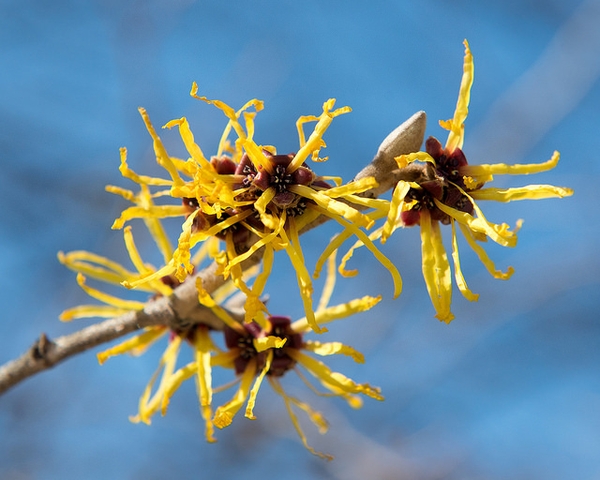
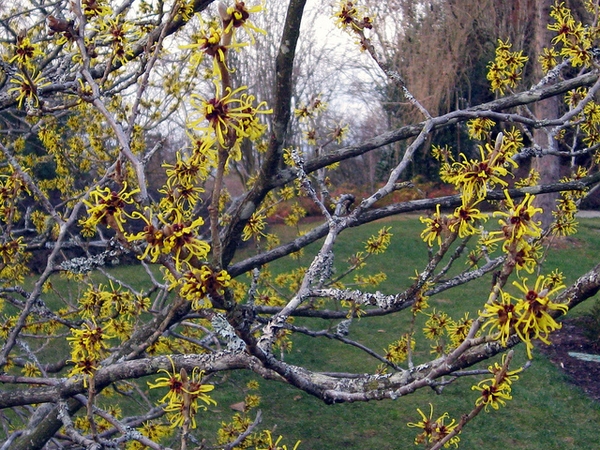
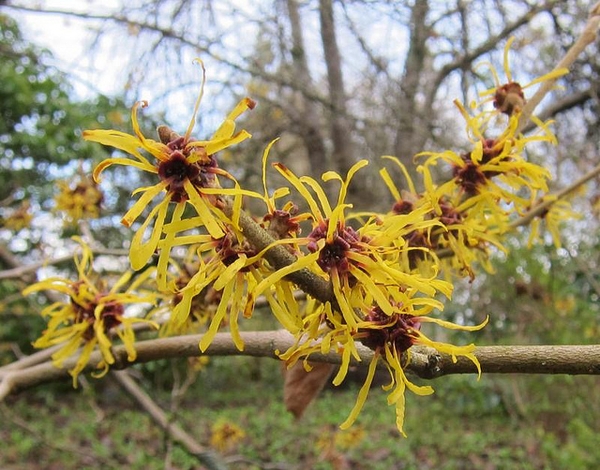
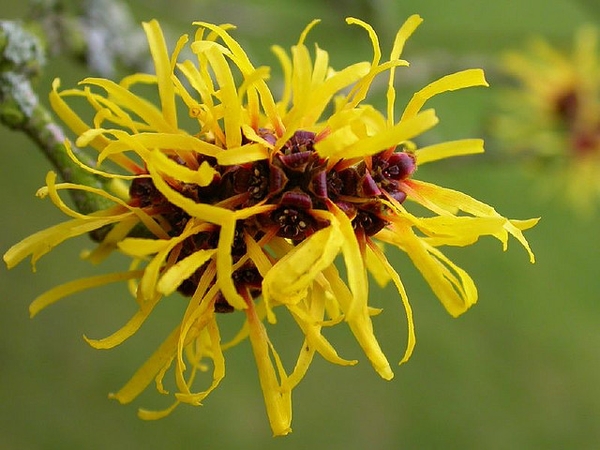
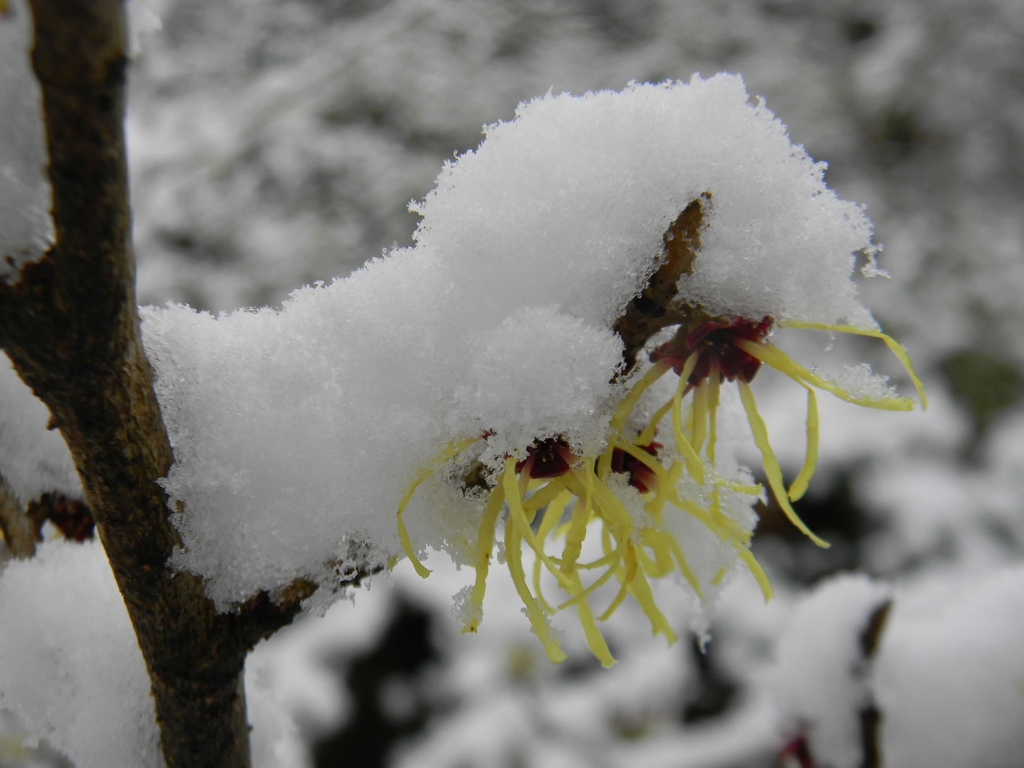
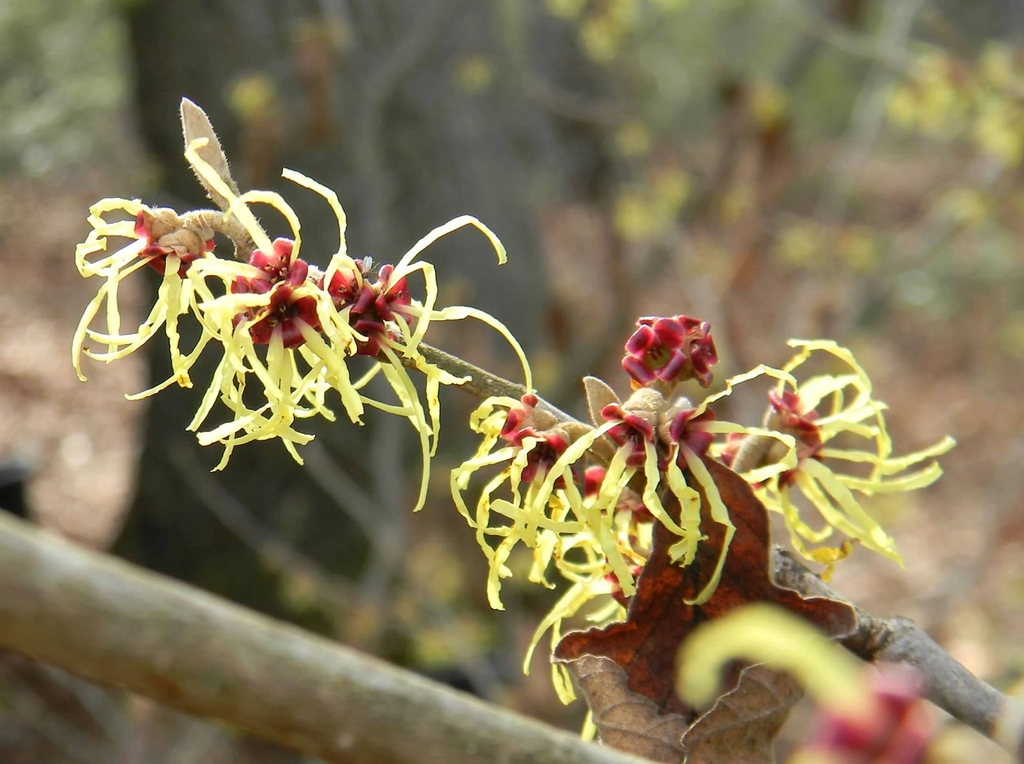
The fragrant, yellow flowers appear in clusters from January to March, and the leaves turn yellow in the fall. There are several cultivars available.
Use this shrub in woodland and winter gardens, as a hedge, specimen or in the back of the border.
Quick ID Hints:
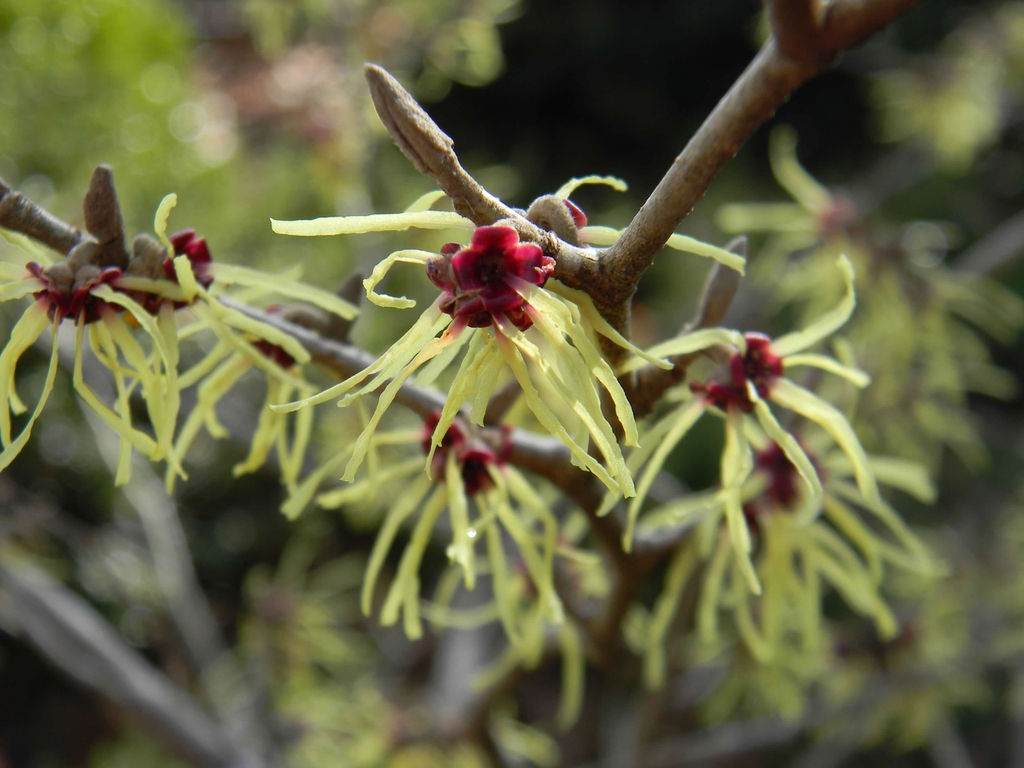
- Flowers in axillary clusters, 4 ligulate petals
- Deciduous shrub to small tree with zig-zag twigs
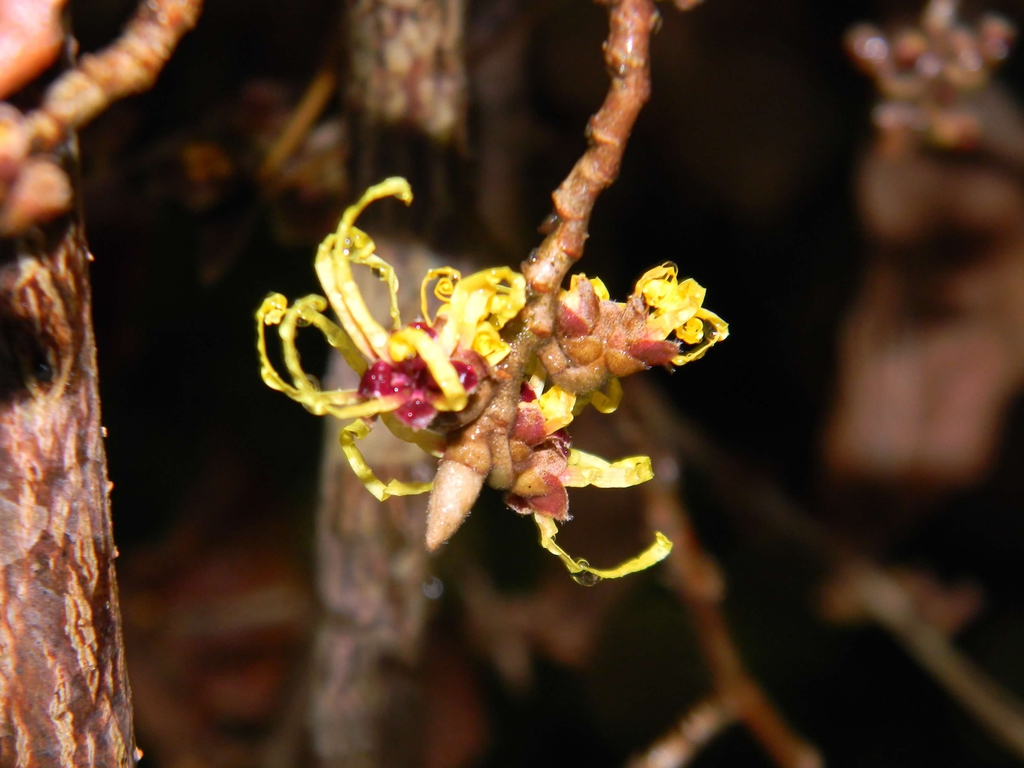
- Leaf buds and young twigs tomentose
- Native form flowers in late fall to early winter. Other species flower in late winter.
- Leaves turn yellow in fall.
Diseases, Insect Pests, and Other Plant Problems: No significant problems. Caterpillars and beetles may chew on the leaves. Watch for gall aphids, scale, leafroller and leafminer. Potential diseases include powdery mildew, occasional leaf spots and rots
- See this plant in the following landscape :
- Cultivars / Varieties:
-
- 'Brevipetala'
Rounded form 9 to 12 feet tall and wide - 'Early Bright'
Earliest to bloom. 10 to 15 feet tall and wide - 'Jermyns Gold'
Won the Royal Horticultural Society's Award of Garden Merit. - 'Pallida'
Vase-shaped with a spreading habit 9 to 12 feet tall - Princeton Gold
4 to 6 feet tall with golden yellow flowers - 'Sweet Sunshine'
10 feet tall, blooms profusely in February and March, - 'Wisley Supreme'[
Won the Royal Horticultural Society's Award of Garden Merit.
- 'Brevipetala'
- 'Brevipetala', 'Early Bright', 'Jermyns Gold', 'Pallida', Princeton Gold, 'Sweet Sunshine', 'Wisley Supreme'[
- Tags:


- Cultivars / Varieties:
-
- 'Brevipetala'
Rounded form 9 to 12 feet tall and wide - 'Early Bright'
Earliest to bloom. 10 to 15 feet tall and wide - 'Jermyns Gold'
Won the Royal Horticultural Society's Award of Garden Merit. - 'Pallida'
Vase-shaped with a spreading habit 9 to 12 feet tall - Princeton Gold
4 to 6 feet tall with golden yellow flowers - 'Sweet Sunshine'
10 feet tall, blooms profusely in February and March, - 'Wisley Supreme'[
Won the Royal Horticultural Society's Award of Garden Merit.
- 'Brevipetala'
- 'Brevipetala', 'Early Bright', 'Jermyns Gold', 'Pallida', Princeton Gold, 'Sweet Sunshine', 'Wisley Supreme'[
- Tags:
-
-
Attributes:
- Genus:
- Hamamelis
- Species:
- mollis
- Family:
- Hamamelidaceae
- Uses (Ethnobotany):
- Has been used as a medicinal plant. The bark and leaves produce a topical astringent.
- Life Cycle:
- Woody
- Recommended Propagation Strategy:
- Seed
- Country Or Region Of Origin:
- Western and west-central China
- Wildlife Value:
- Fruit serves as food source for small mammals and birds.
- Play Value:
- Attractive Flowers
- Edible fruit
- Fragrance
- Wildlife Food Source
- Dimensions:
- Height: 10 ft. 0 in. - 15 ft. 6 in.
- Width: 10 ft. 0 in. - 15 ft. 0 in.
-
-
Whole Plant Traits:
- Plant Type:
- Shrub
- Tree
- Woody Plant Leaf Characteristics:
- Deciduous
- Habit/Form:
- Erect
- Oval
- Rounded
- Spreading
- Growth Rate:
- Slow
- Maintenance:
- Low
- Texture:
- Medium
-
-
Cultural Conditions:
- Light:
- Dappled Sunlight (Shade through upper canopy all day)
- Full sun (6 or more hours of direct sunlight a day)
- Partial Shade (Direct sunlight only part of the day, 2-6 hours)
- Soil Texture:
- High Organic Matter
- Soil pH:
- Acid (<6.0)
- Soil Drainage:
- Good Drainage
- Moist
- Occasionally Wet
- NC Region:
- Coastal
- Mountains
- Piedmont
- USDA Plant Hardiness Zone:
- 5a, 5b, 6a, 6b, 7a, 7b, 8a, 8b
-
-
Fruit:
- Fruit Color:
- Black
- Fruit Value To Gardener:
- Edible
- Display/Harvest Time:
- Fall
- Fruit Type:
- Capsule
- Fruit Length:
- < 1 inch
- Fruit Width:
- < 1 inch
- Fruit Description:
- A two-valved dihiscent woody capsule.
-
-
Flowers:
- Flower Color:
- Brown/Copper
- Gold/Yellow
- Flower Inflorescence:
- Cyme
- Flower Value To Gardener:
- Fragrant
- Showy
- Flower Bloom Time:
- Spring
- Winter
- Flower Shape:
- Cup
- Flower Description:
- Yellow flowers with red-brown calyx cups in late winter to early spring are fragrant with strap-shaped petals. Inflorescence is a cyme in leaf axils.
-
-
Leaves:
- Woody Plant Leaf Characteristics:
- Deciduous
- Leaf Color:
- Green
- Orange
- Leaf Value To Gardener:
- Showy
- Deciduous Leaf Fall Color:
- Gold/Yellow
- Orange
- Leaf Type:
- Simple
- Leaf Arrangement:
- Alternate
- Leaf Shape:
- Obovate
- Ovate
- Leaf Margin:
- Lobed
- Serrate
- Hairs Present:
- Yes
- Leaf Length:
- 3-6 inches
- Leaf Width:
- 1-3 inches
- Leaf Description:
- Alternate, ovate to obovate, toothed or shallowly lobed, base oblique and undersides are densely hairy. Leaf buds are pubescent. Leaves are 2 to 6 inches long and 2 to 4 inches wide.
-
-
Stem:
- Stem Is Aromatic:
- No
- Stem Description:
- Young stems zig-zag, pubescent; older glabrous, smooth.
-
-
Landscape:
- Landscape Location:
- Recreational Play Area
- Woodland
- Landscape Theme:
- Children's Garden
- Edible Garden
- Winter Garden
- Design Feature:
- Border
- Specimen
- Attracts:
- Small Mammals
- Songbirds
- Resistance To Challenges:
- Compaction
- Deer
- Erosion



