


Fiveleaf Aralia Eleutherococcus sieboldianus
Other Common Name(s):
Previously known as:
- Acanthopanax sieboldianus
- Eleutherococcus sieboldianus f. variegatus
- Phonetic Spelling
- el-ew-ther-oh-KOK-us see-bold-ee-AH-nus
- Description
-
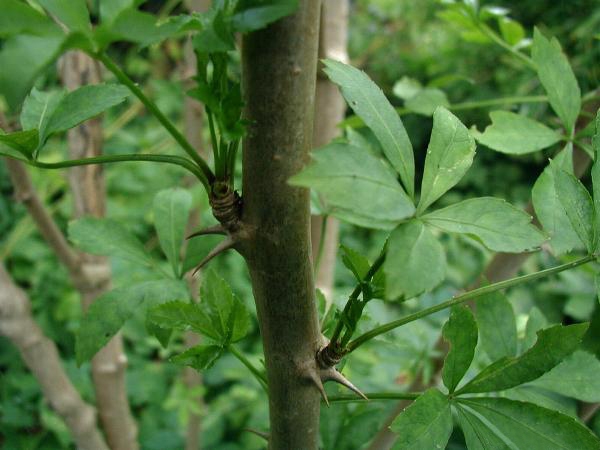
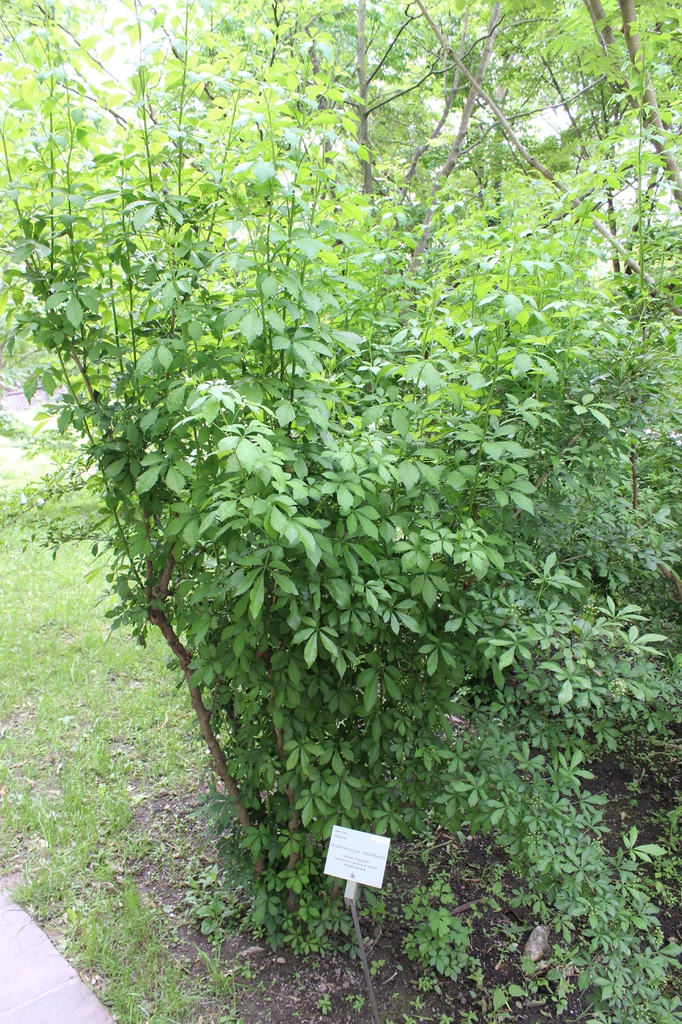
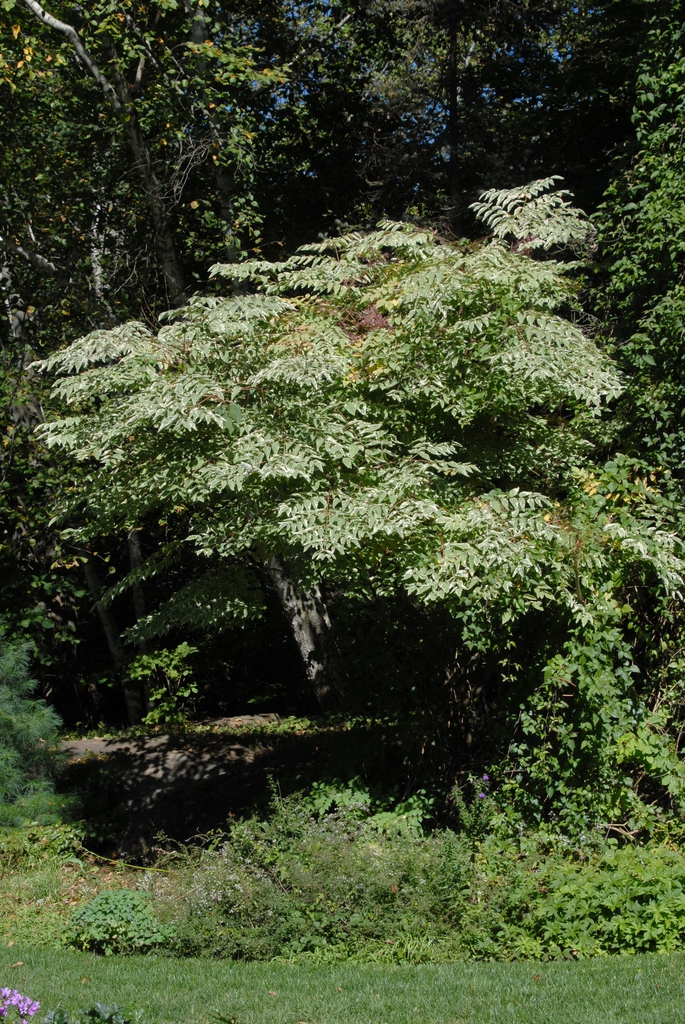
Five-fingered aralia is an erect, upright, ornamental, deciduous shrub with slender, arching branches when the shrub is young, becoming more erect with age. It grows up to 8 to 10 feet tall and equally as wide, with green palmate leaves having 3 to 5 leaflets, small inconspicuous greenish-white flowers in the spring, and small black berries during the summer. This shrub also has sharp spines located at the stem nodes, just below each leaf. The five-fingered aralia is native to Southeast China, and it is usually found in forests, hedgerows, or forest edges. Although this shrub is a member of the ginseng family (Araliaceae), it is not in the genus Aralia. The genus name, Eleutherococcus, originated from two Greek words: eleutheros, meaning free, and kokkos, meaning seed. This refers to the seed arrangement inside its fruit. The specific epithet sieboldianus honors Dr. Philip Franz van Siebold of Germany, a physician and plant collector from the 18th century.
This low-maintenance shrub prefers partial shade to full shade and is adaptable to a variety of moist, well-drained soil types. It is drought-tolerant and tolerant of poor soils and urban pollution. The shrub is hardy from zones 4 to 9, but it should be sheltered from the north and east. It can be severely pruned and is easy to transplant. It roots sucker readily, and is propagated by softwood cuttings.
This species is dioecious and requires a male and female shrub to produce fruit. Mostly female shrubs are sold commercially.
Its thorns make it a good candidate for a screen or security planting, or a shrub border, foundation planting, or the background of a planting bed.
Insects, Diseases, and Other Plant Problems: No significant insect pests or diseases.
- See this plant in the following landscape :
- Cultivars / Varieties:
-
- 'Variegatus'
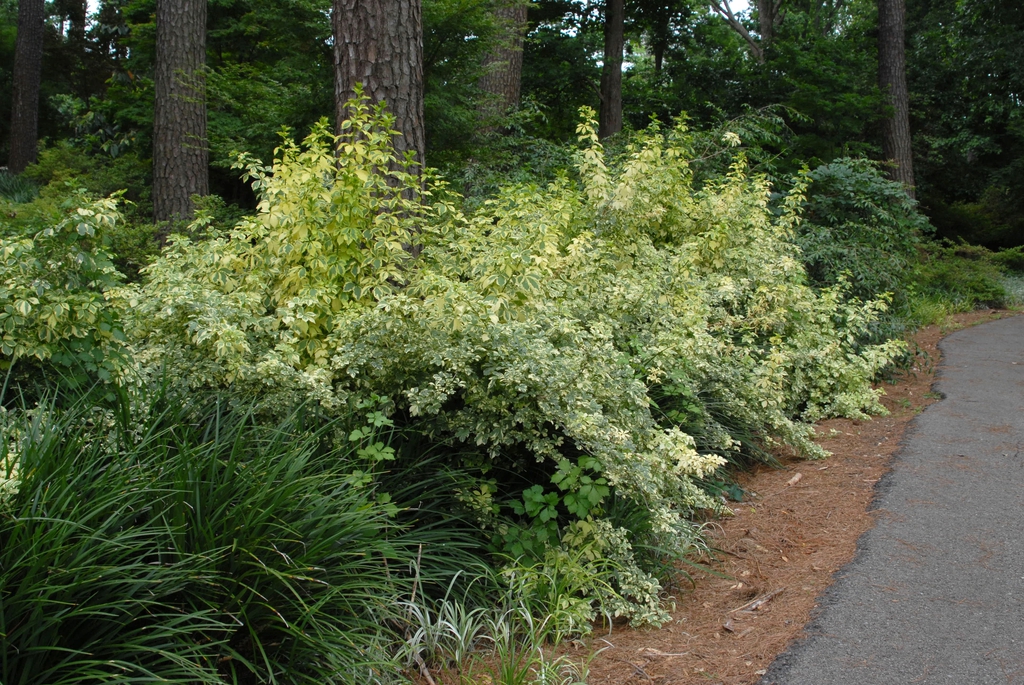
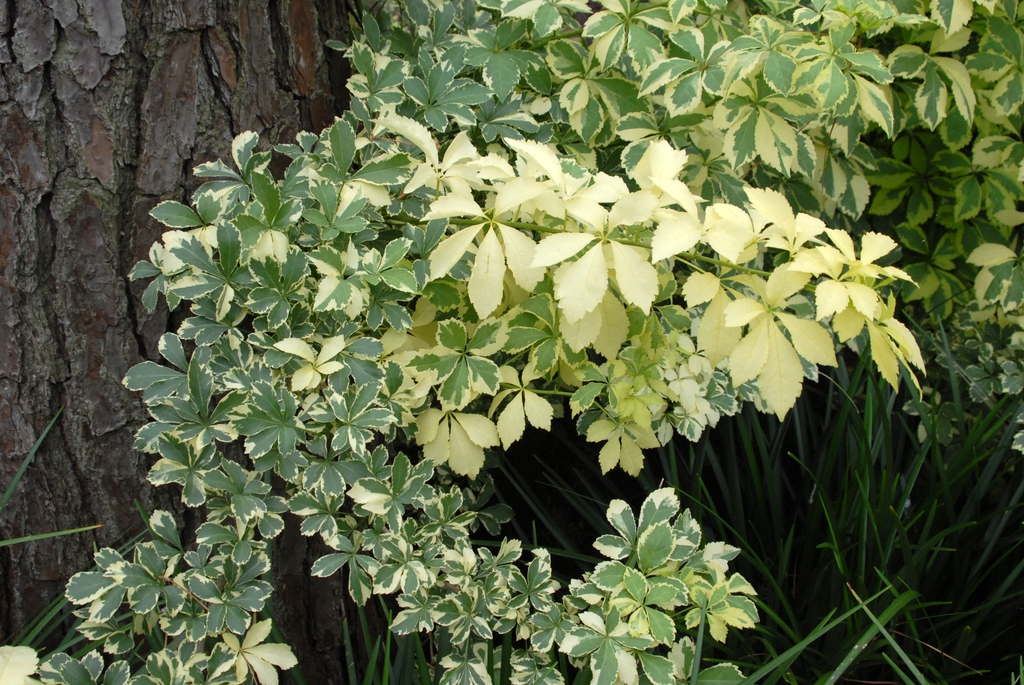
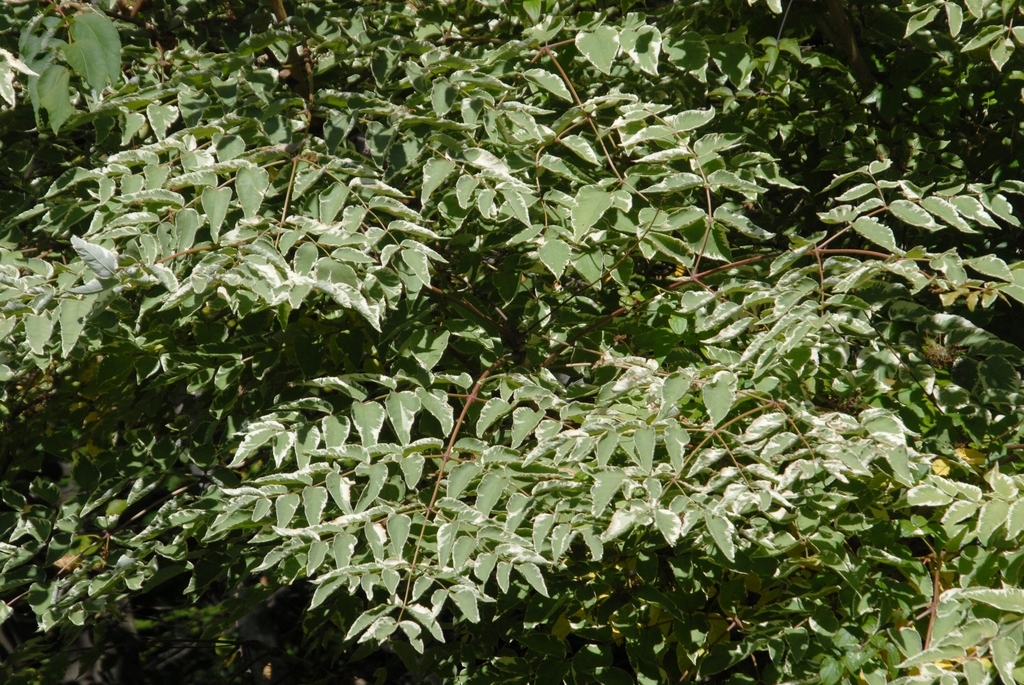
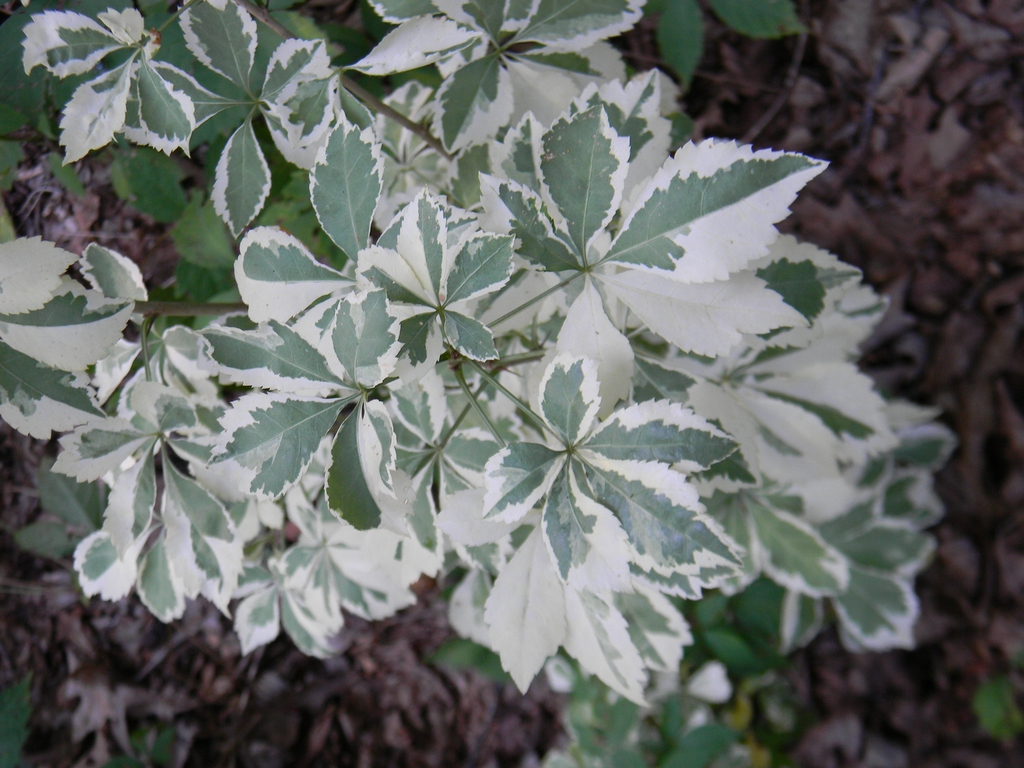
compact form, up to 6 to 8 feet tall, bright green foliage variegated with white edging
- 'Variegatus'
- 'Variegatus'
- Tags:


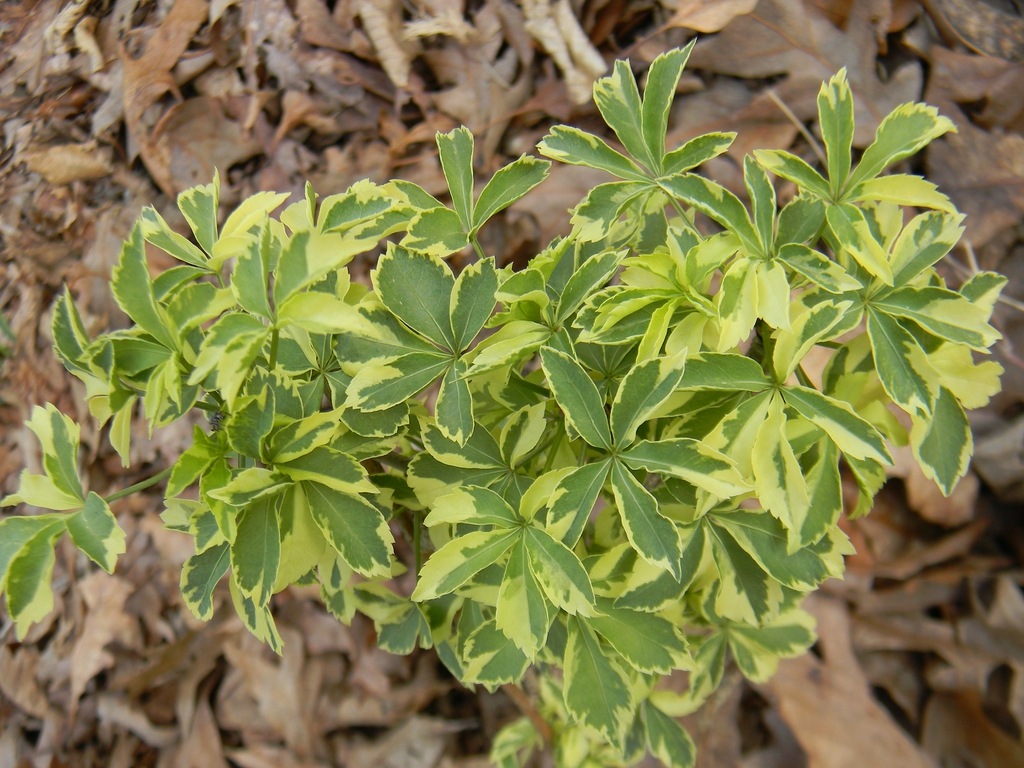
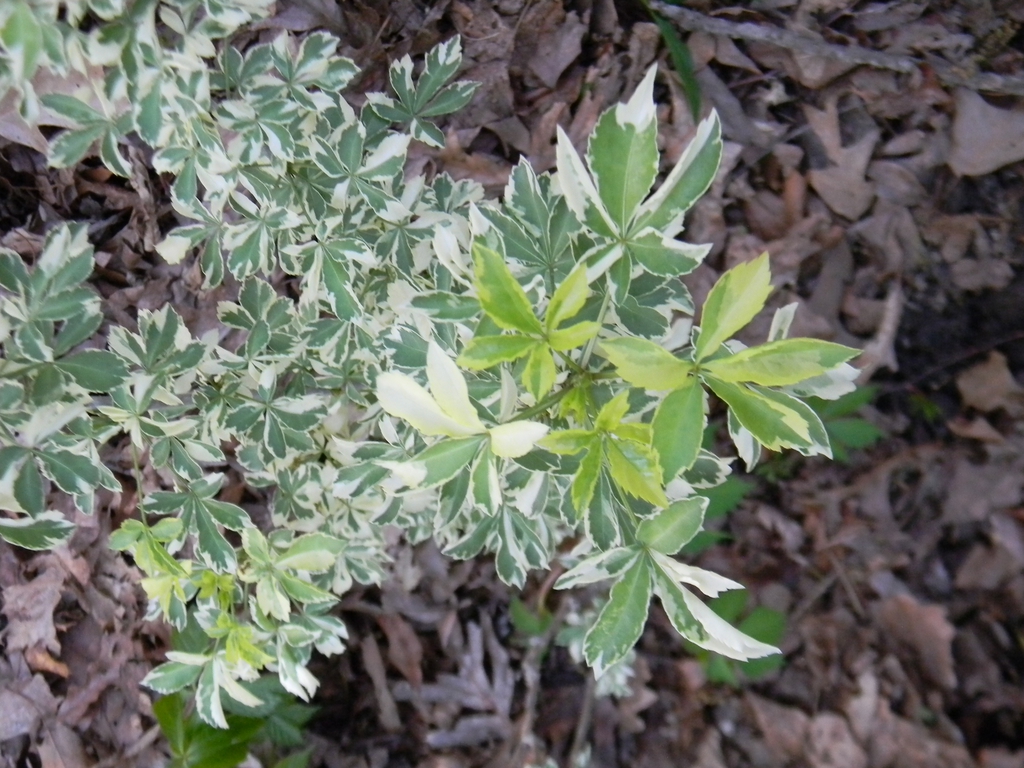


- Cultivars / Varieties:
-
- 'Variegatus'
compact form, up to 6 to 8 feet tall, bright green foliage variegated with white edging
- 'Variegatus'
- 'Variegatus'
- Tags:
-
-
Attributes:
- Genus:
- Eleutherococcus
- Species:
- sieboldianus
- Family:
- Araliaceae
- Life Cycle:
- Woody
- Recommended Propagation Strategy:
- Root Cutting
- Stem Cutting
- Country Or Region Of Origin:
- China (Anhui)
- Distribution:
- Native: China Southeast Introduced: Japan, Korea, Ontario, and the United States--CT, IL, IN, KY, MD, MA, MI, NH, NJ, NY, OH, PA, UT, VT, VA, and WV.
- Play Value:
- Screening
- Particularly Resistant To (Insects/Diseases/Other Problems):
- Drought, poor soil, urban settings, pollution.
- Dimensions:
- Height: 6 ft. 0 in. - 10 ft. 0 in.
- Width: 8 ft. 0 in. - 10 ft. 0 in.
-
-
Whole Plant Traits:
- Plant Type:
- Shrub
- Woody Plant Leaf Characteristics:
- Deciduous
- Habit/Form:
- Arching
- Erect
- Rounded
- Maintenance:
- Low
- Texture:
- Medium
- Appendage:
- Spines
-
-
Cultural Conditions:
- Light:
- Dappled Sunlight (Shade through upper canopy all day)
- Deep shade (Less than 2 hours to no direct sunlight)
- Full sun (6 or more hours of direct sunlight a day)
- Partial Shade (Direct sunlight only part of the day, 2-6 hours)
- Soil Texture:
- Clay
- Sand
- Soil pH:
- Acid (<6.0)
- Alkaline (>8.0)
- Neutral (6.0-8.0)
- Soil Drainage:
- Good Drainage
- Moist
- Available Space To Plant:
- 6-feet-12 feet
- USDA Plant Hardiness Zone:
- 4a, 4b, 5a, 5b, 6a, 6b, 7a, 7b, 8a, 8b, 9a, 9b
-
-
Fruit:
- Fruit Color:
- Black
- Fruit Value To Gardener:
- Showy
- Display/Harvest Time:
- Summer
- Fruit Type:
- Berry
- Fruit Description:
- Modest production of small black fruit because plants are dioecious; therefore, they need both male and female plants. The blackberries are borne on a spherical umbel. Each berry contains 2 to 5 seeds. Each seed measures 0.25 inches in length. Fruits appear in July and August.
-
-
Flowers:
- Flower Color:
- Green
- White
- Flower Inflorescence:
- Insignificant
- Umbel
- Flower Bloom Time:
- Spring
- Summer
- Flower Size:
- < 1 inch
- Flower Description:
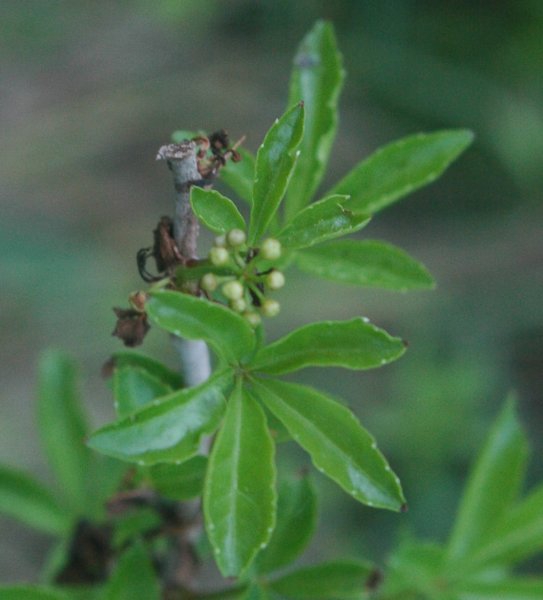
- The flowers are small, greenish-white, and are borne on an umbel 3/4 to 1 inch in diameter in late spring to early summer, May-June.
-
-
Leaves:
- Woody Plant Leaf Characteristics:
- Deciduous
- Leaf Color:
- Green
- Leaf Value To Gardener:
- Showy
- Deciduous Leaf Fall Color:
- Gold/Yellow
- Leaf Type:
- Compound (Pinnately , Bipinnately, Palmately)
- Leaf Arrangement:
- Alternate
- Leaf Shape:
- Obovate
- Leaf Margin:
- Dentate
- Hairs Present:
- No
- Leaf Length:
- 1-3 inches
- Leaf Width:
- < 1 inch
- Leaf Description:
- The leaves are bright green, alternate, smooth, and palmately compound leaves with 5 to 7 leaflets, resembling buckeye leaves. Each leaflet is obovate, measuring 1 to 2.5 inches long; 1 to 2.5 in. long and 1/3 to 1 inch wide with dentate margins except at the base. The base of the leaflet is cuneate, and the apex is acute. The leaflets are sessile, but the leaf petiole is 1.5 to 3.5 inches long. A slender spine is located at the petiole base. The fall color is non-showy and mostly yellow.
-
-
Bark:
- Bark Color:
- Light Brown
- Light Gray
- Surface/Attachment:
- Fissured
- Bark Description:
- The bark is brownish- gray, fissured, and warty.
-
-
Stem:
- Stem Color:
- Brown/Copper
- Stem Is Aromatic:
- No
- Stem Description:
- The stems are long, arching, with branches that flop over. As the shrub ages, the branches become more erect. Spines appear at the stem nodes below each leaf and along the branches.
-
-
Landscape:
- Landscape Location:
- Naturalized Area
- Woodland
- Design Feature:
- Barrier
- Border
- Foundation Planting
- Hedge
- Screen/Privacy
- Resistance To Challenges:
- Drought
- Dry Soil
- Pollution
- Urban Conditions
- Problems:
- Spines/Thorns