



Echeveria derenbergii
Common Name(s):
- Phonetic Spelling
- ek-eh-VER-ee-ah der-en-BERJ-ee-eye
- Description
-
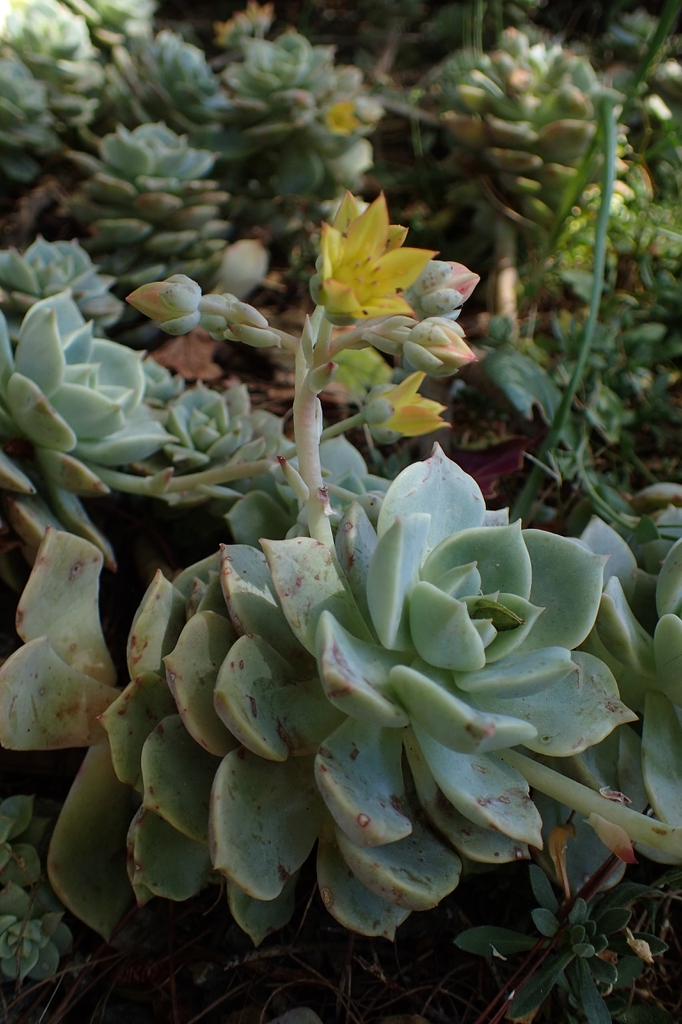
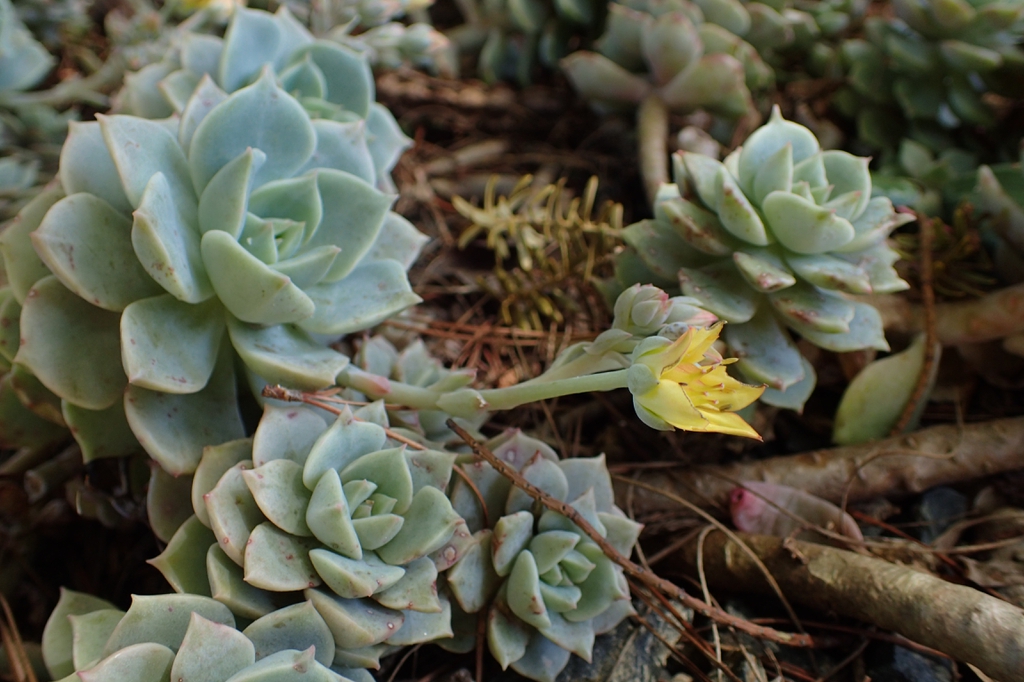
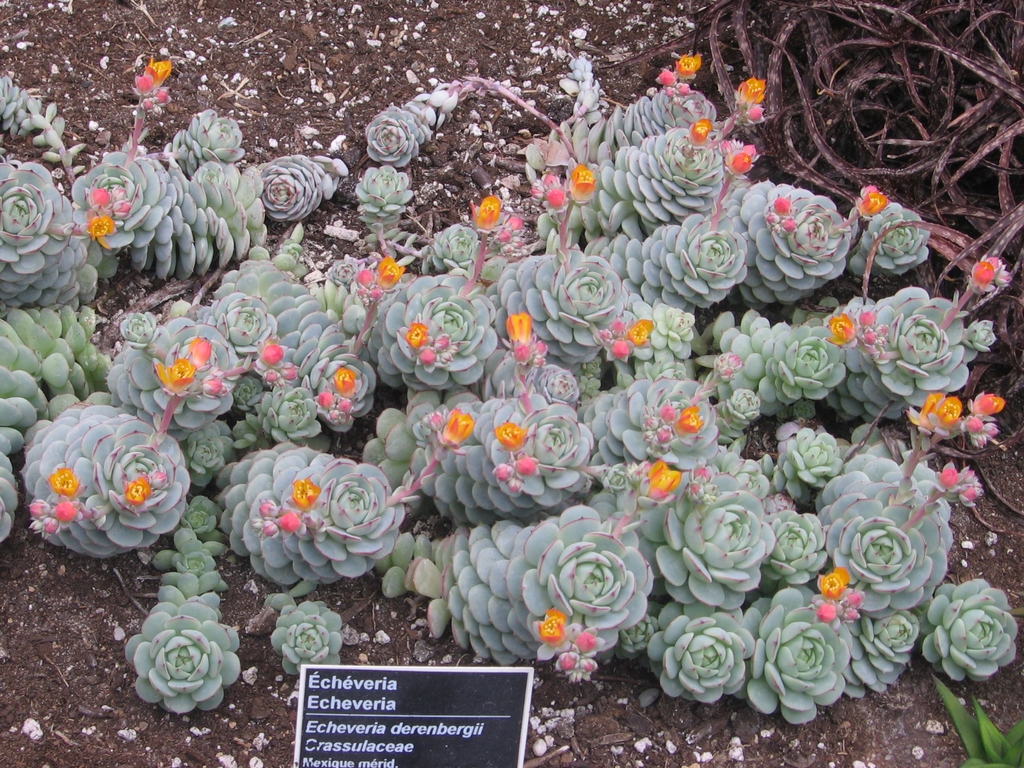
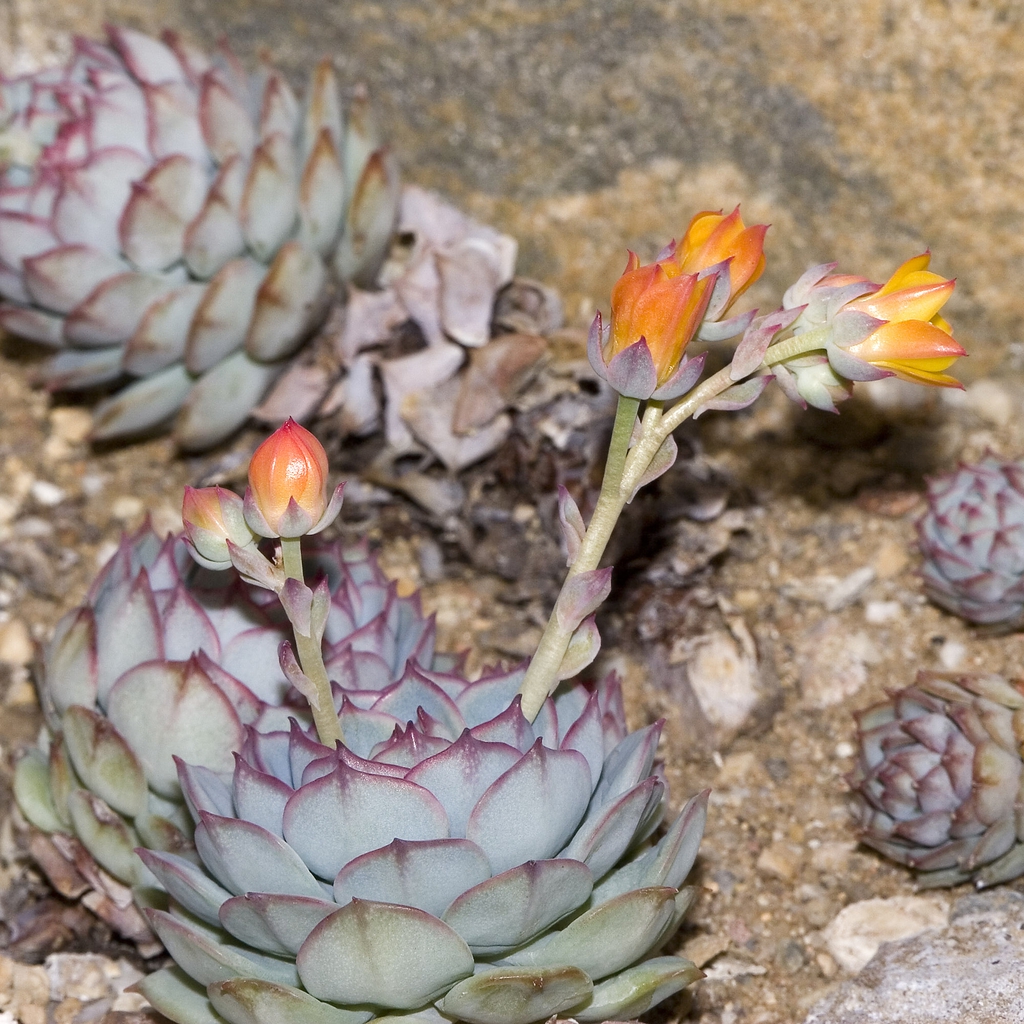
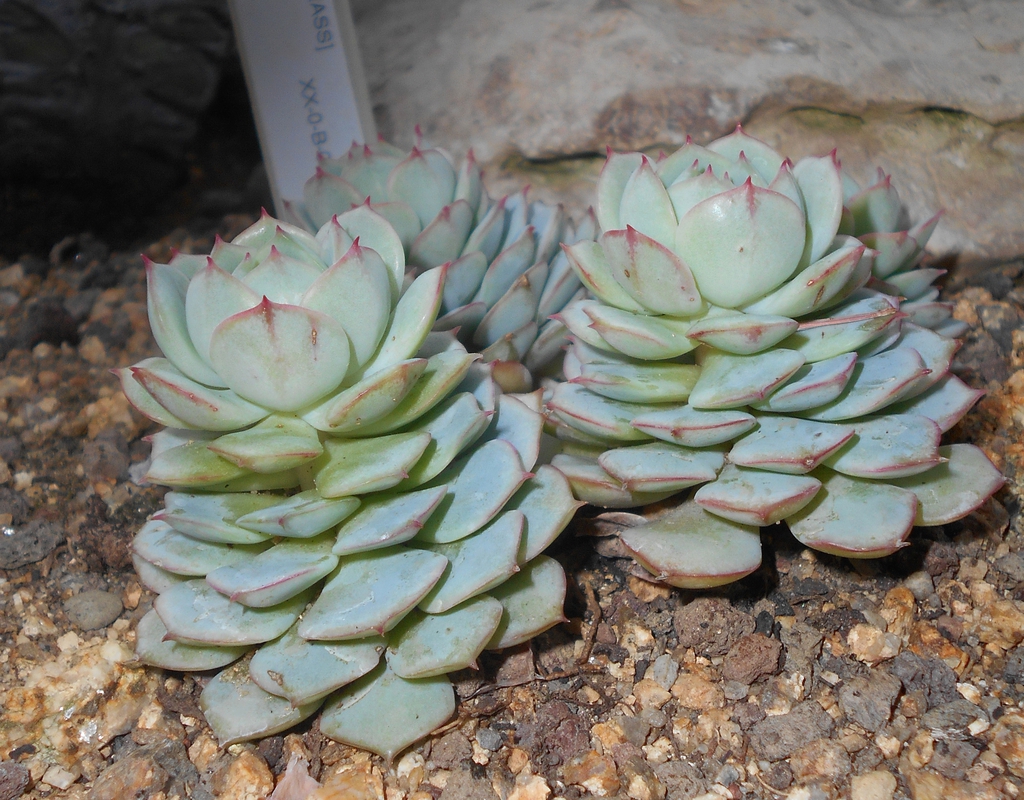
Painted lady is an evergreen succulent native to Southwest Mexico in the stonecrop family (Crassulaceae). This plant forms dense clusters of small, tight rosettes with blue-gray, wedge-shaped leaves with red margins. It will produce yellow cup-shaped flowers with red tips in the late winter to spring. It grows up to 4 inches tall, 3 inches in diameter, and can spread up to 36 inches wide. This plant is found in the southwestern Sierra Mixteca of eastern Oaxaca in Mexico. The genus name, Echeveria, honors Atanasio Echeverria y Godoy, a Mexican botanical artist. The specific epithet, derenbergii, is named in honor of Dr. Julius Derenberg of Hamburg, Germany, by his friend and horticulturist, Joseph Anton Pupus, who had collected this specimen.
This plant thrives in full sun to partial sun and in sandy, medium-moist to dry, well-drained soils or potting mix. Painted lady requires very little water, and it is important to avoid overwatering. It is winter-hardy in zones 9a to 12b. Indoor temperatures from 40 to 75 degrees are tolerated. It is best practice to remove any dead leaves to prevent insect pests. Houseplants should be repotted as needed, preferably in the spring. Propagated by offsets in the spring, and they may also be propagated by stem or leaf cuttings.
Painted lady is often used as a houseplant or container plant. In warm climates, it can be grown in rock gardens and crevice gardens. Over time, this plant will form a dense carpet of rosettes.
Insects, Diseases, and Other Plant Problems: No significant problems. Mealybugs and aphids may be seen. Overwatering can cause yellowing, mushy leaves, and root rot. Use tepid water when watering; cold water can cause leaf drop. The leaves can sunburn from prolonged periods of direct sunlight.
VIDEO Created by Laura Barth for "Houseplants, Succulents, and Cacti," a plant identification course offered in partnership with Longwood Gardens.
- Profile Video:
- See this plant in the following landscape :
- Cultivars / Varieties:
-
- 'Captain Hay'
dense rosettes, triangular grayish-blue leaves that are edged with red - 'Dondo'
compact, rosettes of grayish-green leaves, broad at leaf tip with a small soft spine that is sometimes slightly red
- 'Captain Hay'
- 'Captain Hay', 'Dondo'
- Tags:


- Cultivars / Varieties:
-
- 'Captain Hay'
dense rosettes, triangular grayish-blue leaves that are edged with red - 'Dondo'
compact, rosettes of grayish-green leaves, broad at leaf tip with a small soft spine that is sometimes slightly red
- 'Captain Hay'
- 'Captain Hay', 'Dondo'
- Tags:
-
-
Attributes:
- Genus:
- Echeveria
- Species:
- derenbergii
- Family:
- Crassulaceae
- Life Cycle:
- Perennial
- Recommended Propagation Strategy:
- Division
- Leaf Cutting
- Stem Cutting
- Country Or Region Of Origin:
- Mexico
- Distribution:
- Mexico Southwest
- Wildlife Value:
- Attracts bees, butterflies, and hummingbirds.
- Dimensions:
- Height: 0 ft. 3 in. - 0 ft. 4 in.
- Width: 0 ft. 1 in. - 0 ft. 3 in.
-
-
Whole Plant Traits:
- Plant Type:
- Herbaceous Perennial
- Houseplant
- Succulent
- Habit/Form:
- Mounding
- Growth Rate:
- Slow
- Maintenance:
- Low
- Texture:
- Medium
-
-
Cultural Conditions:
- Light:
- Full sun (6 or more hours of direct sunlight a day)
- Partial Shade (Direct sunlight only part of the day, 2-6 hours)
- Soil Texture:
- Loam (Silt)
- Sand
- Soil pH:
- Acid (<6.0)
- Alkaline (>8.0)
- Neutral (6.0-8.0)
- Soil Drainage:
- Good Drainage
- Occasionally Dry
- Available Space To Plant:
- 12 inches-3 feet
- USDA Plant Hardiness Zone:
- 9a, 9b, 10a, 10b, 11a, 11b, 12a, 12b
-
-
Fruit:
- Fruit Type:
- Capsule
- Fruit Description:
- Tiny seeds in a dry capsule
-
-
Flowers:
- Flower Color:
- Gold/Yellow
- Red/Burgundy
- Flower Inflorescence:
- Cyme
- Raceme
- Flower Value To Gardener:
- Showy
- Flower Bloom Time:
- Spring
- Winter
- Flower Shape:
- Cup
- Flower Size:
- 1-3 inches
- Flower Description:
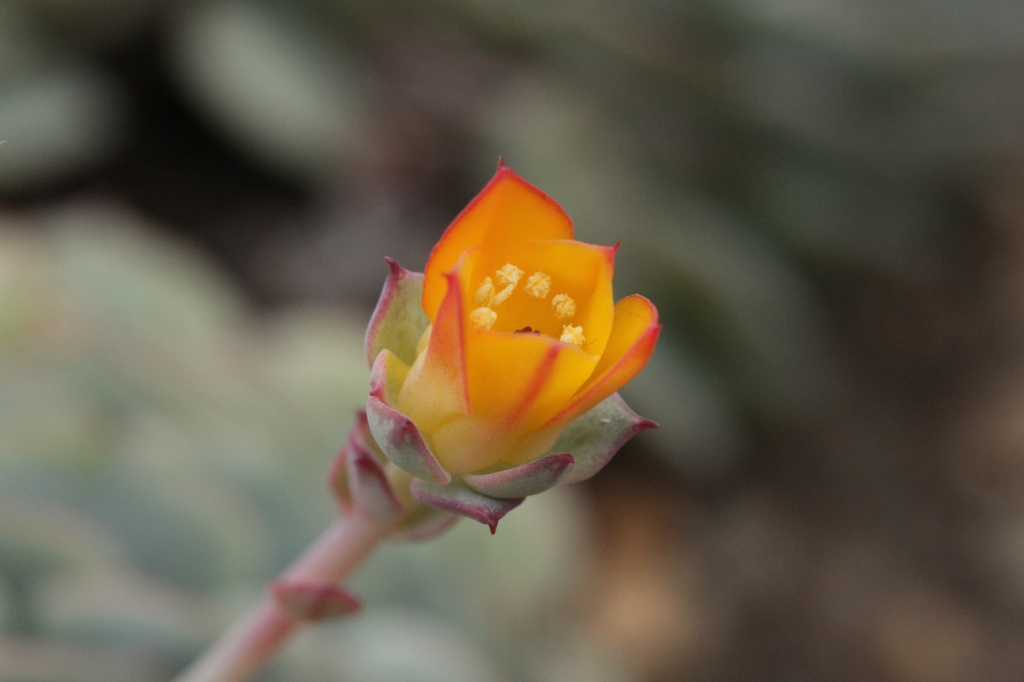
- The flowers are cup-shaped, yellow with red tips, and appear on pinkish-red stems late winter to early summer. Bloom multiple times in the plant's lifetime. The flower stalks are erect and up to 3.2 inches tall.
-
-
Leaves:
- Leaf Color:
- Blue
- Gray/Silver
- Green
- Red/Burgundy
- Leaf Feel:
- Fleshy
- Glossy
- Smooth
- Waxy
- Leaf Value To Gardener:
- Long-lasting
- Showy
- Leaf Type:
- Simple
- Leaf Arrangement:
- Rosulate
- Leaf Shape:
- Cuneate
- Obovate
- Leaf Margin:
- Entire
- Hairs Present:
- No
- Leaf Length:
- 1-3 inches
- Leaf Width:
- < 1 inch
- Leaf Description:
- The leaves are thick, fleshy, obovate or wedge-shaped, blue-green with red margins, and pointed apex. They form a rosette, measuring up to 3 inches across. It will make multiple offsets. Each leaf measures up to 1.6 inches long and 1 inch wide. The leaf thickness is about 0.2 inches.
-
-
Stem:
- Stem Color:
- Blue
- Green
- Stem Is Aromatic:
- No
- Stem Surface:
- Covered with a powdery bloom (glaucous)
- Stem Description:
- Short, succulent stems.
-
-
Landscape:
- Landscape Location:
- Container
- Houseplants
- Patio
- Landscape Theme:
- Drought Tolerant Garden
- Rock Garden
- Design Feature:
- Border
- Mass Planting
- Attracts:
- Bees
- Butterflies
- Hummingbirds
- Resistance To Challenges:
- Deer
- Drought
- Dry Soil
- Rabbits



