



Threadleaf Sundew Drosera filiformis
Other Common Name(s):
- Phonetic Spelling
- DROSS-er-uh fil-ih-FOR-mis
- Description
-
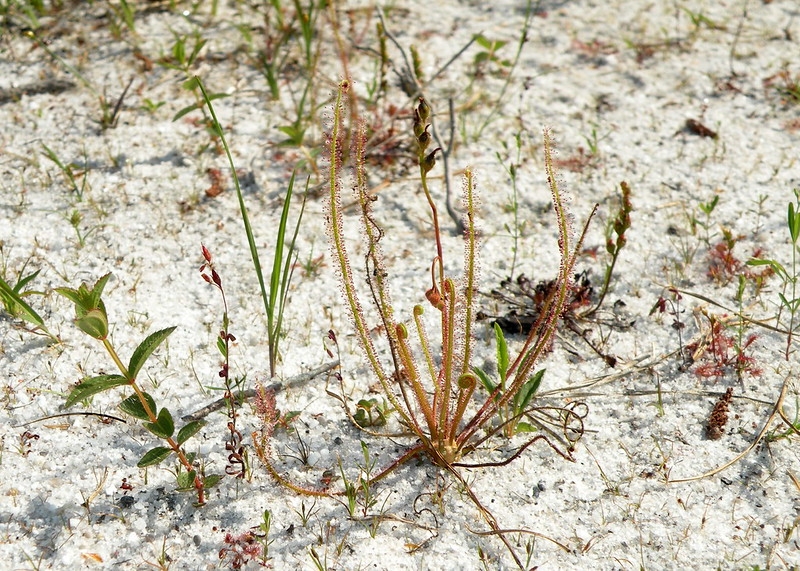
Threadleaf sundew is a carnivorous herbaceous perennial native to the Atlantic Seaboard, from Connecticut to Florida. It is a member of the sundew family (Droseraceae). The species epithet is a Latin compound meaning “having a threadlike form” and refers to the distinctive shape of the leaf. Our other native sundews have spoon-shaped leaves.
Plant in full sun with a planting mix of whole fiber sphagnum moss or a mix of equal parts peat moss and coarse vermiculite or sharp sand. The mix should be low in nutrients, and no fertilizer is necessary. The plant will get all the nutrients from digested prey. The plants require constant moisture and a winter dormancy for longevity. Always use distilled water or rainwater to irrigate these plants. Threadleaf sundew is easy to cultivate and will form clumps that can be divided while dormant.
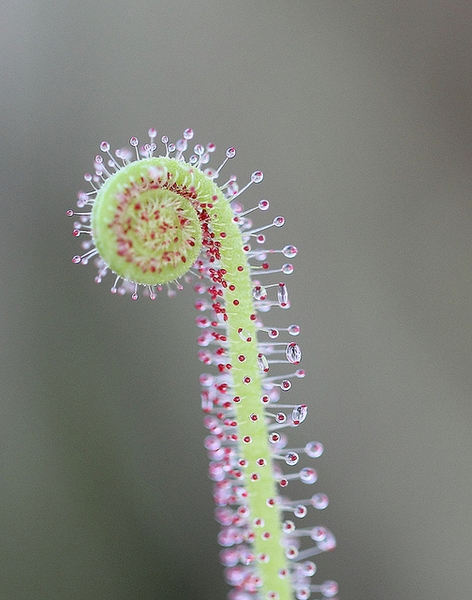
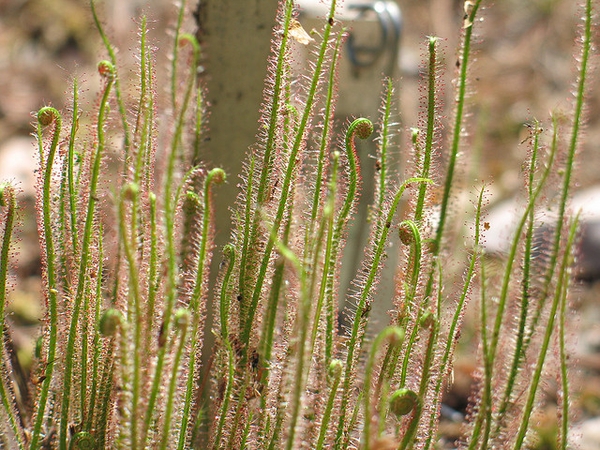
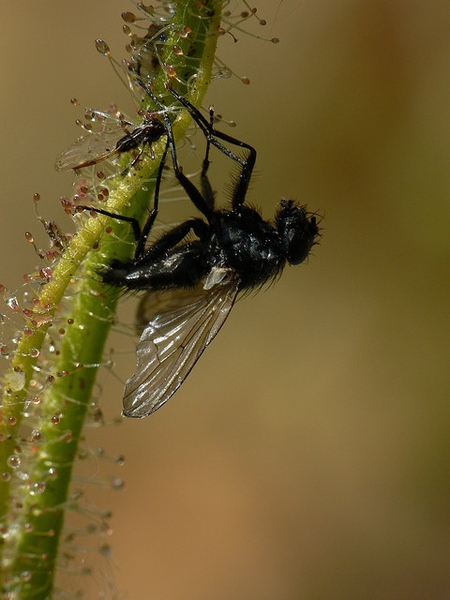
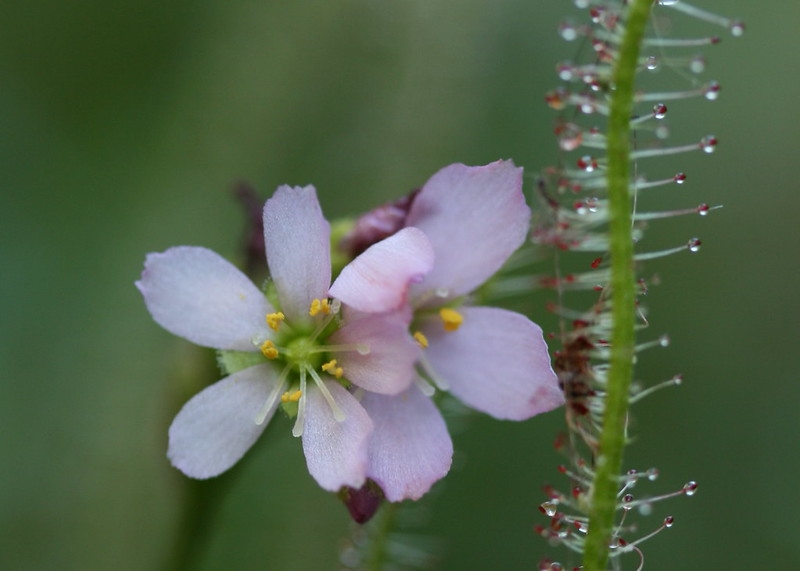
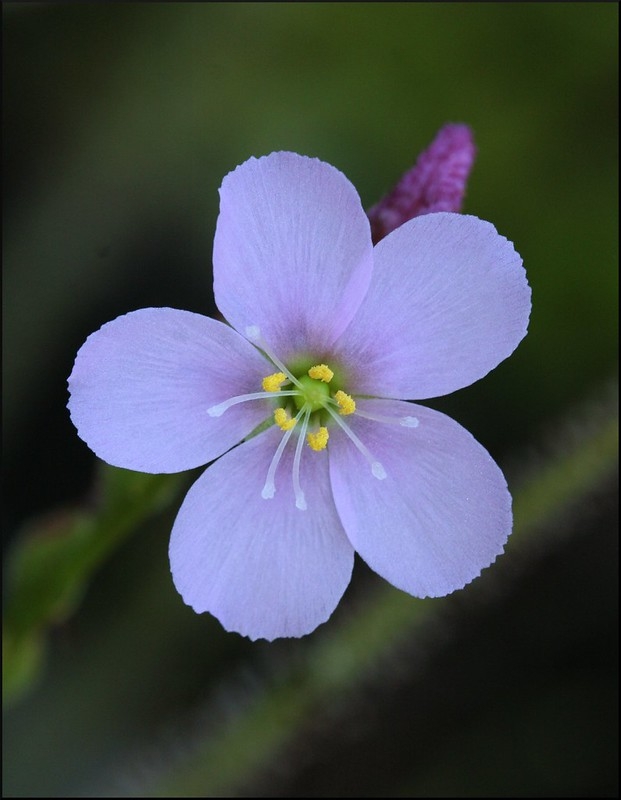
It has lavender-rose flowers on a leafless stalk rising from erect, thread-like, sticky, basal leaves that unroll in spirals, like fern fiddleheads. Insects trapped in the sticky hairs are digested by plant enzymes, and the nutrients are absorbed by the plant. The populations of this species in Florida have been recognized as the Florida threadleaf sundew (Drosera filiformis var. floridana), which is distinguished by having red or orange leaves.
Threadleaf sundew can be grown outside in bog gardens, troughs or containers. Grow it in a native garden, rain garden or children’s garden. This species can also be grown indoors. Place the plant in a small pot and set the pot in a tray of distilled or rainwater.
Insects, Diseases, and Other Plant Problems: No significant problems.
- See this plant in the following landscape :
- Cultivars / Varieties:
-
- 'California Sunset'
Long upright, filament-like green leaves covered in sticky, dew-producing glands with faint rosy-red tentacles. - 'Devil's Dozen'
Carnivorous plant with long, upright, thread-like leaves covered in sticky, glistening tentacles that trap small insects.
- 'California Sunset'
- 'California Sunset', 'Devil's Dozen'
- Tags:


- Cultivars / Varieties:
-
- 'California Sunset'
Long upright, filament-like green leaves covered in sticky, dew-producing glands with faint rosy-red tentacles. - 'Devil's Dozen'
Carnivorous plant with long, upright, thread-like leaves covered in sticky, glistening tentacles that trap small insects.
- 'California Sunset'
- 'California Sunset', 'Devil's Dozen'
- Tags:
-
-
Attributes:
- Genus:
- Drosera
- Species:
- filiformis
- Family:
- Droseraceae
- Life Cycle:
- Perennial
- Recommended Propagation Strategy:
- Division
- Seed
- Country Or Region Of Origin:
- Nova Scotia to Eastern U.S.A
- Distribution:
- CT , DE , MA , MD , NC , NJ , NY , PA , RI Canada: NS
- Dimensions:
- Height: 0 ft. 4 in. - 1 ft. 0 in.
- Width: 0 ft. 1 in. - 0 ft. 2 in.
-
-
Whole Plant Traits:
- Plant Type:
- Carnivorous
- Herbaceous Perennial
- Native Plant
- Woody Plant Leaf Characteristics:
- Deciduous
- Habit/Form:
- Erect
- Maintenance:
- High
-
-
Cultural Conditions:
- Light:
- Full sun (6 or more hours of direct sunlight a day)
- Partial Shade (Direct sunlight only part of the day, 2-6 hours)
- Soil Texture:
- Clay
- Sand
- Soil pH:
- Acid (<6.0)
- Soil Drainage:
- Moist
- Occasionally Dry
- Occasionally Wet
- NC Region:
- Coastal
- USDA Plant Hardiness Zone:
- 6a, 6b, 7a, 7b, 8a, 8b, 9a
-
-
Fruit:
- Display/Harvest Time:
- Fall
- Fruit Description:
- Displays in August
-
-
Flowers:
- Flower Color:
- Pink
- White
- Flower Inflorescence:
- Head
- Flower Value To Gardener:
- Long Bloom Season
- Flower Bloom Time:
- Fall
- Summer
- Flower Shape:
- Star
- Flower Petals:
- 4-5 petals/rays
- Flower Description:
- White, pink, or dark pink flowers on 6- to 12-inche stalk, June, above a rosette of basal leaves; open for several hours in the morning.
-
-
Leaves:
- Woody Plant Leaf Characteristics:
- Deciduous
- Leaf Color:
- Gold/Yellow
- Green
- Leaf Value To Gardener:
- Long-lasting
- Showy
- Hairs Present:
- Yes
- Leaf Description:
- Usually 4 to 8 leaves studded with dozens of slender, crimson or green-tipped filaments. Glands secrete a tiny droplet of clear mucilaginous substance on the ends of tiny tentacles that trap insects. Traps unfold 4 to 6 days after trapping an insect and die after 2 to 4 trappings.
-
-
Stem:
- Stem Is Aromatic:
- No
-
-
Landscape:
- Landscape Location:
- Container
- Pond
- Landscape Theme:
- Children's Garden
- Native Garden
- Rain Garden
- Water Garden
- Design Feature:
- Specimen
- Resistance To Challenges:
- Poor Soil
- Wet Soil



