


Jimsonweed Datura wrightii
Other Common Name(s):
Other plants called Jimsonweed:
Previously known as:
- Datura innoxia subsp. quinquecuspidata
- Datura metel va.r quinquecuspidata
- Phonetic Spelling
- duh-TOO-ruh RITE-ee-eye
- This plant has high severity poison characteristics.
- See below
- Description
-
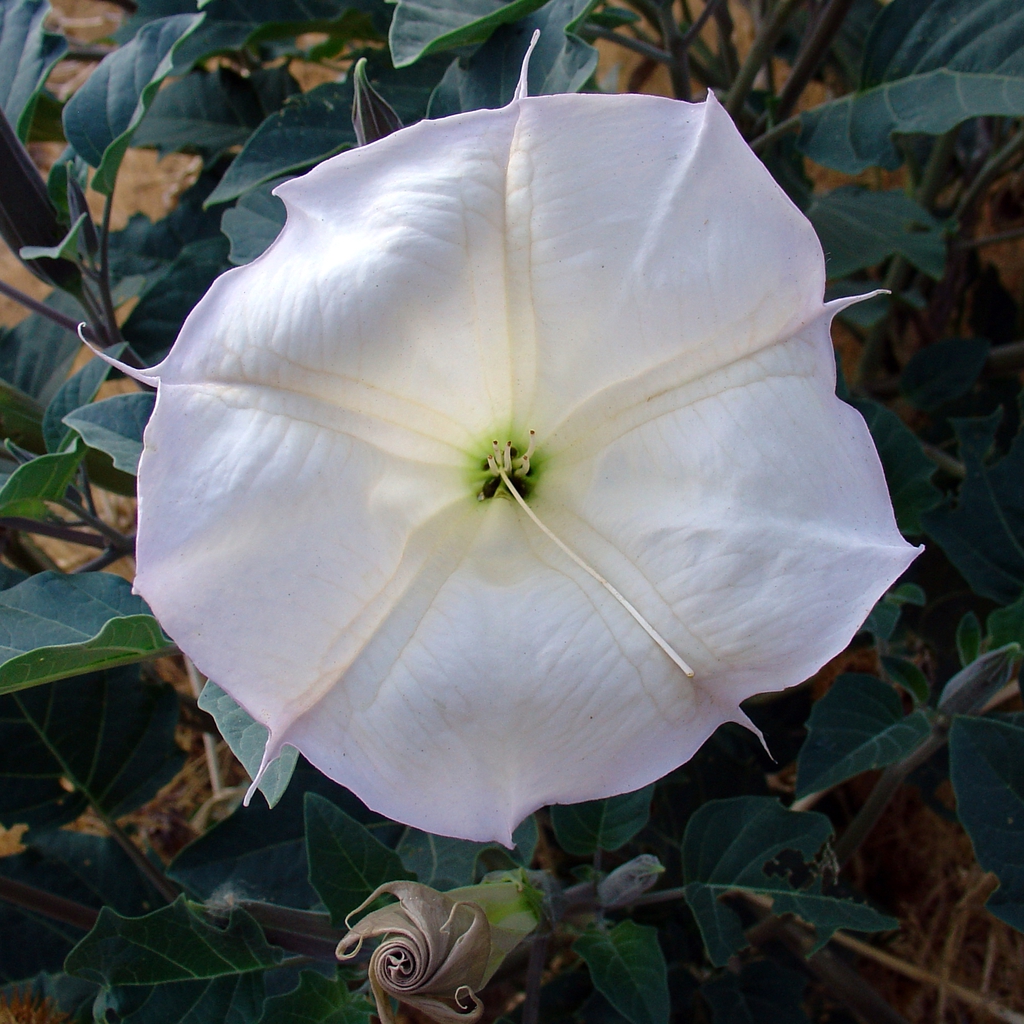
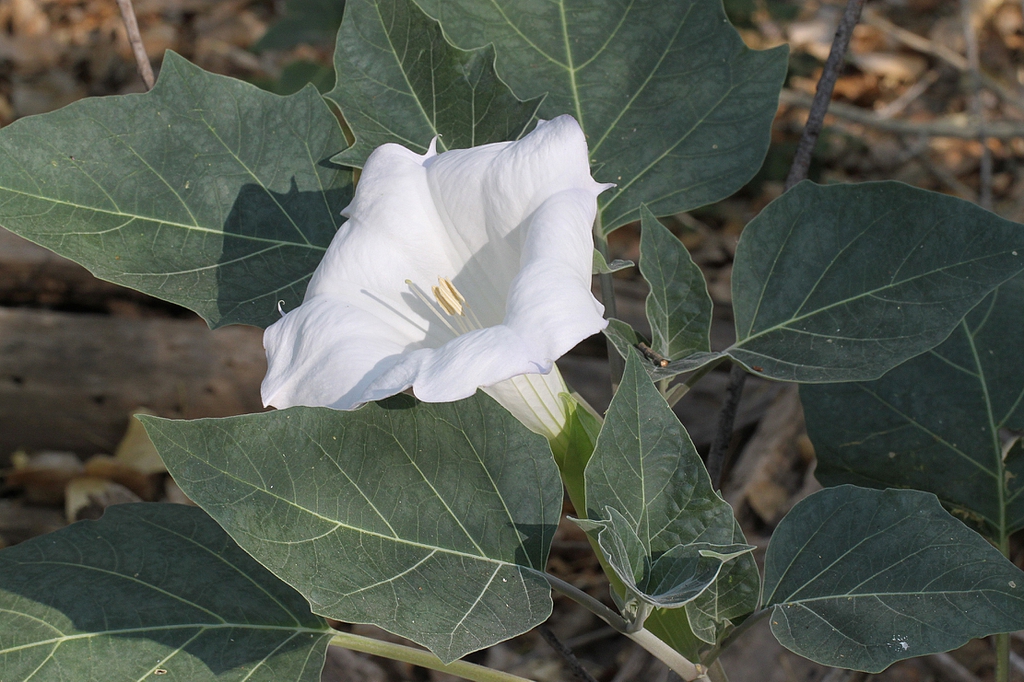
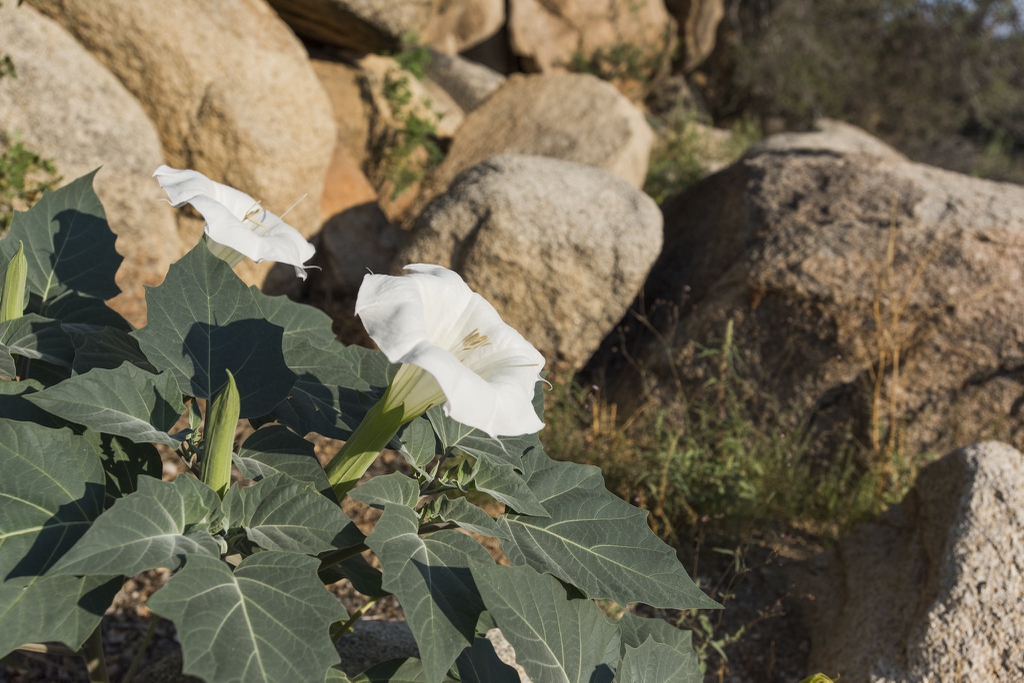
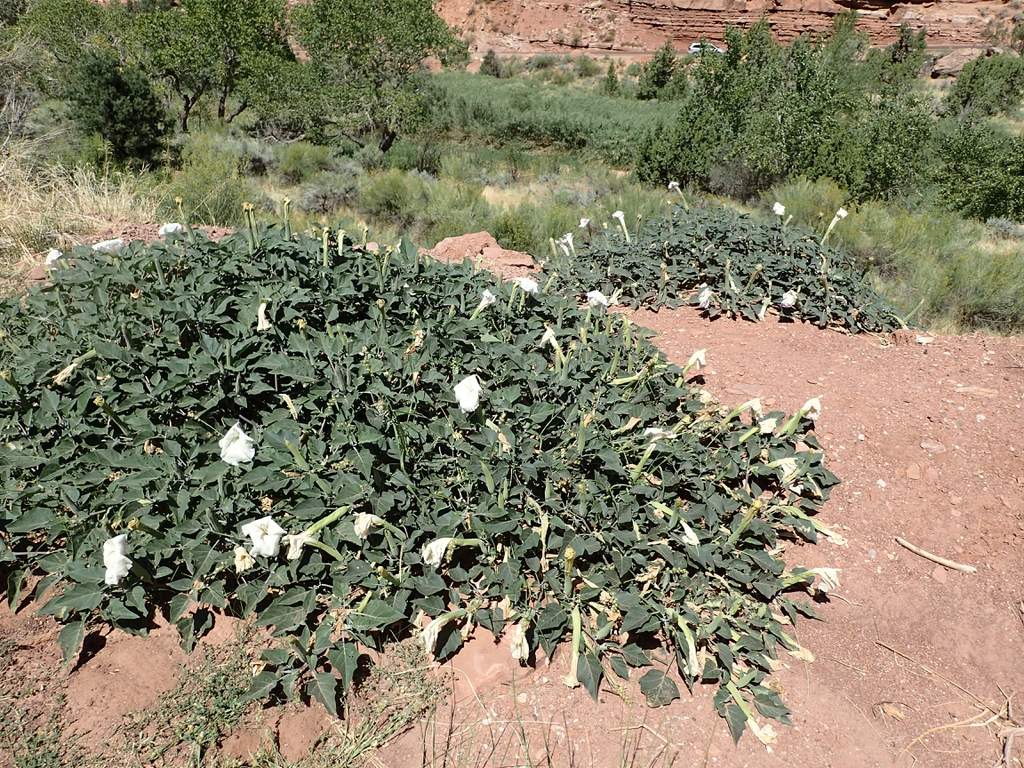
Angel's trumpet is a fast-growing, poisonous ornamental perennial and a member of the nightshade family (Solanaceae). It is native to the southwestern United States and Mexico. Angel's trumpet is found in open or disturbed land and along roadsides with well-drained sandy soils. All parts of the plant are poisonous if consumed. It grows in a sprawling habit, reaching up to 6 feet wide and 2 to 5 feet tall, and the white, trumpet-shaped flowers are 8 inches long and 6 inches wide. This plant is a short-lived perennial in the Southern United States and an annual in the North. It resembles Jimsonweed (Datura stramonium); however, Angel's trumpet is larger, and its fruit has more spines.
The genus name, Datura, means "white thorn-apple and is Sanskrit in origin. The specific epithet, wrightii, is in honor of Charles Wright, a botanist in the Southwest.
Thrives in full sun and well-drained, acidic soils of loam, sand, or clay. The plant dies back with freezing temperatures. It has a tuberous root, and it will return the following spring. Best propagated by seeds
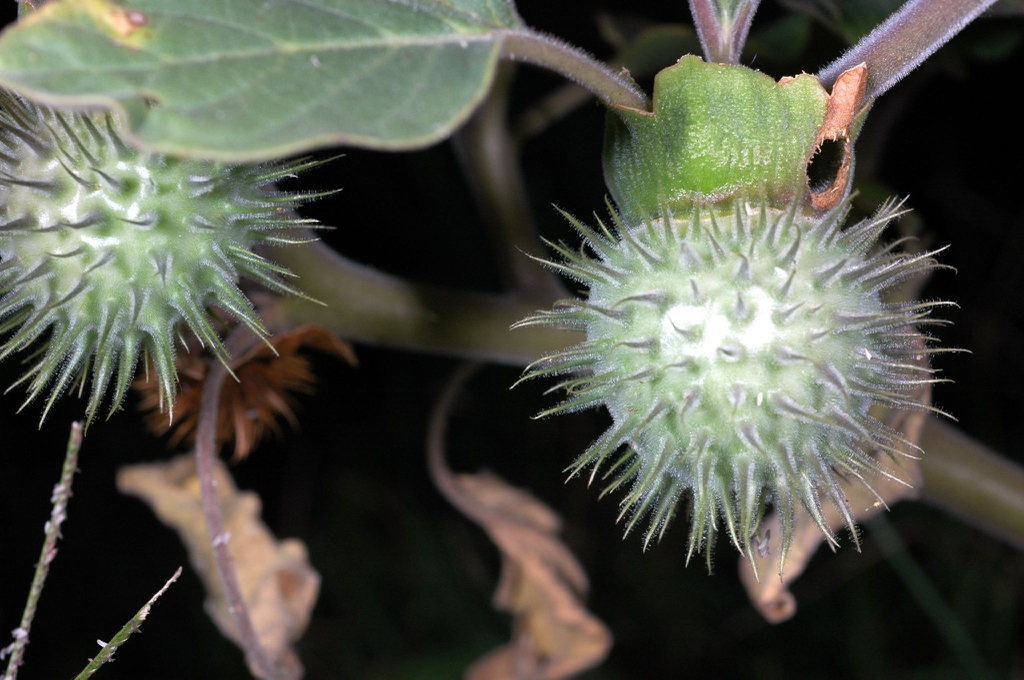
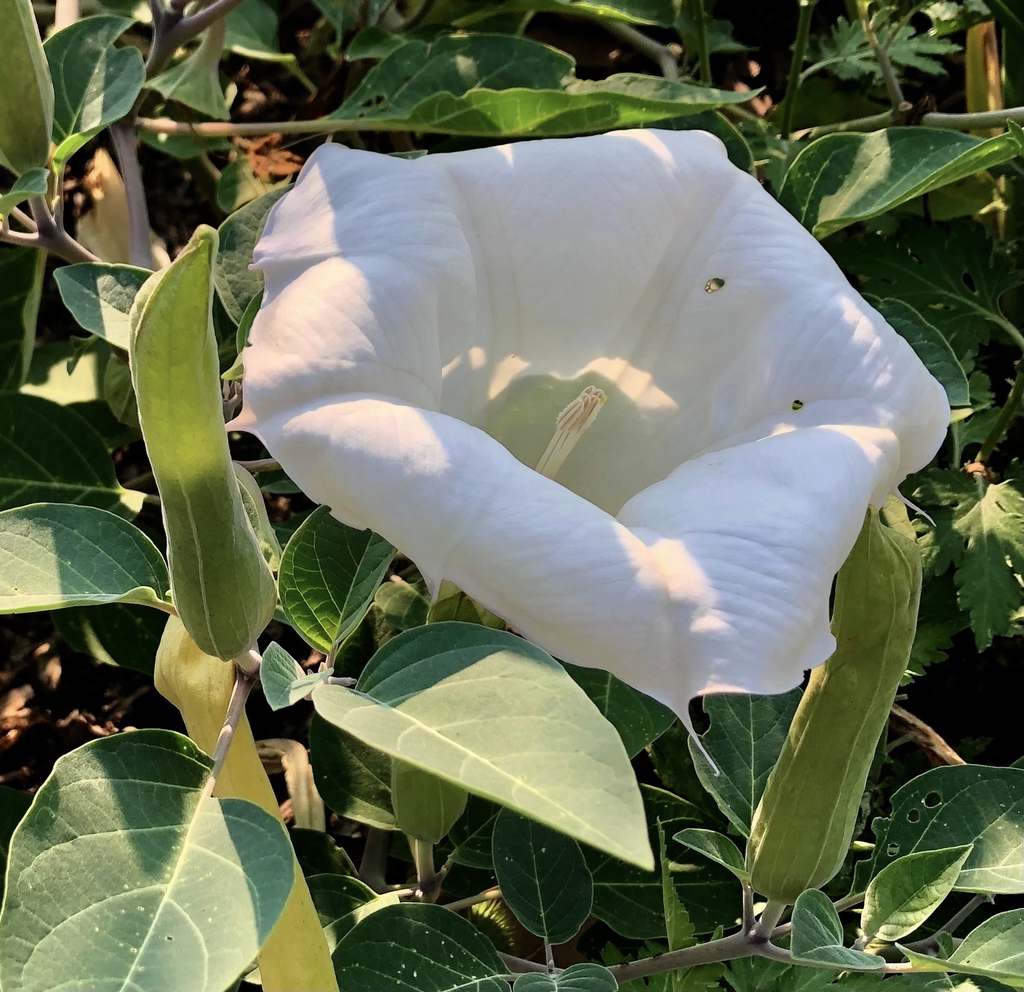
The angel's trumpet has medium-green leaves on the upper surface; the undersides are grayish-green with entire margins. The flowers are large, showy, trumpet-shaped, white, and may be tinted purple. They open in the evening and are withered by noon the next day. Blooming occurs from May through November. Its fruit is a spiny capsule, containing numerous seeds. This plant is the host plant for the larvae of the Carolina Sphinx Moth, Manduca sexta, which is its primary pollinator.
Depending on your climate, this plant can be used as an annual or perennial in a border, cottage garden, rock garden, or nighttime garden.
Insects, Diseases, and Other Plant Problems: No significant insect pests or diseases.
All parts of this plant are toxic if ingested. Keep out of reach of children and pets. The sap can cause skin irritation. Use gloves and protective clothing when handling this plant.
- See this plant in the following landscape :
- Cultivars / Varieties:
-
- Tags:


- Cultivars / Varieties:
-
- Tags:
-
-
Attributes:
- Genus:
- Datura
- Species:
- wrightii
- Family:
- Solanaceae
- Uses (Ethnobotany):
- Native Americans used it in religious ceremonies and for medicinal purposes.
- Life Cycle:
- Perennial
- Recommended Propagation Strategy:
- Seed
- Country Or Region Of Origin:
- South Central U.S.A. to Northern Mexico
- Distribution:
- Native: Mexico Northeast, Mexico Northwest, New Mexico, and Texas; Introduced: United States--AL, AZ, AR, CA, CO, CT, FL, GA, ID, IL, IN, IA, KS, KY, LA, ME, MD, MA, MI, MN, MS, MO, NE, NV, NH, NJ, NY, NC, OH, OK, OR, PA, RI, SC, UT, VA, WA, WV, WI, and WY. France, Greece, New South Wales, Northern Territory, NW Balkan Peninsula, Romania, Sicily, South Australia, Spain, Tunisia, Ukraine, Victoria, and Western Australia.
- Wildlife Value:
- Host plant for the larva of the Carolina Sphinx Moth
- Particularly Resistant To (Insects/Diseases/Other Problems):
- Resistant to damage by deer.
- Edibility:
- Toxic if ingested
- Dimensions:
- Height: 2 ft. 0 in. - 5 ft. 0 in.
- Width: 3 ft. 0 in. - 6 ft. 0 in.
-
-
Whole Plant Traits:
- Plant Type:
- Herbaceous Perennial
- Poisonous
- Habit/Form:
- Erect
- Mounding
- Spreading
- Growth Rate:
- Medium
- Maintenance:
- Medium
- Texture:
- Medium
-
-
Cultural Conditions:
- Light:
- Full sun (6 or more hours of direct sunlight a day)
- Partial Shade (Direct sunlight only part of the day, 2-6 hours)
- Soil Texture:
- Clay
- Loam (Silt)
- Sand
- Soil pH:
- Acid (<6.0)
- Soil Drainage:
- Good Drainage
- Occasionally Dry
- Very Dry
- Available Space To Plant:
- 3 feet-6 feet
- USDA Plant Hardiness Zone:
- 9a, 9b, 10a, 10b, 11a, 11b
-
-
Fruit:
- Fruit Color:
- Brown/Copper
- Display/Harvest Time:
- Fall
- Summer
- Fruit Type:
- Capsule
- Fruit Length:
- 1-3 inches
- Fruit Width:
- 1-3 inches
- Fruit Description:
- The fruits are spiny globe-shaped capsules, measuring 1 to 2 inches across, split open when ripe and release black seeds.
-
-
Flowers:
- Flower Color:
- Purple/Lavender
- White
- Flower Inflorescence:
- Solitary
- Flower Value To Gardener:
- Fragrant
- Long Bloom Season
- Showy
- Flower Bloom Time:
- Fall
- Spring
- Summer
- Flower Shape:
- Trumpet
- Flower Petals:
- 4-5 petals/rays
- fused petals
- Flower Size:
- > 6 inches
- Flower Description:
- The large, fragrant, upward-facing, trumpet-shaped flowers are up to 8 inches long and 6 inches across. The blooms are white and may be tinted purple, night-blooming, and wilt by noon the next day. Blooming occurs from May to November. Sphinx and hawk moths are attracted to the blooms.
-
-
Leaves:
- Leaf Color:
- Gray/Silver
- Green
- Leaf Feel:
- Velvety
- Leaf Value To Gardener:
- Showy
- Leaf Type:
- Simple
- Leaf Arrangement:
- Alternate
- Leaf Shape:
- Cordate
- Ovate
- Leaf Margin:
- Entire
- Undulate
- Hairs Present:
- Yes
- Leaf Length:
- 3-6 inches
- Leaf Width:
- 3-6 inches
- Leaf Description:
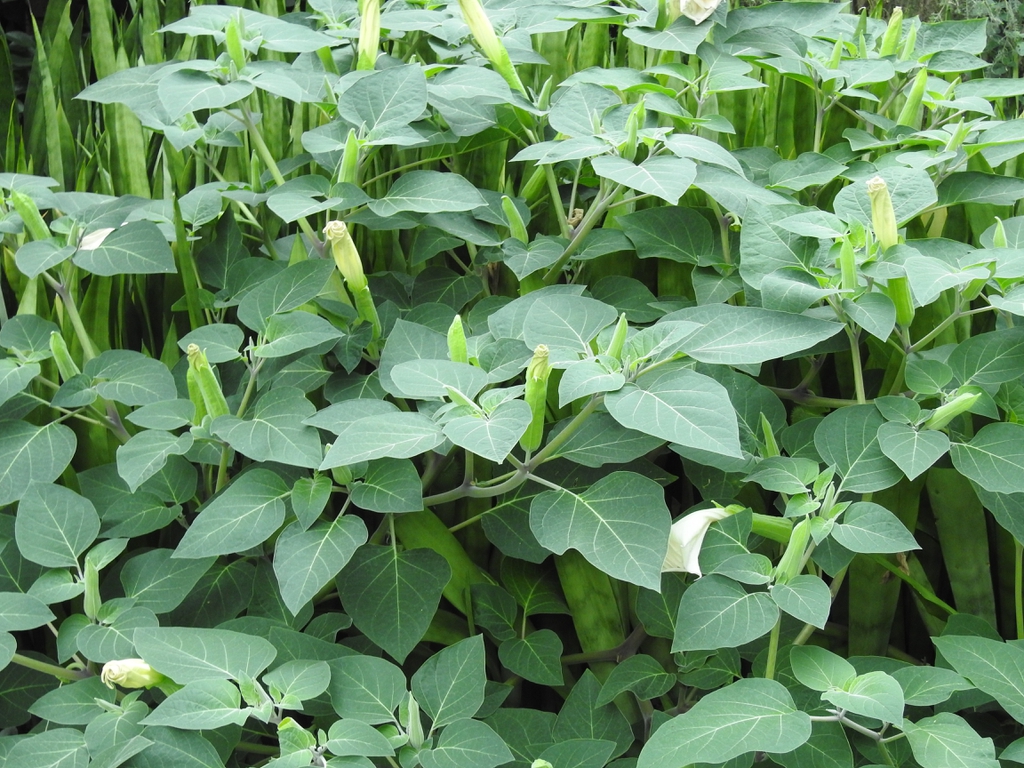
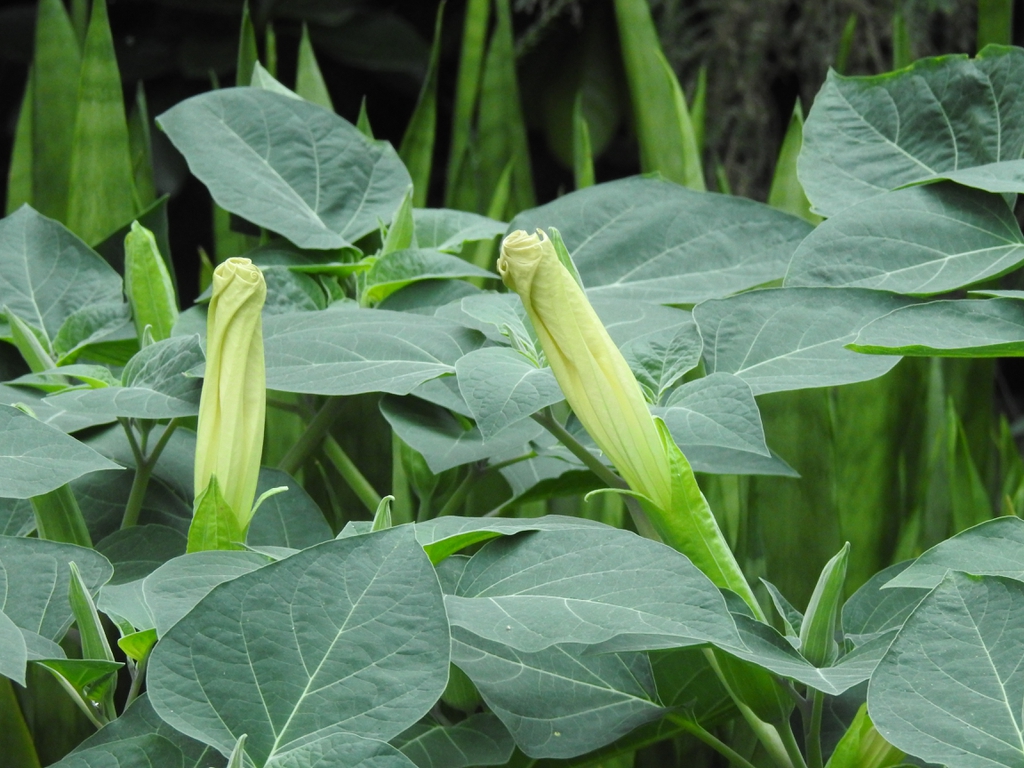
- The leaves are velvety, medium green on the upper surface, grayish-green on the underside, up to 6 inches long and 4 inches wide, and covered with fine downy hairs. The leaves have a foul odor when crushed.
-
-
Stem:
- Stem Color:
- Gray/Silver
- Green
- Stem Is Aromatic:
- No
- Stem Form:
- Straight
- Stem Surface:
- Hairy (pubescent)
- Stem Description:
- Gray-green stems have fine hairs
-
-
Landscape:
- Landscape Location:
- Naturalized Area
- Landscape Theme:
- Cottage Garden
- Drought Tolerant Garden
- Nighttime Garden
- Pollinator Garden
- Rock Garden
- Design Feature:
- Border
- Specimen
- Attracts:
- Moths
- Resistance To Challenges:
- Deer
- Drought
- Dry Soil
- Rabbits
- Problems:
- Problem for Cats
- Problem for Children
- Problem for Dogs
- Problem for Horses
-
-
Poisonous to Humans:
- Poison Severity:
- High
- Poison Symptoms:
- Hot, dry, and flushed skin, hallucinations, pupil dilation, headache, delirium, rapid and weak pulse, convulsions, and coma. Skin irritation can occur.
- Poison Toxic Principle:
- Tropane alkaloids, atropine, hyoscyamine
- Causes Contact Dermatitis:
- Yes
- Poison Part:
- Bark
- Flowers
- Fruits
- Leaves
- Roots
- Sap/Juice
- Seeds
- Stems