


Daphniphyllum macropodum
Common Name(s):
Previously known as:
- Daphniphyllum humile
- Daphniphyllum jezoense
- Daphniphyllum macropodum subsp. humile
- Tetranthera lhuysii
- Phonetic Spelling
- daf-ne-FILL-um mak-roh-POH-dum
- Description
-
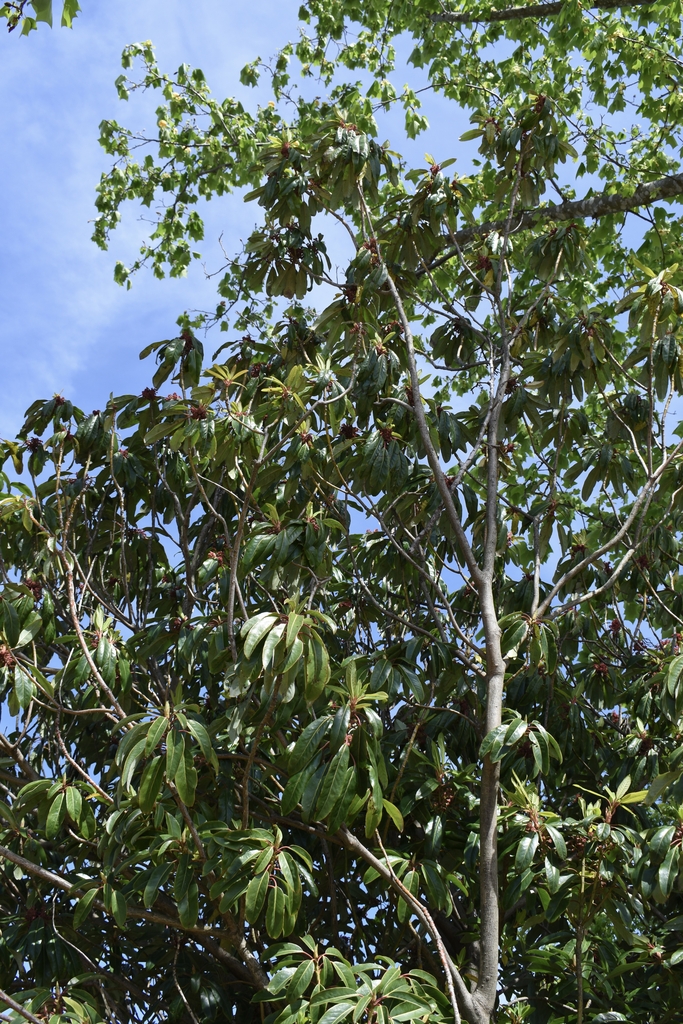
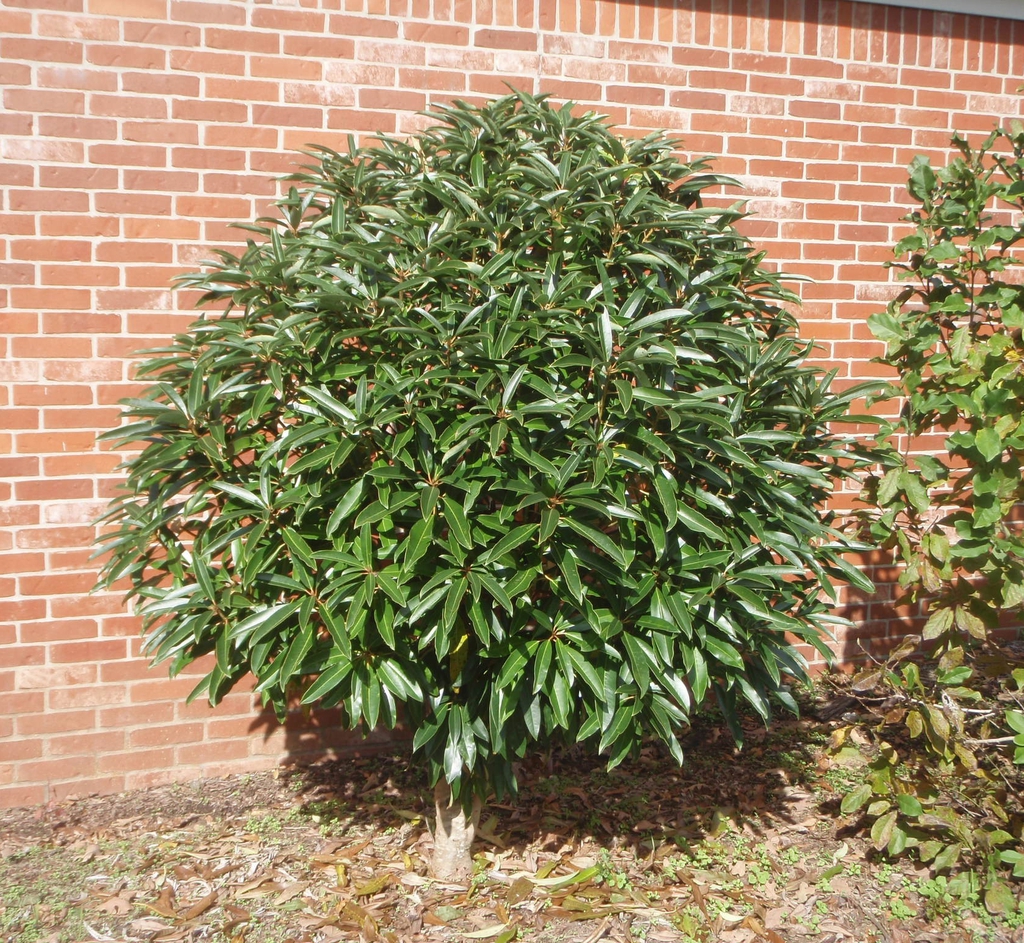
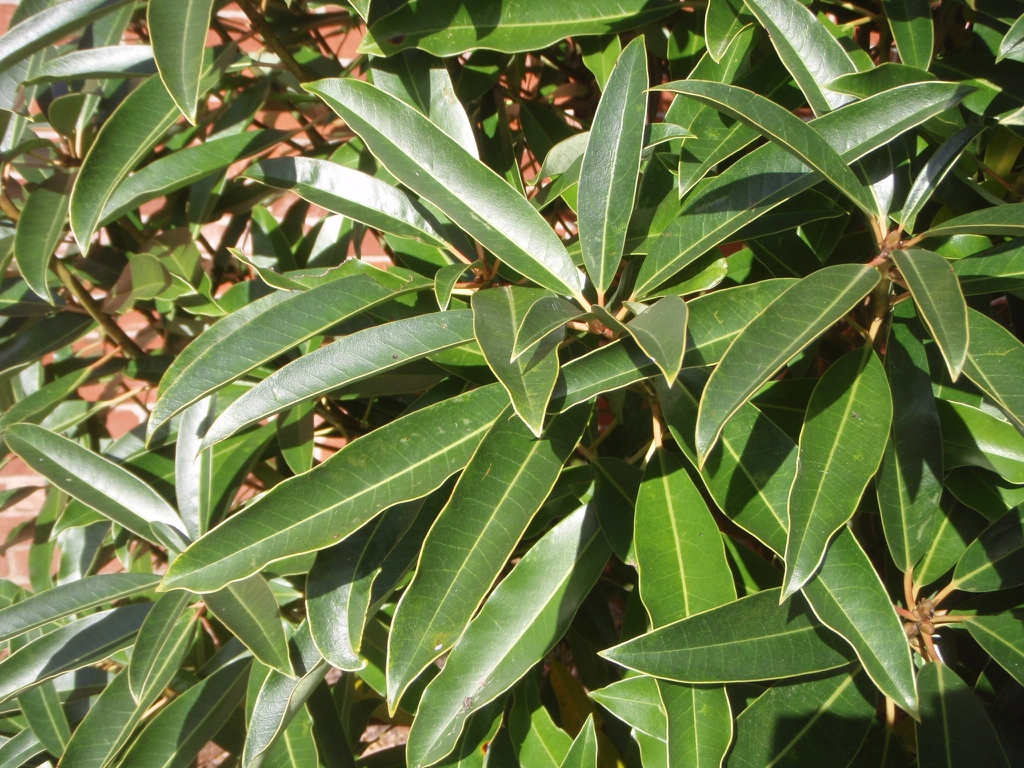
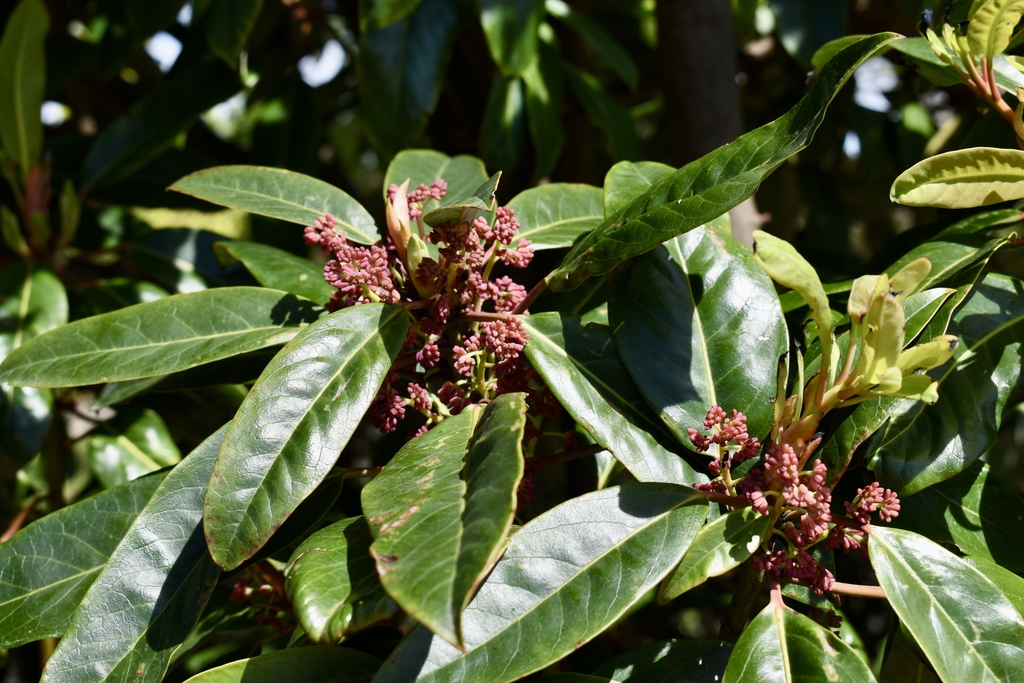
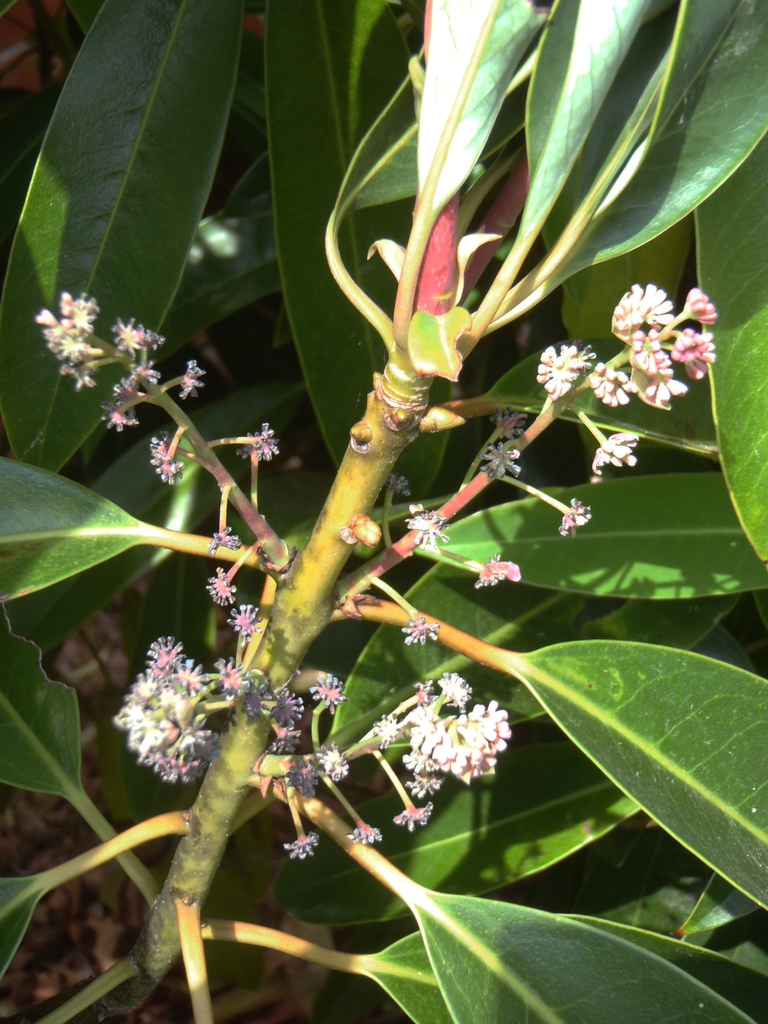
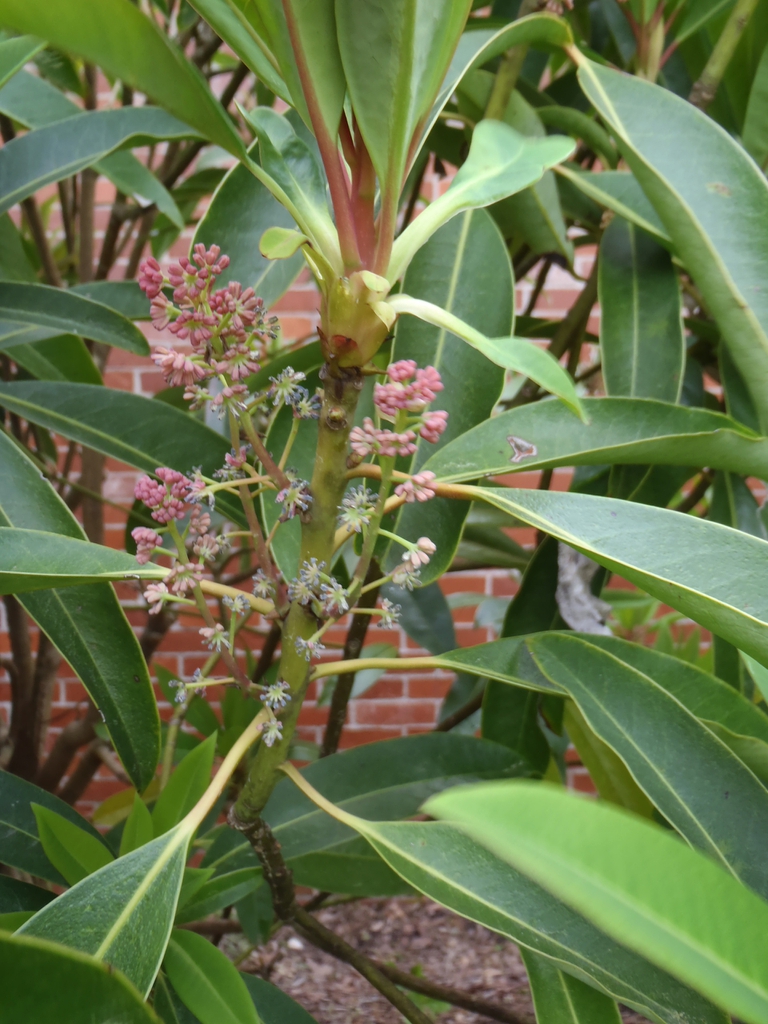
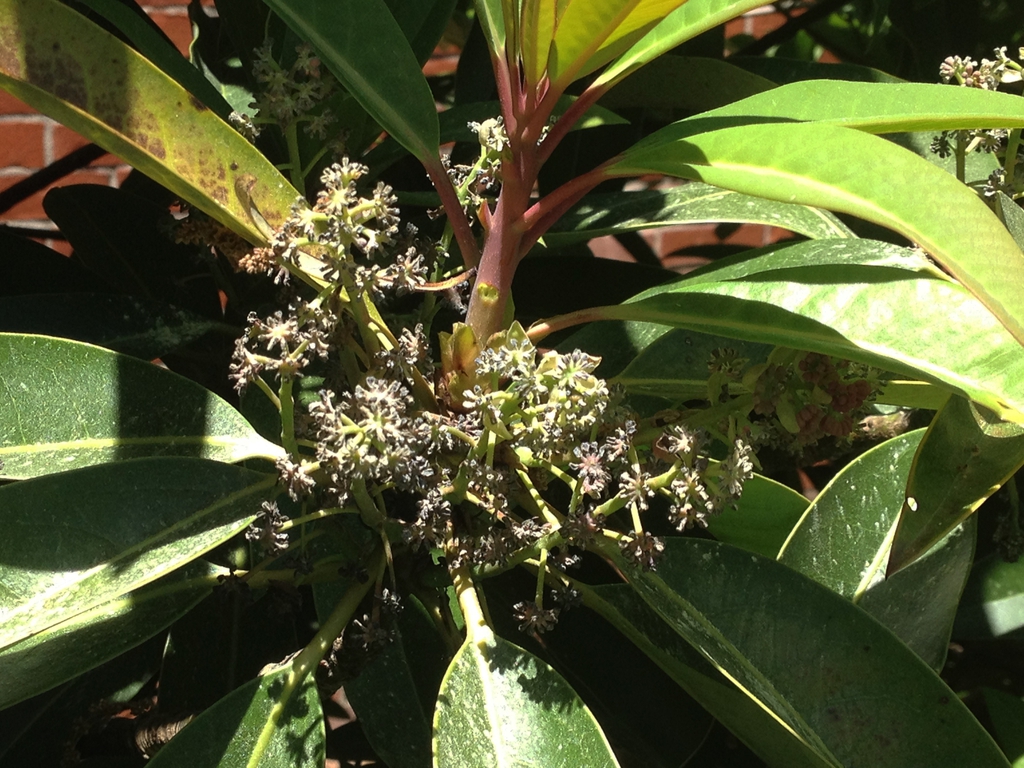
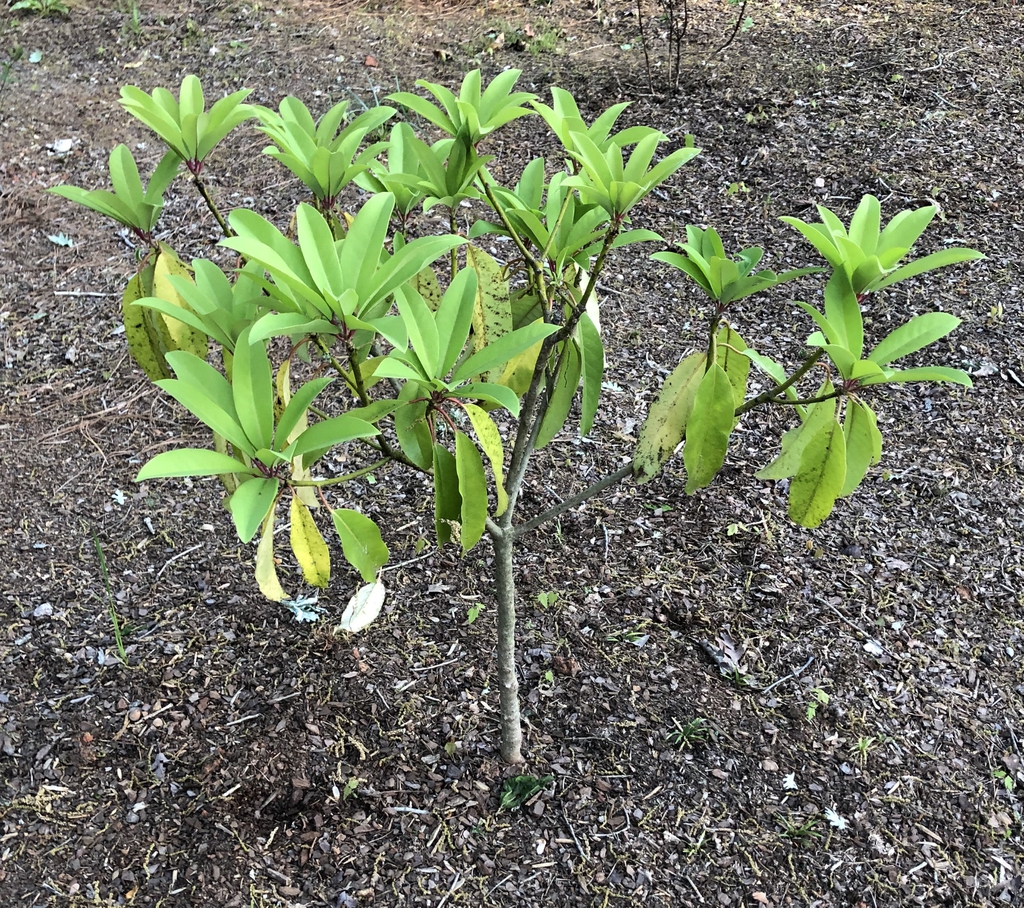
Daphniphyllum is an understory, broadleaf evergreen shrub or small tree with a rounded, dense, or haystack habit, measuring 15 to 25 feet tall and equally as wide. This plant is native to China, Korea, and Japan. It has dark green, leathery, oblong leaves with purplish red petioles. This plant is dioecious, meaning the male and female flowers occur on separate shrubs. The flowers are non-showy; the male shrub has purplish-pink flowers, while the female has pale green flowers, blooming from May to June. The female produces small, showy, bluish-black drupes in the fall. The genus name, Daphniphyllum, originates from the genus name Daphne, and phyllum means leaf. The specific epithet, macropodum, is derived from the Latin word macro, meaning large, and the Greek word, podos, meaning "stalk." This broadleaf evergreen is a member of the Daphniphyllaceae family.
Thrives in partial shade and requires soil that is moist, well-drained, slightly acidic, and rich in organic matter. It is hardy in USDA Zones 7 to 9. If planted in full sun, afternoon shade is needed to protect the leaves. and it is also does best in a sheltered location to prevent winter damage. For the female shrub to produce fruit, a male shrub would need to be planted close by.
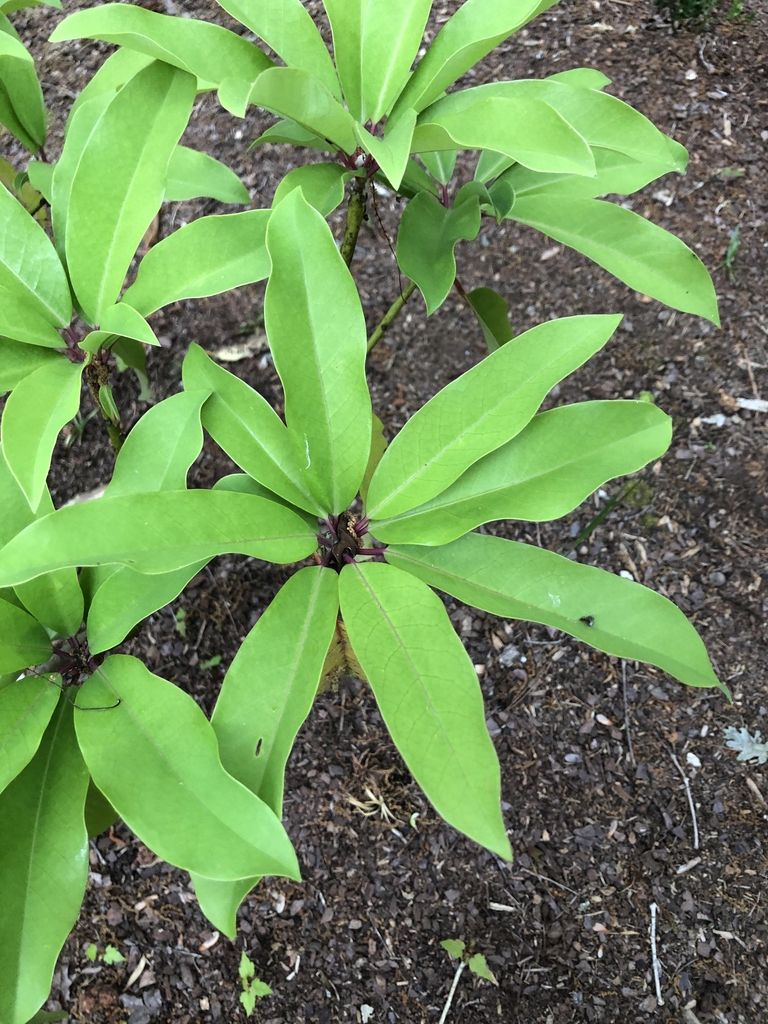
The leaves are arranged in a spiral or whorled pattern at the stem's end, very similar to rhododendrons. The leaves are leathery, glossy, and 5 to 10 inches long and 1 to 3 inches wide. The flowers are apetalous blooms, arranged in racemes, and emerge from the leaf axils. If pollinated, the female will produce fruit.
Recommended as an ornamental evergreen shrub for an informal hedge, small groups, borders, and foundation plantings. To produce fruits, a male and female specimen are needed.
Insects, Diseases, and Other Plant Problems: No serious insect or disease issues. If planted in full sun, it requires afternoon shade to prevent leaf scorch.
VIDEO created by Andy Pulte for “Landscape Plant Identification, Taxonomy and Morphology,” a plant identification course offered by the Department of Plant Sciences, University of Tennessee.
- Profile Video:
- See this plant in the following landscape :
- Cultivars / Varieties:
-
- Tags:
 Download Image


- Cultivars / Varieties:
-
- Tags:
-
-
Attributes:
- Genus:
- Daphniphyllum
- Species:
- macropodum
- Family:
- Daphniphyllaceae
- Uses (Ethnobotany):
- The wood is used to make stationery and furniture.
- Life Cycle:
- Woody
- Recommended Propagation Strategy:
- Seed
- Country Or Region Of Origin:
- South China, South Kuril Islands to Temperate Eastern Asia
- Distribution:
- Native: China South-Central, China Southeast, Japan, Korea, Kuril Islands, Nansei-shoto, and Taiwan
- Play Value:
- Screening
- Dimensions:
- Height: 15 ft. 0 in. - 25 ft. 0 in.
- Width: 15 ft. 0 in. - 25 ft. 0 in.
-
-
Whole Plant Traits:
- Plant Type:
- Shrub
- Tree
- Habit/Form:
- Erect
- Rounded
- Maintenance:
- Medium
- Texture:
- Medium
-
-
Cultural Conditions:
- Light:
- Partial Shade (Direct sunlight only part of the day, 2-6 hours)
- Soil Texture:
- High Organic Matter
- Soil pH:
- Acid (<6.0)
- Soil Drainage:
- Good Drainage
- Moist
- Available Space To Plant:
- 24-60 feet
- NC Region:
- Coastal
- Mountains
- Piedmont
- USDA Plant Hardiness Zone:
- 7a, 7b, 8a, 8b, 9a, 9b
-
-
Fruit:
- Fruit Color:
- Black
- Blue
- Fruit Value To Gardener:
- Showy
- Display/Harvest Time:
- Fall
- Summer
- Fruit Type:
- Drupe
- Fruit Length:
- < 1 inch
- Fruit Width:
- < 1 inch
- Fruit Description:
- The pollinated female shrub produces fruits that are 0.3 inches long, elliptical, glaucous, and bluish-black drupes. Fruiting occurs from August to October.
-
-
Flowers:
- Flower Color:
- Green
- Pink
- Purple/Lavender
- Flower Inflorescence:
- Insignificant
- Raceme
- Flower Value To Gardener:
- Fragrant
- Flower Bloom Time:
- Spring
- Summer
- Flower Description:
- The male shrub has purplish-pink blooms, and the female's are pale green. Blooming occurs from May through June. The flowers have a strong odor and are apetalous, arranged in racemes at the leaf axils. The inflorescence measures 2 to 3 inches long. The flowers appear on the shrub's growth from the previous year.
-
-
Leaves:
- Leaf Color:
- Gray/Silver
- Green
- Leaf Feel:
- Glossy
- Leathery
- Leaf Value To Gardener:
- Showy
- Leaf Type:
- Simple
- Leaf Arrangement:
- Alternate
- Leaf Shape:
- Lanceolate
- Oblong
- Leaf Margin:
- Entire
- Hairs Present:
- No
- Leaf Length:
- > 6 inches
- Leaf Width:
- 1-3 inches
- Leaf Description:
- The leaves are alternate, simple, leathery, lustrous, green, 5 to 10 inches long, and 1 to 3 inches wide. The upper surface is dark green with reddish midribs, and the underside is glaucous, light green. The base of the leaf is cuneate, and the apex is acuminate. The petioles are showy, purplish-red, and 1 to 1.5 inches long. The leaves are arranged in a spiral at the end of the stem.
-
-
Stem:
- Stem Color:
- Brown/Copper
- Stem Is Aromatic:
- No
- Stem Cross Section:
- Round
- Stem Form:
- Straight
- Stem Leaf Scar Shape:
- Round
- Stem Description:
- The stems are stout, dark brown, and have orbicular leaf scars. The petioles are purplish- red.
-
-
Landscape:
- Landscape Location:
- Naturalized Area
- Woodland
- Landscape Theme:
- Shade Garden
- Design Feature:
- Border
- Foundation Planting
- Hedge
- Small groups
- Specimen
- Resistance To Challenges:
- Deer