


Cirsium vulgare
Common Name(s):
- Phonetic Spelling
- SIR-see-um vul-GAIR-ee
- This plant is an invasive species in North Carolina
- Description
-
Bull thistle is an upright, branching, biennial weed in the daisy family (Asteraceae) and is native to Europe, Siberia and the Arabian Peninsula. In North Carolina, where it is an invasive species, it is commonly found along the edges of salt marshes, shores, meadows, pastures, forest openings and roadside ditches.
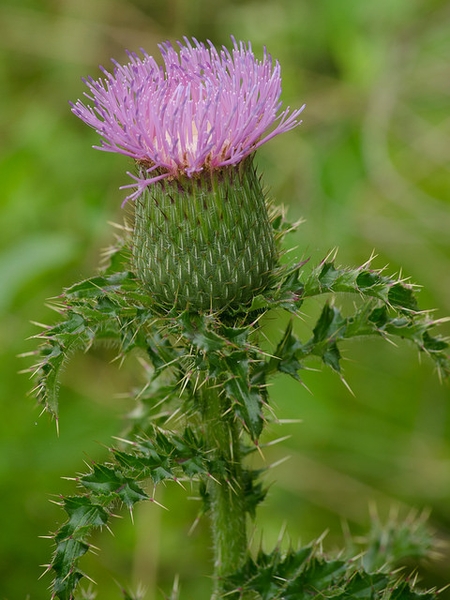
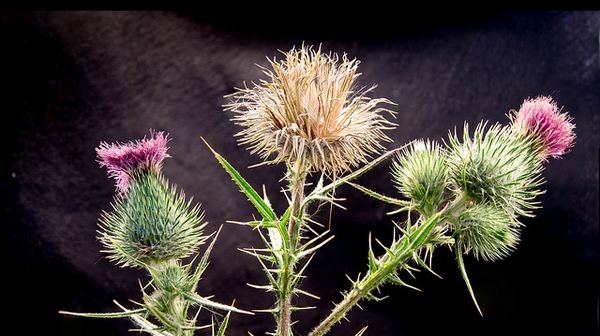
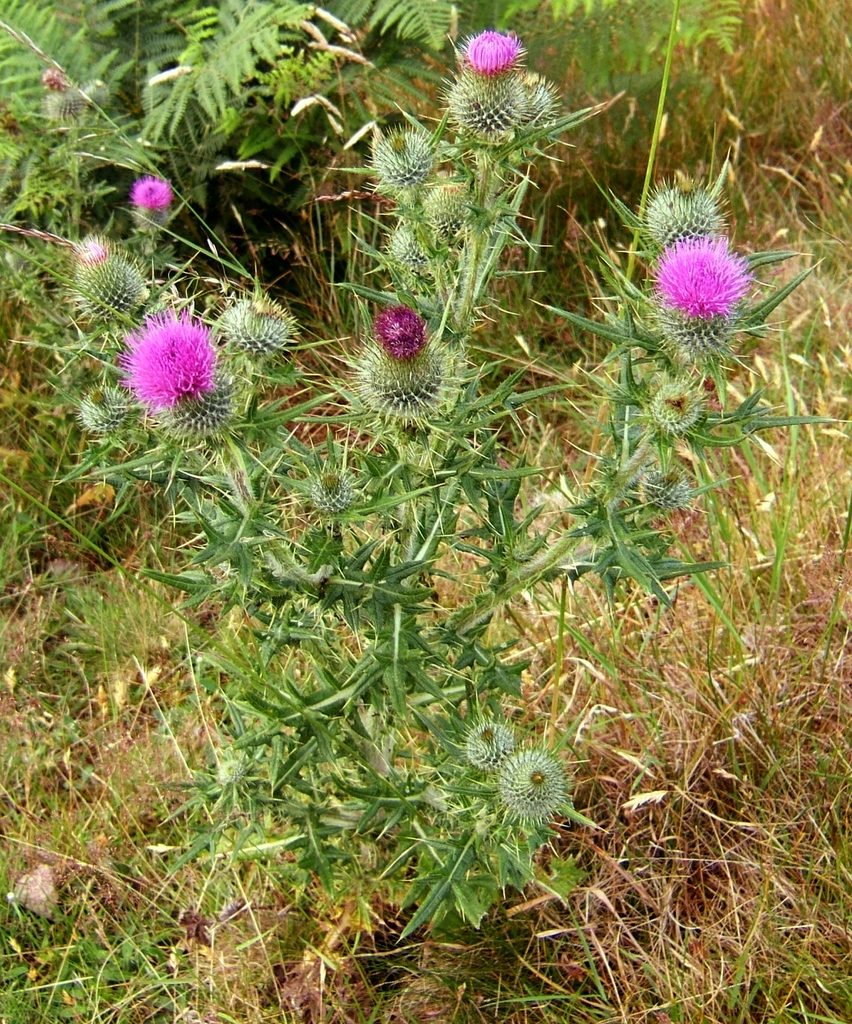
Bull thistle grows 2 to 5 feet tall, with leaves 8 to 24 inches long. The plant is spiny all over, with a tall, branching stem bearing large pinkish-purple flower heads that occur either solitary or in groups of two or three. To distinguish this species from other thistles, look for fine, bristle-like spines on the upper surfaces of the leaves. Also, look for this species to have decurrent leafbases that form spiny wings on the stem.
Each plant can produce 4,000 seeds or more, which are dispersed by wind, water, farm machinery and animals. It can invade almost any type of disturbed area and form dense thickets that crowd out native plants. Populations of bull thistle tend to be short-lived, establishing after disturbance, dominating for a few years, and then declining as other vegetation recovers. Given these attributes, it may be easier to control than other thistles.
Bull thistle is not recommended for landscape use. Please choose a native or less problematic thistle.
Insects, Diseases and Other Plant Problems: Bull thistle is an invasive species in North Carolina.
- See this plant in the following landscape :
- Cultivars / Varieties:
-
- Tags:



- Cultivars / Varieties:
-
- Tags:
-
-
Attributes:
- Genus:
- Cirsium
- Species:
- vulgare
- Family:
- Asteraceae
- Life Cycle:
- Biennial
- Recommended Propagation Strategy:
- Seed
- Country Or Region Of Origin:
- Europe to Siberia and Arabian Peninsula
- Distribution:
- Europe, including Britain, from Scandinavia south and east to N. Africa and W. Asia. Naturalized in North America.
- Wildlife Value:
- The seeds are rich in oil, an important food source for seed-eating birds and use the tufts of the seeds for their nests. Members of the genus Cirsium support the following specialized bees: Melissodes (Heliomelissodes) desponsus, Osmia (Helicosmia) chalybea and Osmia (Helicosmia) texana.
- Particularly Resistant To (Insects/Diseases/Other Problems):
- Deer don't bother them.
-
-
Whole Plant Traits:
- Plant Type:
- Annual
- Weed
- Wildflower
- Woody Plant Leaf Characteristics:
- Deciduous
- Habit/Form:
- Erect
- Growth Rate:
- Rapid
- Maintenance:
- High
- Medium
- Texture:
- Coarse
- Appendage:
- Prickles
- Spines
-
-
Cultural Conditions:
- Light:
- Full sun (6 or more hours of direct sunlight a day)
- Soil Texture:
- Clay
- Loam (Silt)
- Sand
- Soil pH:
- Acid (<6.0)
- Alkaline (>8.0)
- Neutral (6.0-8.0)
- Soil Drainage:
- Moist
- Available Space To Plant:
- 12 inches-3 feet
- NC Region:
- Coastal
- Mountains
- Piedmont
- USDA Plant Hardiness Zone:
- 3a, 3b, 4a, 4b, 5a, 5b, 6a, 6b, 7a, 7b, 8a, 8b
-
-
Fruit:
- Fruit Color:
- Cream/Tan
- Fruit Value To Gardener:
- Showy
- Display/Harvest Time:
- Fall
- Fruit Type:
- Achene
- Fruit Length:
- < 1 inch
- Fruit Width:
- < 1 inch
- Fruit Description:
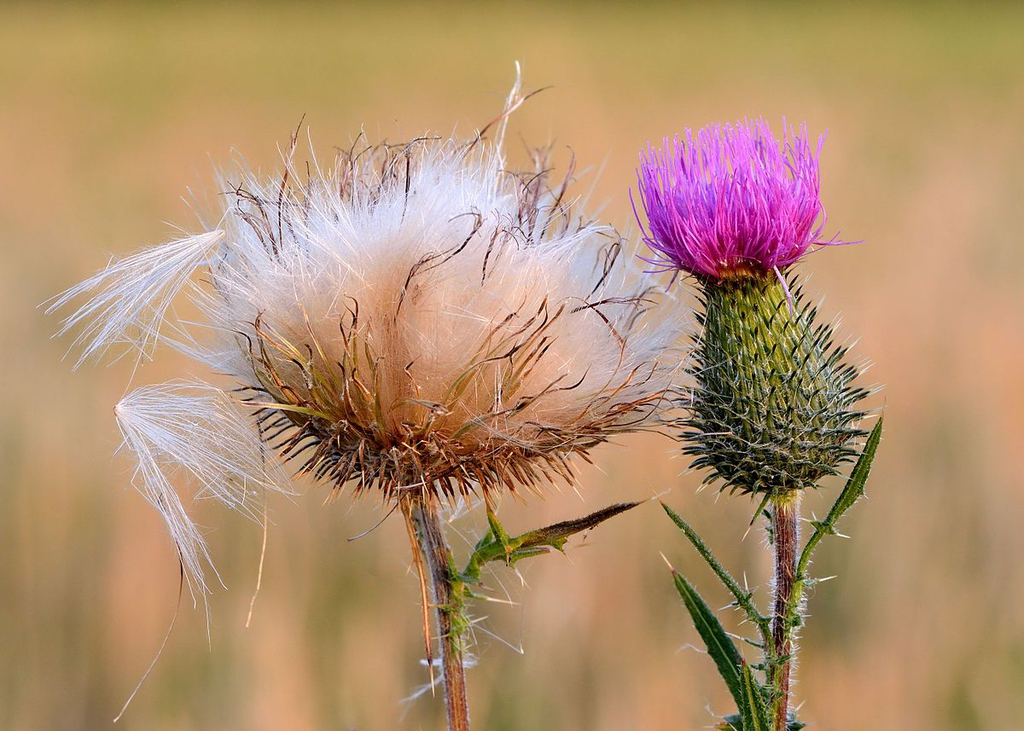
- Seeds are produced singly in a flat, brown fruit about 1/10 of an inch long with narrow dark brown stripes. Seeds produce a feathery pappus (similar to dandelion ‘seeds’) which help disperse the seeds.
-
-
Flowers:
- Flower Color:
- Pink
- Purple/Lavender
- Flower Inflorescence:
- Head
- Flower Value To Gardener:
- Showy
- Flower Bloom Time:
- Summer
- Flower Shape:
- Dome
- Flower Petals:
- Bracts
- Flower Size:
- 1-3 inches
- Flower Description:
- Each flower head contains numerous disc florets. Each disk floret is long and tubular and becomes divided into 5 long thread-like lobes giving it a hair-like appearance. The 1.5-2 inch flowers are pinkish-purple and occur solitary or in groups of 2-3. The bracts are stiff and rigid and have yellow-tipped spines. Blooms June to September.
-
-
Leaves:
- Woody Plant Leaf Characteristics:
- Deciduous
- Leaf Color:
- Green
- Leaf Feel:
- Prickly
- Leaf Type:
- Simple
- Leaf Arrangement:
- Alternate
- Rosulate
- Leaf Shape:
- Elliptical
- Lanceolate
- Leaf Margin:
- Lobed
- Hairs Present:
- Yes
- Leaf Length:
- > 6 inches
- Leaf Width:
- 1-3 inches
- Leaf Description:
- The leaf shape changes as the plant ages. Young (seed) leaves are elliptical. Older leaves form a basal rosette that can grow 8-24 inches long and are deeply incised and very spiny. The stem leaves are alternate with pronounced stiff spines along the edges, stiff hairs on the upper surface, and softer white hairs below.
-
-
Stem:
- Stem Color:
- Green
- Purple/Lavender
- Stem Is Aromatic:
- No
- Stem Surface:
- Hairy (pubescent)
- Stem Description:
- Stout green stems covered in dense white hairs with dark purple veins.
-
-
Landscape:
- Landscape Location:
- Meadow
- Naturalized Area
- Landscape Theme:
- Pollinator Garden
- Attracts:
- Pollinators
- Songbirds
- Specialized Bees
- Problems:
- Invasive Species
- Spines/Thorns
- Weedy