


Camellia
Common Name(s):
Previously known as:
- Camelliastrum
- Thea
- Theopsis
- Phonetic Spelling
- ka-MEE-lee-ah
- Description
-
The genus Camellia is native to tropical and subtropical Asia and has over 200 accepted species. These impressive evergreen shrubs are very popular for shaded gardens and borders. Depending on the species, they grow upright or spreading, 2 to 20 feet tall and 2 to 10 feet wide. Their dense habit and the attractive, glossy, dark green foliage provide privacy and screening. The rose-like flower forms, vibrant colors, and various blooming seasons will add interest to your home landscape. The genus Camellia was named in honor of Georg Joseph Camel, a Jesuit missionary in the Philippines, who had a special interest in plants native to the Orient. This genus is a member of the tea family (Theaceae).
Camellias thrive in partial shade. It is recommended to avoid sites that receive early morning sun or hot afternoon sun. A sheltered location is needed to protect the plants from cold, dry winds that can damage the flower buds and blooms. These shrubs are hardy in zones 6 to 9. The soil should be moist, well-drained, slightly acidic, organically rich, and loamy. They don't tolerate drought, and do not require fertilizing. If pruning is necessary, prune the stems back to last year's growth soon after blooming is finished to avoid removing next year's buds. Pick up spent blooms and replace the mulch regularly to prevent disease. Best planted from November to February, to establish the shrub before the summer heat sets in. Propagated by stem cuttings, hardwood cuttings, layering, or grafting.
The Japanese and sasanqua camellia are frequently found in North Carolina gardens, and many cultivars are available in a variety of colors. Species such as C. transarisanensis and C. lutchuensis are less well-known and have smaller flowers and leaves. Camellia oleifera is known as the tea oil camellia, and its seeds are used for making oil. The Camellia sinensis is the tea camellia, and tea can be made with its leaves. Some of the species are more tolerant of cooler temperatures or have a more elegant habit.
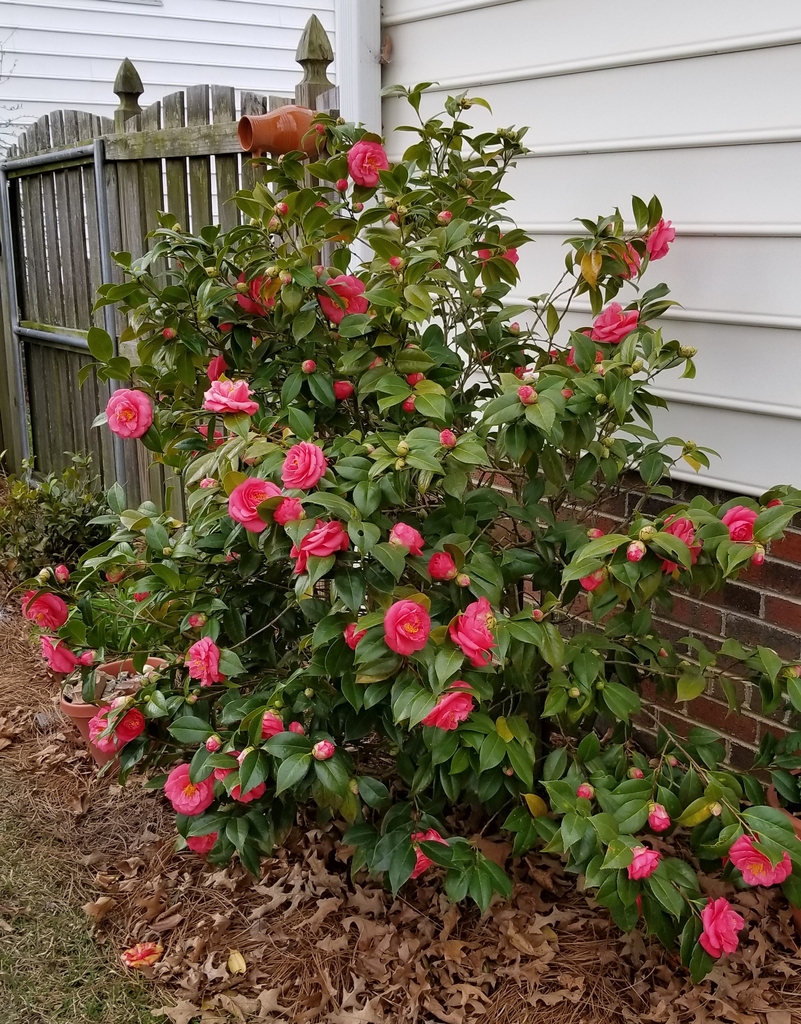
Depending on the species, this flowering evergreen shrub, has various growth habits, flower sizes, bloom colors, and seasons of interest. Select the species, based on its mature size, that will be adaptable to your landscape. These shrubs make a wonderful addition to your garden, used as a border or foundation planting, in a shaded garden, as a container plant, or accent. New cultivars are always being introduced.
Insects, Diseases, and Other Plant Problems: Monitor for tea scale, aphids, planthoppers, and spider mites. Camellias are susceptible to viruses and fungal diseases. Monitor for leaf spot, anthracnose, black mold, petal blight, leaf gall, bud gall, canker, dieback, and root rot. Root rot from poor soil drainage and petal blight can be fatal. If petal blight is suspected (brownish, rust-colored spots on the flowers), the infected portion must be removed. Tool sanitation is important to help prevent the spread of fungal disease. Chlorosis causes yellowing of the leaves and is best treated by adding iron to the soil.
For further information, the Clemson Cooperative Extension Home and Garden Information Center has a factsheet on common camellia diseases and insect pests.
- See this plant in the following landscape :
- Cultivars / Varieties:
-
-
Camellia japonica (Japanese Camellia)
- Camellia lutchuensis (Lutchuensis Camellia)
shrub or small tree, from 8 to 15 ft tall, dark green leaves, and abundant, pure white, fragrant flowers, blooms in early spring
Camellia oleifera (Tea-oil Camellia)
- Camellia transarisanensis
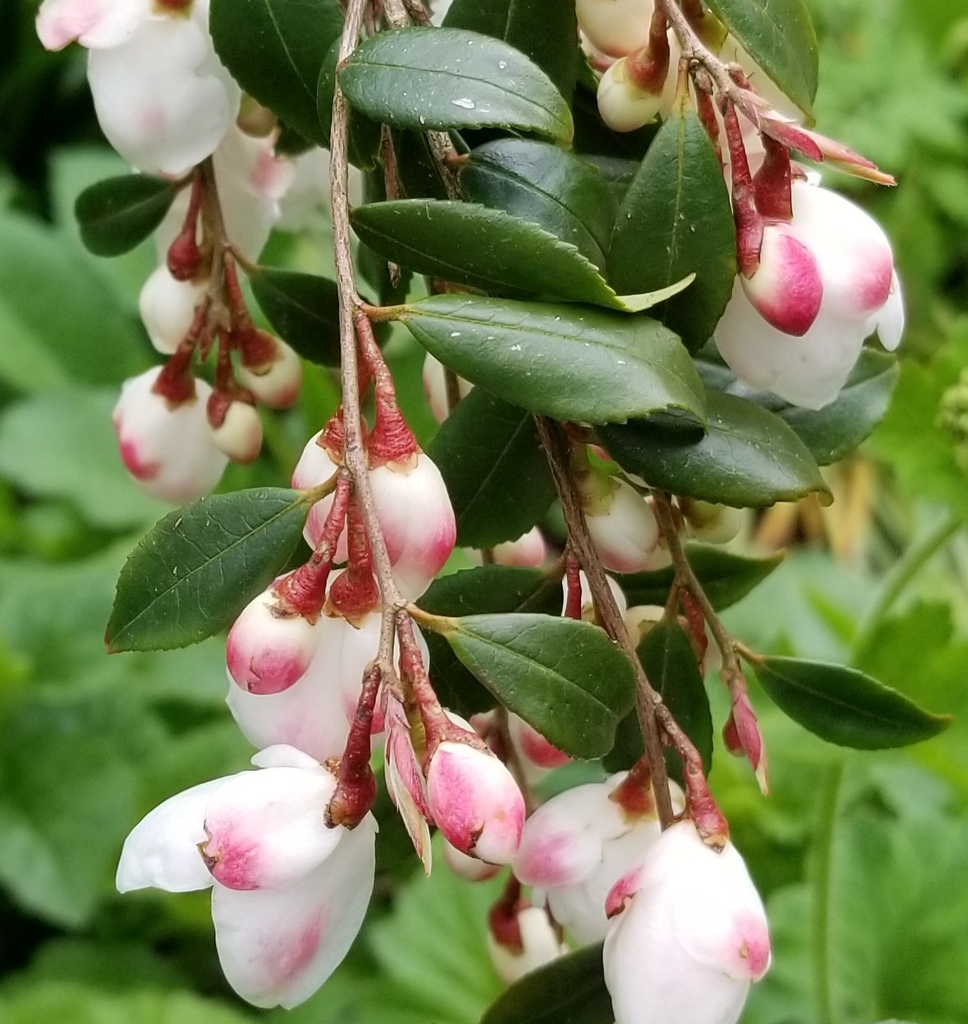
shrub, small white flowers, along the stem, blooms face downward, pink buds, strong scent, blooms late winter to early spring

shrub or tree, grows 7 to 12 feet tall, with larger leaves and flowers, 3 to 5 inches wide
shrub or tree, grows 10 to 12 feet tall, glossy green leaves, small, fragrant, white blooms, oil from seeds Camellia reticulata (Yennan Camellia)
shrub 8 to 12 feet tall, tree up to 50 feet, with large flowers Camellia sasanqua (Sasanqua Camellia)
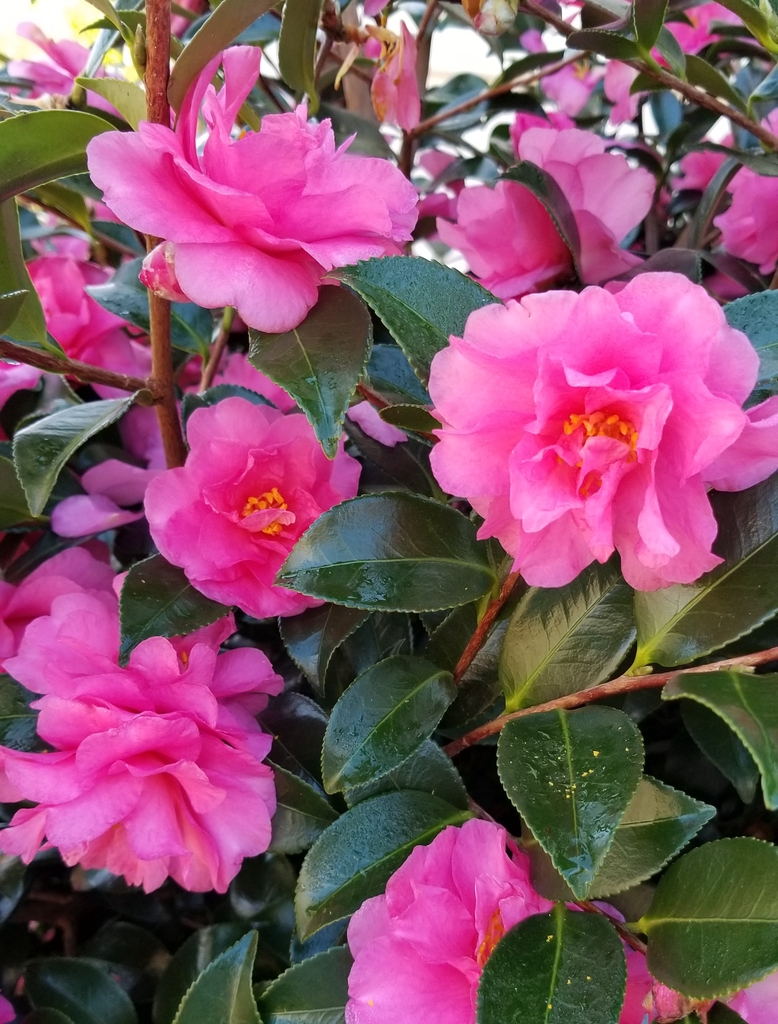
shrub or tree, smaller leaves and smaller, simpler, fragrant flowers, blooms profusely, and is more sun-tolerant Camellia sinensis (Tea Camellia)
shrub or tree, grows 10 to 15 feet tall, leaves used for making tea, fragrant, white flowers - Camellia lutchuensis (Lutchuensis Camellia)
- Camellia japonica (Japanese Camellia), Camellia lutchuensis (Lutchuensis Camellia), Camellia oleifera (Tea-oil Camellia), Camellia reticulata (Yennan Camellia), Camellia sasanqua (Sasanqua Camellia), Camellia sinensis (Tea Camellia), Camellia transarisanensis
- Tags:


- Cultivars / Varieties:
-
-
Camellia japonica (Japanese Camellia)
- Camellia lutchuensis (Lutchuensis Camellia)
shrub or small tree, from 8 to 15 ft tall, dark green leaves, and abundant, pure white, fragrant flowers, blooms in early spring
Camellia oleifera (Tea-oil Camellia)
- Camellia transarisanensis
shrub, small white flowers, along the stem, blooms face downward, pink buds, strong scent, blooms late winter to early spring
shrub or tree, grows 7 to 12 feet tall, with larger leaves and flowers, 3 to 5 inches wide
shrub or tree, grows 10 to 12 feet tall, glossy green leaves, small, fragrant, white blooms, oil from seeds Camellia reticulata (Yennan Camellia)
shrub 8 to 12 feet tall, tree up to 50 feet, with large flowers Camellia sasanqua (Sasanqua Camellia)
shrub or tree, smaller leaves and smaller, simpler, fragrant flowers, blooms profusely, and is more sun-tolerant Camellia sinensis (Tea Camellia)
shrub or tree, grows 10 to 15 feet tall, leaves used for making tea, fragrant, white flowers - Camellia lutchuensis (Lutchuensis Camellia)
- Camellia japonica (Japanese Camellia), Camellia lutchuensis (Lutchuensis Camellia), Camellia oleifera (Tea-oil Camellia), Camellia reticulata (Yennan Camellia), Camellia sasanqua (Sasanqua Camellia), Camellia sinensis (Tea Camellia), Camellia transarisanensis
- Tags:
-
-
Attributes:
- Genus:
- Camellia
- Family:
- Theaceae
- Uses (Ethnobotany):
- Some species are used for traditional herbal use. Some are used for making both teas or tea seed oil
- Life Cycle:
- Woody
- Recommended Propagation Strategy:
- Grafting
- Layering
- Stem Cutting
- Country Or Region Of Origin:
- Tropical and Subtropical Asia
- Distribution:
- Native: Assam, Bangladesh, Borneo, Cambodia, China North-Central, China South-Central, China Southeast, East Himalaya, Hainan, Japan, Korea, Laos, Lesser Sunda Is., Myanmar, Nansei-shoto, Nepal, Philippines, Sri Lanka, Sulawesi, Taiwan, Thailand, Tibet, Vietnam. Introduced: Argentina Northeast, Bolivia, Ethiopia, Guinea, India, Mauritius, Réunion, Seychelles, Trinidad-Tobago, Turkey, and the United States.
- Play Value:
- Attractive Flowers
- Easy to Grow
- Dimensions:
- Height: 2 ft. 0 in. - 20 ft. 0 in.
- Width: 2 ft. 0 in. - 10 ft. 0 in.
-
-
Whole Plant Traits:
- Plant Type:
- Shrub
- Tree
- Woody Plant Leaf Characteristics:
- Broadleaf Evergreen
- Habit/Form:
- Dense
- Erect
- Multi-stemmed
- Growth Rate:
- Slow
- Maintenance:
- Low
- Texture:
- Medium
-
-
Cultural Conditions:
- Light:
- Deep shade (Less than 2 hours to no direct sunlight)
- Partial Shade (Direct sunlight only part of the day, 2-6 hours)
- Soil Texture:
- High Organic Matter
- Loam (Silt)
- Soil pH:
- Acid (<6.0)
- Neutral (6.0-8.0)
- Soil Drainage:
- Good Drainage
- Moist
- Available Space To Plant:
- 6-feet-12 feet
- 12-24 feet
- NC Region:
- Coastal
- Mountains
- Piedmont
- USDA Plant Hardiness Zone:
- 6a, 6b, 7a, 7b, 8a, 8b, 9a, 9b
-
-
Fruit:
- Fruit Color:
- Brown/Copper
- Display/Harvest Time:
- Fall
- Fruit Type:
- Capsule
- Fruit Length:
- < 1 inch
- Fruit Width:
- < 1 inch
- Fruit Description:
- The fruit is a hard, woody, globose capsule, initially green and reddish-brown when ripe. Each capsule contains 4 to 5, dark brown seeds.
-
-
Flowers:
- Flower Color:
- Gold/Yellow
- Pink
- Red/Burgundy
- Variegated
- White
- Flower Inflorescence:
- Solitary
- Flower Value To Gardener:
- Fragrant
- Good Cut
- Showy
- Flower Bloom Time:
- Fall
- Spring
- Summer
- Winter
- Flower Shape:
- Cup
- Flower Petals:
- 4-5 petals/rays
- 7 - 20 petals/rays
- more than 20 petals/rays
- Flower Description:
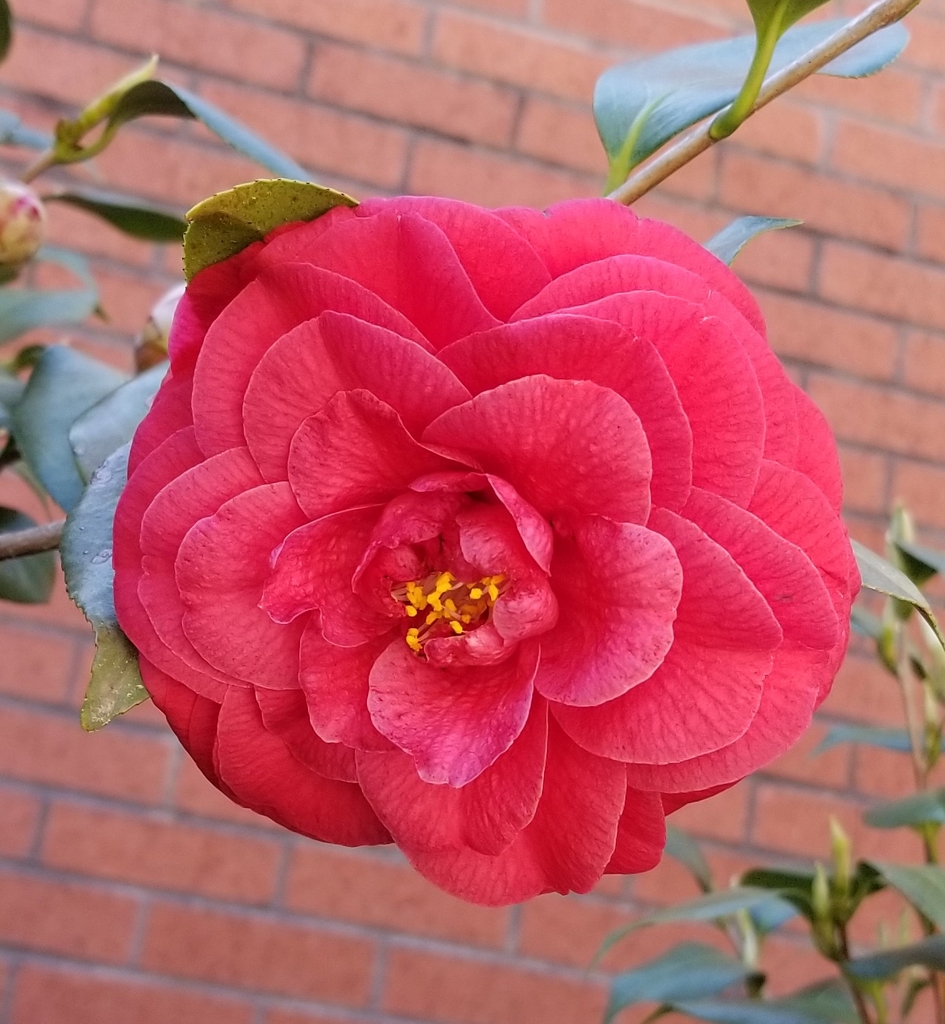
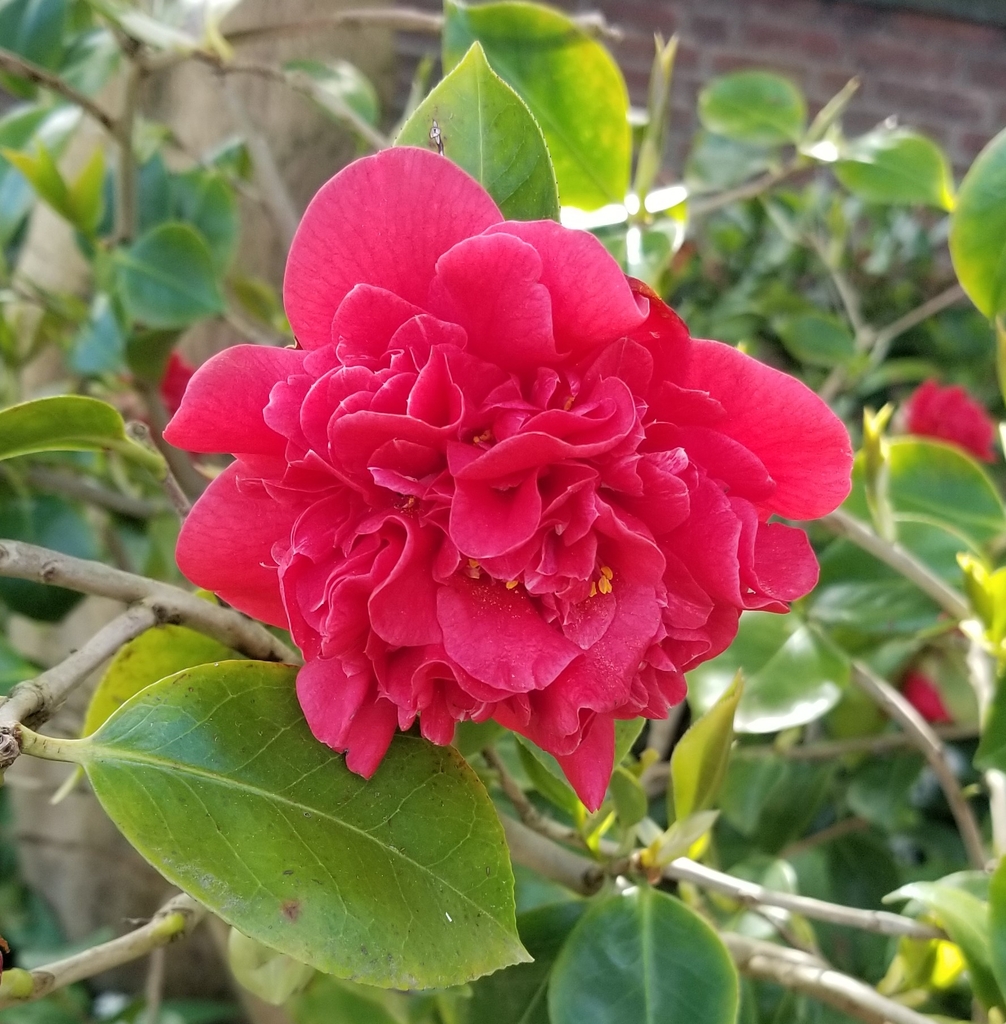
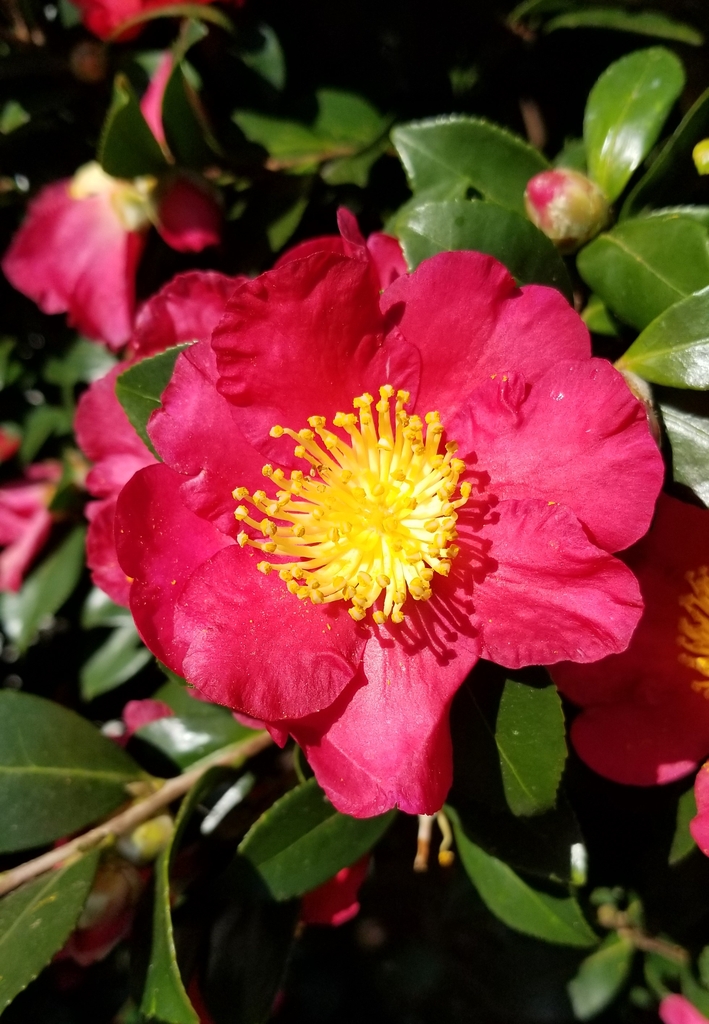
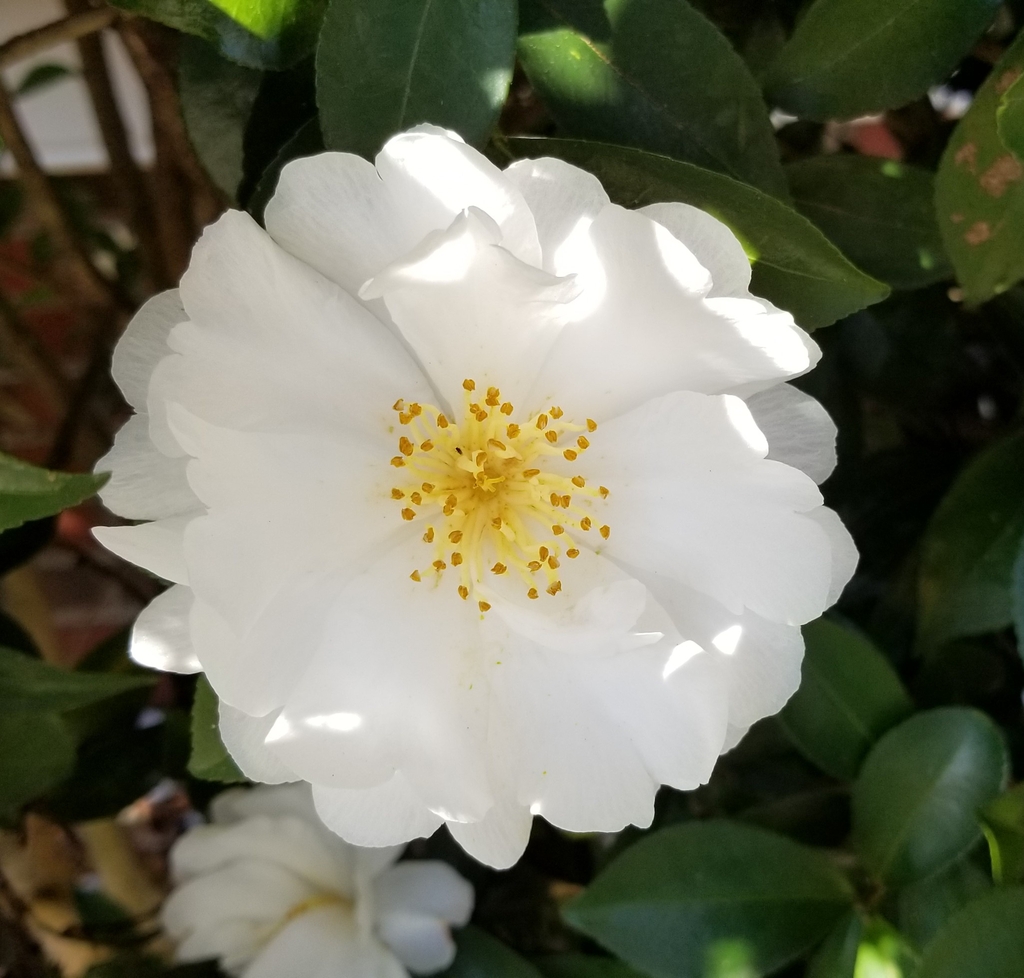
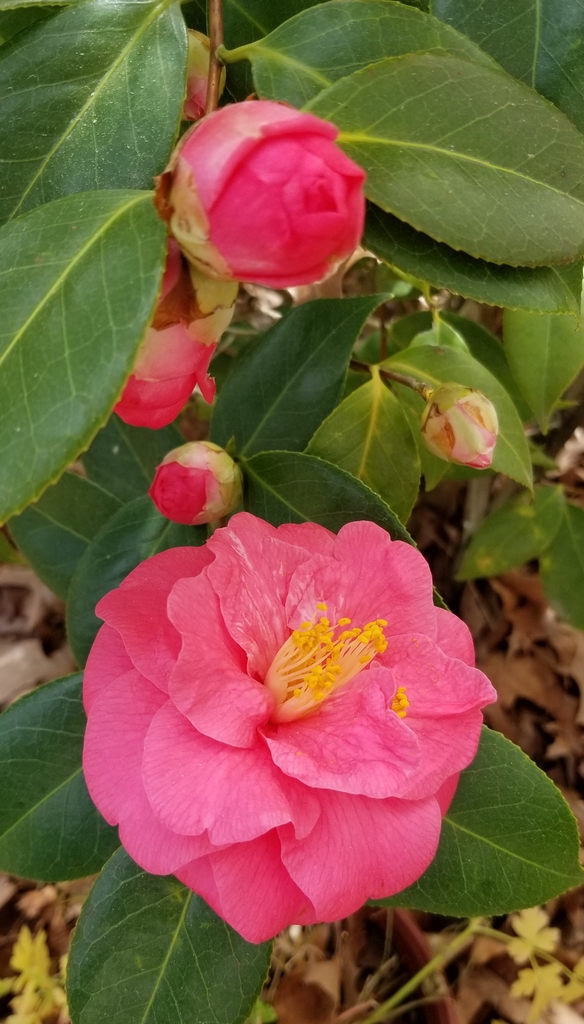
- Species have varying flower forms from single, semi-double, anemone, peony, rose, and formal double. Each has a unique arrangement of its petals and stamens. There are fall-blooming camellias (blooms from October to January), winter-blooming (blooms from January to March), spring-blooming (blooms from March to May), and long-blooming (blooms from April to September). The colors range from white, yellow, pink, red, and variegated. The number of petals varies from 5 to over 100 depending on the form. The flower size depends on the species, varying from 1 to 2 inches, 2 to 3.5 inches, 3 to 5 inches, or over 6 inches in diameter. White and yellow anthers, and the white filaments, are displayed in the center of the bloom.
-
-
Leaves:
- Woody Plant Leaf Characteristics:
- Broadleaf Evergreen
- Leaf Color:
- Green
- Leaf Feel:
- Glossy
- Leathery
- Smooth
- Leaf Value To Gardener:
- Long-lasting
- Leaf Type:
- Simple
- Leaf Arrangement:
- Alternate
- Leaf Shape:
- Elliptical
- Oblong
- Ovate
- Leaf Margin:
- Serrate
- Hairs Present:
- No
- Leaf Description:
- The leaves are dark green, glossy, leathery, alternate, elliptical to ovate to oblong with serrate margins. Leaf size varies between species, 1.5 inches long and 0.5 inches wide, 1 to 3 inches, 2 to 4 inches, or 3 to 5 inches long.
-
-
Bark:
- Bark Color:
- Light Brown
- Light Gray
-
-
Stem:
- Stem Is Aromatic:
- No
-
-
Landscape:
- Landscape Location:
- Container
- Patio
- Landscape Theme:
- Asian Garden
- Cottage Garden
- Cutting Garden
- Shade Garden
- Winter Garden
- Design Feature:
- Accent
- Border
- Flowering Tree
- Foundation Planting
- Hedge
- Screen/Privacy
- Small Tree
- Attracts:
- Pollinators
- Songbirds
- Resistance To Challenges:
- Deer
- Salt
- Problems:
- Frequent Disease Problems
- Frequent Insect Problems