


Berberis 'JC Raulston'
Common Name(s):
Previously known as:
- Mahonia 'JC Raulston'
- Phonetic Spelling
- BER-ber-is
- This plant has low severity poison characteristics.
- See below
- Description
-
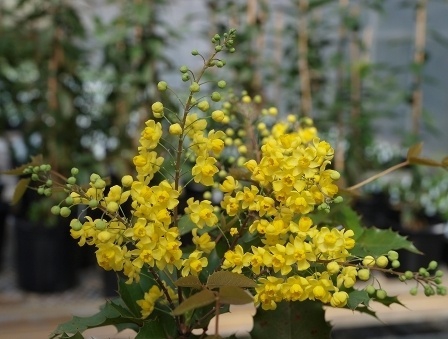
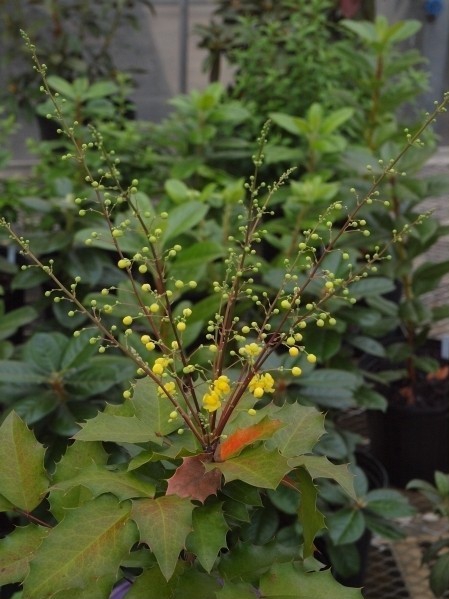
Mahonia J.C. Rauston, a spectacular hybrid developed by Tom Ranney and his team at NC State University, is a cross between two North American congeners: B. aquifolium ‘Golden Abundance’ and its rare Mexican counterpart, B. lanceolata. The result is a cold-hardy, medium-sized shrub with billowy plumes of golden flowers in late winter.
Brilliant, infertile flowers are borne on 12″ long panicles. Cold hardy to USDA zone 6. The shrub can be pruned, but keep in mind that next season's blossoms and fruit will appear on old growth. Developed at NC State University, this plant was named in honor of the late Dr. J.C. Raulston, the first director of the NC State University Arboretum (now the JC Raulston Arboretum). Dr. Raulston had a keen interest in both Mahonia and Mexican flora, so it is particularly fitting to name this plant after him. I
The plant is not currently on the market but may be in the future.
- See this plant in the following landscape :
- Plant Walls and Hedges
- Cultivars / Varieties:
-
- Tags:
 Download Image
 Download Image


- Cultivars / Varieties:
-
- Tags:
-
-
Attributes:
- Genus:
- Berberis
- Family:
- Berberidaceae
- Life Cycle:
- Perennial
- Woody
- Edibility:
- Not poisonous, but berries contain berberine that can cause stomach upset, especially with children.
-
-
Whole Plant Traits:
- Plant Type:
- Perennial
- Poisonous
- Shrub
- Woody Plant Leaf Characteristics:
- Broadleaf Evergreen
- Habit/Form:
- Erect
- Texture:
- Coarse
- Appendage:
- Spines
-
-
Cultural Conditions:
- Light:
- Full sun (6 or more hours of direct sunlight a day)
- Partial Shade (Direct sunlight only part of the day, 2-6 hours)
- Available Space To Plant:
- 6-feet-12 feet
- USDA Plant Hardiness Zone:
- 6a, 6b, 7a, 7b, 8a, 8b
-
-
Fruit:
- Fruit Color:
- Red/Burgundy
- Fruit Type:
- Berry
-
-
Flowers:
- Flower Color:
- Gold/Yellow
- Flower Inflorescence:
- Panicle
- Flower Bloom Time:
- Winter
- Flower Size:
- > 6 inches
-
-
Leaves:
- Woody Plant Leaf Characteristics:
- Broadleaf Evergreen
- Leaf Color:
- Green
- Leaf Feel:
- Leathery
- Leaf Type:
- Simple
- Leaf Arrangement:
- Alternate
- Hairs Present:
- No
- Leaf Description:
- Shiny, spiky evergreen leaves
-
-
Stem:
- Stem Is Aromatic:
- No
-
-
Landscape:
- Design Feature:
- Border
- Hedge
- Security
- Problems:
- Poisonous to Humans
- Problem for Cats
- Problem for Children
- Problem for Dogs
- Spines/Thorns