



Aster incisus
Common Name(s):
Previously known as:
- Asteromoea incisa
- Boltonia incisa
- Kalimeris incisa
- Phonetic Spelling
- ASS-ter in-SY-sus
- Description
-
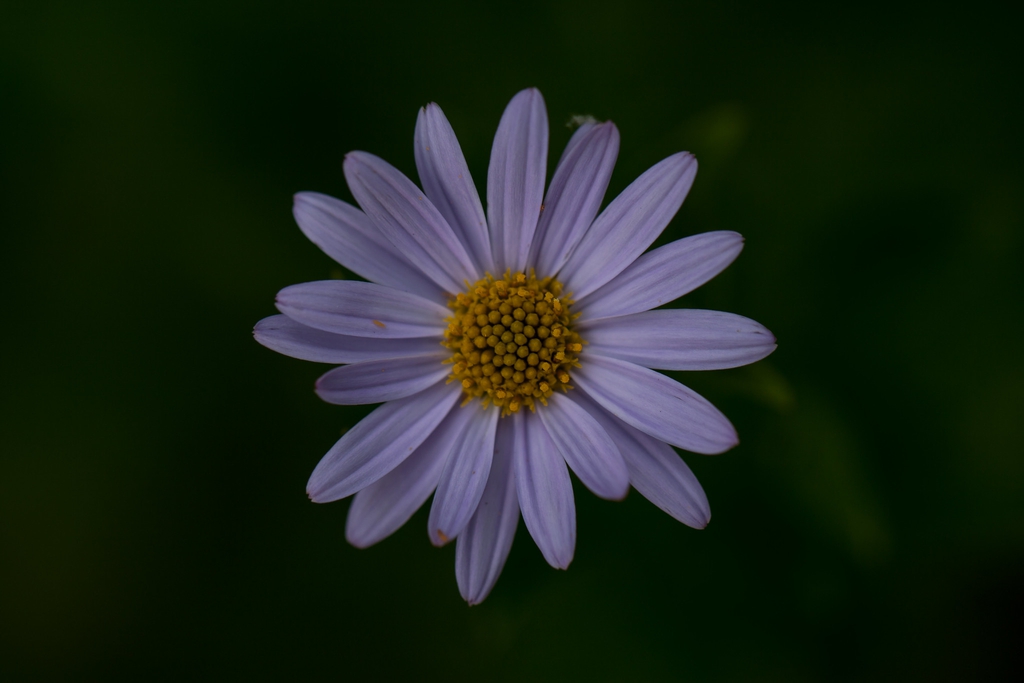
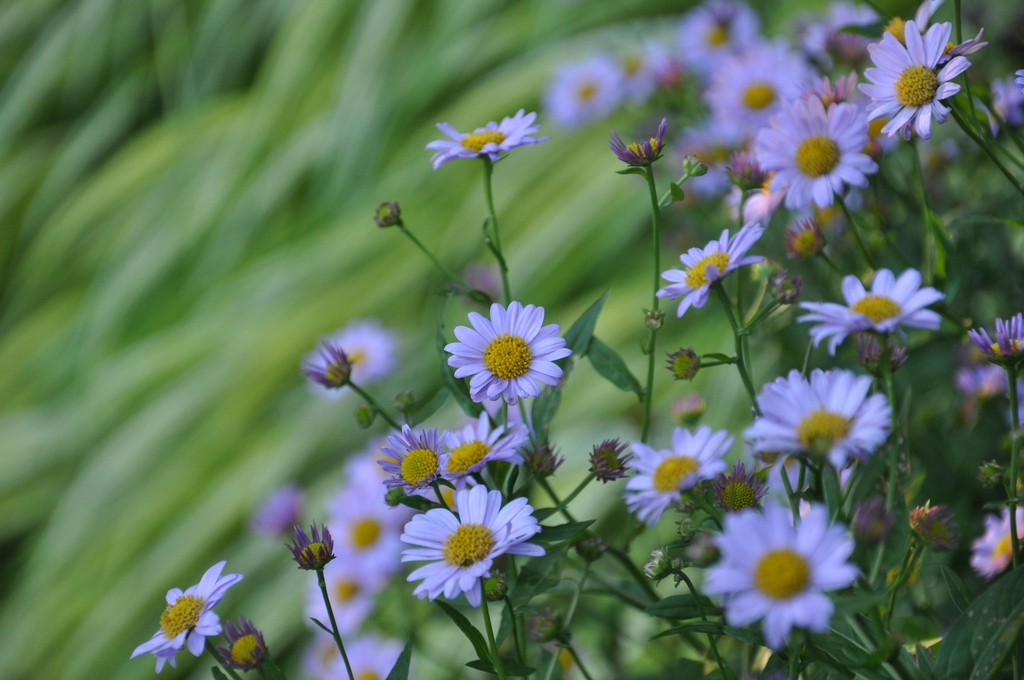
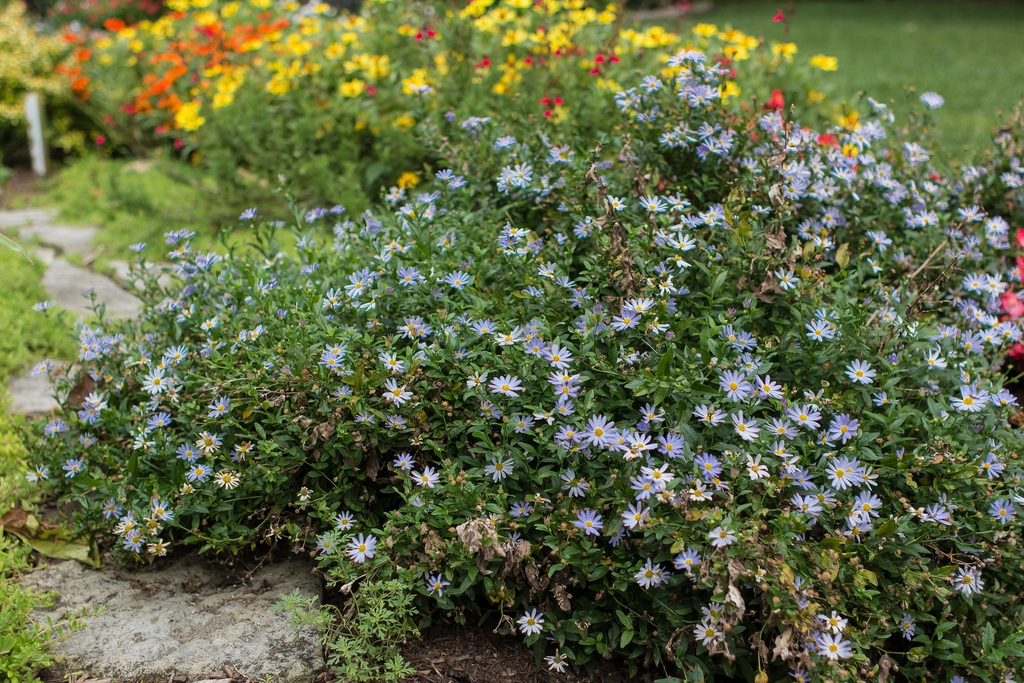
Kalimeris is a flowering, rhizomatous, herbaceous perennial native to Southeastern Siberia, northern China, and central and southern Japan and is a member of the daisy family (Asteraceae). It is typically found in grasslands, thickets, meadows, or along roadsides in its native habitat and is clump-forming, growing 1 to 4 feet tall. Daisy-like flowers with light blue or lilac blue petal rays and a yellow center appear on erect, leafy, branching stems from June to October. The foliage is dark green, oblong to lanceolate, with toothed margins. The genus name Aster is Greek, meaning "star." This refers to the arrangement of the flower heads. The specific epithet incisus is Latin, meaning 'having been cut or notched."
Prefers full sun to partial shade and moist, well-drained soils. It is adaptable to clay soils, moist and dry conditions, and hot, humid weather. In early summer, pinching back the foliage will stimulate the plant's growth. After blooming, cut back the spent flowers to encourage fall re-blooming. Propagate by division or root cuttings in the spring. Divide the plant about every 3 years to maintain its size and health.
Recommended for cottage gardens, rock gardens, or along borders. Mass planting and small groups would be more impactful.
Insects, Diseases, and Other Plant Problems: No serious issues. Monitor for slugs and snails. May be susceptible to verticillium wilt, gray mold, and powdery mildew. Root rot can occur in locations with improper drainage.
- See this plant in the following landscape :
- Cultivars / Varieties:
-
- 'Alba'
White, daisy-like flowers with a yellow center - 'Blue Star'
Grows 15 inches tall, hardy zones 5a to 8b, with light blue daisy-like blooms from June to October - 'Charlotte'
Grows 18-24 inches tall, with pale purple daisy-like flowers and a yellow center, dark green leaves - 'Madiva'
Grows 18-24 inches tall, compact, with pale purple daisy-like blooms and a yellow center and dark green leaves
- 'Alba'
- 'Alba', 'Blue Star', 'Charlotte', 'Madiva'
- Tags:


- Cultivars / Varieties:
-
- 'Alba'
White, daisy-like flowers with a yellow center - 'Blue Star'
Grows 15 inches tall, hardy zones 5a to 8b, with light blue daisy-like blooms from June to October - 'Charlotte'
Grows 18-24 inches tall, with pale purple daisy-like flowers and a yellow center, dark green leaves - 'Madiva'
Grows 18-24 inches tall, compact, with pale purple daisy-like blooms and a yellow center and dark green leaves
- 'Alba'
- 'Alba', 'Blue Star', 'Charlotte', 'Madiva'
- Tags:
-
-
Attributes:
- Genus:
- Aster
- Species:
- incisus
- Family:
- Asteraceae
- Life Cycle:
- Perennial
- Recommended Propagation Strategy:
- Division
- Root Cutting
- Country Or Region Of Origin:
- SE Siberia to Northern China and Central & Southern Japan
- Distribution:
- Native: Amur, Chita, Inner Mongolia, Japan, Khabarovsk, Korea, Manchuria, Primorye, and Sakhalin. Introduced: Sweden, West Siberia
- Wildlife Value:
- Butterflies and bees are attracted to the blooms.
- Play Value:
- Attractive Flowers
- Attracts Pollinators
- Easy to Grow
- Dimensions:
- Height: 1 ft. 0 in. - 4 ft. 0 in.
- Width: 1 ft. 0 in. - 1 ft. 6 in.
-
-
Whole Plant Traits:
- Plant Type:
- Ground Cover
- Perennial
- Habit/Form:
- Clumping
- Mounding
- Growth Rate:
- Medium
- Maintenance:
- Low
- Texture:
- Medium
-
-
Cultural Conditions:
- Light:
- Full sun (6 or more hours of direct sunlight a day)
- Partial Shade (Direct sunlight only part of the day, 2-6 hours)
- Soil Texture:
- Clay
- Loam (Silt)
- Sand
- Soil pH:
- Acid (<6.0)
- Alkaline (>8.0)
- Neutral (6.0-8.0)
- Soil Drainage:
- Good Drainage
- Moist
- Occasionally Dry
- Occasionally Wet
- Available Space To Plant:
- 12 inches-3 feet
- NC Region:
- Coastal
- Mountains
- Piedmont
- USDA Plant Hardiness Zone:
- 5a, 5b, 6a, 6b, 7a, 7b, 8a, 8b, 9a, 9b
-
-
Fruit:
- Fruit Color:
- Brown/Copper
- Display/Harvest Time:
- Fall
- Summer
- Fruit Type:
- Achene
- Fruit Length:
- < 1 inch
- Fruit Width:
- < 1 inch
- Fruit Description:
- The fruit is a brownish, ovoid achene, with a reddish pappus. The fruit measures less than 0.25 inches long. May be seen from summer to fall.
-
-
Flowers:
- Flower Color:
- Blue
- Gold/Yellow
- Purple/Lavender
- Flower Inflorescence:
- Solitary
- Flower Value To Gardener:
- Long Bloom Season
- Showy
- Flower Bloom Time:
- Fall
- Summer
- Flower Shape:
- Star
- Flower Petals:
- 7 - 20 petals/rays
- Flower Size:
- < 1 inch
- Flower Description:
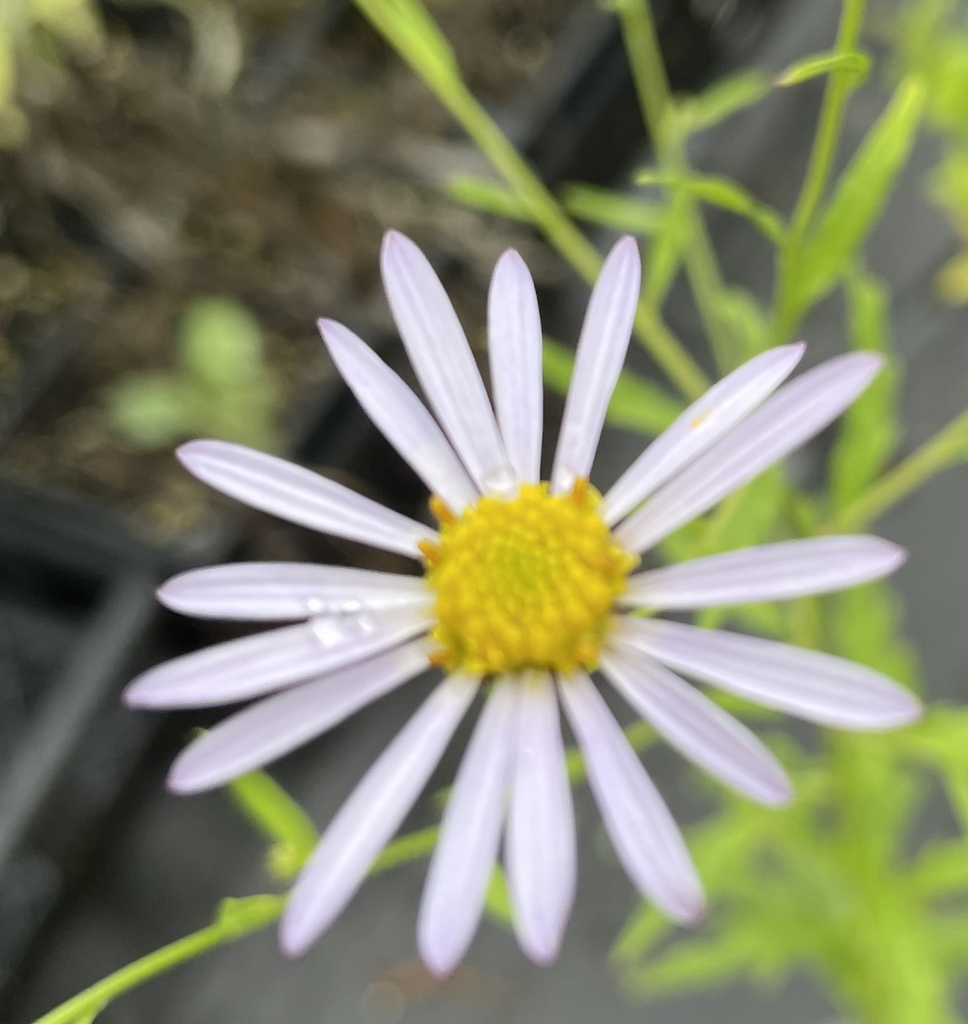
- The daisy-like flowers measure about 1 inch in diameter with pale lilac to bluish-purple petal rays and a center disc of yellow florets. There are 16-27 petal rays per bloom. Flowering occurs from June to October.
-
-
Leaves:
- Leaf Color:
- Green
- Leaf Feel:
- Smooth
- Leaf Value To Gardener:
- Showy
- Leaf Type:
- Simple
- Leaf Arrangement:
- Alternate
- Leaf Shape:
- Lanceolate
- Oblong
- Leaf Margin:
- Lobed
- Serrate
- Hairs Present:
- No
- Leaf Length:
- 3-6 inches
- Leaf Width:
- < 1 inch
- Leaf Description:
- The dark green leaves are simple, alternately arranged, oblong to lanceolate with serrated margins.
-
-
Stem:
- Stem Color:
- Green
- Stem Is Aromatic:
- No
- Stem Form:
- Straight
- Stem Surface:
- Smooth (glabrous)
- Stem Description:
- The erect, green stems are branched at the upper part of the stem. The surface is smooth or sparsely strigose (fine, stiff hairs).
-
-
Landscape:
- Landscape Location:
- Coastal
- Container
- Meadow
- Near Septic
- Pool/Hardscape
- Slope/Bank
- Woodland
- Landscape Theme:
- Butterfly Garden
- Cottage Garden
- Cutting Garden
- Pollinator Garden
- Rock Garden
- Design Feature:
- Border
- Mass Planting
- Small groups
- Attracts:
- Bees
- Butterflies
- Resistance To Challenges:
- Deer
- Drought
- Heat
- Humidity
- Rabbits



