


Japanese cobra lily Arisaema sikokianum
Other Common Name(s):
Other plants called Japanese cobra lily:
Previously known as:
- Arisaema japonica
- Phonetic Spelling
- air-uh-SEE-muh see-ko-kee-AY-num
- This plant has low severity poison characteristics.
- See below
- Description
-
Japanese Jack-in-the-pulpit is an herbaceous flowering plant in the aroid family (Araceae) native to the island of Shikoku in Japan and found in shady, moist woodland sites. The species epithet is Latin for "of Shikoku."
This plant grows 1.5 to 2 feet tall and wide in hummus-rich, moist, well-drained soils in partial to full shade. It is best grown from corms, as plants grown from seed can take 3 to 5 years to bloom. Plant corms 3 to 4 inches deep and leave them undisturbed once established.
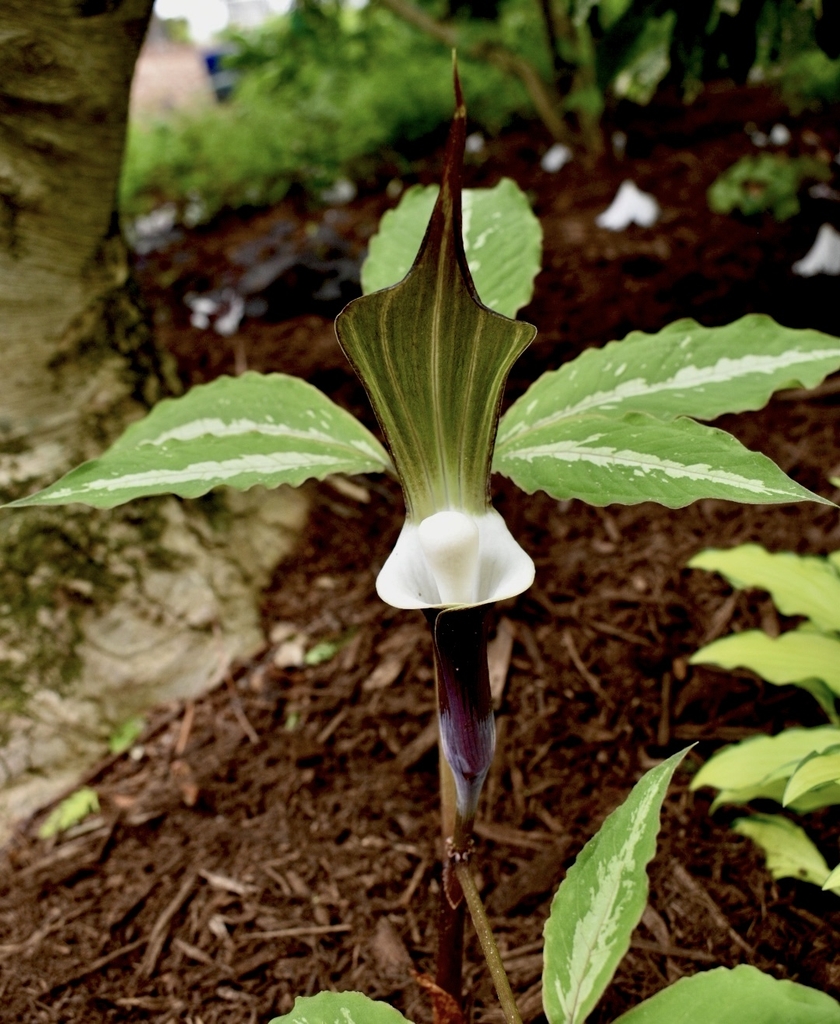
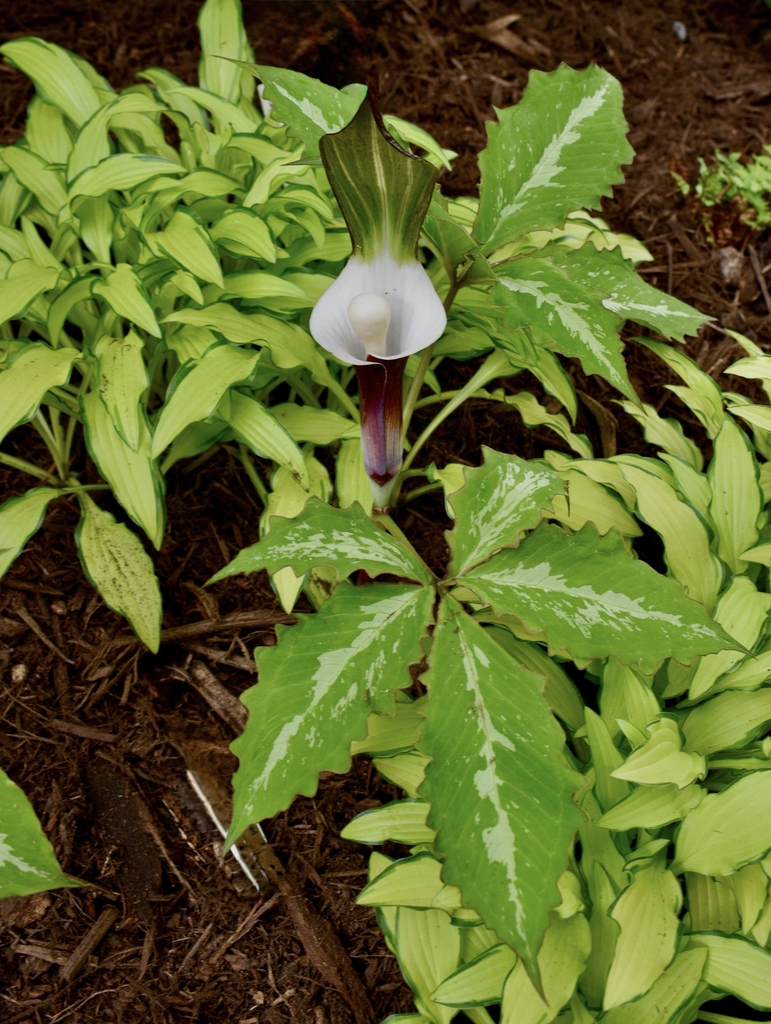
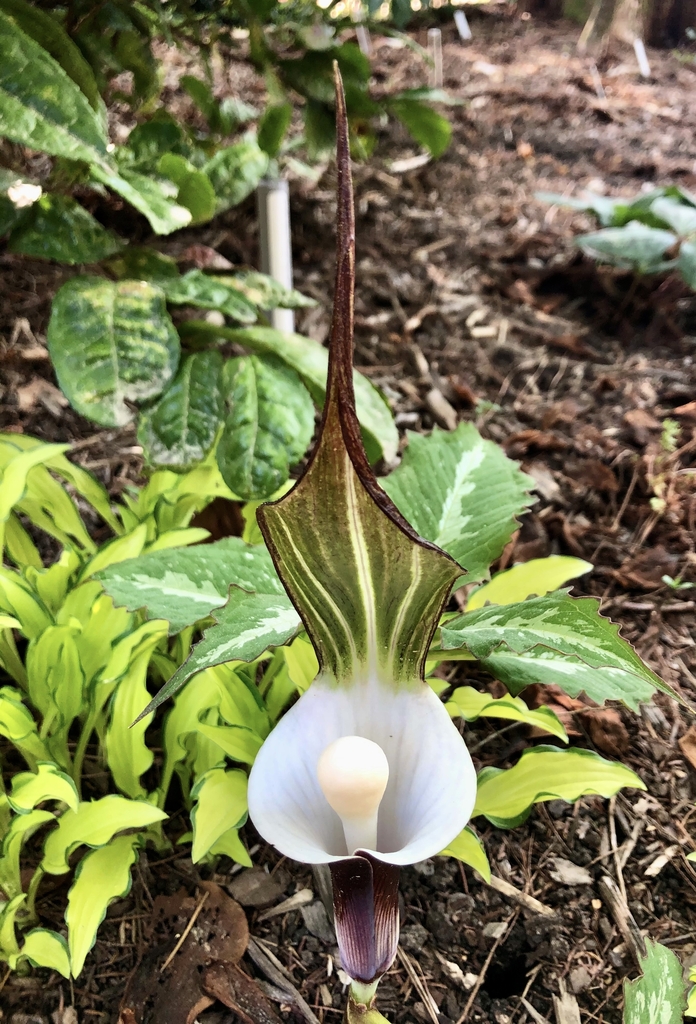
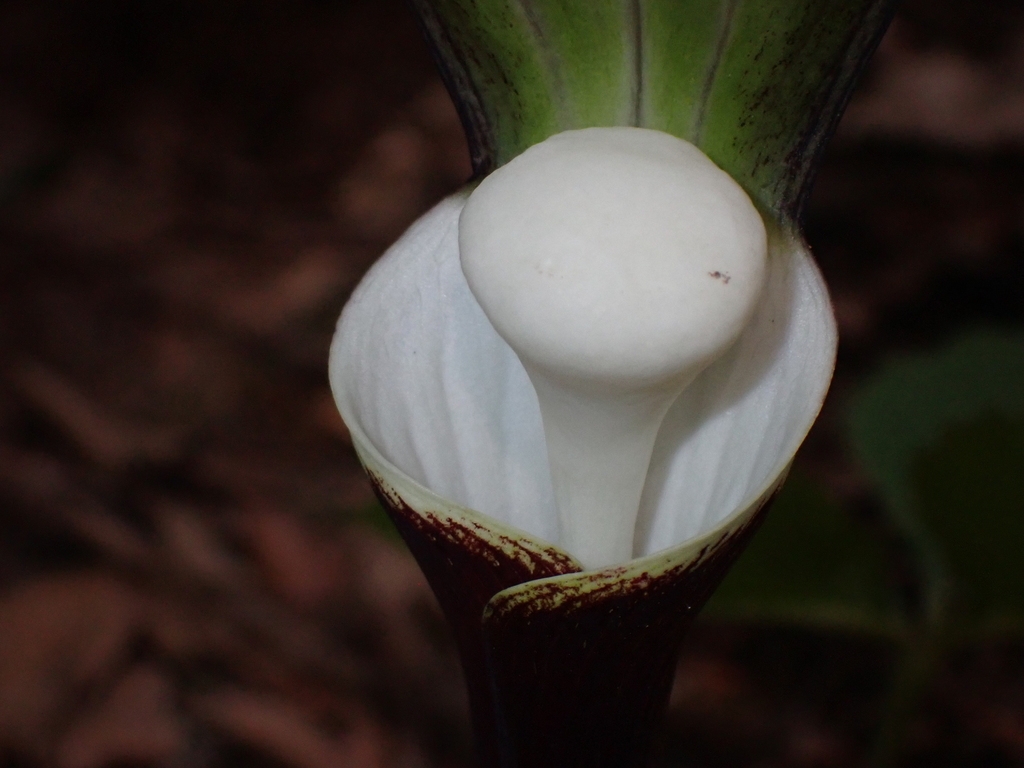
The inflorescence is comprised of a spathe, which is a sheathing bract that is dark purple on the outside and white on the inside, and a spadix, which is an unbranched spike of tiny flowers. The spadix is swollen and white, surrounded by the spathe. Blooming occurs in spring. It is the showiest of the plants in the group. The flower may be followed by a cone of red berries in summer.
Use Japanese Jack-in-the-pulpit in a woodland garden, in shade to partial shade, along with other shade-loving plants, as it will go dormant in mid- to late-summer. Use in a cottage or Asian garden theme or in a container. Some people may experience a mild dermatitis when handling the plant.
Insects, Diseases, and Other Plant Problems: No significant problems. Watch for slugs and vine weevils.
- See this plant in the following landscape:
- Cultivars / Varieties:
-
- Tags:
 Download Image
 Download Image
 Download Image


- Cultivars / Varieties:
-
- Tags:
-
-
Attributes:
- Genus:
- Arisaema
- Species:
- sikokianum
- Family:
- Araceae
- Life Cycle:
- Perennial
- Country Or Region Of Origin:
- Japan
- Dimensions:
- Height: 1 ft. 6 in. - 2 ft. 0 in.
- Width: 1 ft. 6 in. - 2 ft. 0 in.
-
-
Whole Plant Traits:
- Plant Type:
- Herbaceous Perennial
- Habit/Form:
- Erect
- Growth Rate:
- Medium
- Maintenance:
- Medium
- Texture:
- Medium
-
-
Cultural Conditions:
- Light:
- Deep shade (Less than 2 hours to no direct sunlight)
- Partial Shade (Direct sunlight only part of the day, 2-6 hours)
- Soil Texture:
- High Organic Matter
- Soil Drainage:
- Good Drainage
- Moist
- NC Region:
- Coastal
- Mountains
- Piedmont
- USDA Plant Hardiness Zone:
- 5a, 5b, 6a, 6b, 7a, 7b, 8a, 8b, 9a
-
-
Fruit:
- Fruit Color:
- Red/Burgundy
- Fruit Value To Gardener:
- Showy
- Display/Harvest Time:
- Fall
- Summer
- Fruit Type:
- Berry
- Fruit Description:
- The spathe may produce a dense cone of red berries in summer to fall
-
-
Flowers:
- Flower Color:
- Purple/Lavender
- White
- Flower Bloom Time:
- Spring
- Flower Shape:
- Tubular
- Flower Size:
- > 6 inches
- Flower Description:
- The inflorescence is a spadix up to 8 inches long ans swollen at the apex. It is surrounded by the spathe that is dark purple on the outside and pure white on the inside and a large striped hood of purple, green and white. Bloom time is spring
-
-
Leaves:
- Leaf Color:
- Green
- Red/Burgundy
- Leaf Margin:
- Lobed
- Hairs Present:
- No
- Leaf Description:
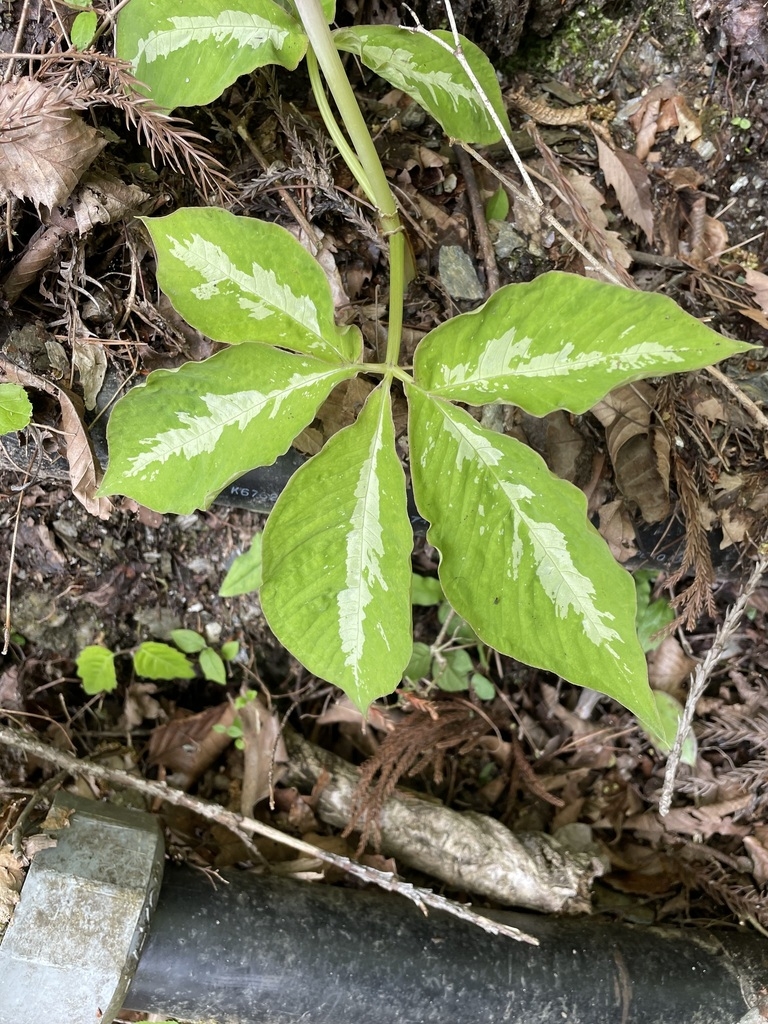
- The stem arising from the corms produces a pair of 5-lobed leaves, some of which may have red markings
-
-
Stem:
- Stem Color:
- Green
- Stem Is Aromatic:
- No
- Stem Description:
- A single fleshy stem arises from the corm
-
-
Landscape:
- Landscape Location:
- Container
- Woodland
- Landscape Theme:
- Asian Garden
- Cottage Garden
- Shade Garden
- Design Feature:
- Border
- Small groups
- Resistance To Challenges:
- Deer
- Problems:
- Poisonous to Humans
- Problem for Cats
- Problem for Children
- Problem for Dogs
- Problem for Horses
-
-
Poisonous to Humans:
- Poison Severity:
- Low
- Poison Symptoms:
- Irritation and swelling of the lips, tongue, and throat if it is eaten raw. Handling the fruit pulp or leaf sap may cause mild dermatitis.
- Poison Toxic Principle:
- calcium oxalate
- Causes Contact Dermatitis:
- Yes
- Poison Part:
- Fruits
- Leaves
- Roots
- Sap/Juice