


Anatherum virginicum
Common Name(s):
Previously known as:
- Andropogon virginicus
- Phonetic Spelling
- a-NAH-the-rum ver-JIN-ih-kus
- Description
-
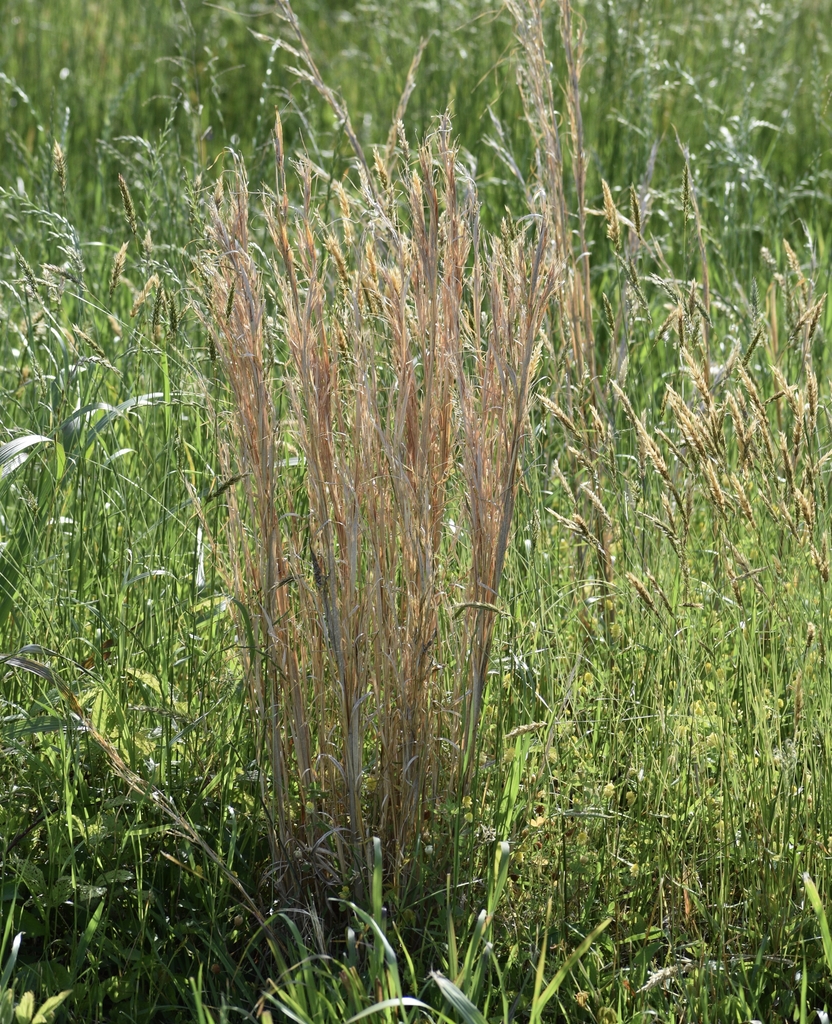
Broomsedge is a native perennial plant in the grass family (Poaceae). The specific epithet, virginicus ("from Virginia"), refers to the Virginia territory where the specimen was originally collected. The common name of broomsedge is misleading, as it is a grass and not a sedge. The early settlers gathered and used the dried stalks of broomsedge to make brooms.
Broomsedge grows best in full sun, dry conditions and poor, barren soil. However, it will grow in partial sun, and it will tolerate mesic soils. This plant is not recommended for a formal garden and does not tolerate heavy mulch. However, it can be used as a backdrop or as a filler in wildflower beds.
It is often found in disturbed woodlands, old fields and pastures, and along roadbeds. Broomsedge is a vigorous plant that provides excellent ground cover that is not grazed by livestock or wildlife. It is good for use in managed rural areas.
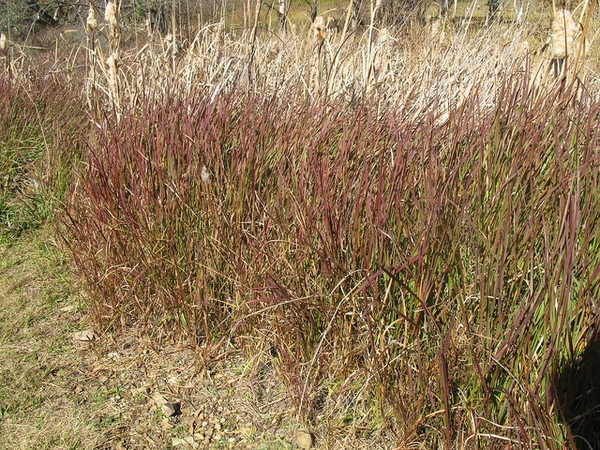
Broomsedge has green leaves and stems that turn dark red-purple followed by bright orange in late fall. It is a long-lived plant. May cause allergy symptoms for some.
Insects, Diseases, and Other Plant Problems: No significant problems
- See this plant in the following landscape :
- Cultivars / Varieties:
-
- Tags:


- Cultivars / Varieties:
-
- Tags:
-
-
Attributes:
- Genus:
- Anatherum
- Species:
- virginicum
- Family:
- Poaceae
- Life Cycle:
- Perennial
- Recommended Propagation Strategy:
- Division
- Seed
- Country Or Region Of Origin:
- N. & Central America, Caribbean to Venezuela
- Distribution:
- AL , AR , CA , CT , DC , DE , FL , GA , HI , IA , IL , IN , KS , KY , LA , MA , MD , MI , MO , MS , NC , NJ , NY , OH , OK , PA , RI , SC , TN , TX , VA , WV
- Wildlife Value:
- Members of the genus Anatherum support Common Wood-Nymph (Cercyonis pegala) larvae which have one brood from late May to October. Adult Common Wood-Nymph butterflies feed on rotting fruit and flower nectar. This plant also supports various Skipper larvae.
- Particularly Resistant To (Insects/Diseases/Other Problems):
- Tolerant of poor soil (sand, clay) and drought
- Dimensions:
- Height: 2 ft. 0 in. - 4 ft. 0 in.
- Width: 1 ft. 0 in. - 2 ft. 0 in.
-
-
Whole Plant Traits:
- Plant Type:
- Herbaceous Perennial
- Native Plant
- Ornamental Grasses and Sedges
- Habit/Form:
- Clumping
- Erect
- Growth Rate:
- Medium
- Texture:
- Medium
-
-
Cultural Conditions:
- Light:
- Full sun (6 or more hours of direct sunlight a day)
- Partial Shade (Direct sunlight only part of the day, 2-6 hours)
- Soil Texture:
- Sand
- Soil Drainage:
- Moist
- Occasionally Dry
- Available Space To Plant:
- 12 inches-3 feet
- NC Region:
- Coastal
- Mountains
- Piedmont
- USDA Plant Hardiness Zone:
- 3a, 3b, 4a, 4b, 5a, 5b, 6a, 6b, 7a, 7b, 8a, 8b, 9a, 9b
-
-
Fruit:
- Display/Harvest Time:
- Fall
- Fruit Description:
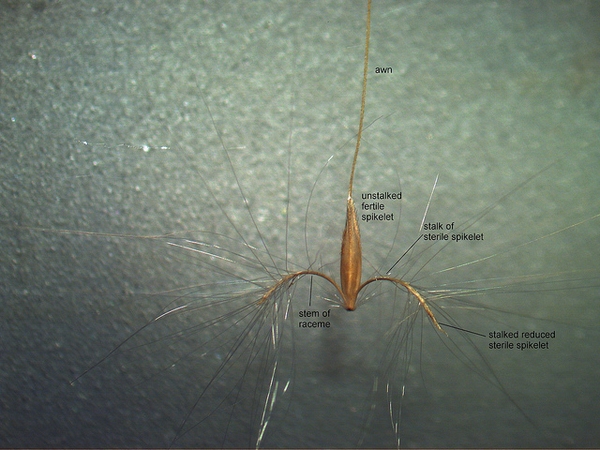
- Fruit displays from October to November.
-
-
Flowers:
- Flower Color:
- Orange
- Flower Bloom Time:
- Fall
- Flower Description:
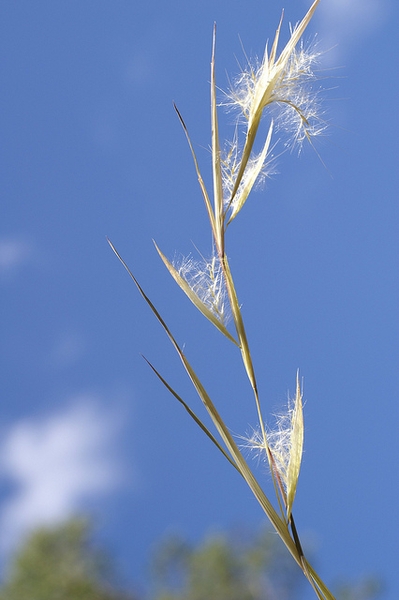
- The flower inflorescence appears in September, turns bright orange in fall, and is attractively silver when back lit.
-
-
Leaves:
- Leaf Color:
- Gold/Yellow
- Gray/Silver
- Green
- Orange
- Purple/Lavender
- Red/Burgundy
- Deciduous Leaf Fall Color:
- Orange
- Leaf Type:
- Sheath
- Hairs Present:
- Yes
- Leaf Description:
- Green leaves and stems turns dark red-purple then bright orange in late fall.
-
-
Stem:
- Stem Color:
- Green
- Orange
- Purple/Lavender
- Red/Burgundy
- Stem Is Aromatic:
- No
- Stem Description:
- Andropogon virginicus has green leaves and stems turns dark red-purple then bright orange in late fall.
-
-
Landscape:
- Landscape Location:
- Meadow
- Naturalized Area
- Landscape Theme:
- Butterfly Garden
- Cottage Garden
- Drought Tolerant Garden
- Garden for the Blind
- Native Garden
- Pollinator Garden
- Design Feature:
- Accent
- Barrier
- Border
- Mass Planting
- Attracts:
- Butterflies
- Pollinators
- Resistance To Challenges:
- Drought
- Poor Soil