


Sphaeropteris cooperi
Common Name(s):
Previously known as:
- Alsophila cooperi
- Cyathea cooperi
- Phonetic Spelling
- sfay-ROP-teris koo-PER-ee
- Description
-
The Australian tree fern is a medium to large, fast-growing, ornamental, tropical, evergreen in the tree-fern family (Cyatheaceae) that is native to New South Wales and Queensland, Australia. The specie epithet commemorates the surname “Cooper” but was not explained by the author of the name.
This tree prefers partial to full shade and moist, well-drained, loamy, sandy soil. The soil should be kept moist consistently, and it also requires a warm and humid environment with temperatures ranging from 65 to 80 degrees Fahrenheit. It is propagated by spores.
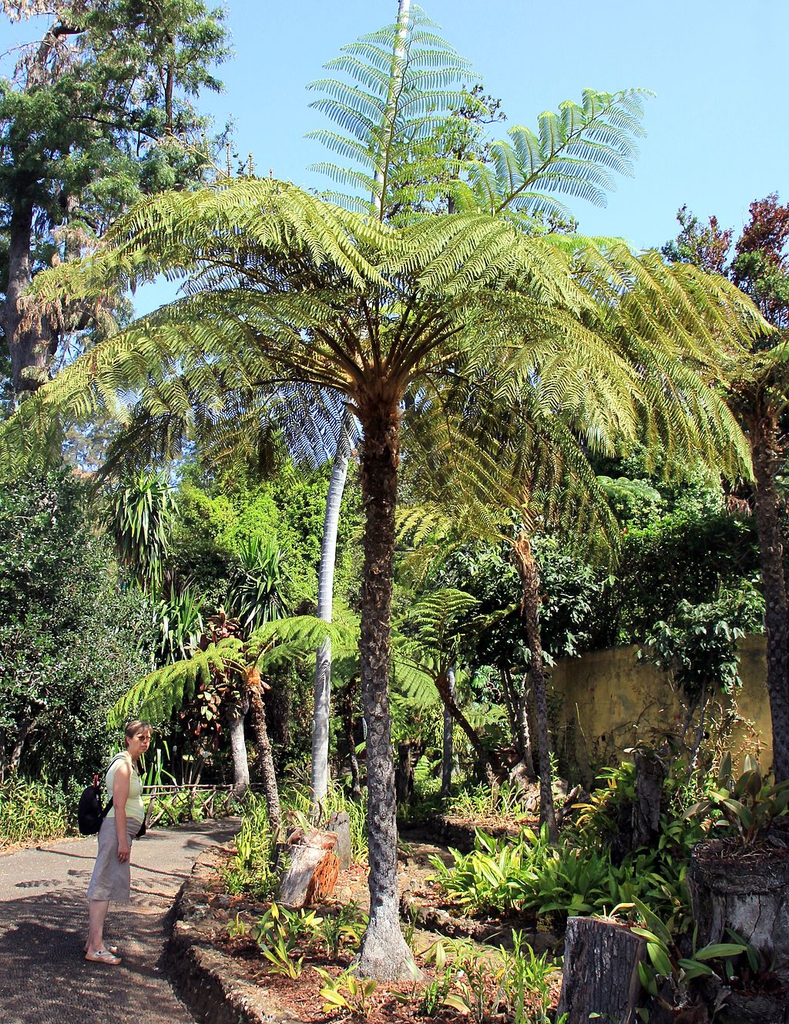
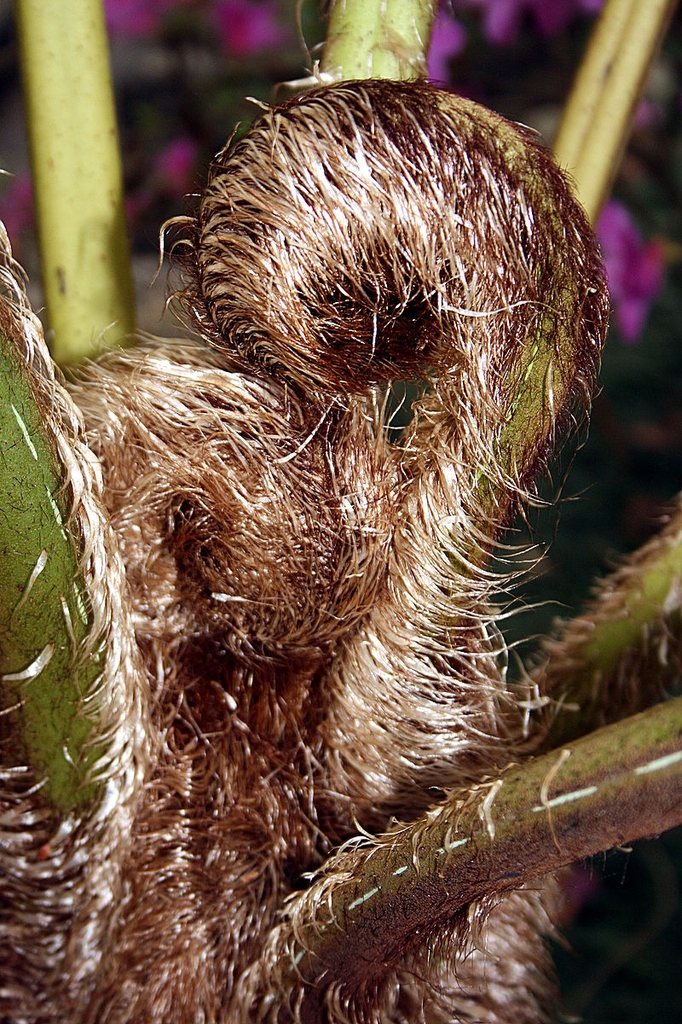
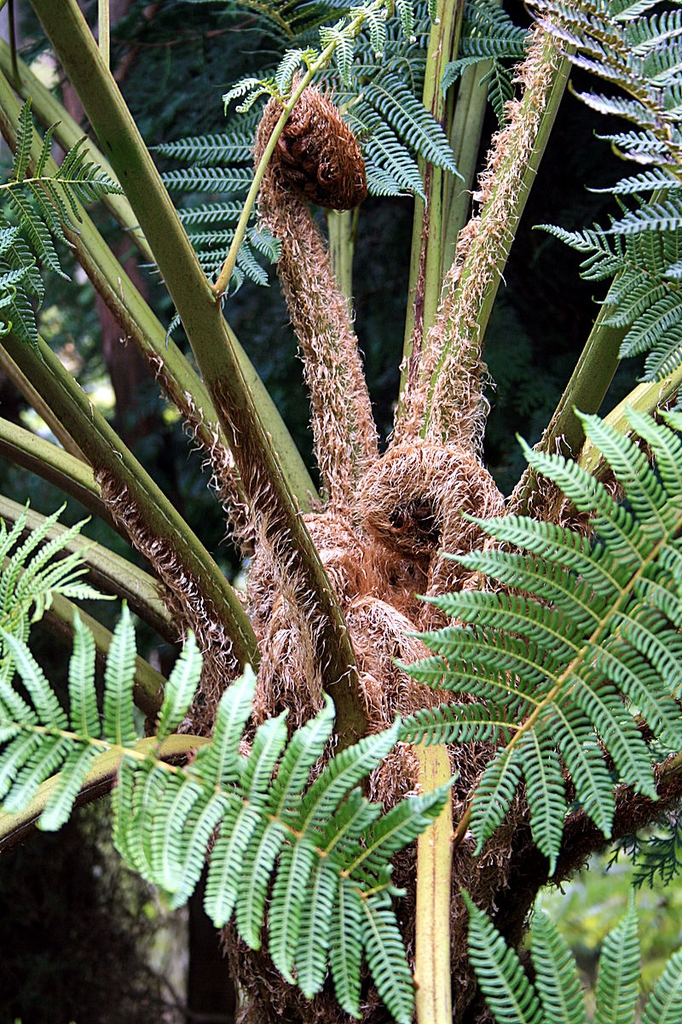
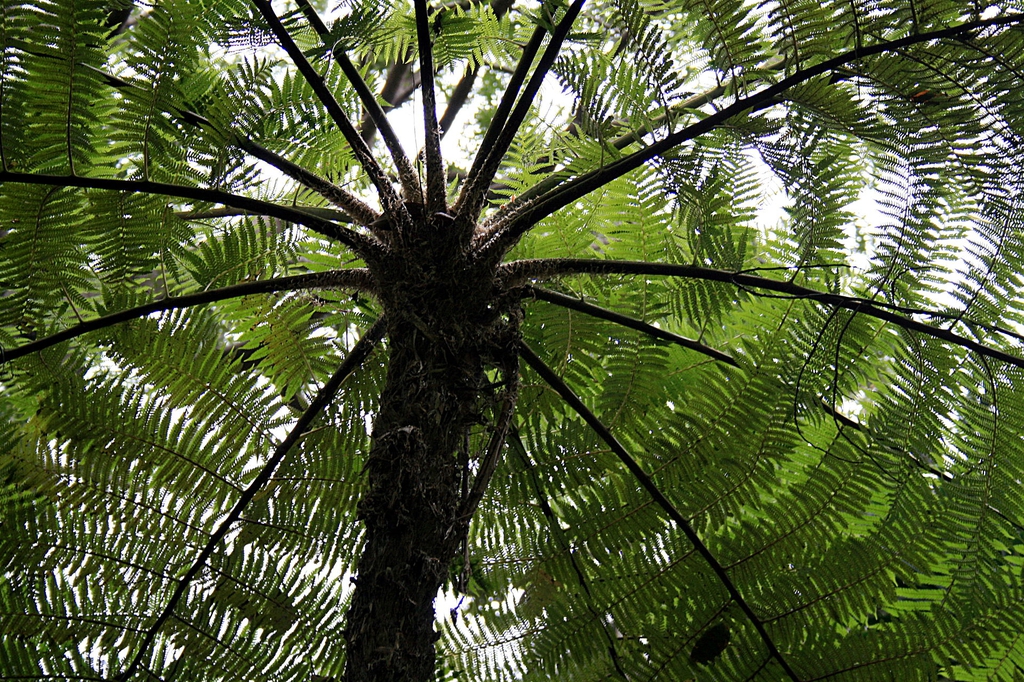
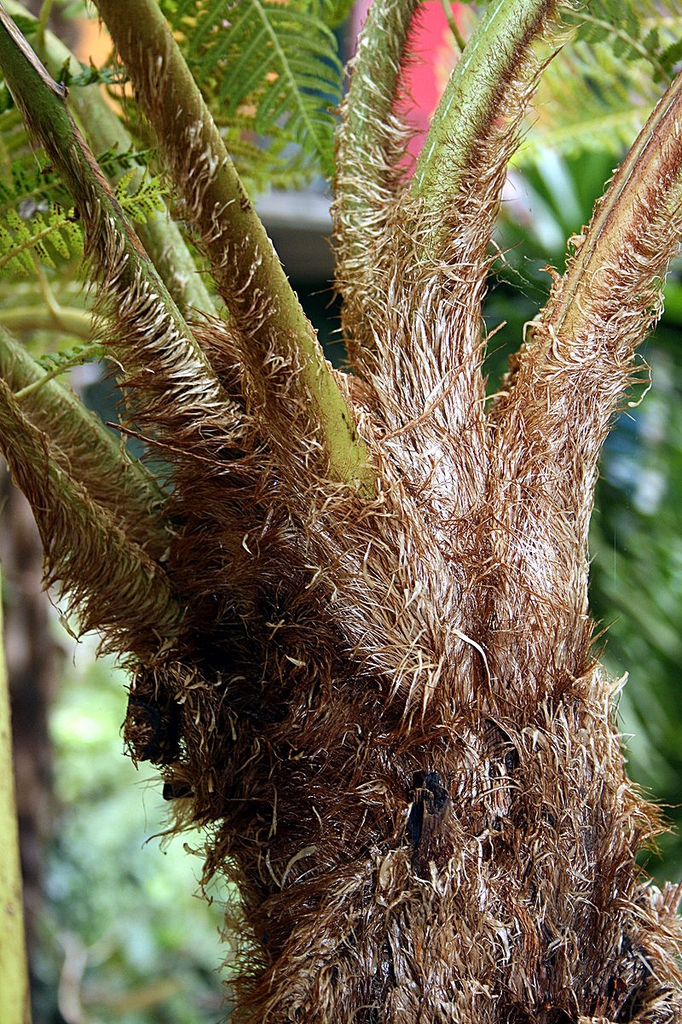
It can reach a height of 15 to 25 feet tall and 10 to 12 feet wide, but up to 50 feet tall in the wild. It has a solitary, scale covered trunk and long, lacy, feathery, green, bipinnately compound fronds. Its form resembles a martini glass with gracefully arching fronds emerging from a skinny trunk. The stem of this fern is brown and fibrous. The fronds are delicate, medium-green, bipinnately compounded, and can reach up 13 to 20 feet in length. The stipes or stems of the fronds will fall off when the fronds die, leaving oval scars on the scaly stems. Young fronds are known as fiddleheads and have stiff white hairs. The brown sori appear in a single row on the undersides of the leaflets, close to the midrib.
The Australian tree fern is easy to grow and is often used in gardens or public areas. In climates such as North Carolina, it may be used as a tropical container specimen seasonally on a patio or deck. If grown indoors, it will require a bright and humid location such as a sunroom or bathroom. This tropical plant may grow too tall as an indoor plant and may be best reserved for conservatories and greenhouses.
Insects, Diseases, and Other Plant Problems: Monitor for spider mites and mealybugs. It is usually resistant to diseases. Root rot can occur from watering the crown; therefore, it is best water at the base of the trunk. Rapid changes in temperature or humidity can cause browning of the fronds.
VIDEO Created by NC State Extension's Homegrown series featuring Mark Weathington, Director of JC Raulston Arboretum.
- Profile Video:
- See this plant in the following landscape :
- Cultivars / Varieties:
-
- 'Brentwood'
fast-growing, large tree with dark green fronds
- 'Brentwood'
- 'Brentwood'
- Tags:


- Cultivars / Varieties:
-
- 'Brentwood'
fast-growing, large tree with dark green fronds
- 'Brentwood'
- 'Brentwood'
- Tags:
-
-
Attributes:
- Genus:
- Sphaeropteris
- Species:
- cooperi
- Family:
- Cyatheaceae
- Life Cycle:
- Woody
- Country Or Region Of Origin:
- Eastern Australia
- Distribution:
- Native: New South Wales and Queensland, Australia. Introduced: Azores, Cape Provinces, Hawaii, KwaZulu-Natal, Madeira, Mauritius, New Zealand North, Réunion, Tanzania, Vanuatu, Victoria, Western Australia
- Play Value:
- Easy to Grow
- Shade
- Textural
- Particularly Resistant To (Insects/Diseases/Other Problems):
- Heavy shade, Deer
- Dimensions:
- Height: 15 ft. 0 in. - 50 ft. 0 in.
- Width: 10 ft. 0 in. - 12 ft. 0 in.
-
-
Whole Plant Traits:
- Plant Type:
- Fern
- Tree
- Woody Plant Leaf Characteristics:
- Broadleaf Evergreen
- Habit/Form:
- Arching
- Erect
- Open
- Growth Rate:
- Rapid
- Maintenance:
- Low
- Texture:
- Fine
-
-
Cultural Conditions:
- Light:
- Dappled Sunlight (Shade through upper canopy all day)
- Deep shade (Less than 2 hours to no direct sunlight)
- Full sun (6 or more hours of direct sunlight a day)
- Partial Shade (Direct sunlight only part of the day, 2-6 hours)
- Soil Texture:
- Loam (Silt)
- Sand
- Soil pH:
- Acid (<6.0)
- Neutral (6.0-8.0)
- Soil Drainage:
- Good Drainage
- Moist
- Available Space To Plant:
- 6-feet-12 feet
- 12-24 feet
- NC Region:
- Coastal
- USDA Plant Hardiness Zone:
- 8a, 8b, 9a, 9b, 10a, 10b, 11a, 11b
-
-
Fruit:
- Fruit Description:
- No fruits. This plants reproduces via spores.
-
-
Flowers:
- Flower Description:
- Non-flowering
-
-
Leaves:
- Woody Plant Leaf Characteristics:
- Broadleaf Evergreen
- Leaf Color:
- Green
- Leaf Value To Gardener:
- Showy
- Leaf Type:
- Compound (Pinnately , Bipinnately, Palmately)
- Fronds
- Leaf Arrangement:
- Whorled
- Leaf Shape:
- Lanceolate
- Leaf Margin:
- Entire
- Hairs Present:
- No
- Leaf Length:
- > 6 inches
- Leaf Description:
- The leaves are green on the upper side and pale green on the underside. They are evergreen, whorled, odd-pinnately compound, lanceolate with entire margins. The leaf blade is 1 to 1.5 feet long and each leaflet is less than 2 inches long. The fronds can reach up to 13 to 20 feet long. The large fronds that have a delicate and lacy appearance. The fiddle heads have stiff white hairs.
-
-
Bark:
- Bark Color:
- Light Brown
- Bark Description:
- The bark is brown and fibrous. Trunk is skinny has oval-shaped leaf scars from old fronds in a diagonal pattern encircling the trunk.
-
-
Stem:
- Stem Color:
- Brown/Copper
- Stem Is Aromatic:
- No
- Stem Description:
- The stems are brown and scaly.
-
-
Landscape:
- Landscape Location:
- Container
- Patio
- Pool/Hardscape
- Woodland
- Landscape Theme:
- Children's Garden
- Shade Garden
- Design Feature:
- Accent
- Specimen
- Resistance To Challenges:
- Deer
- Heavy Shade
- Problems:
- Weedy