


Quercus myrtifolia
Common Name(s):
Previously known as:
- Quercus phellos var. arenaria
- Quercus phellos var. myrtifolia
- Phonetic Spelling
- KWER-kus mir-ti-FOH-lee-ah
- Description
-
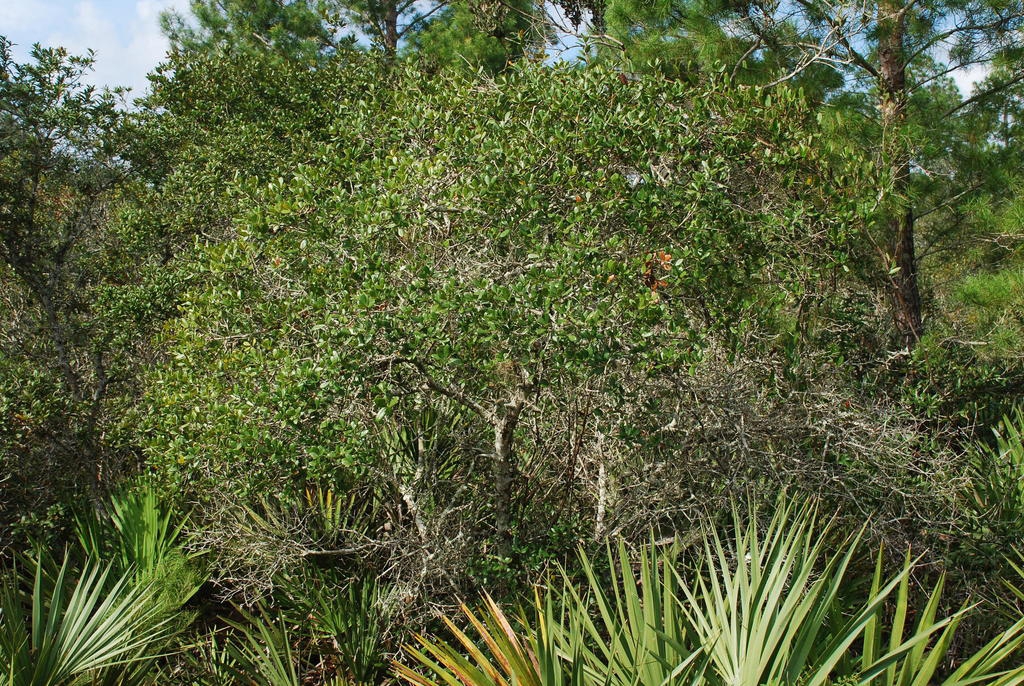
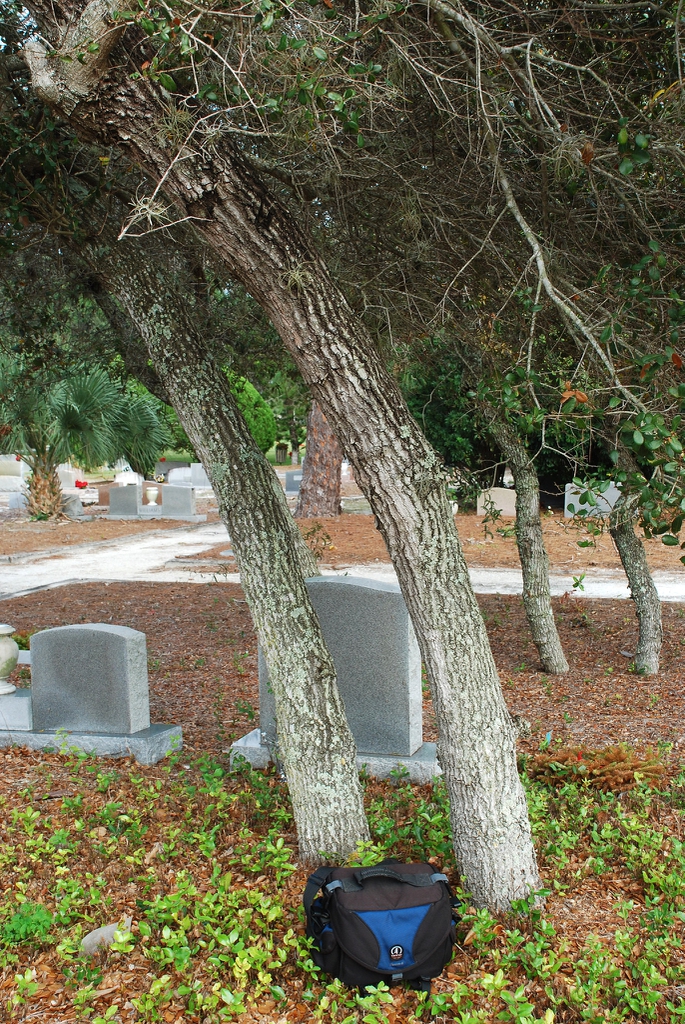
Myrtle oak is a large evergreen shrub to medium sized tree in the red oak family (Fagaceae) native to the southeastern USA. It is found in dry sandy soils of dunes, sandhills, and ridges, from sea level to 350 feet in elevation, with a western range limit of coastal Mississippi. The specific epithet means with leaves like myrtle.
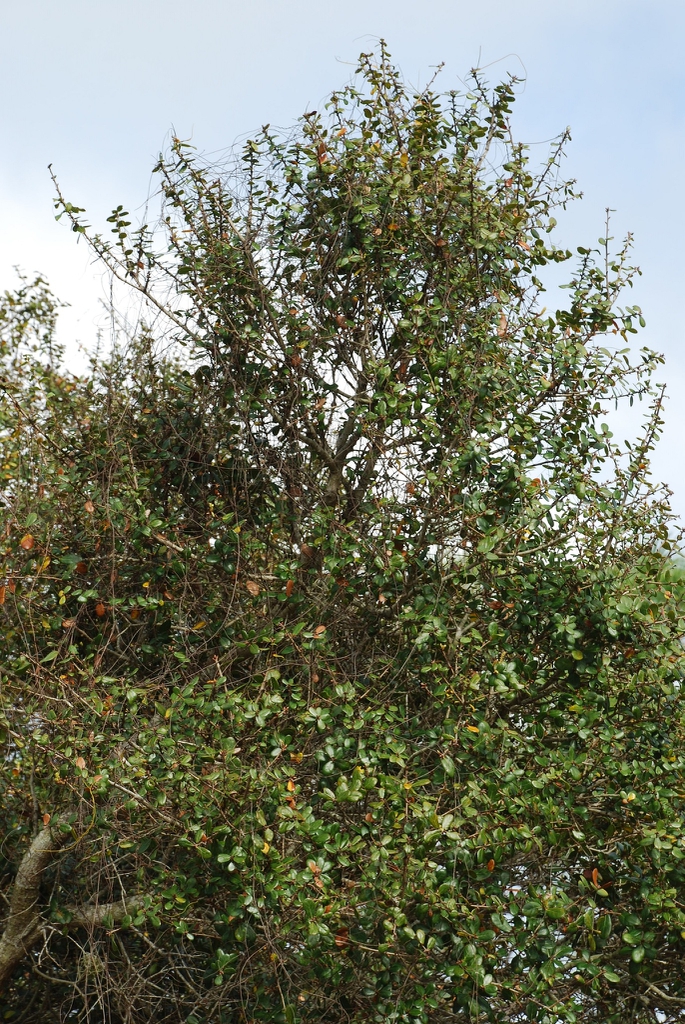
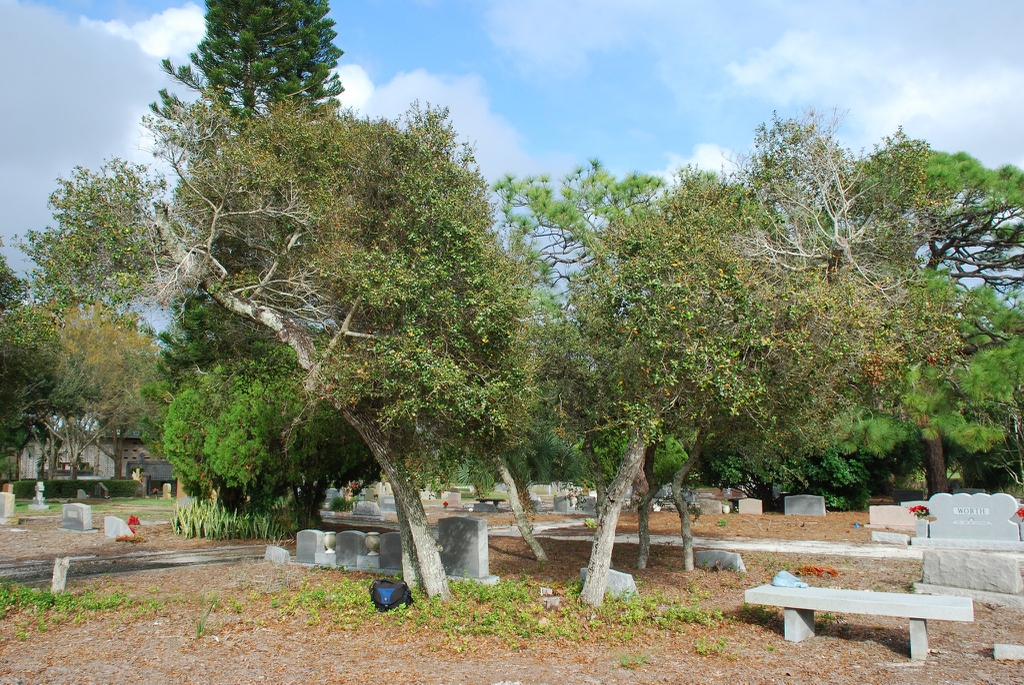
Myrtle oak can grow 15-20 feet high or higher with an 8-10 foot spread and a rounded crown and can form thickets. It needs full sun to partial shade in well-drained acidic sandy to loamy soils. It is drought-tolerant once established and tolerant of salty wind
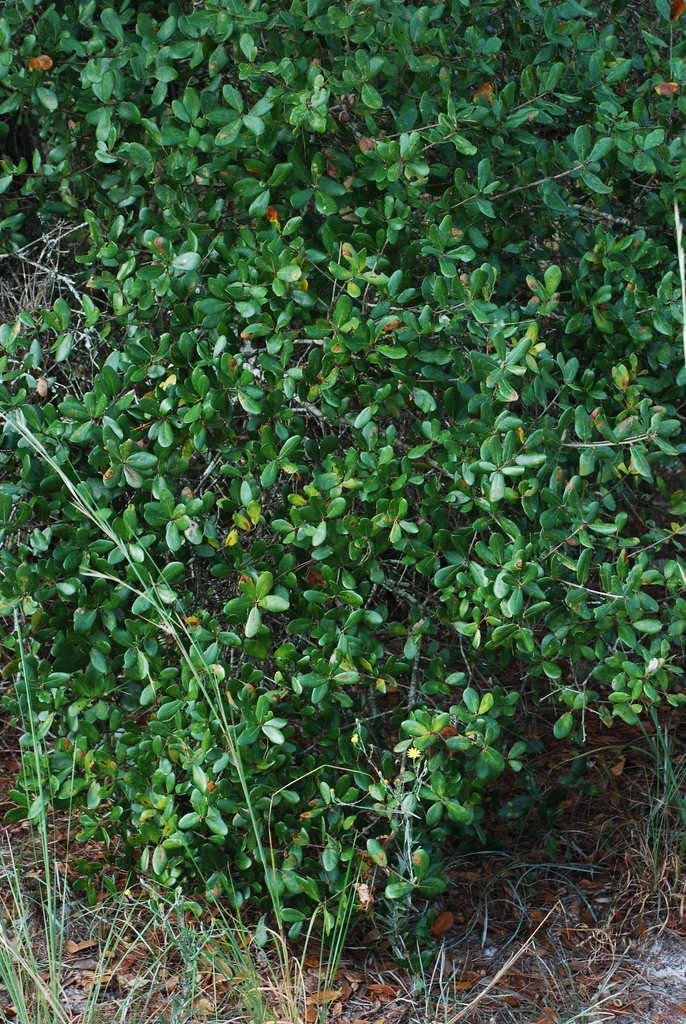
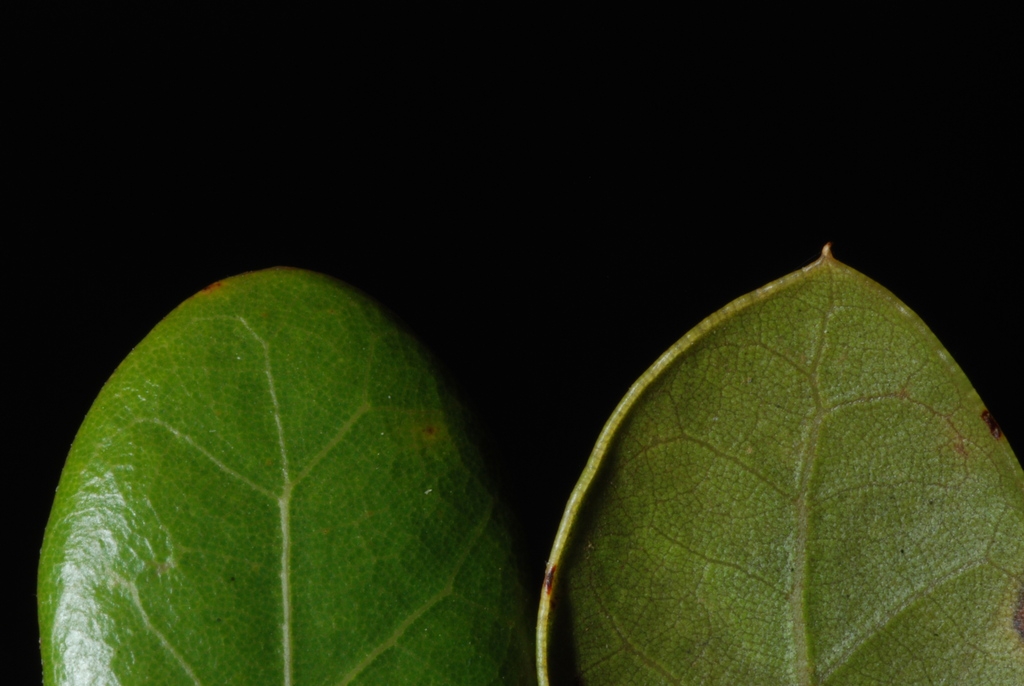
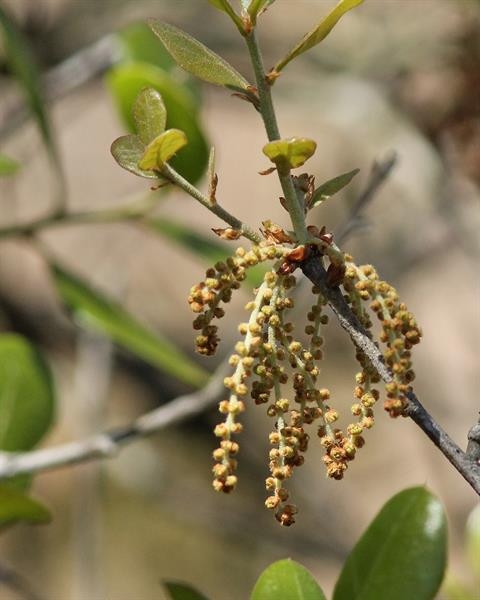
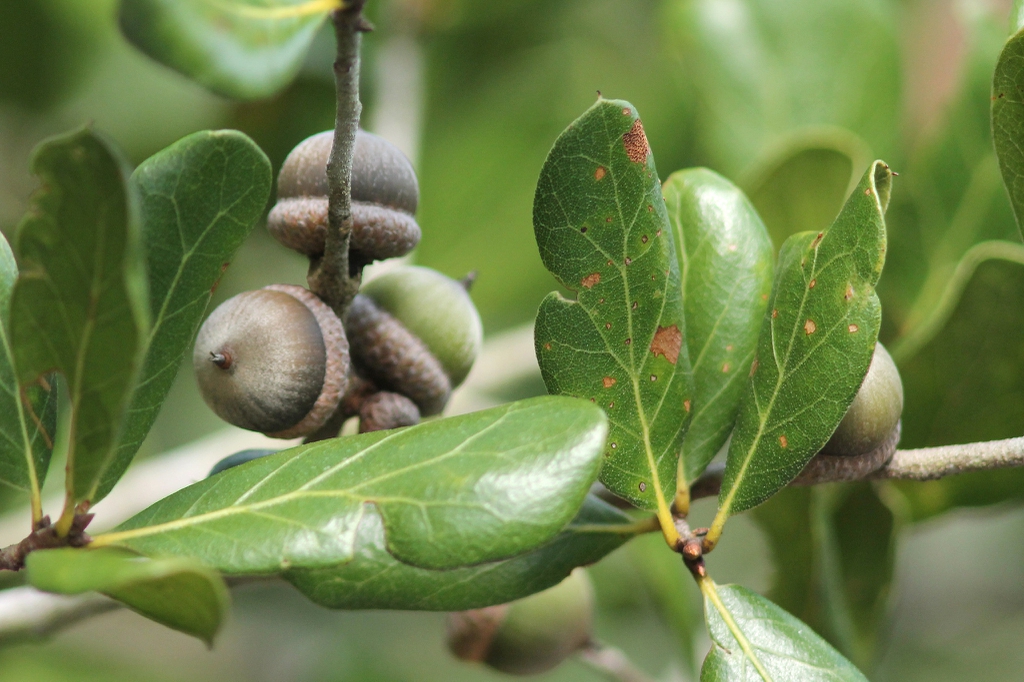
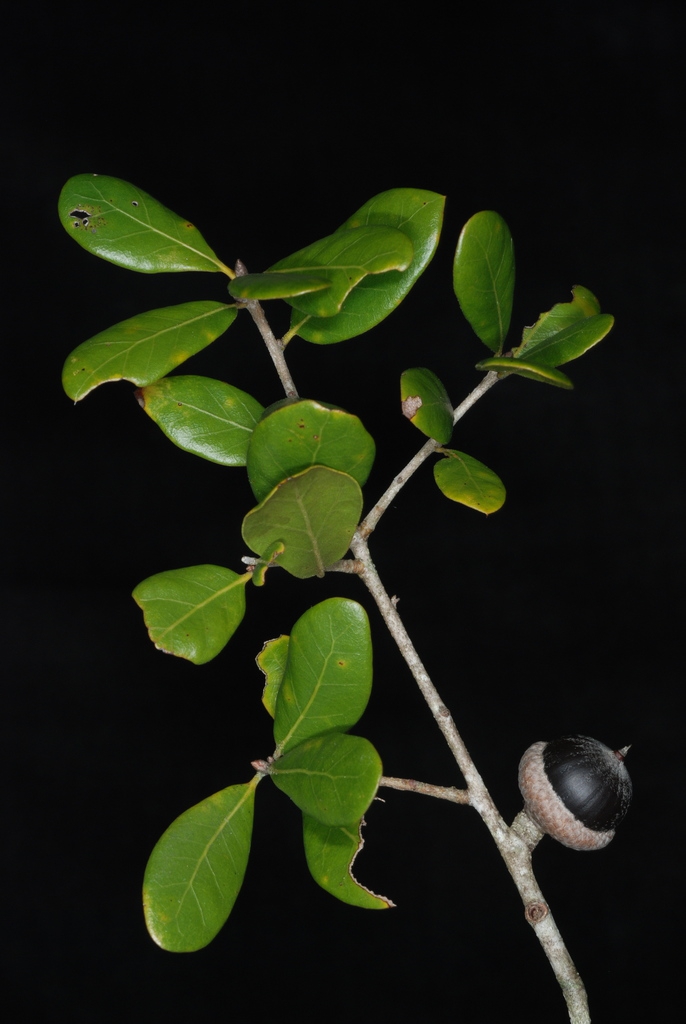
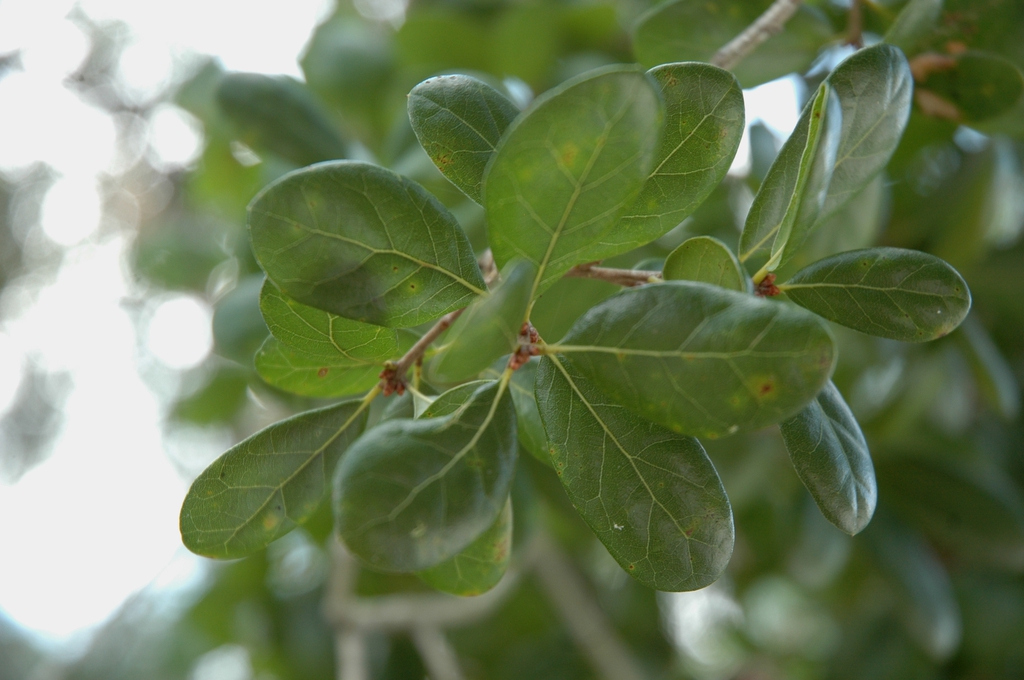
Insignificant flowers appear in spring, followed by small acorns that mature the following year. The Leaves are leathery, glossy and 2 inches long with rolled margins and a bristle at the tip. They stay on the tree all winter until new spring growth appears.
Myrtle oak works well in the landscape as an accent plant or the back of a shrub border or pollinator garden. Its evergreen leaves provide winter interest in the landscape.
Insects, Diseases, and Other Plant Problems: See common pests of oaks in NC to the left. The Clemson Cooperative Extension Home and Garden Information Center has a factsheet on common pests and insects.
- See this plant in the following landscape :
- Cultivars / Varieties:
-
- Tags:


- Cultivars / Varieties:
-
- Tags:
-
-
Attributes:
- Genus:
- Quercus
- Species:
- myrtifolia
- Family:
- Fagaceae
- Life Cycle:
- Woody
- Recommended Propagation Strategy:
- Seed
- Country Or Region Of Origin:
- Southeastern U.S.A.
- Distribution:
- AL , FL , GA , MS , NC , SC
- Wildlife Value:
- Oak trees support a wide variety of Lepidopteran. You may see Imperial Moth (Eacles imperialis) larvae which have one brood per season and appear from April-October in the south. Adult Imperial Moths do not feed. Banded Hairstreak (Satyrium calanus), which have one flight from June-August everywhere but Florida where they emerge April-May. Edward's Hairstreak (Satyrium edwardsii), has one flight from May-July in the south and June-July in the north. Gray Hairstreak (Strymon melinus), has three to four flights in the south from February-November and two flights in the north from May-September. White-M Hairstreak (Parrhasius m-album) has three broods in the north from February-October. Horace’s Duskywing (Erynnis horatius) has three broods in Texas and the deep south from January-November, and two broods in the north from April-September. Juvenal’s Duskywing (Erynnis juvenalis) has one brood from April-June, appearing as early as January in Florida. Acorns provide food to birds and mammals. The tree provides shelter to birds and mammals. They are host plants to moths and butterflies.
- Edibility:
- Acorns (nuts) are edible after tannins are leached or boiled out
- Dimensions:
- Height: 15 ft. 0 in. - 20 ft. 0 in.
- Width: 8 ft. 0 in. - 10 ft. 0 in.
-
-
Whole Plant Traits:
- Plant Type:
- Tree
- Woody Plant Leaf Characteristics:
- Broadleaf Evergreen
- Habit/Form:
- Broad
- Multi-stemmed
- Growth Rate:
- Slow
- Maintenance:
- Low
- Texture:
- Coarse
-
-
Cultural Conditions:
- Light:
- Full sun (6 or more hours of direct sunlight a day)
- Partial Shade (Direct sunlight only part of the day, 2-6 hours)
- Soil Texture:
- Loam (Silt)
- Sand
- Soil pH:
- Neutral (6.0-8.0)
- Soil Drainage:
- Occasionally Dry
- Very Dry
- Available Space To Plant:
- 6-feet-12 feet
- NC Region:
- Coastal
- USDA Plant Hardiness Zone:
- 8a, 8b, 9a, 9b, 10a, 10b
-
-
Fruit:
- Fruit Color:
- Brown/Copper
- Display/Harvest Time:
- Fall
- Fruit Type:
- Nut
- Fruit Length:
- < 1 inch
- Fruit Width:
- < 1 inch
- Fruit Description:
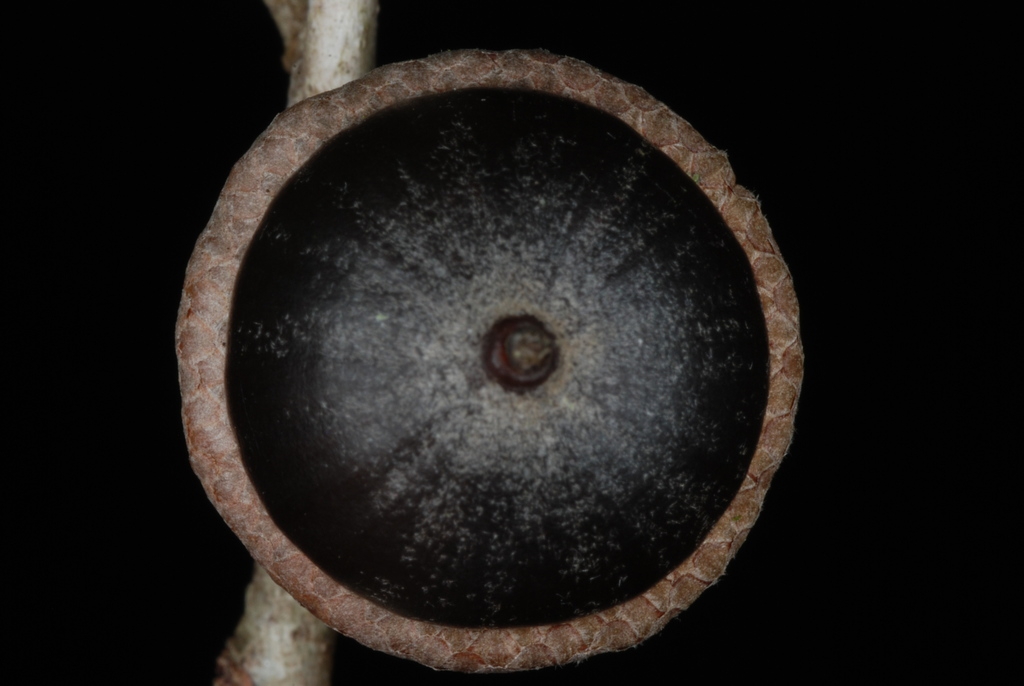
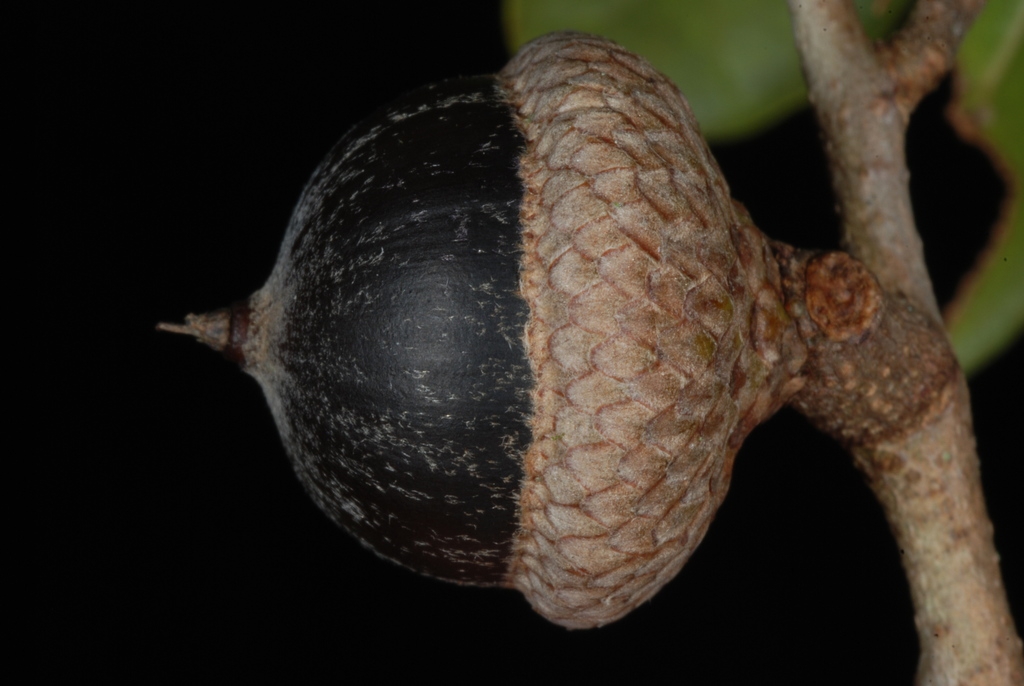
- Biennial oval to round dark brown acorn up to 5/8 inch. The cap covers 1/4-1/3 of the nut.
-
-
Flowers:
- Flower Color:
- Brown/Copper
- Gold/Yellow
- Flower Inflorescence:
- Catkin
- Insignificant
- Flower Bloom Time:
- Spring
- Flower Description:
- Male flowers in catkins
-
-
Leaves:
- Woody Plant Leaf Characteristics:
- Broadleaf Evergreen
- Leaf Color:
- Green
- Leaf Feel:
- Glossy
- Leathery
- Leaf Value To Gardener:
- Long-lasting
- Leaf Type:
- Simple
- Leaf Arrangement:
- Alternate
- Leaf Shape:
- Obovate
- Leaf Margin:
- Entire
- Hairs Present:
- No
- Leaf Length:
- 1-3 inches
- Leaf Width:
- < 1 inch
- Leaf Description:
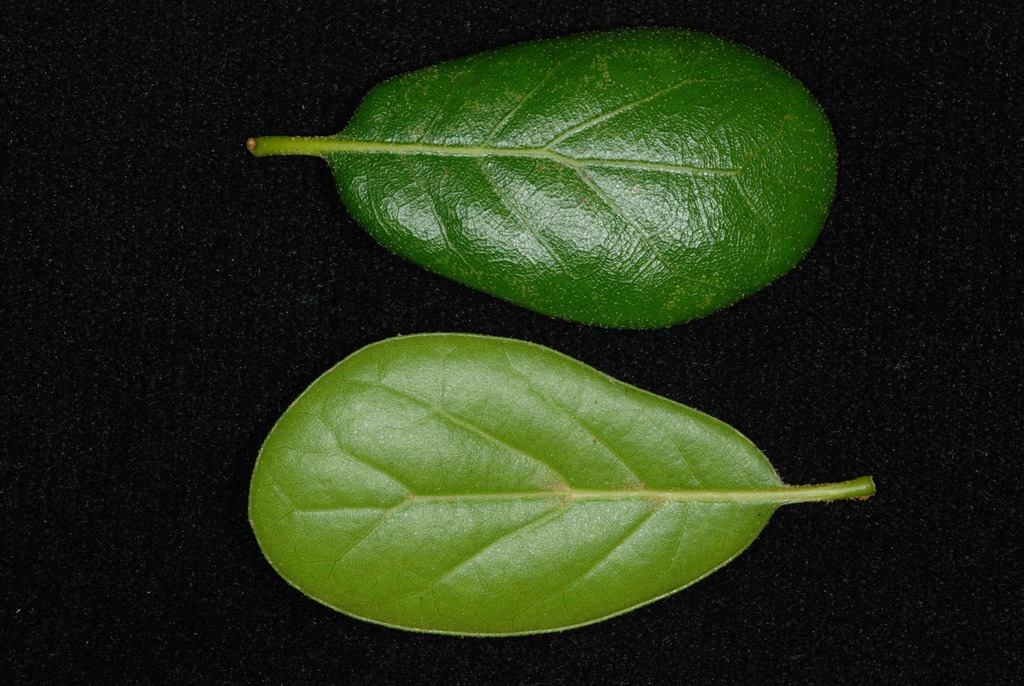
- 2-inch long by 1 inch wide dark green leathery evergreen leaves are a lighter green to yellowish bloom underneath. Entire margins are rolled under and there is a bristle at the tip. Leaves persist on the tree until new leaves form in spring.
-
-
Bark:
- Bark Color:
- Dark Gray
- Light Gray
- Surface/Attachment:
- Furrowed
- Bark Description:
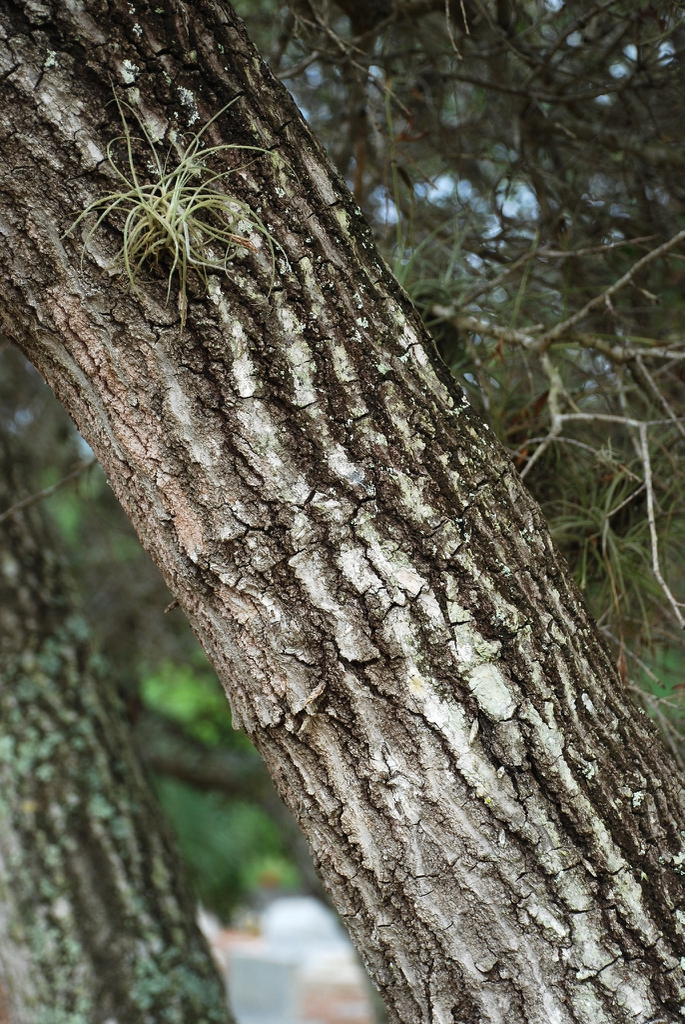
- The bark is gray and smooth, becoming furrowed with age
-
-
Stem:
- Stem Color:
- Brown/Copper
- Red/Burgundy
- Stem Is Aromatic:
- No
- Stem Bud Scales:
- Enclosed in more than 2 scales
- Stem Surface:
- Hairy (pubescent)
- Stem Description:
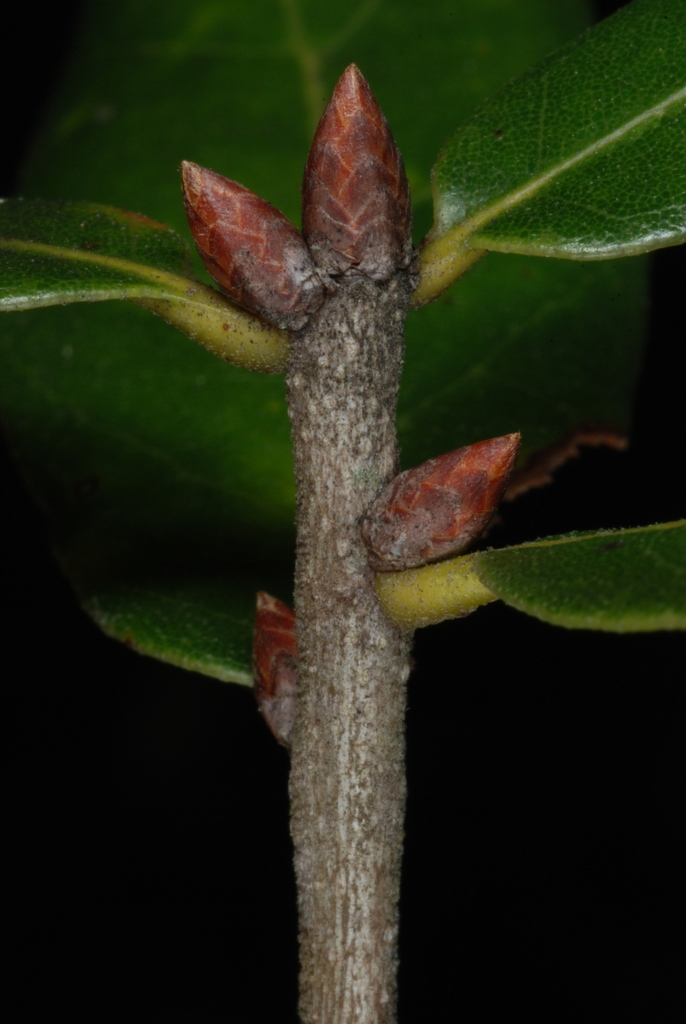
- Reddish-brown twigs with hairs. Oval buds that narrow to a point with reddish-brown scales
-
-
Landscape:
- Landscape Location:
- Coastal
- Small Space
- Landscape Theme:
- Cottage Garden
- Native Garden
- Winter Garden
- Design Feature:
- Accent
- Border
- Attracts:
- Butterflies
- Moths
- Small Mammals
- Resistance To Challenges:
- Drought
- Dry Soil
- Wind