


Prosartes maculata
Common Name(s):
Previously known as:
- Disporum maculatum
- Phonetic Spelling
- pro-SAR-teez mak-yuh-LAH-tuh
- This plant has low severity poison characteristics.
- See below
- Description
-
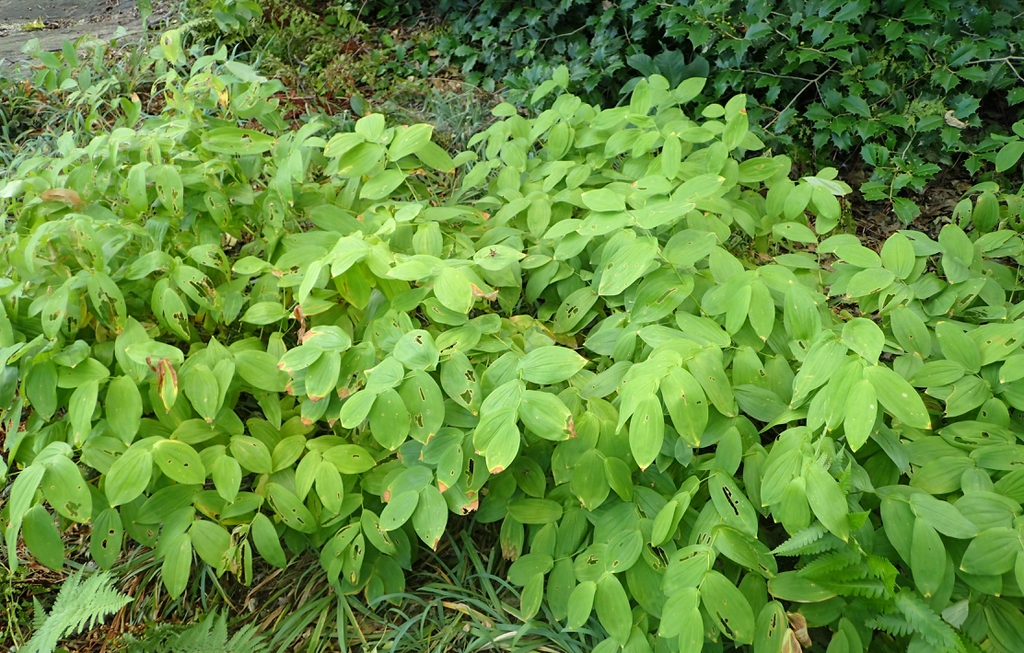
Nodding Mandarin is a small, native, flowering, herbaceous perennial wildflower in the lily family that grows in rich deciduous forests. It is native to the eastern United States and is commonly found in mountainous terrain such as the Great Smoky and Appalachian Mountains. From dense clumps of upright stems, small white blooms appear in late spring that try to hide under the leaves. It is considered rare or uncommon in every state it is found.
Nodding Mandarin does best in most moist, well drained soil types, including clay, and when sited in partial shade. Nodding Mandarin will slowly, but persistently, spread by means of rhizomes.
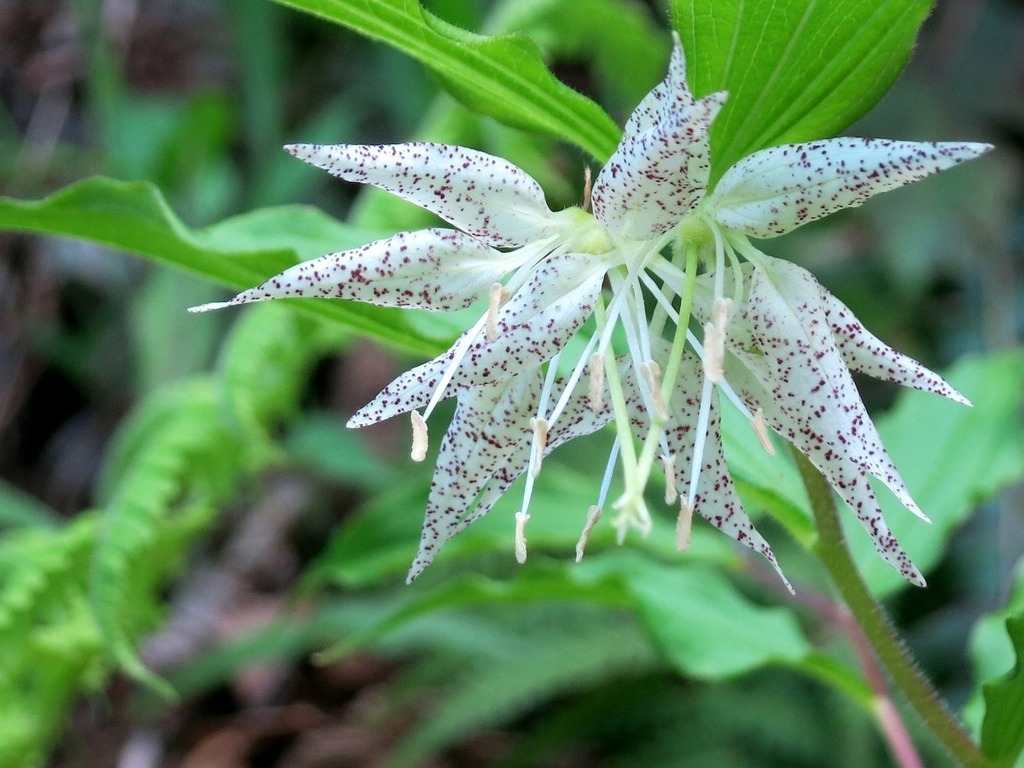
Nodding Mandarin is similar to Prosartes lanuginosa (Yellow Mandarin). They share much of the same range, but differ by flower color. Yellow Mandarin has greenish-yellow tepals, while Nodding Mandarin tepals are white with purple spots.
The plant can be propagated by seed grown in small containers in the fall and planted in the spring, or by division of existing plants in the spring.
Diseases, Insect Pests, and Other Plant Problems:
No known diseases or insect pests.
- See this plant in the following landscape :
- Cultivars / Varieties:
-
- Tags:


- Cultivars / Varieties:
-
- Tags:
-
-
Attributes:
- Genus:
- Prosartes
- Species:
- maculata
- Family:
- Liliaceae
- Life Cycle:
- Perennial
- Recommended Propagation Strategy:
- Division
- Seed
- Country Or Region Of Origin:
- Eastern United States
- Distribution:
- Michigan south to Georgia and west to the Mississippi River.
-
-
Whole Plant Traits:
- Plant Type:
- Herbaceous Perennial
- Native Plant
- Poisonous
- Wildflower
- Habit/Form:
- Clumping
- Dense
- Erect
- Spreading
- Growth Rate:
- Medium
- Maintenance:
- Low
-
-
Cultural Conditions:
- Light:
- Dappled Sunlight (Shade through upper canopy all day)
- Partial Shade (Direct sunlight only part of the day, 2-6 hours)
- Soil Texture:
- Clay
- High Organic Matter
- Loam (Silt)
- Soil pH:
- Acid (<6.0)
- Alkaline (>8.0)
- Neutral (6.0-8.0)
- Soil Drainage:
- Good Drainage
- Moist
- NC Region:
- Mountains
- USDA Plant Hardiness Zone:
- 5a, 5b, 6a, 6b, 7a, 7b, 8a, 8b
-
-
Fruit:
- Fruit Color:
- Orange
- Red/Burgundy
- Fruit Type:
- Berry
- Fruit Description:
- 3-lobed, orange-red berries with 6 to 10 seeds.
-
-
Flowers:
- Flower Color:
- Purple/Lavender
- White
- Flower Bloom Time:
- Spring
- Flower Shape:
- Bell
- Star
- Flower Petals:
- 6 petals/rays
- Flower Size:
- 1-3 inches
- Flower Description:
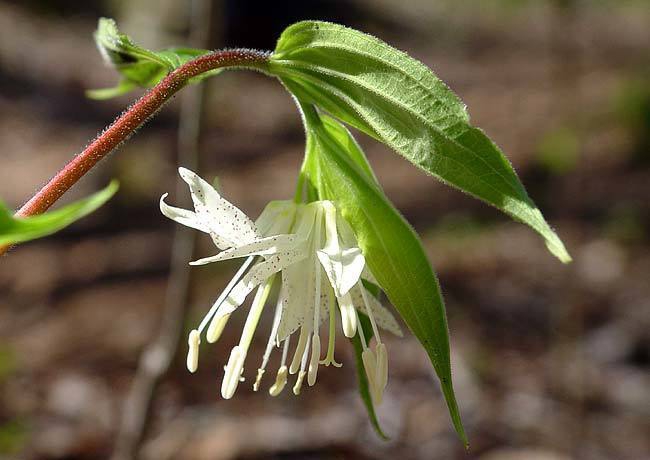
- One inch nodding blooms in April and May have creamy white petals spotted with purple with projecting stamens. They appear on split stems singly or up to 4 clusters and hide under the final leaves of the stem. Typically, two flowers develop on each forked flower stem.
-
-
Leaves:
- Leaf Color:
- Green
- Leaf Type:
- Simple
- Leaf Arrangement:
- Alternate
- Leaf Shape:
- Lanceolate
- Ovate
- Leaf Margin:
- Entire
- Hairs Present:
- Yes
- Leaf Length:
- 3-6 inches
- Leaf Description:
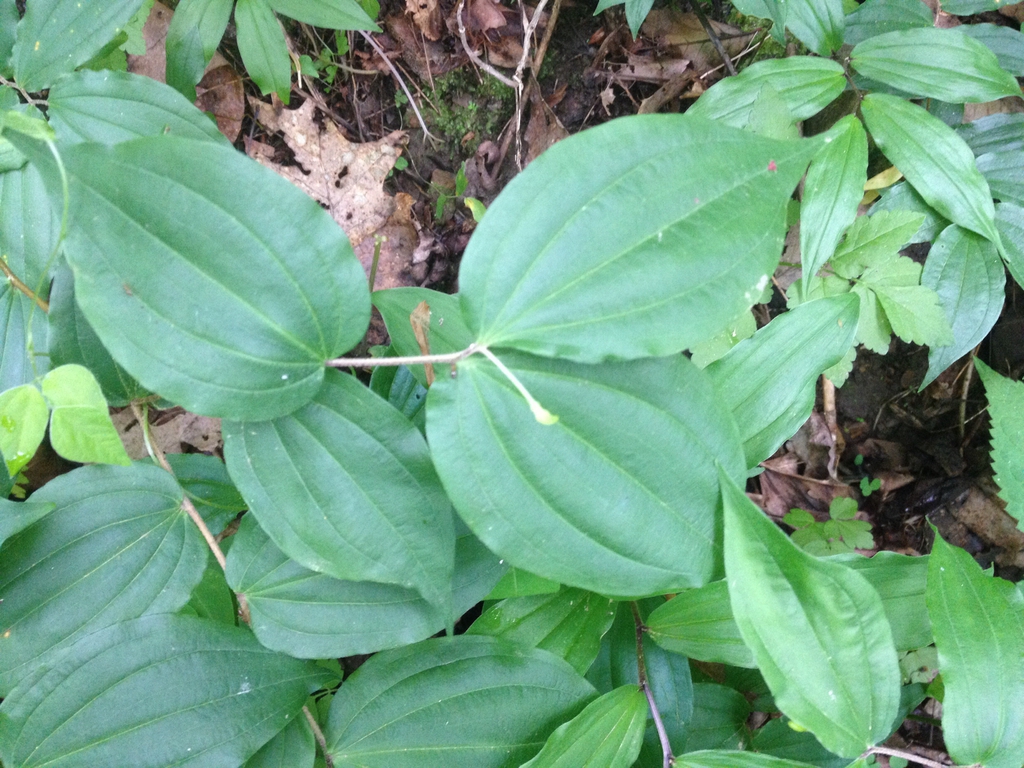
- Two to four inch, oval, pointed leaves with parallel veins are stalkless with small, stiff hairs on the lower leaf surface and younger portion of the stem
-
-
Stem:
- Stem Color:
- Green
- Red/Burgundy
- Stem Is Aromatic:
- No
- Stem Form:
- Zig Zags
- Stem Surface:
- Hairy (pubescent)
- Stem Description:
- Reddish, usually forked, stems with hairs hold the flowers, singly or in pairs. Stems grow less hairy with age.
-
-
Landscape:
- Landscape Location:
- Woodland
- Landscape Theme:
- Cottage Garden
- Native Garden
- Shade Garden
- Design Feature:
- Border
- Attracts:
- Pollinators
- Problems:
- Poisonous to Humans