


Mountain Aspen Populus tremuloides
Other Common Name(s):
- Phonetic Spelling
- POP-yoo-lus trem-yoo-LOY-deez
- Description
-
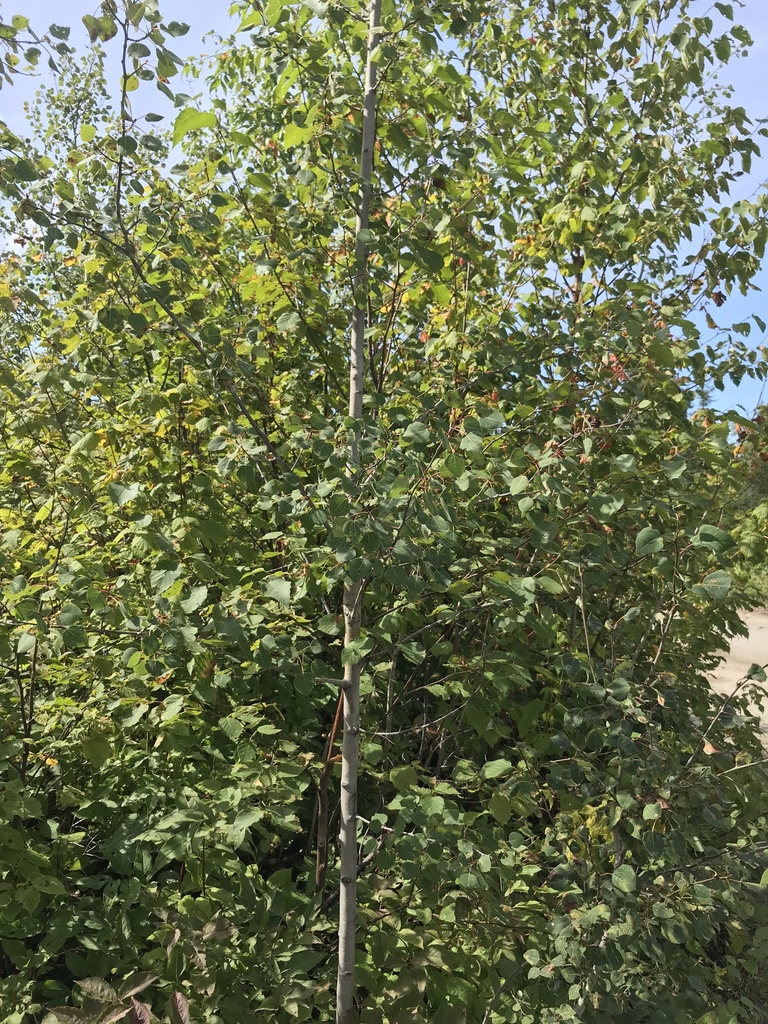
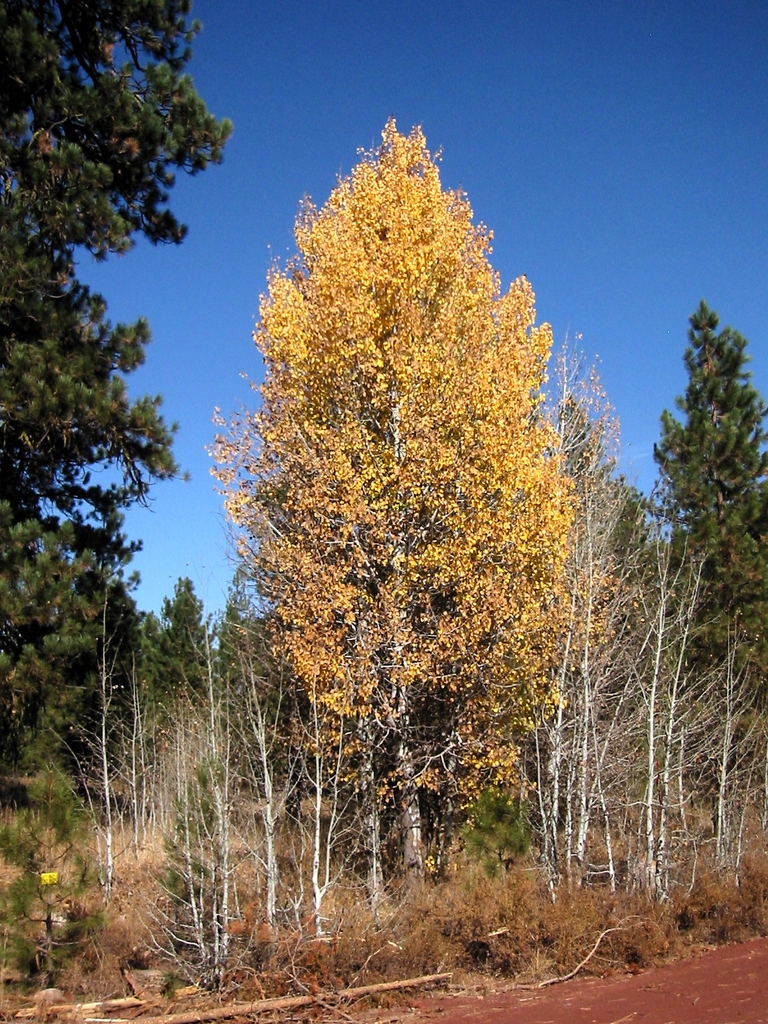
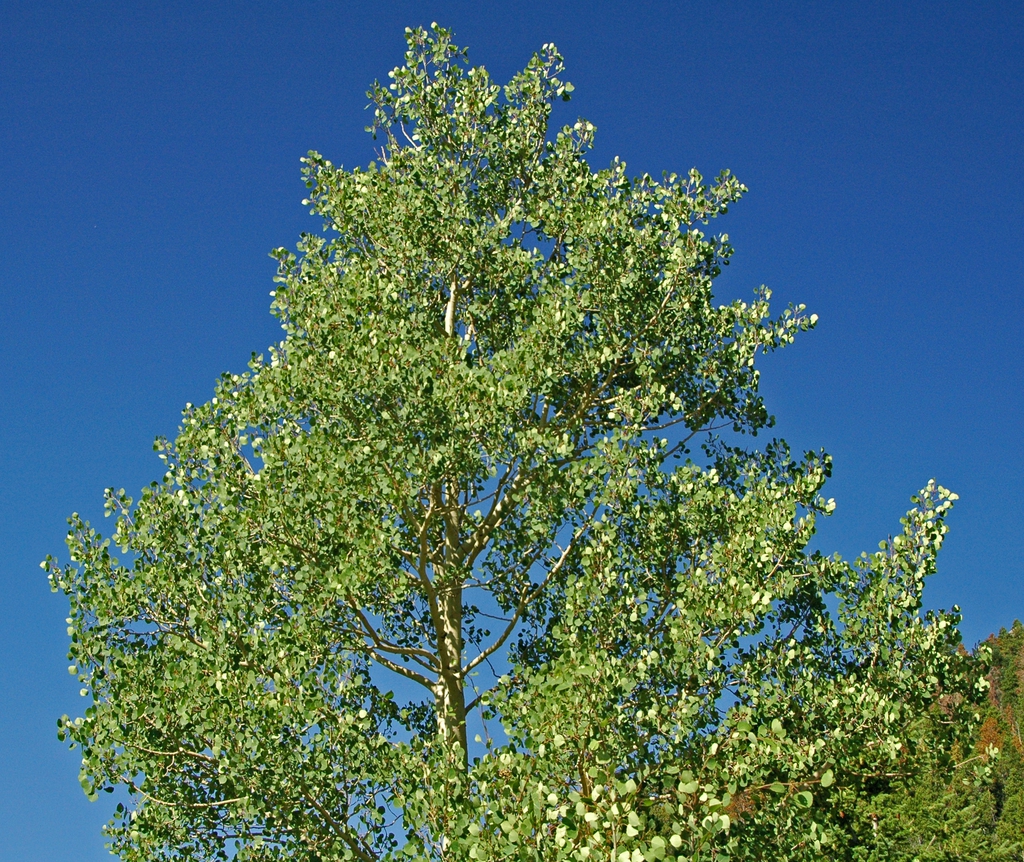
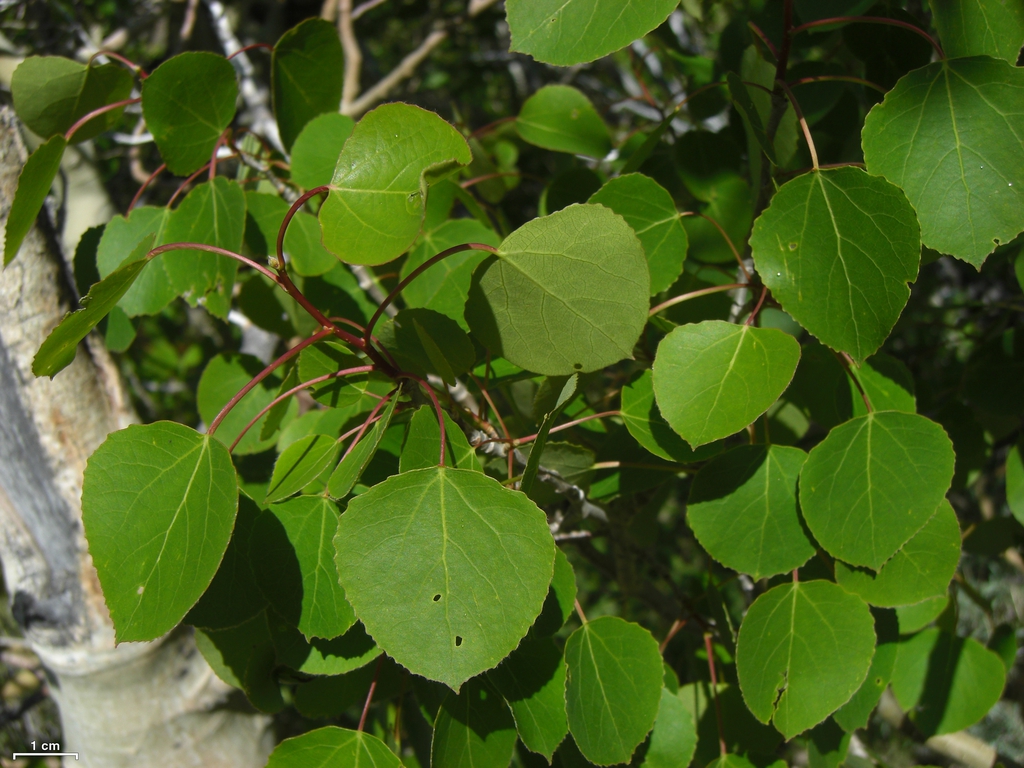
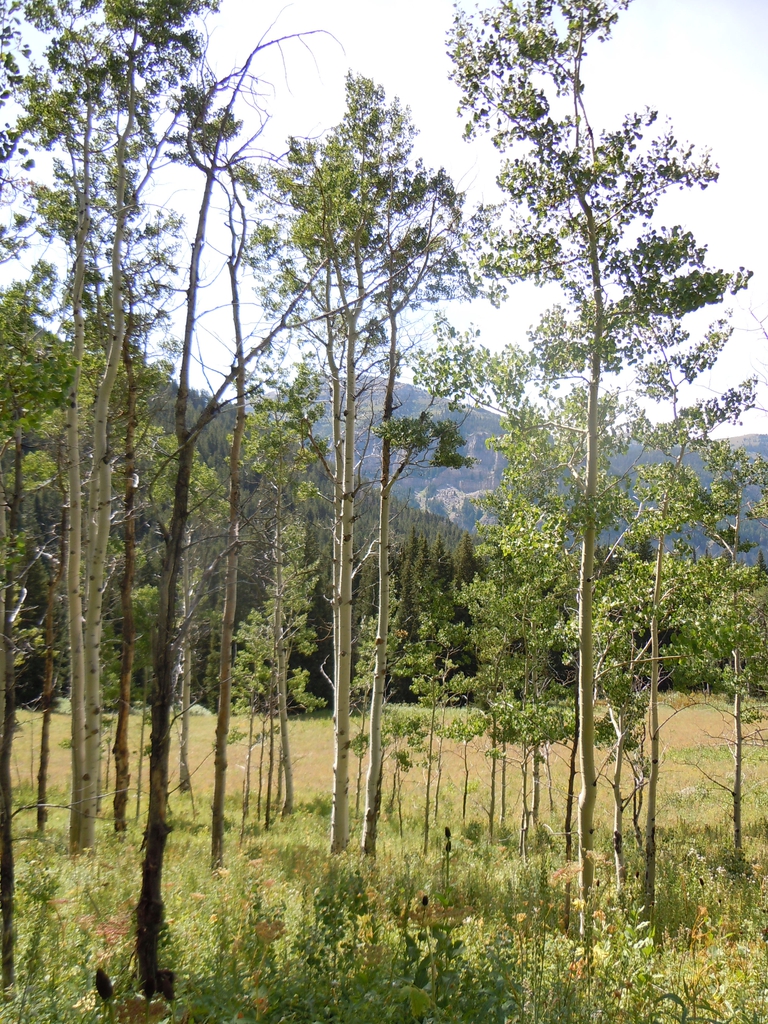
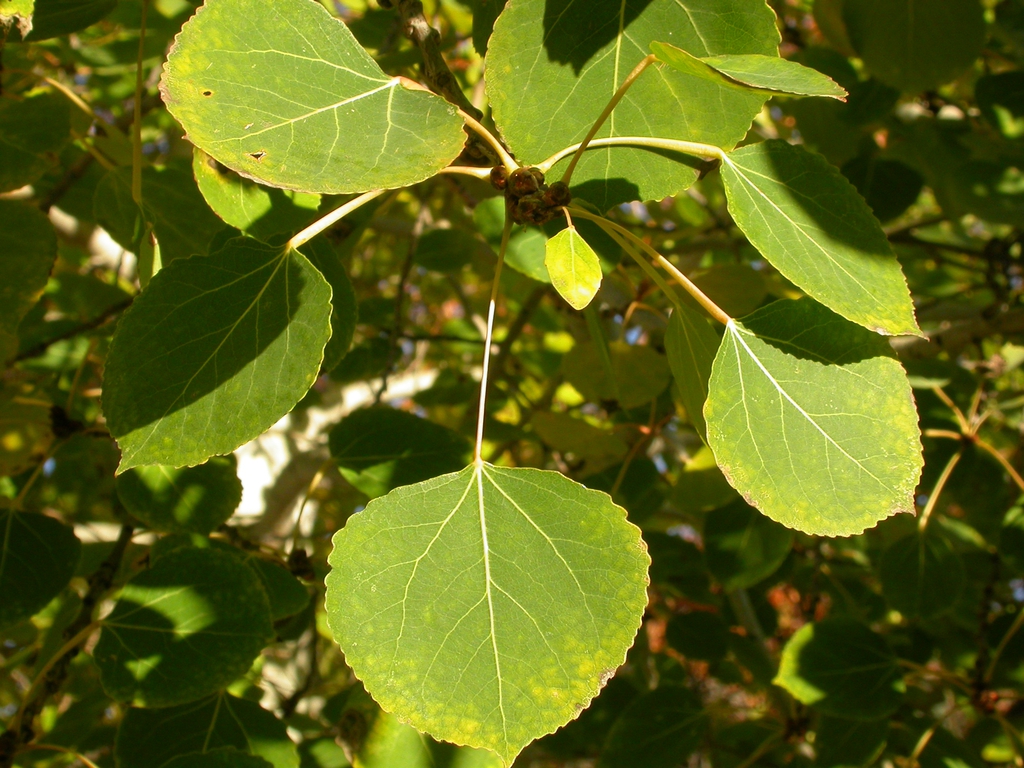
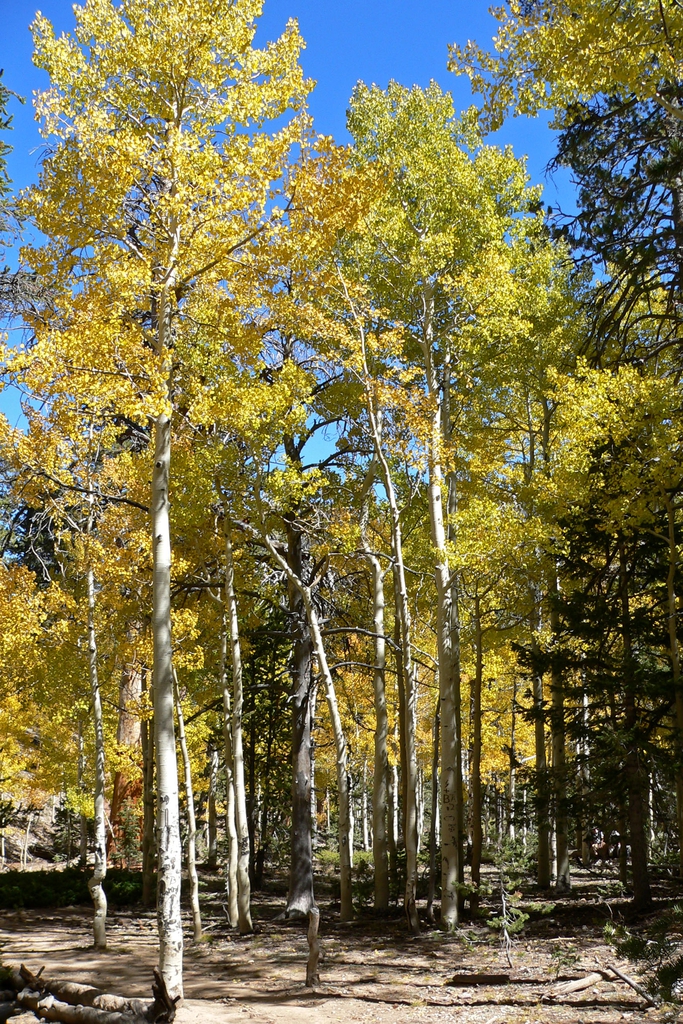
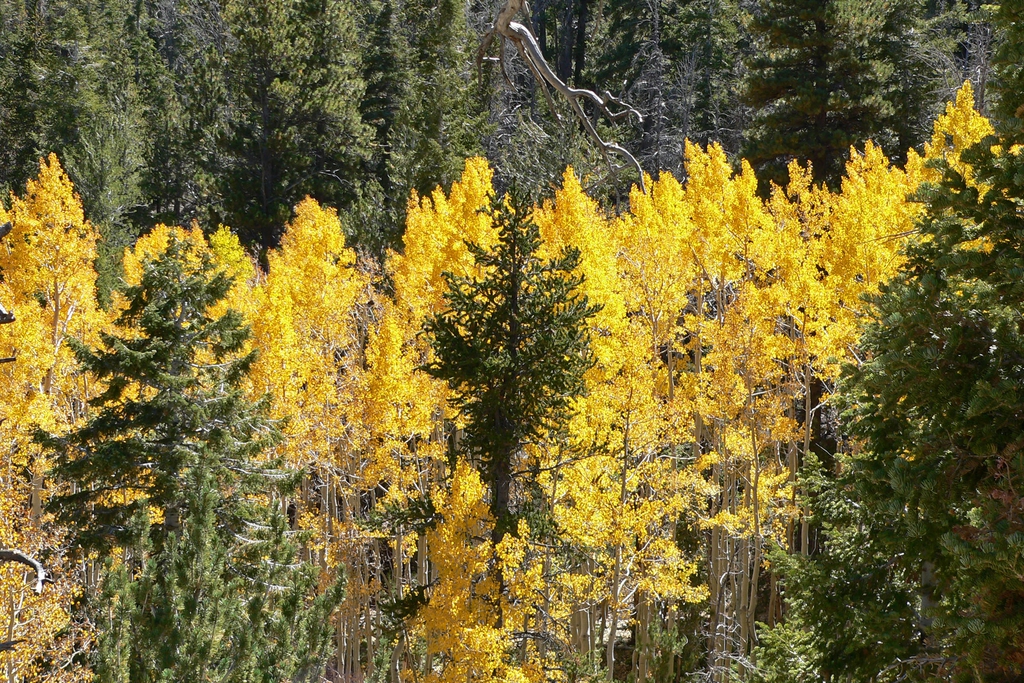
Quaking Aspen is a native, single trunk, deciduous tree in the willow family. It is native to North America from Canada south, but is found in one small area of the mountains of North Carolina where a climate similar to its southern range, USDA zone 6, will support it. It reach a height of 50 feet at maturity, an 18 to 36 inch singular trunk, and a 30 foot spread. It has a strongly pyramidal form when young maturing to a narrow rounded crown. It is a tree of cooler northern regions and thrives in rocky soils at high mountain elevations to clay or sandy loams at lower elevations. This tree has beautiful white bark and leaves that quake at the slightest breeze due to the flattened leaf stems. Fall foliage is a beautiful yellow.
Quaking Aspen does best sited in full sun in fertile, humusy soil kept consistently moist with good drainage. It will tolerate a range of soils, from rocky to clay, but will not tolerate heat and humidity. These trees will grow rapidly for the first 10 to 20 years, but will slow after that. The tree is occasionally cultivated as a landscape tree for its attractive bark and foliage.
In the wild, aspens typically appear in clonal groups all rising from the same underground root system. An individual tree may have a lifespan of 50 years, but a grove of aspen clones can last hundreds of year. These trees are dioecious, thus each group consists of all male clones or all female clones.
Diseases, Insect Pests, and Other Plant Problems:
Susceptible to dieback, leaf spots, rusts, powdery mildew and cankers, especially when the tree is stressed. Insect problems can include caterpillars, borers, aphids and scale.
- See this plant in the following landscape :
- Cultivars / Varieties:
-
- Tags:




- Cultivars / Varieties:
-
- Tags:
-
-
Attributes:
- Genus:
- Populus
- Species:
- tremuloides
- Family:
- Salicaceae
- Uses (Ethnobotany):
- Native Americans are known to have used this plant as a food source. To prepare it, they would cut the inner bark into strips, dry it, and then ground it to be mixed with other starches for bread or mush. They ate catkins raw, and the cambium both raw and in soups.
- Life Cycle:
- Woody
- Recommended Propagation Strategy:
- Division
- Root Cutting
- Country Or Region Of Origin:
- Canda to Mexico, including North Carolina
- Play Value:
- Wildlife Cover/Habitat
- Wildlife Food Source
- Wind Shimmer
- Dimensions:
- Height: 20 ft. 0 in. - 50 ft. 0 in.
- Width: 10 ft. 0 in. - 30 ft. 0 in.
-
-
Whole Plant Traits:
- Plant Type:
- Native Plant
- Perennial
- Tree
- Woody Plant Leaf Characteristics:
- Deciduous
- Habit/Form:
- Pyramidal
- Rounded
- Growth Rate:
- Rapid
- Maintenance:
- High
- Texture:
- Medium
-
-
Cultural Conditions:
- Light:
- Full sun (6 or more hours of direct sunlight a day)
- Partial Shade (Direct sunlight only part of the day, 2-6 hours)
- Soil Texture:
- Clay
- High Organic Matter
- Loam (Silt)
- Sand
- Shallow Rocky
- Soil Drainage:
- Good Drainage
- Moist
- Occasionally Dry
- NC Region:
- Mountains
- USDA Plant Hardiness Zone:
- 1a, 1b, 2a, 2b, 3a, 3b, 4a, 4b, 5a, 5b, 6a, 6b
-
-
Fruit:
- Fruit Color:
- White
- Display/Harvest Time:
- Summer
- Fruit Type:
- Capsule
- Fruit Length:
- > 3 inches
- Fruit Description:
- Female catkins up to 4" long split open to release their seeds. Each capsule contains 4 to 10 tiny seeds that are embedded in cottony hairs. The seeds are distributed by the wind or water.
-
-
Flowers:
- Flower Color:
- Blue
- Gray/Silver
- Flower Inflorescence:
- Catkin
- Flower Bloom Time:
- Spring
- Flower Description:
- Insignificant silver catkins appear before leaves in April. Male and female flowers appear in separate catkins on separate clones. Catkins are gray-green and not showy.
-
-
Leaves:
- Woody Plant Leaf Characteristics:
- Deciduous
- Leaf Color:
- Green
- Leaf Feel:
- Glossy
- Leaf Value To Gardener:
- Showy
- Deciduous Leaf Fall Color:
- Gold/Yellow
- Leaf Type:
- Simple
- Leaf Arrangement:
- Alternate
- Leaf Shape:
- Ovate
- Leaf Margin:
- Crenate
- Dentate
- Hairs Present:
- Yes
- Leaf Length:
- 1-3 inches
- Leaf Width:
- 1-3 inches
- Leaf Description:
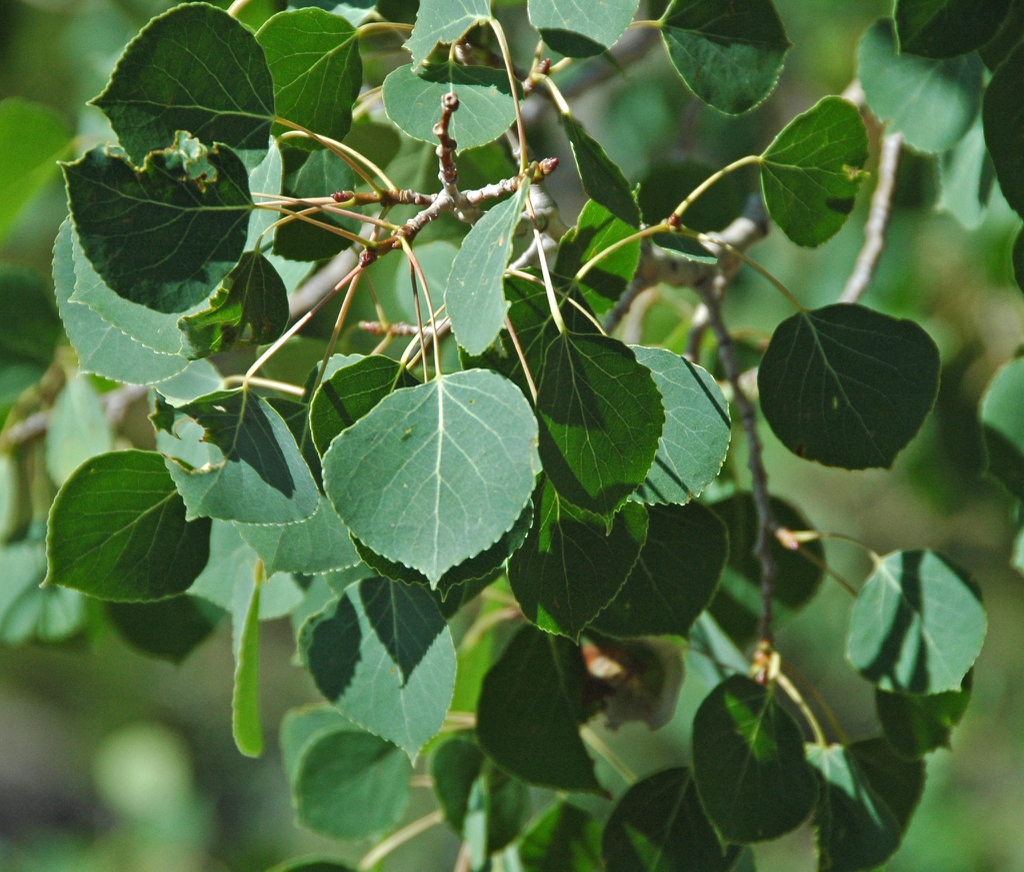
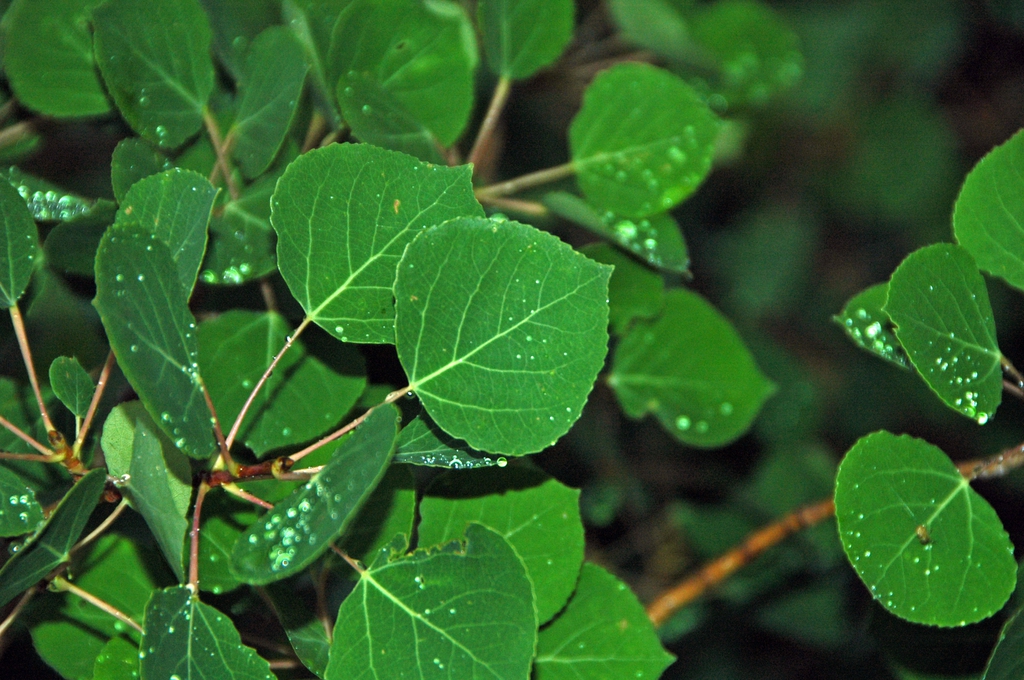
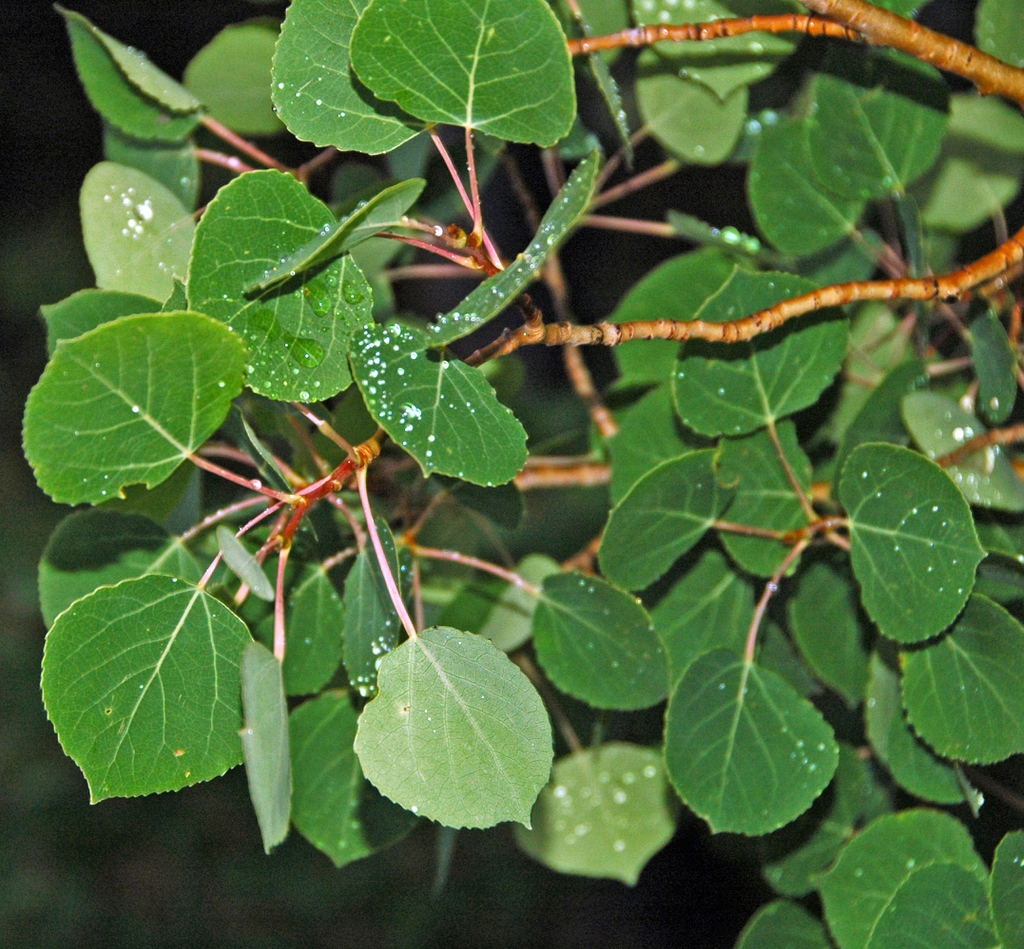
- Green leaves in spring and summer turning a golden yellow in fall. Petioles are flattened which makes the leaves "quake" in the wind. Dark glossy green leaves are 3 inches long, finely toothed, with hairs along the margins.
-
-
Bark:
- Bark Color:
- Green
- Light Gray
- White
- Surface/Attachment:
- Furrowed
- Smooth
- Bark Description:
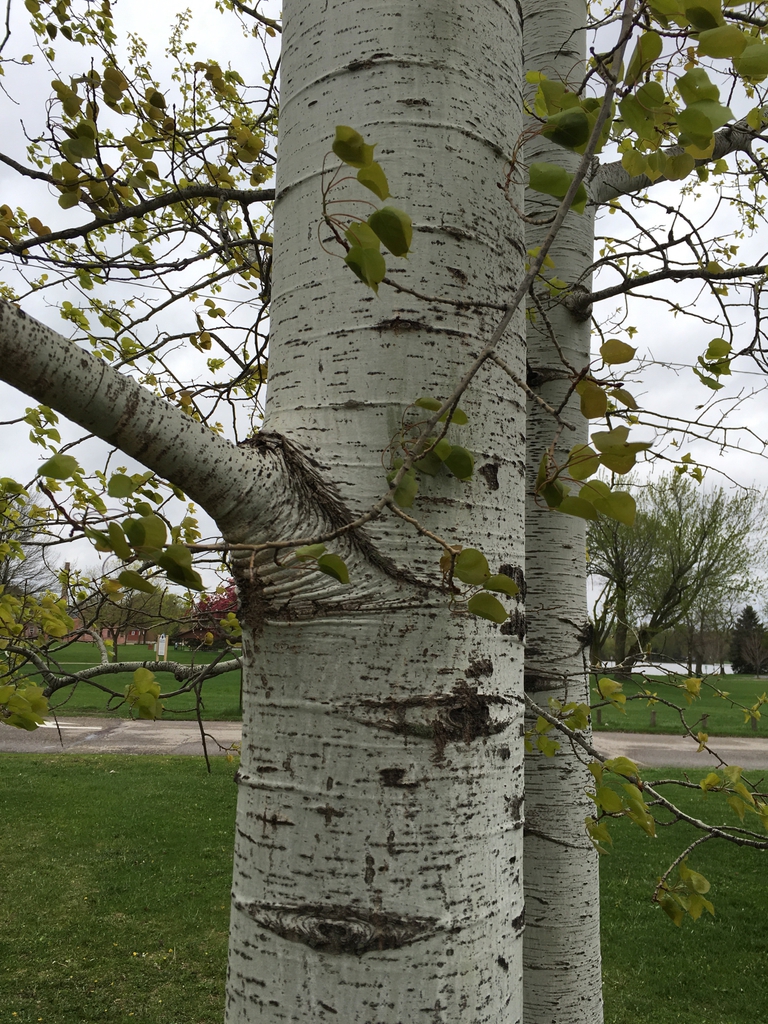
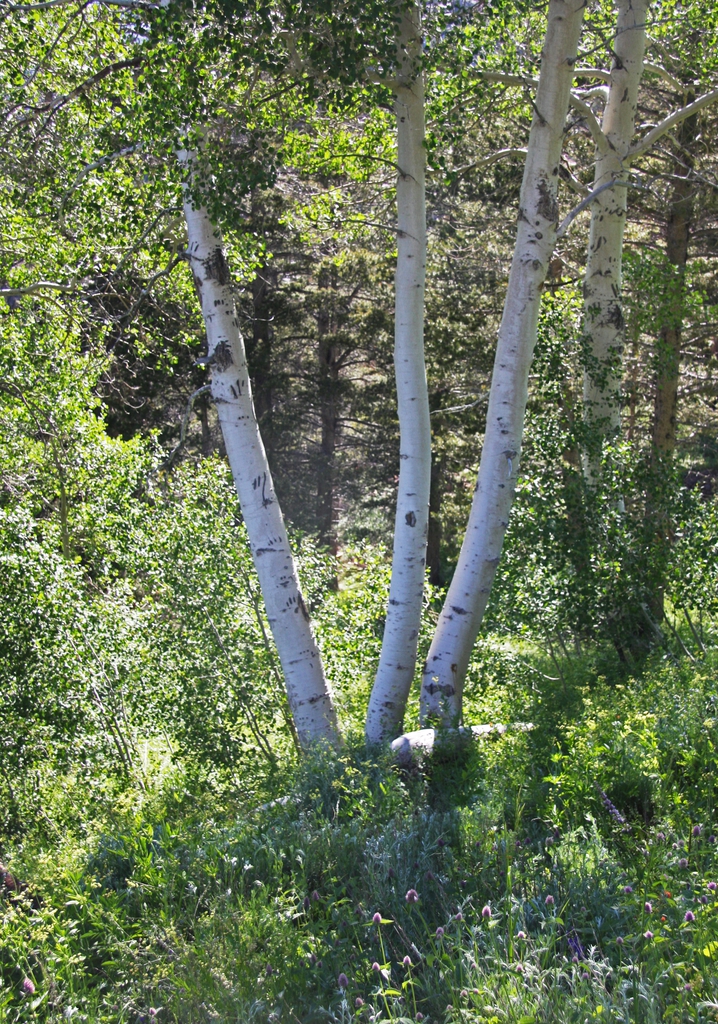
- Smooth silvery white-green bark becomes furrowed and chalky white with black warty patching as the tree ages.
-
-
Stem:
- Stem Is Aromatic:
- No
-
-
Landscape:
- Landscape Location:
- Naturalized Area
- Recreational Play Area
- Landscape Theme:
- Children's Garden
- Native Garden
- Design Feature:
- Accent
- Attracts:
- Small Mammals
- Songbirds
- Resistance To Challenges:
- Wet Soil
- Problems:
- Short-lived