


Polypodium virginianum
Common Name(s):
Previously known as:
- Polypodium vulgare subsp. virginianum
- Phonetic Spelling
- pol-ee-POH-dee-um vir-jin-ee-AY-num
- Description
-
The common rockcap fern is an herbaceous perennial in the polypody family (Polypodiaceae). It ranges from Greenland through eastern North America, and in the north, it extends to Alaska. The species epithet refers to the state of Virginia.
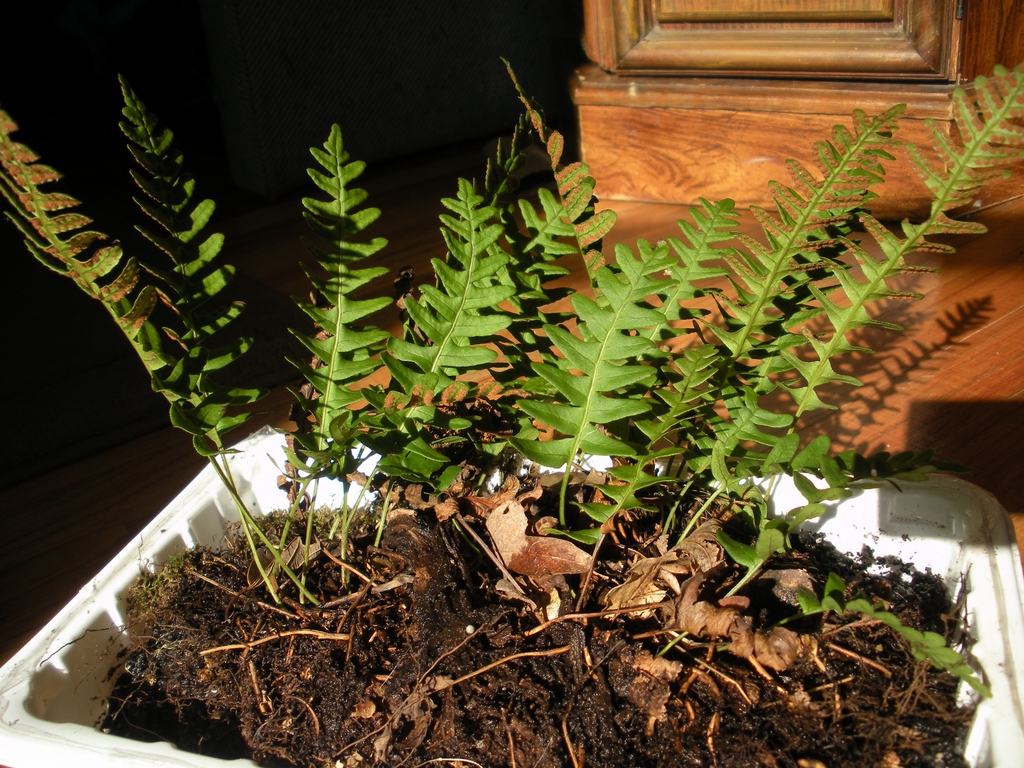
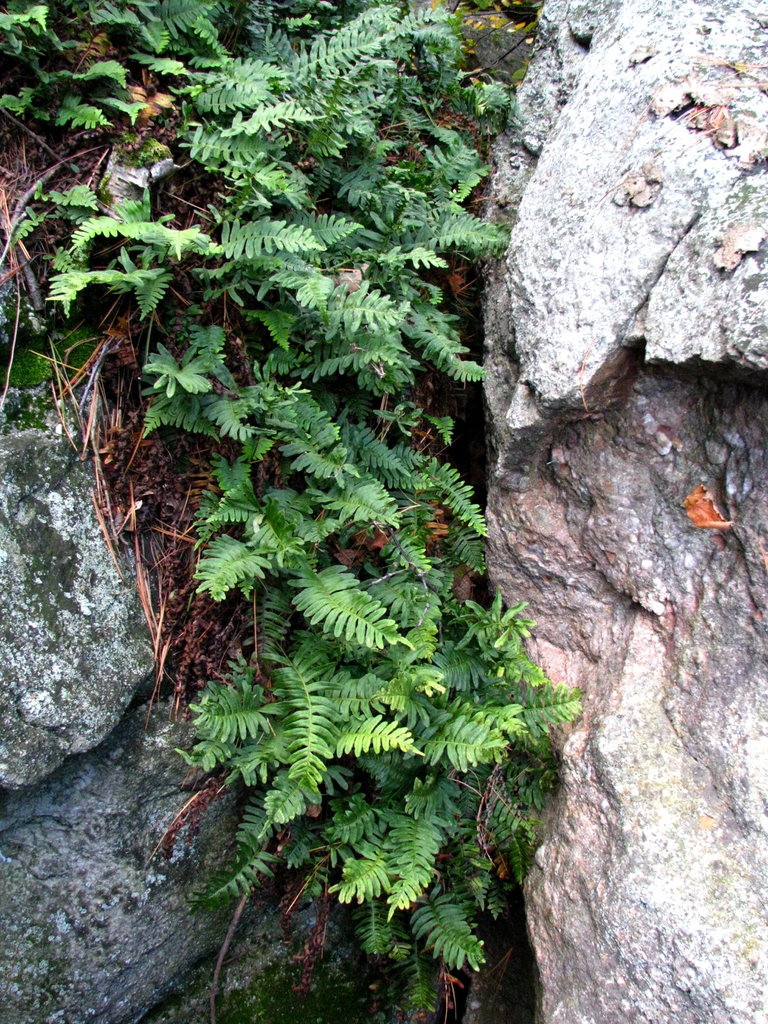
Once established, this fern grows well in a variety of conditions, making it a low-maintenance plant that likes moist, well-drained soils but can tolerate drought. It prefers deep shade and loam or sandy soil. It grows 6 inches to 1 foot high and wide. It reproduces by spores.
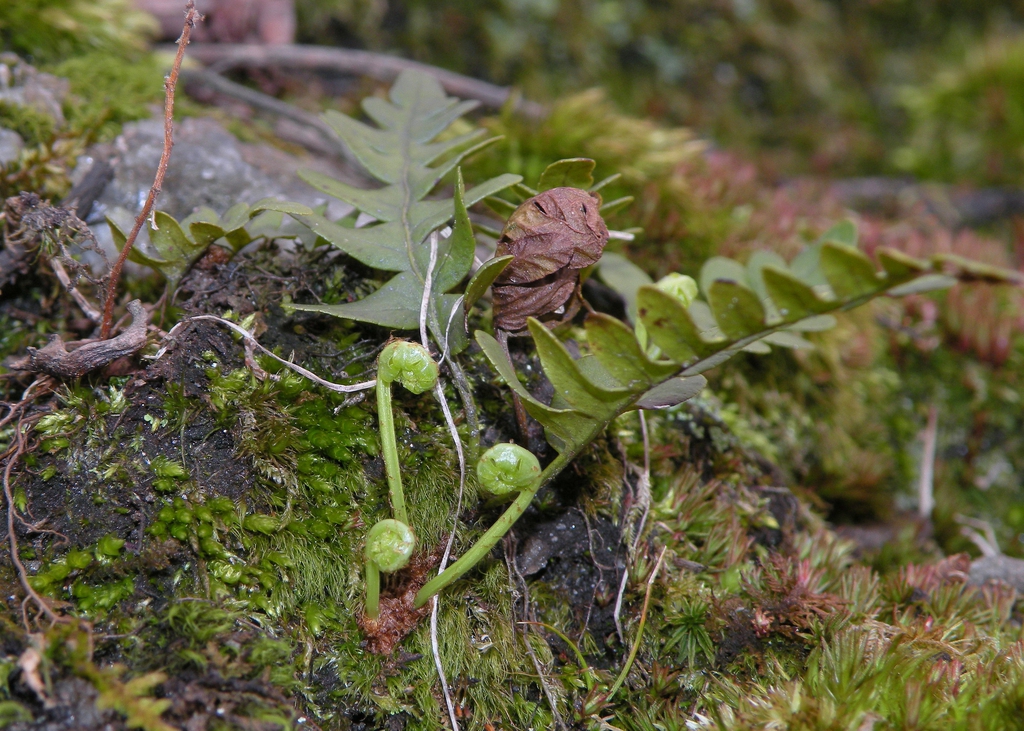
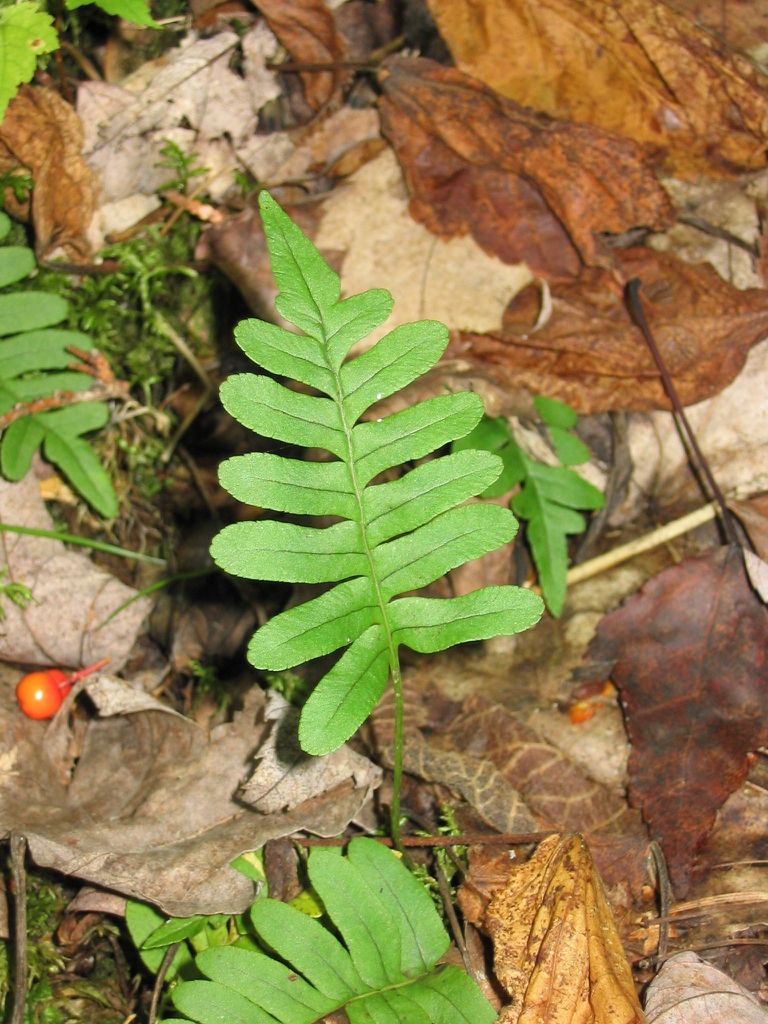
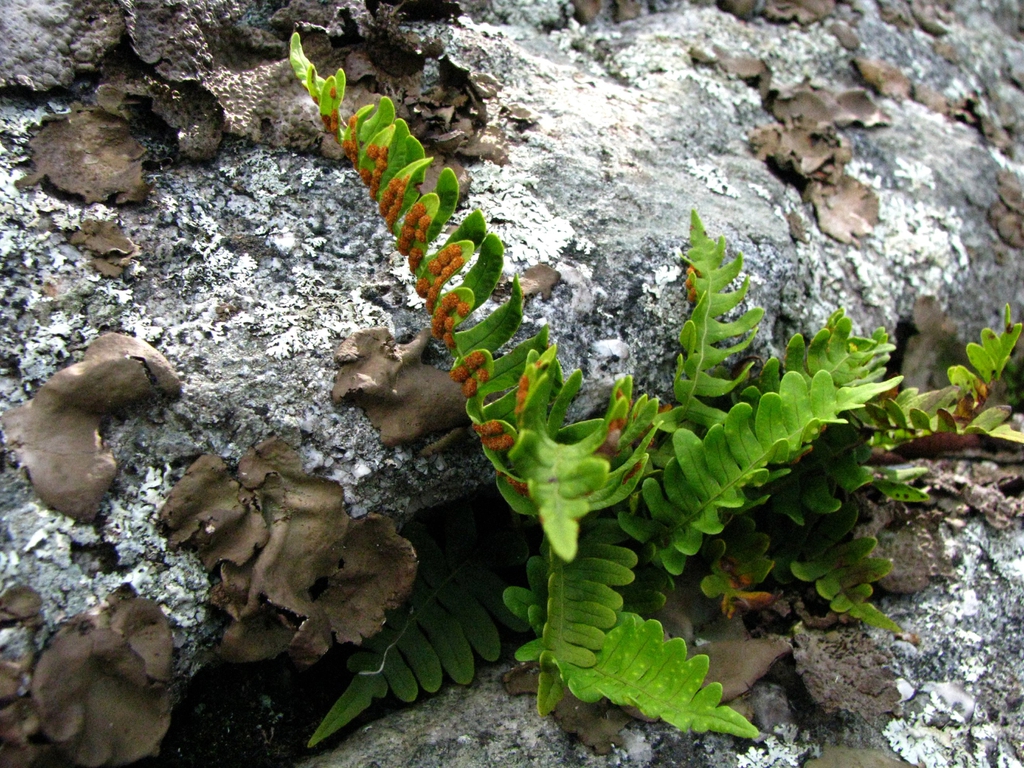
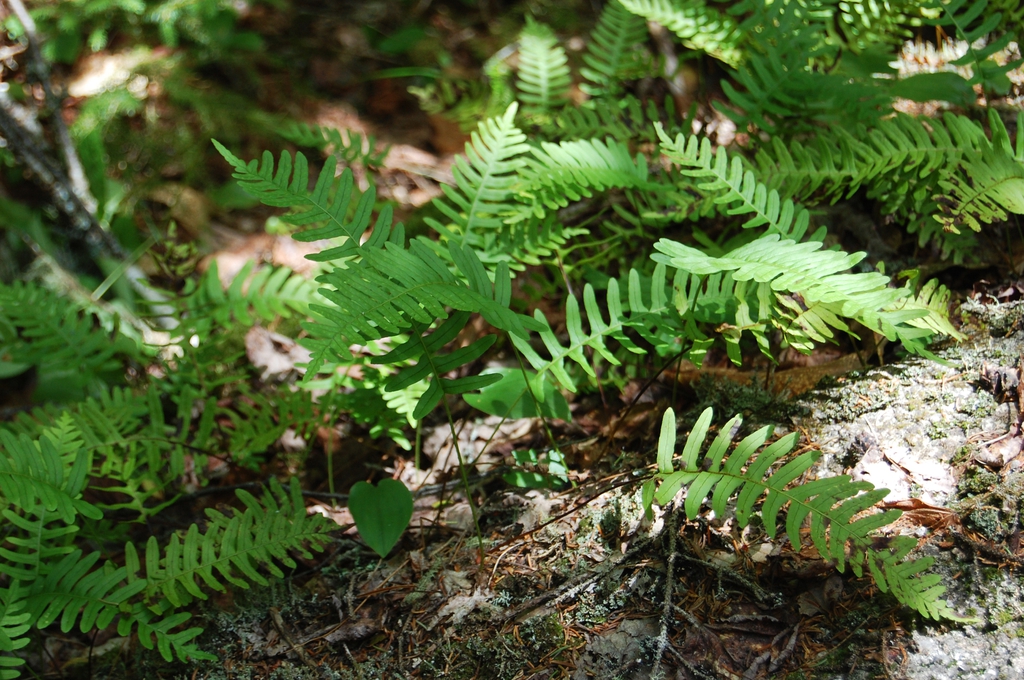
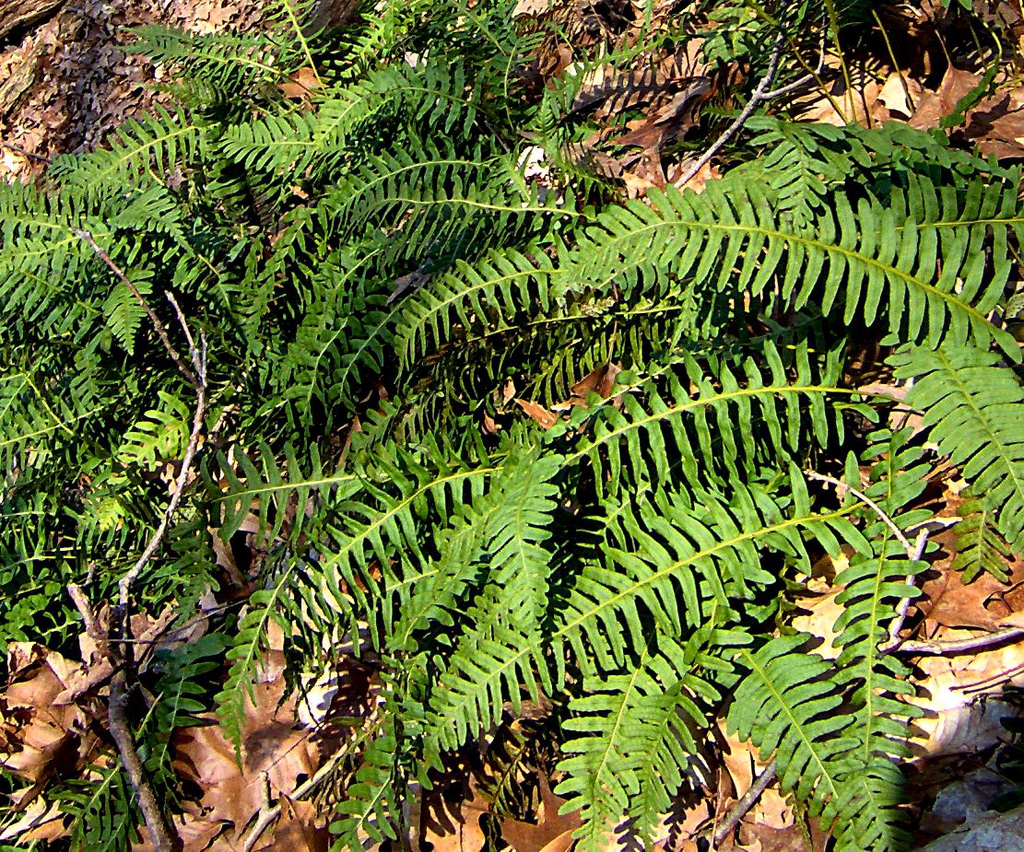
The common rockcap fern is believed to be a naturally, fertile, stabilized allotetrapoid hybrid of P. appalachianum and P. sibiricum. Nectaries are present at the base of the frond's blade. The sori are orange to brown and lack an indusium. The fronds are evergreen, making this fern of winter interest. This plant looks very similar to Polypodium appalachianum, making it difficult to distinguish the two plants. One key difference, however, is that this plant's leaf blades are widest near the middle.
It grows naturally on rock walls and tree roots that are covered with moss. Because of its adaptability, it can be used to line borders or in native, woodland, shade or rock gardens.
Quick ID hints
- evergreen fern
- Fronds erect to arching, lance-shaped to triangular
- Sori, orange to brown, large and circular, lacking an indusium, in rows along each side of the midvein.
Diseases, Insect Pests, and Other Plant Problems: No significant diseases or pests. Watch for Florida Fern Caterpillars.
VIDEO Created by NC State Extension's Homegrown series featuring Mark Weathington, Director of JC Raulston Arboretum.
- Profile Video:
- See this plant in the following landscape :
- Cultivars / Varieties:
-
- Tags:


- Cultivars / Varieties:
-
- Tags:
-
-
Attributes:
- Genus:
- Polypodium
- Species:
- virginianum
- Family:
- Polypodiaceae
- Life Cycle:
- Perennial
- Recommended Propagation Strategy:
- Division
- Country Or Region Of Origin:
- Sub Arctic North America
- Play Value:
- Defines Paths
- Easy to Grow
- Shade
- Particularly Resistant To (Insects/Diseases/Other Problems):
- Heavy shade, Deer
- Dimensions:
- Height: 0 ft. 6 in. - 1 ft. 0 in.
- Width: 0 ft. 6 in. - 1 ft. 0 in.
-
-
Whole Plant Traits:
- Plant Type:
- Fern
- Herbaceous Perennial
- Native Plant
- Habit/Form:
- Arching
- Clumping
- Creeping
- Erect
- Growth Rate:
- Medium
- Maintenance:
- Low
-
-
Cultural Conditions:
- Light:
- Deep shade (Less than 2 hours to no direct sunlight)
- Soil Texture:
- Loam (Silt)
- Sand
- Shallow Rocky
- Soil pH:
- Acid (<6.0)
- Neutral (6.0-8.0)
- Soil Drainage:
- Good Drainage
- Moist
- Occasionally Dry
- Available Space To Plant:
- 12 inches-3 feet
- NC Region:
- Mountains
- Piedmont
- USDA Plant Hardiness Zone:
- 3a, 3b, 4a, 4b, 5a, 5b, 6a, 6b, 7a, 7b, 8a, 8b
-
-
Fruit:
- Fruit Description:
- No fruits. This plants reproduces via spores.
-
-
Flowers:
- Flower Description:
- No flowers.
-
-
Leaves:
- Leaf Type:
- Compound (Pinnately , Bipinnately, Palmately)
- Fronds
- Leaf Arrangement:
- Alternate
- Leaf Shape:
- Lanceolate
- Hairs Present:
- No
- Leaf Description:
- leathery
-
-
Stem:
- Stem Color:
- Brown/Copper
- Gold/Yellow
- Stem Is Aromatic:
- No
-
-
Landscape:
- Landscape Theme:
- Cottage Garden
- Drought Tolerant Garden
- Native Garden
- Rock Garden
- Shade Garden
- Design Feature:
- Border
- Attracts:
- Small Mammals
- Songbirds
- Resistance To Challenges:
- Deer
- Heavy Shade
- Rabbits