


Pilosella venosa
Common Name(s):
Previously known as:
- Hieracium venosum
- Phonetic Spelling
- pil-oh-SEL-uh ven-OH-suh
- Description
-
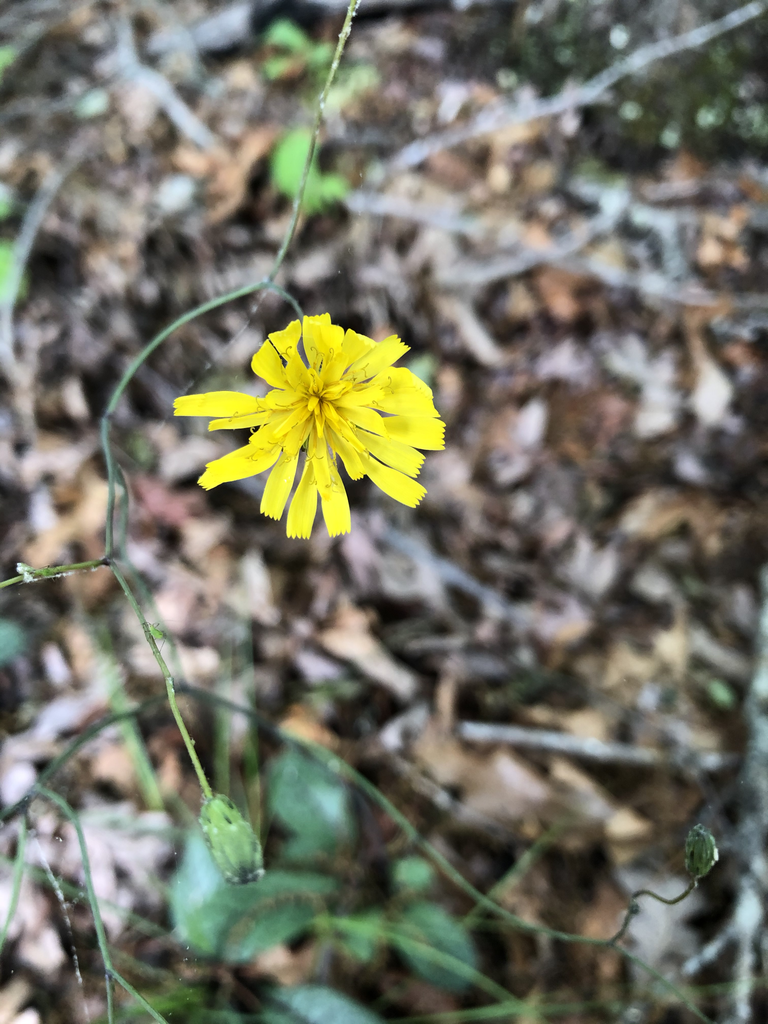
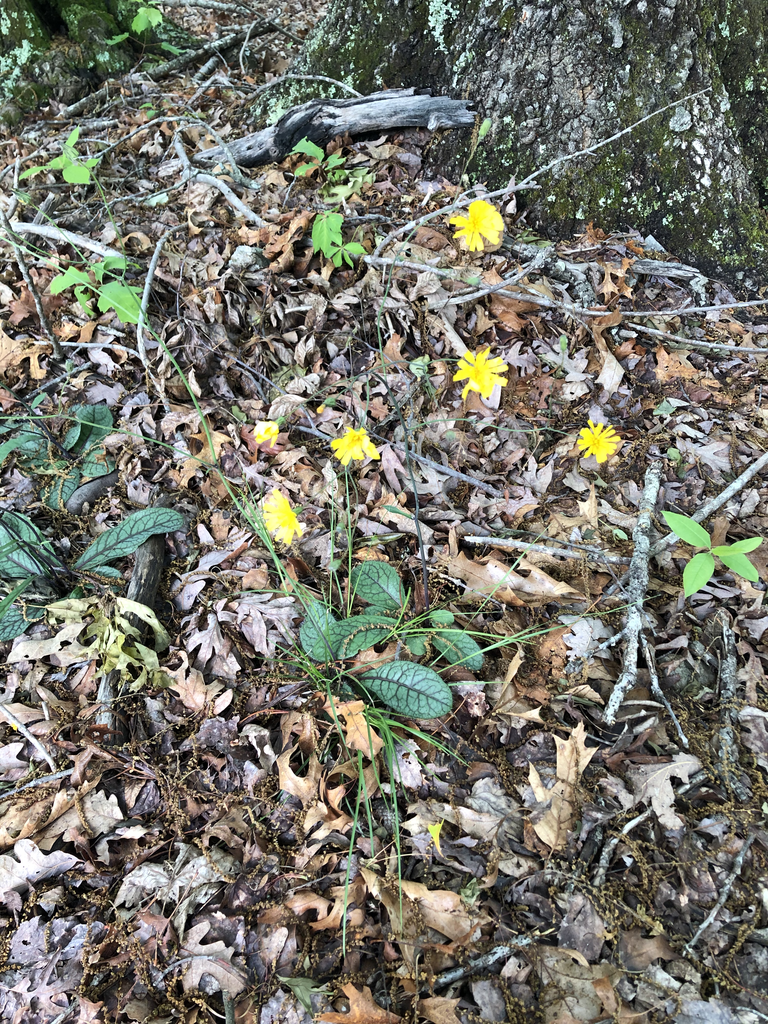
Rattlesnake weed is an herbaceous perennial, weedy wildflower in the aster family. It blooms from May to September and is native to Ontario, Canada and the eastern half of the United States. Rattlesnake weed can be found in open woods and in dry clearings and thickets where it prefers sandy soil and part-shade. These are sites the plant often shares with rattlesnakes, hence the common name. It has a clumping habit and is relatively slow to spread. In spring, the plant will produce numerous yellow, dandelion-like flower heads in open clusters atop a long, foot or more, usually leafless stalk.
Rattlesnake weed does best in moist, slightly acidic, sandy soil in partial shade. It will tolerate poor soils, including clay, and dry conditions.
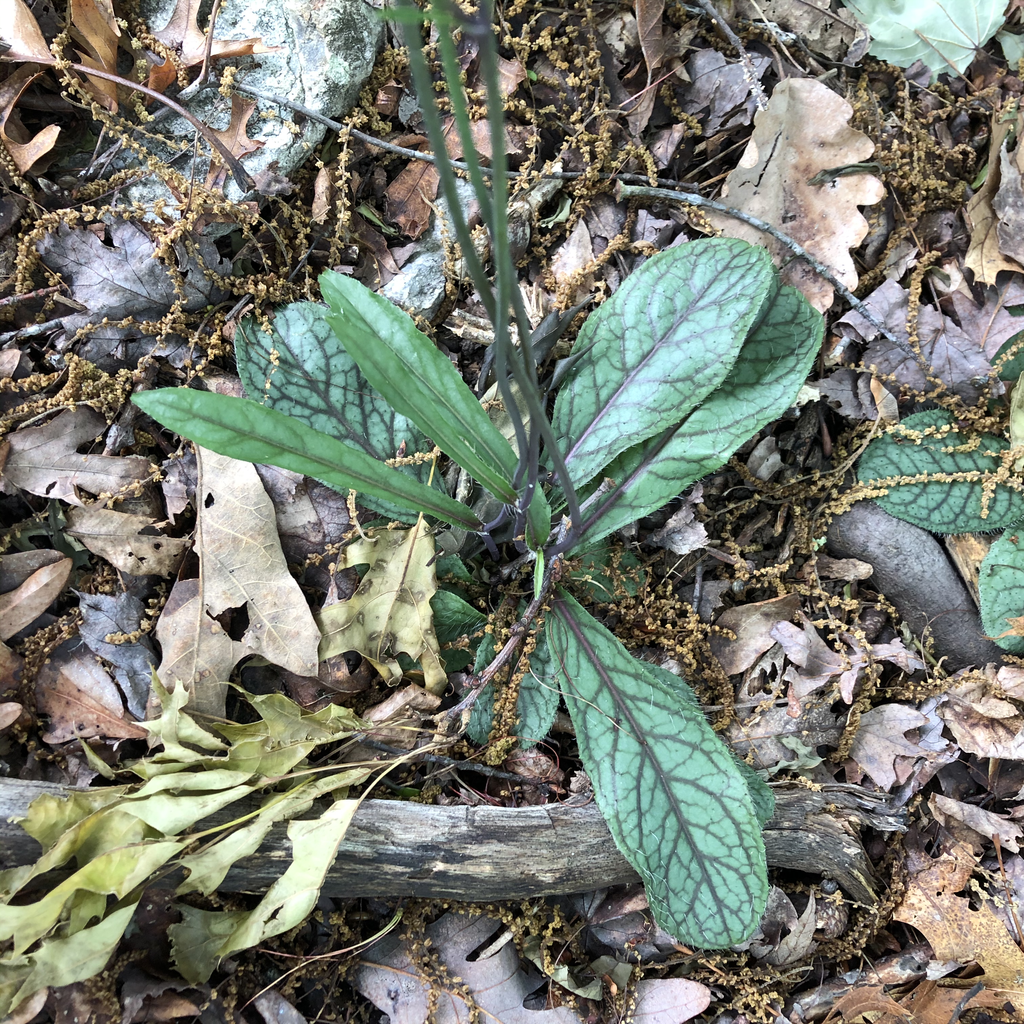
Rattlesnake weed is noted for the red or purple coloration that outlines the veins of the leaf blades.
Diseases, Insect Pests, and Other Plant Problems:
No known diseases or insect pests.
- See this plant in the following landscape :
- Cultivars / Varieties:
-
- Tags:


- Cultivars / Varieties:
-
- Tags:
-
-
Attributes:
- Genus:
- Pilosella
- Species:
- venosa
- Family:
- Asteraceae
- Life Cycle:
- Perennial
- Recommended Propagation Strategy:
- Seed
- Country Or Region Of Origin:
- South Eastern Canada, North Central and Eastern Uited States.
- Distribution:
- Eastern Canada south to Georgia, west to Louisiana and Oklahoma, north to Michigan.
-
-
Whole Plant Traits:
- Plant Type:
- Herbaceous Perennial
- Weed
- Wildflower
- Habit/Form:
- Clumping
- Mounding
- Growth Rate:
- Rapid
- Maintenance:
- High
- Texture:
- Coarse
-
-
Cultural Conditions:
- Light:
- Dappled Sunlight (Shade through upper canopy all day)
- Partial Shade (Direct sunlight only part of the day, 2-6 hours)
- Soil Texture:
- Clay
- Loam (Silt)
- Sand
- Soil pH:
- Acid (<6.0)
- Neutral (6.0-8.0)
- Soil Drainage:
- Moist
- Occasionally Dry
- Available Space To Plant:
- 12 inches-3 feet
- NC Region:
- Mountains
- Piedmont
- USDA Plant Hardiness Zone:
- 3a, 3b, 4a, 4b, 5a, 5b, 6a, 6b, 7a, 7b
-
-
Fruit:
- Fruit Type:
- Achene
- Fruit Description:
- The fruit is a cypsela, although it is more typically known as an achene.
-
-
Flowers:
- Flower Color:
- Gold/Yellow
- Flower Value To Gardener:
- Showy
- Flower Bloom Time:
- Fall
- Summer
- Flower Shape:
- Star
- Flower Petals:
- more than 20 petals/rays
- Flower Size:
- < 1 inch
- Flower Description:
- Small, 1/2 to 3/4 inch, yellow, dandelion-like flowers in an open cluster of up to 20 individuals blossom from May into September.
-
-
Leaves:
- Leaf Color:
- Green
- Purple/Lavender
- Leaf Feel:
- Velvety
- Leaf Type:
- Simple
- Leaf Arrangement:
- Alternate
- Leaf Shape:
- Elliptical
- Lanceolate
- Oblanceolate
- Leaf Margin:
- Dentate
- Entire
- Serrate
- Hairs Present:
- Yes
- Leaf Length:
- 3-6 inches
- Leaf Width:
- 1-3 inches
- Leaf Description:
- Heavy purple-red veining on 1 1/2 to 6 inch, elliptical basal leaves. The underside of the leaves is purplish and hairy. The leaves tend to be crowded around the base of the stem.
-
-
Stem:
- Stem Color:
- Green
- Stem Is Aromatic:
- No
- Stem Cross Section:
- Round
- Stem Form:
- Straight
- Stem Surface:
- Hairy (pubescent)
- Stem Description:
- Leafless floral stalk supports the large number of small, yellow, flowers.
-
-
Landscape:
- Landscape Location:
- Naturalized Area
- Woodland
- Attracts:
- Bees
- Butterflies
- Resistance To Challenges:
- Drought
- Dry Soil
- Problems:
- Weedy