


Pilosella caespitosa
Common Name(s):
Previously known as:
- Hieracium caespitosum
- Phonetic Spelling
- pil-oh-SEL-uh kess-pi-TOH-suh kess-pi-TOH-suh
- Description
-
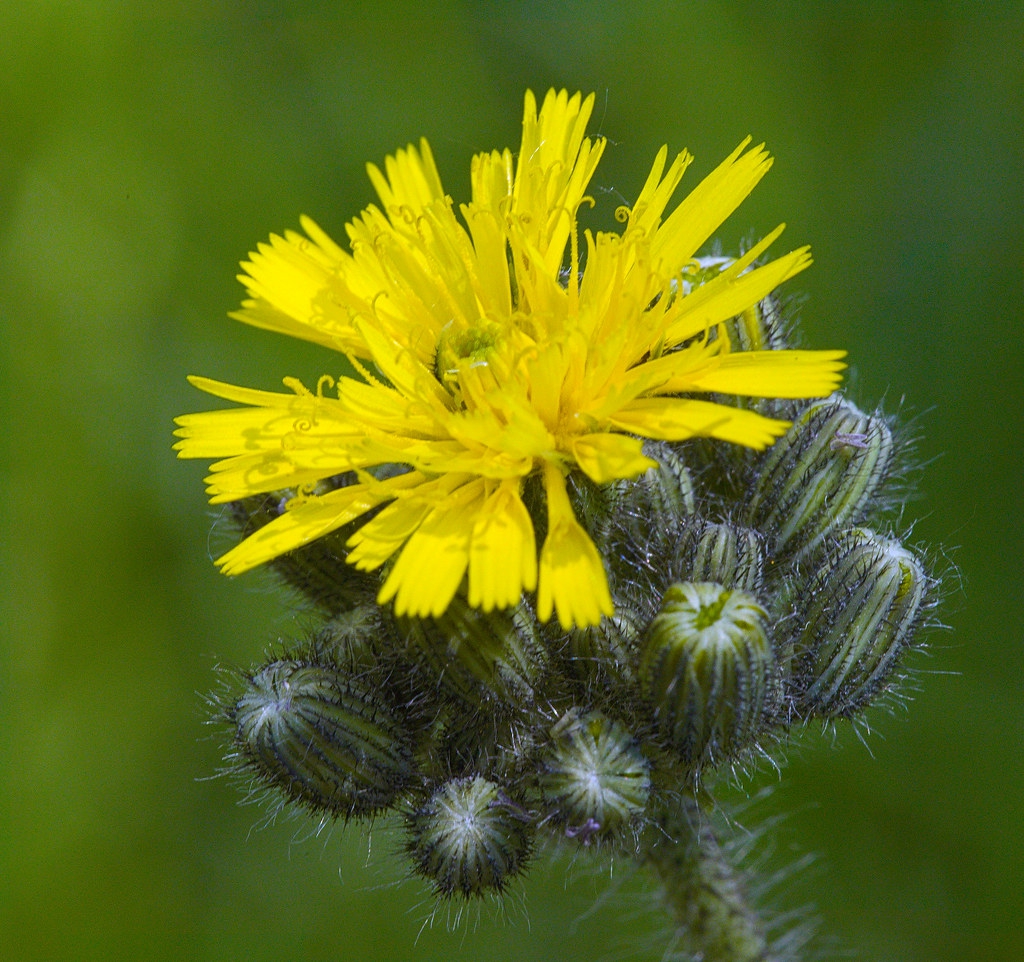
Meadow Hawkweed is a perennial, flowering wildflower in the daisy family (Asteraceae), native to Europe, that has spread to many parts of North America including North Carolina. It can be found growing in the wild in fields, along roadsides, and in sparse woodlands. The leaves are basal, shades of green, and hairy. Clusters of yellow flowerheads sit atop a 2 foot tall stalk in late spring into early summer.
Meadow Hawkweed prefers full or partial sun, moist to dry conditions, and slightly acidic sandy soil. The plant is considered a noxious weed in many states and is commonly found in dry sandy areas with a history of disturbance. It is unpalatable to mammals and competes with native forage.
The plant has fibrous roots and long rhizomes. For removal, dig or hand pull the plants out ensuring that the rhizomes are also removed. This ensures that clonal offsets do not establish colonies of plants.
Insects, Diseases, and Other Plant Problems:
No known diseases or insect pests.
- See this plant in the following landscape :
- Cultivars / Varieties:
-
- Tags:

- Cultivars / Varieties:
-
- Tags:
-
-
Attributes:
- Genus:
- Pilosella
- Species:
- caespitosa
- Family:
- Asteraceae
- Life Cycle:
- Perennial
- Recommended Propagation Strategy:
- Seed
- Country Or Region Of Origin:
- Europe
- Distribution:
- Canada, eastern United States to Georgia, west to the Mississippi, upper west including Oregon and Idaho
-
-
Whole Plant Traits:
- Plant Type:
- Herbaceous Perennial
- Weed
- Wildflower
- Habit/Form:
- Clumping
- Creeping
- Spreading
- Growth Rate:
- Rapid
- Maintenance:
- High
- Texture:
- Coarse
-
-
Cultural Conditions:
- Light:
- Full sun (6 or more hours of direct sunlight a day)
- Partial Shade (Direct sunlight only part of the day, 2-6 hours)
- Soil Texture:
- Clay
- Loam (Silt)
- Sand
- Soil pH:
- Acid (<6.0)
- Neutral (6.0-8.0)
- Soil Drainage:
- Moist
- Occasionally Dry
- Available Space To Plant:
- 12 inches-3 feet
- NC Region:
- Mountains
- Piedmont
- USDA Plant Hardiness Zone:
- 3a, 3b, 4a, 4b, 5a, 5b, 6a, 6b, 7a, 7b, 8a, 8b
-
-
Fruit:
- Fruit Type:
- Achene
- Fruit Description:
- Narrow oblong achenes with tufts of white hair on the upper tips.
-
-
Flowers:
- Flower Color:
- Gold/Yellow
- Flower Value To Gardener:
- Showy
- Flower Bloom Time:
- Spring
- Summer
- Flower Shape:
- Radial
- Flower Petals:
- Bracts
- Flower Size:
- < 1 inch
- Flower Description:
- Yellow, dandelion-like flower heads in tight clusters (5 to 40 flowers per cluster) appear on a 2 foot stalk in late spring through early summer. Each flowerhead is ½ to ¾ of an inch across, consisting of numerous yellow ray florets and their reproductive organs. At the base of each flowerhead, are several floral bracts that are medium green and linear-oblong in shape with glandular black hairs along their midveins.
-
-
Leaves:
- Leaf Color:
- Green
- Leaf Feel:
- Prickly
- Leaf Arrangement:
- Alternate
- Leaf Shape:
- Elliptical
- Oblanceolate
- Oblong
- Leaf Margin:
- Entire
- Hairs Present:
- Yes
- Leaf Length:
- 3-6 inches
- Leaf Width:
- < 1 inch
- Leaf Description:
- Basal leaves 2 to 6 inches long and ½ to 1 inch across with margins that have a fringe of hair. The upper surface of the leaves is medium green and sparsely hairy, while the lower surface is pale green and hairy. One or two small alternate leaves sometimes appear along the lower half of the flowering stalk.
-
-
Stem:
- Stem Color:
- Green
- Stem Is Aromatic:
- No
- Stem Cross Section:
- Round
- Stem Form:
- Straight
- Stem Surface:
- Hairy (pubescent)
- Stem Description:
- Round flowering stalk to 2½ feet tall, pale green, unbranched with white hairs below and glandular black hairs above.
-
-
Landscape:
- Landscape Location:
- Woodland
- Attracts:
- Bees
- Butterflies
- Resistance To Challenges:
- Drought
- Dry Soil
- Problems:
- Weedy