


Phlox drummondii
Common Name(s):
Previously known as:
- America drummondii
- Polemonium drummondii
- Phonetic Spelling
- FLOCKS druh-MON-dee-eye
- Description
-
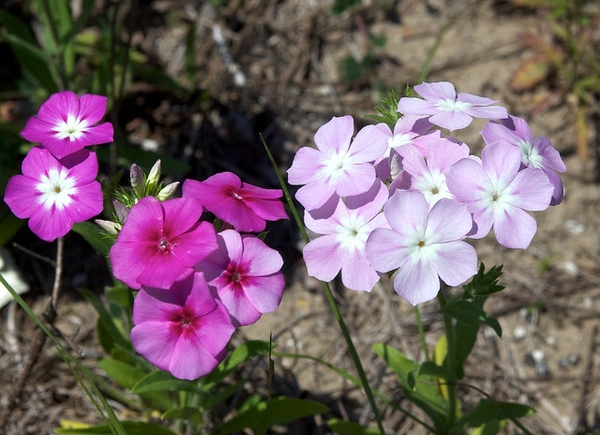
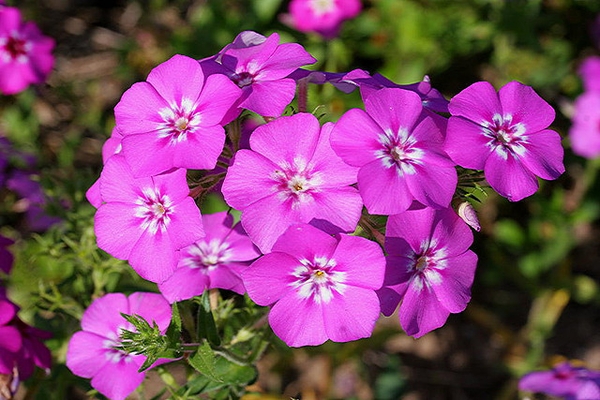
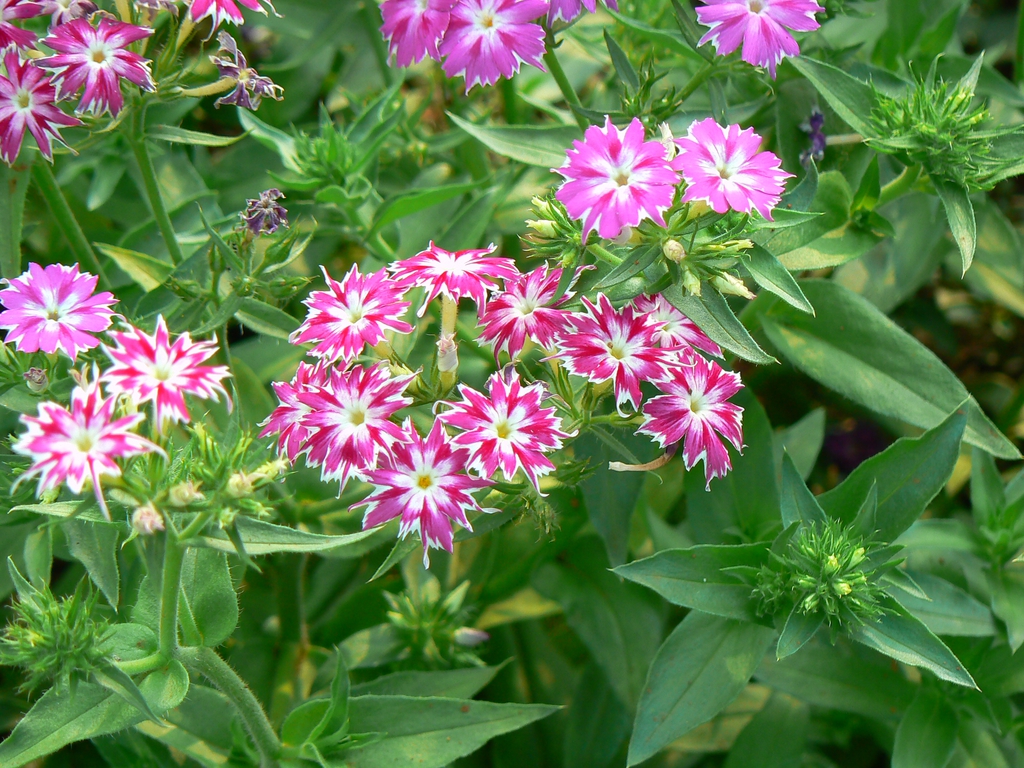
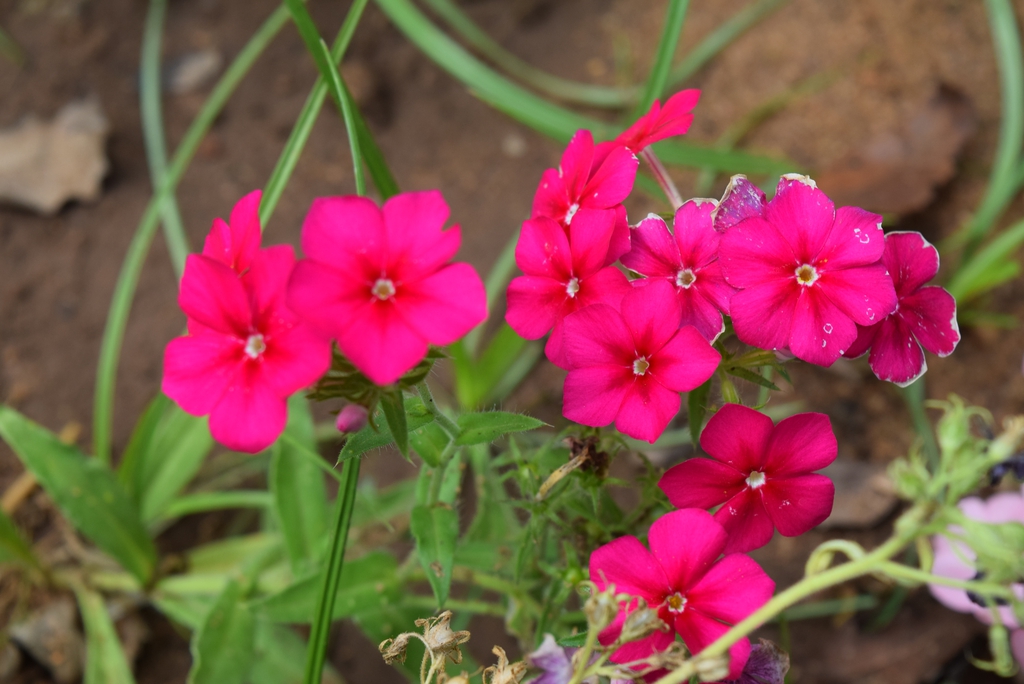
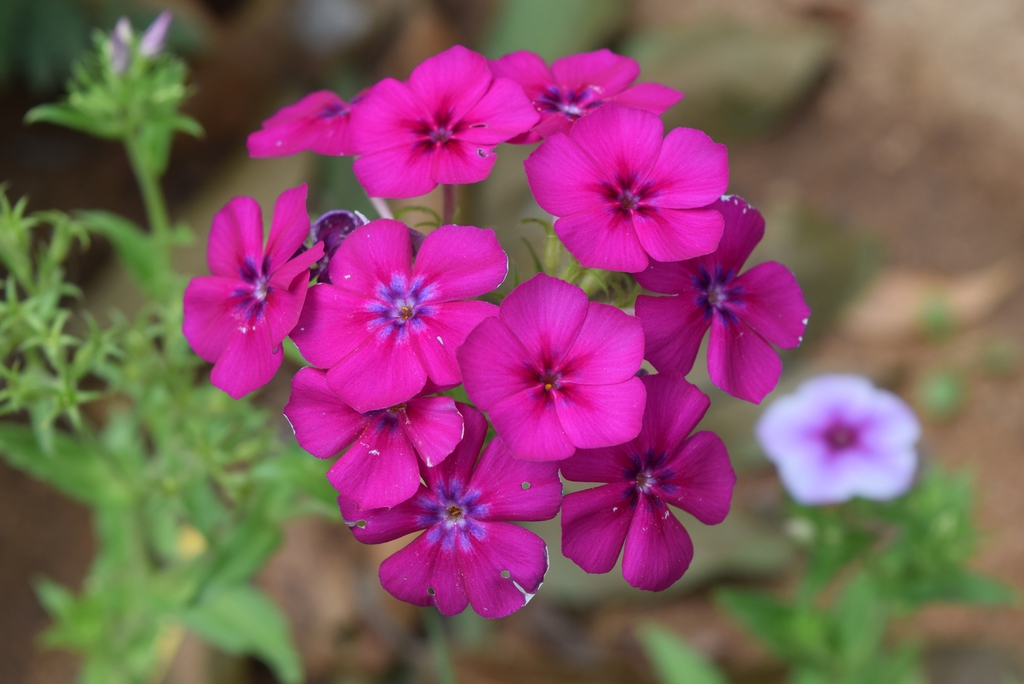
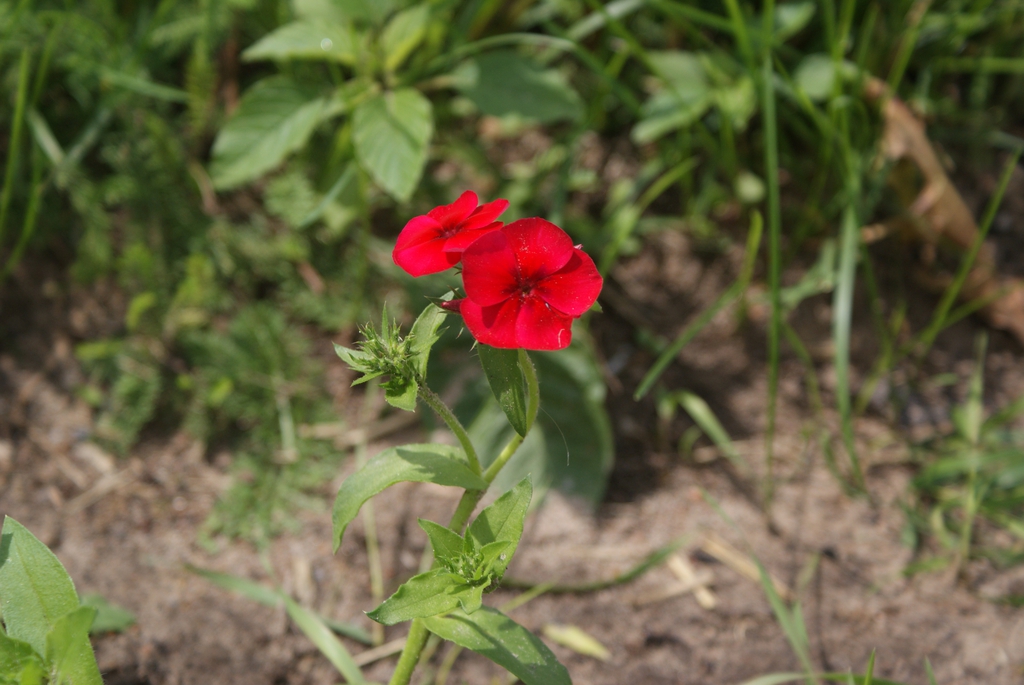
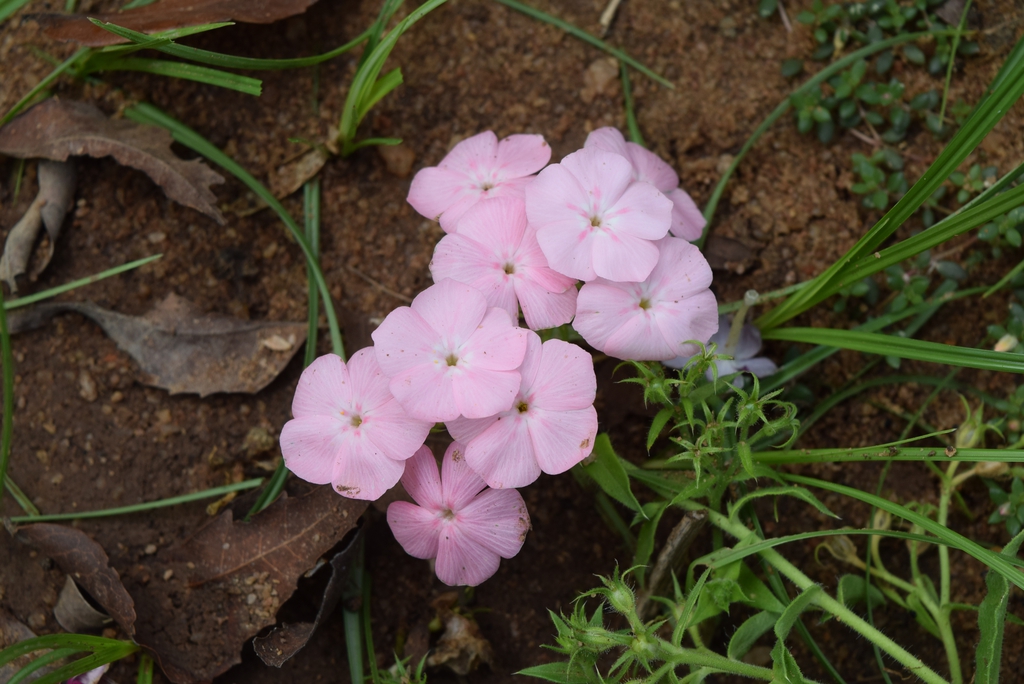
Drummond's phlox is a popular, showy, ornamental annual native to the Central and Southeastern United States, found in grasslands and meadows. It has naturalized throughout the southeastern US along roadsides and fields. The plant is bushy with hairy, erect stems, and the leaves are soft, hairy, sticky, bright green, oblong to lanceolate, and clasp the stems. Clusters of flowers are borne at the stem ends, and each bloom is trumpet-shaped, 5-petalled, fragrant, and rose-red. Flowers bloom in spring to early summer and possibly again in fall. It generally grows 6-12 inches high and wide and will reseed itself under good conditions. The genus name Phlox is Greek and means "flame." This refers to the intensity of the bloom's colors. The specific epithet drummondii honors a Scottish botanist, Thomas Drummond, who collected seeds and plants in Texas and sent them to Great Britain. This plant belongs to the phlox family (Polemoniaceae).
Prefers full sun to partial shade and moist, well-drained, humusy, acidic soil. It has moderate to high drought tolerance. Pinching the main stems will encourage branching. To prolong blooming, deadhead the spent flowers is recommended. The blooms provide a nectar source for bees, butterflies, and hummingbirds. Seed propagation is recommended, and it can easily re-seed itself.
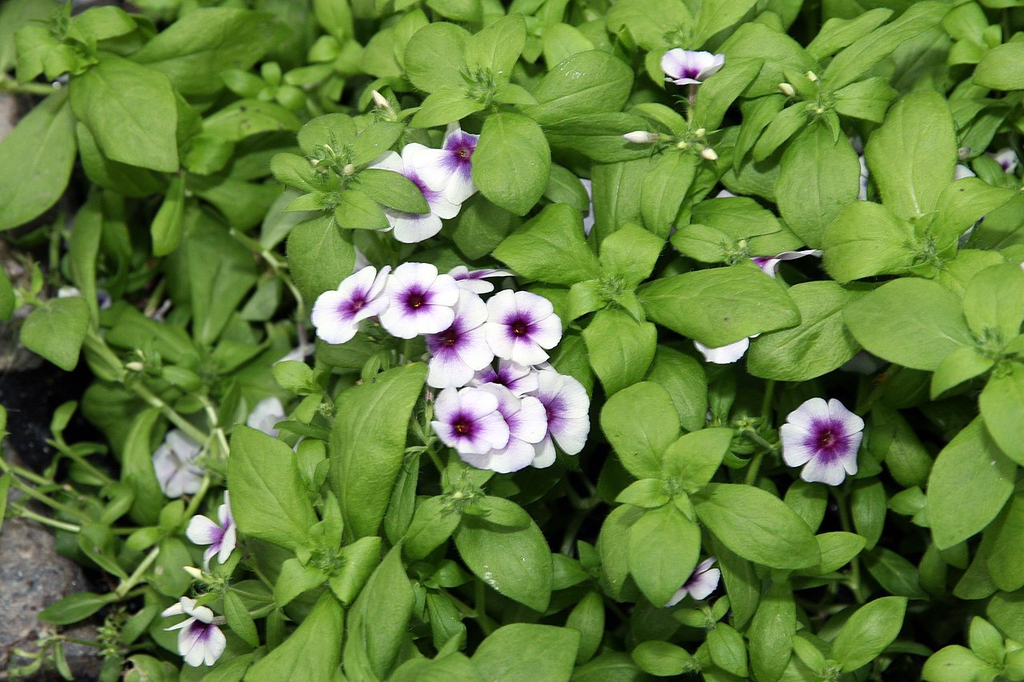
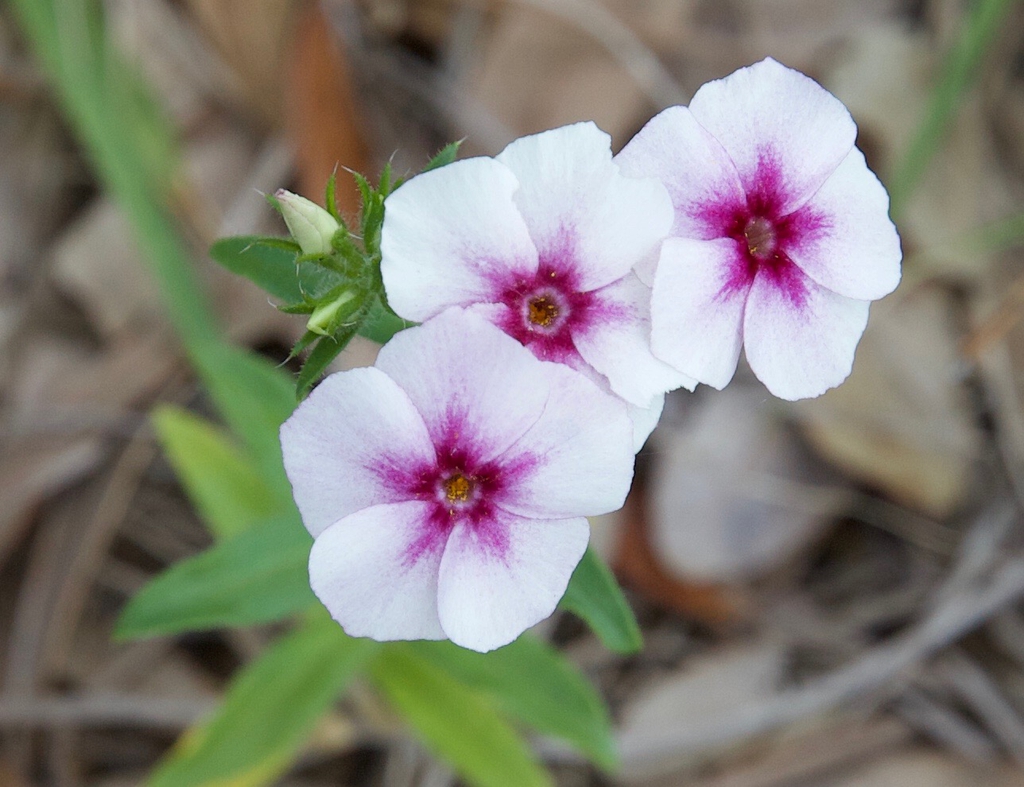
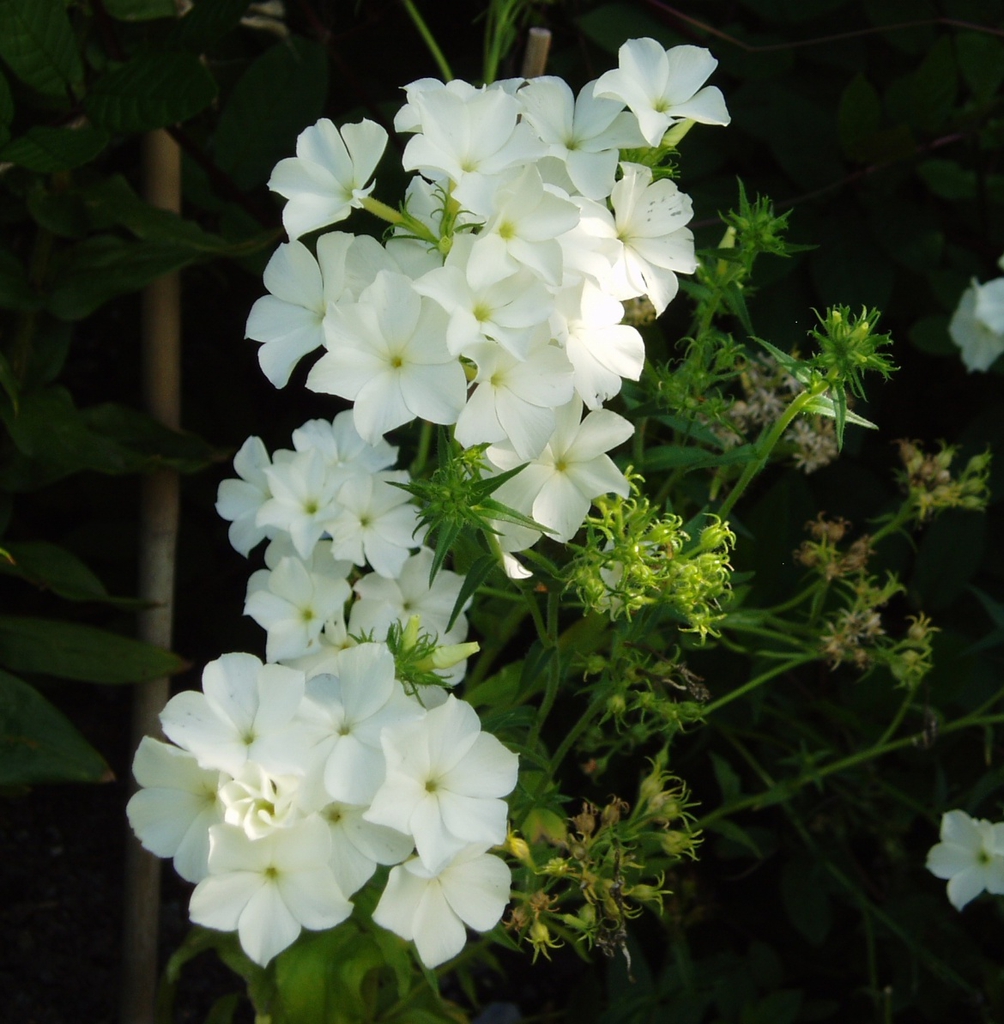
Cultivars are available and come in a variety of colors, including pink, red, lavender, purple, and white. The blooms will frequently have a different eye color.
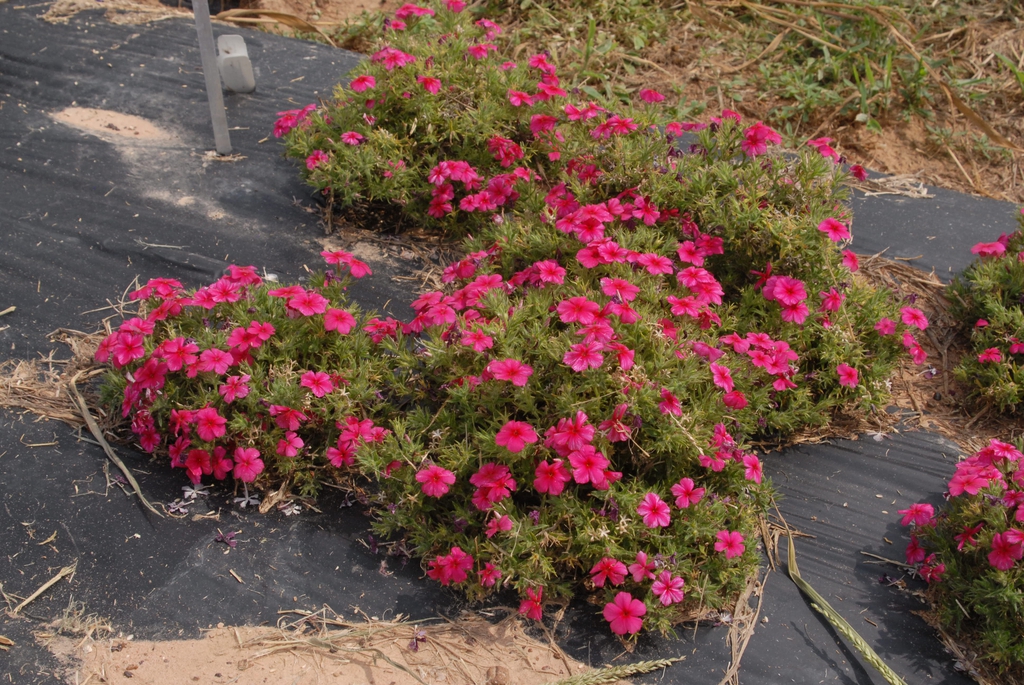
This spring- and summer-blooming annual is best suited for mass planting along borders and used as a groundcover. It is attractive as a container plant or in a rock garden.
Insects, Diseases, and Other Plant Problems: No significant insect pests or diseases. Monitor for spider mites. In humid conditions, monitor for powdery mildew. Overwatering or poorly drained soils can cause crown rot.
- See this plant in the following landscape :
- Cultivars / Varieties:
-
- Southern Blaze® Blueberry
Bluish-purple flowers and green leaves with good heat and humidity tolerance - Southern Blaze® Red Hot
Bright red blooms and bright green leaves, with heat and humidity tolerance - Southern Blaze® White III
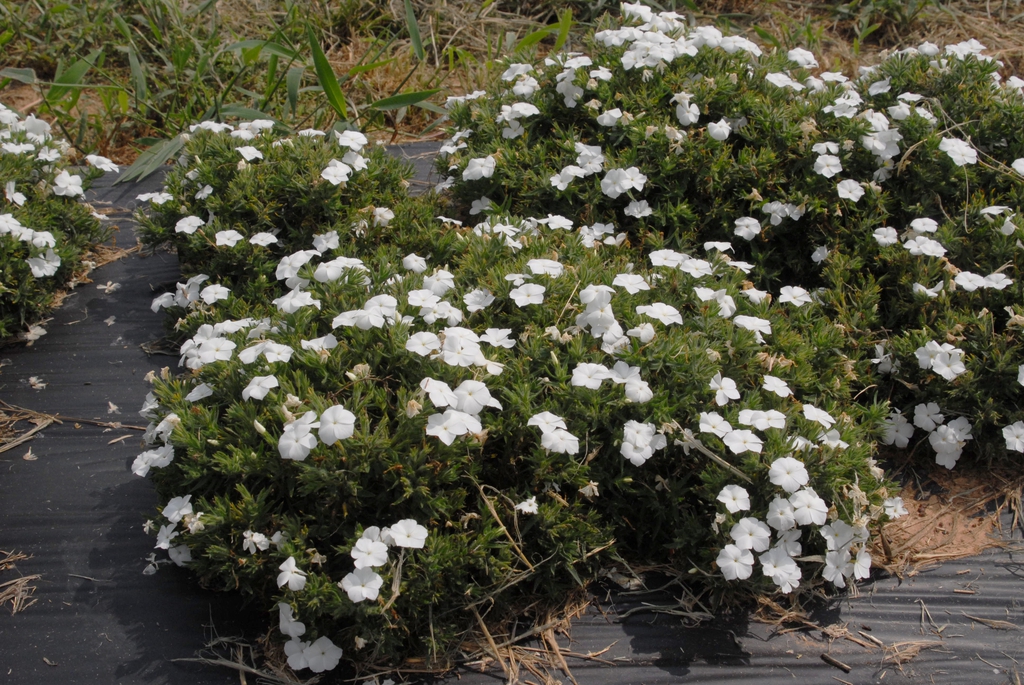
Bright white blooms and green leaves, with drought tolerance
- Southern Blaze® Blueberry
- Southern Blaze® Blueberry, Southern Blaze® Red Hot, Southern Blaze® White III
- Tags:


- Cultivars / Varieties:
-
- Southern Blaze® Blueberry
Bluish-purple flowers and green leaves with good heat and humidity tolerance - Southern Blaze® Red Hot
Bright red blooms and bright green leaves, with heat and humidity tolerance - Southern Blaze® White III
Bright white blooms and green leaves, with drought tolerance
- Southern Blaze® Blueberry
- Southern Blaze® Blueberry, Southern Blaze® Red Hot, Southern Blaze® White III
- Tags:
-
-
Attributes:
- Genus:
- Phlox
- Species:
- drummondii
- Family:
- Polemoniaceae
- Life Cycle:
- Annual
- Recommended Propagation Strategy:
- Seed
- Country Or Region Of Origin:
- Central and Southeastern United States
- Distribution:
- Native: AL, AR, CT, FL, GA, LA, MD, MI, MN, MS, MO, NC, OK, SC, TX, VT, and VA. Introduced: Bangladesh, Czechoslovakia, Galápagos, Germany, Illinois, Irkutsk, New Brunswick, Ontario, Trinidad-Tobago, Uzbekistan, Venezuela, and Vietnam.
- Wildlife Value:
- The flowers attract bees, butterflies, and hummingbirds. The species is pollinated almost exclusively by Battus philenor, the pipevine swallowtail.
- Play Value:
- Attractive Flowers
- Attracts Pollinators
- Colorful
- Defines Paths
- Easy to Grow
- Fragrance
- Dimensions:
- Height: 0 ft. 6 in. - 1 ft. 0 in.
- Width: 0 ft. 6 in. - 1 ft. 0 in.
-
-
Whole Plant Traits:
- Plant Type:
- Annual
- Ground Cover
- Wildflower
- Habit/Form:
- Erect
- Mounding
- Multi-stemmed
- Growth Rate:
- Rapid
- Maintenance:
- Low
- Medium
- Texture:
- Fine
-
-
Cultural Conditions:
- Light:
- Full sun (6 or more hours of direct sunlight a day)
- Partial Shade (Direct sunlight only part of the day, 2-6 hours)
- Soil Texture:
- Clay
- High Organic Matter
- Loam (Silt)
- Sand
- Shallow Rocky
- Soil pH:
- Acid (<6.0)
- Neutral (6.0-8.0)
- Soil Drainage:
- Good Drainage
- Moist
- Occasionally Dry
- Available Space To Plant:
- Less than 12 inches
- NC Region:
- Coastal
- Mountains
- Piedmont
-
-
Fruit:
- Display/Harvest Time:
- Fall
- Fruit Type:
- Capsule
- Fruit Length:
- < 1 inch
- Fruit Width:
- < 1 inch
- Fruit Description:
- The fruit is dry and splits open when ripe
-
-
Flowers:
- Flower Color:
- Pink
- Purple/Lavender
- Red/Burgundy
- White
- Flower Inflorescence:
- Cyme
- Flower Value To Gardener:
- Fragrant
- Good Cut
- Showy
- Flower Bloom Time:
- Spring
- Summer
- Flower Shape:
- Star
- Trumpet
- Tubular
- Flower Petals:
- 4-5 petals/rays
- fused petals
- Flower Size:
- < 1 inch
- Flower Description:
- Flowers are trumpet-shaped with a short tube and 5 star-shaped petals in terminal clusters. It blooms May to June and occasionally again in the fall. Colors vary and the center eye is a lighter color.
-
-
Leaves:
- Leaf Color:
- Green
- Leaf Feel:
- Soft
- Leaf Type:
- Simple
- Leaf Arrangement:
- Alternate
- Opposite
- Leaf Shape:
- Lanceolate
- Oblanceolate
- Oblong
- Leaf Margin:
- Entire
- Hairs Present:
- Yes
- Leaf Length:
- 1-3 inches
- Leaf Width:
- < 1 inch
- Leaf Description:
- Leaves are up to 3 inch long sticky, glandular, hairy clasping leaves. Lower leaves are opposite and upper leaves alternate.
-
-
Stem:
- Stem Color:
- Green
- Stem Is Aromatic:
- No
- Stem Surface:
- Hairy (pubescent)
- Stem Description:
- The stems are green, erect, and hairy.
-
-
Landscape:
- Landscape Location:
- Container
- Hanging Baskets
- Slope/Bank
- Small Space
- Walkways
- Landscape Theme:
- Butterfly Garden
- Children's Garden
- Drought Tolerant Garden
- Design Feature:
- Border
- Mass Planting
- Attracts:
- Bees
- Butterflies
- Hummingbirds
- Resistance To Challenges:
- Deer
- Drought