


Nigella damascena
Common Name(s):
- Phonetic Spelling
- nye-JELL-ah dam-ass-SEE-nah
- Description
-
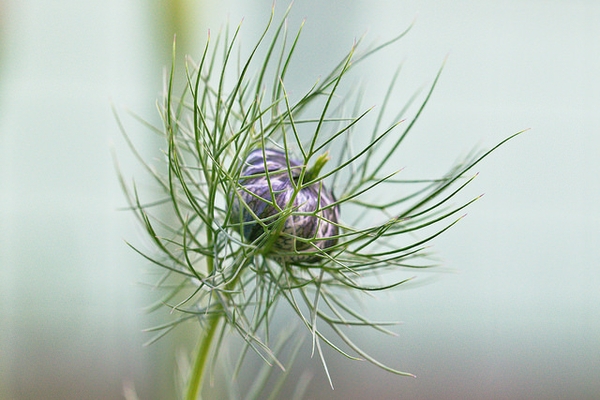
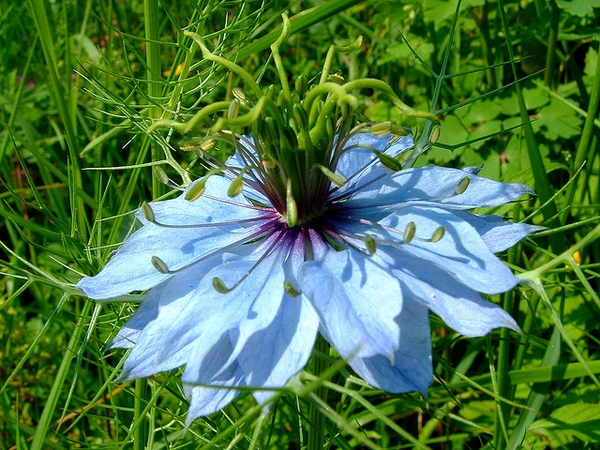
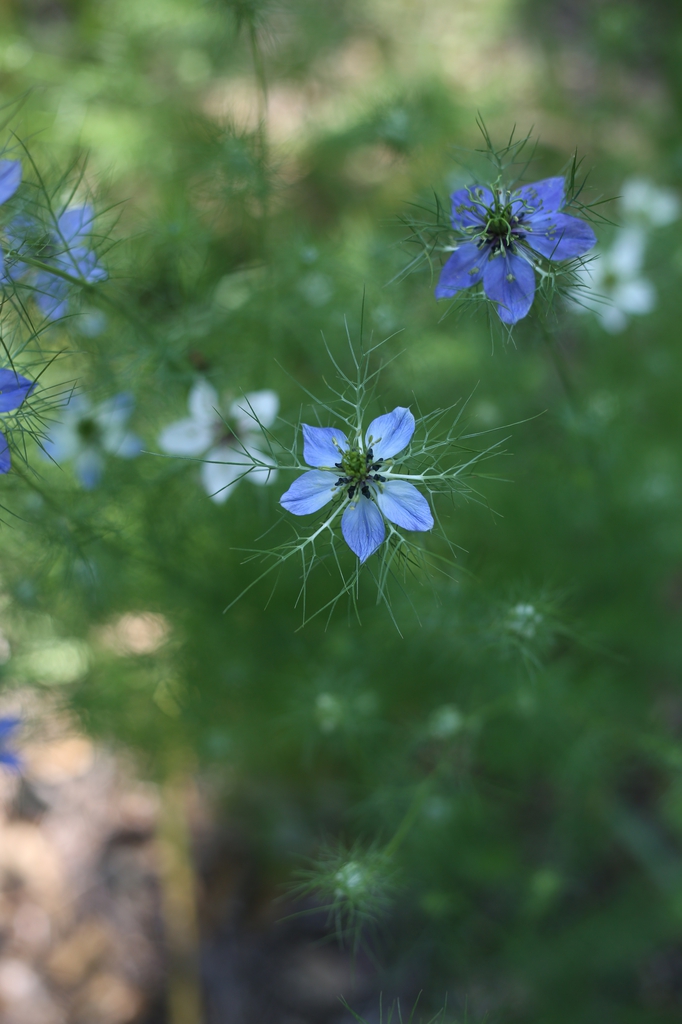
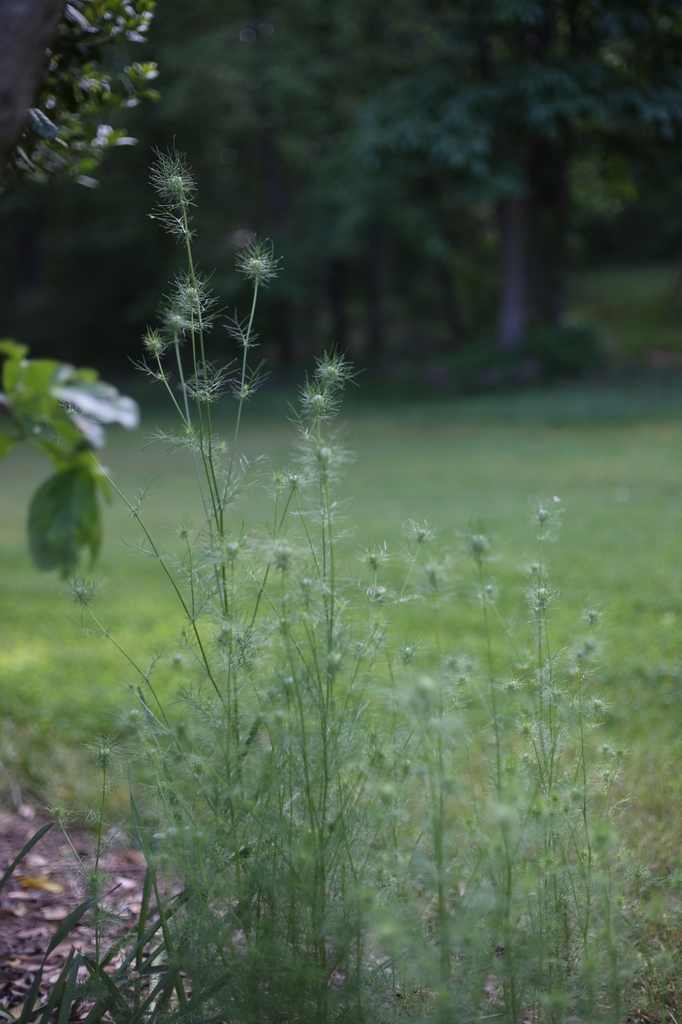
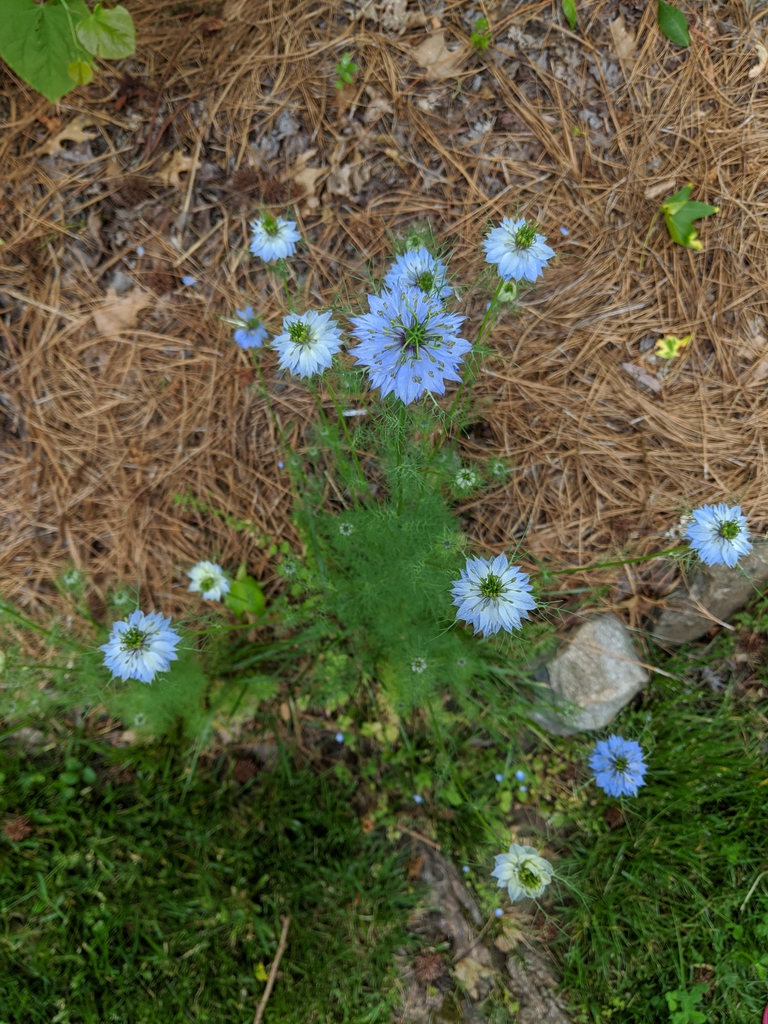
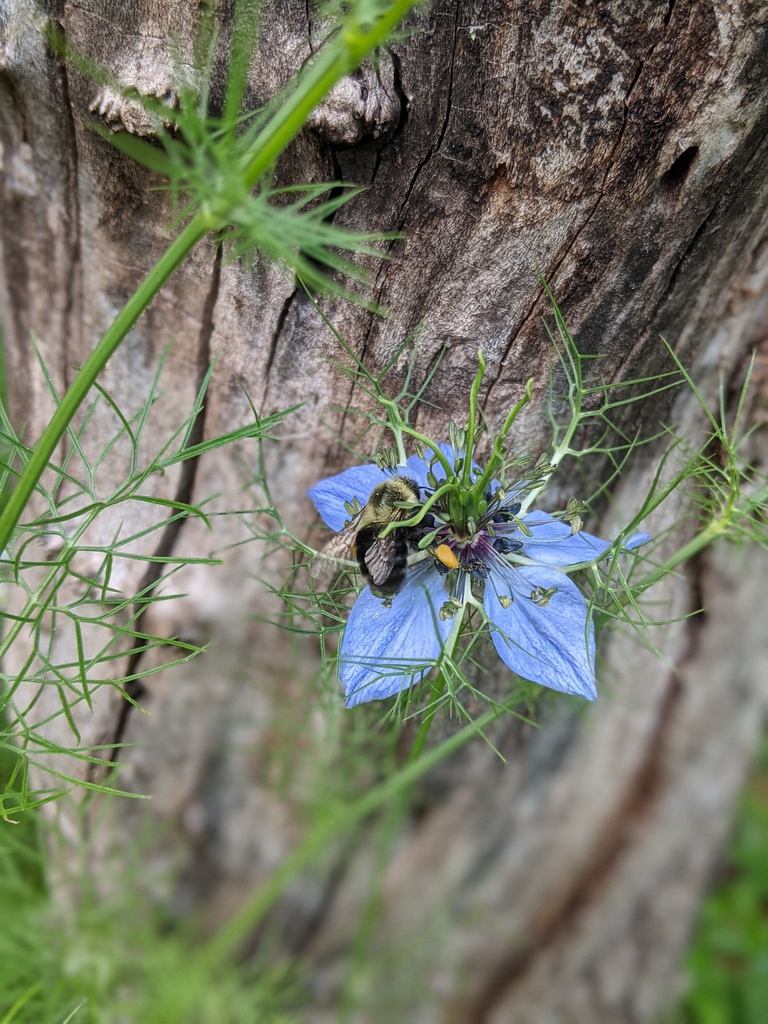
Love in a Mist is a cool-weather, upright, bushy annual in the buttercup family grown for unusual summer flowers and seed pods that often find their home in flower arrangements. It is native to northern Africa and southern Europe and can be planted across a wide range of climate zones. It is a medium size plant with feathery bright green foliage and saucer-shaped, pale blue flowers maturing at 2 feet high with a 1 1/2 foot spread. The genus name comes from the Latin word niger meaning black, the color of the seeds. The species name means of Damascus, Syria. The common name, Love in a Mist, refers to the bed of lacy (and misty) foliage surrounding the flowers.
Love in a Mist does best in consistent moisture, well-drained soils in full sun; however, it will tolerate most soil types. Love in a Mist does not tolerate transplanting. You can deadhead spent flowers to extend the bloom period, but this will also eliminate the attractive seed pods that appear after the blooms die off. Plants will self-seed in the garden.
It is usually better to plant the seeds during the fall than the spring. The young seedlings are winter-hardy. Or seeds can be sown in early spring as soon as the ground can be worked. The plant is a winter annual and if your climate includes cool summer temperatures, you can make additional sowings every 3 to 4 weeks until mid-summer.
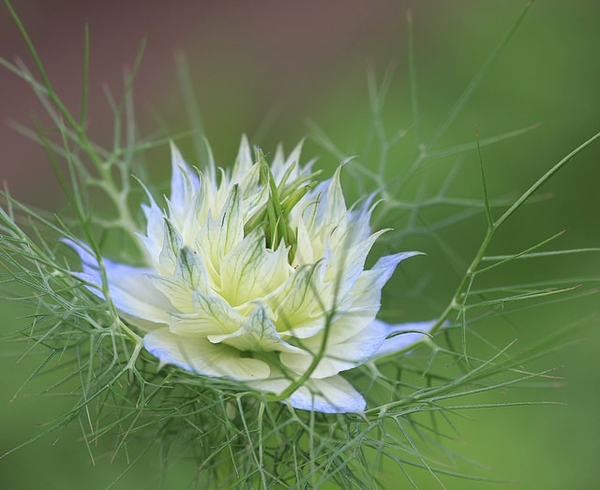
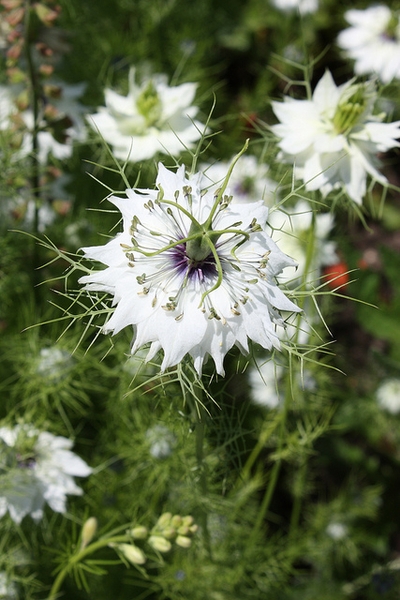
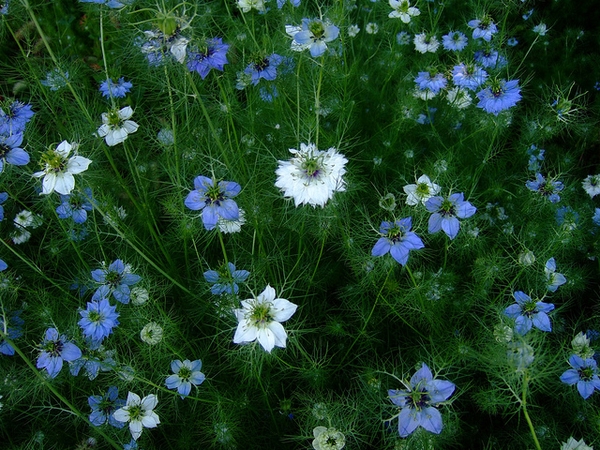
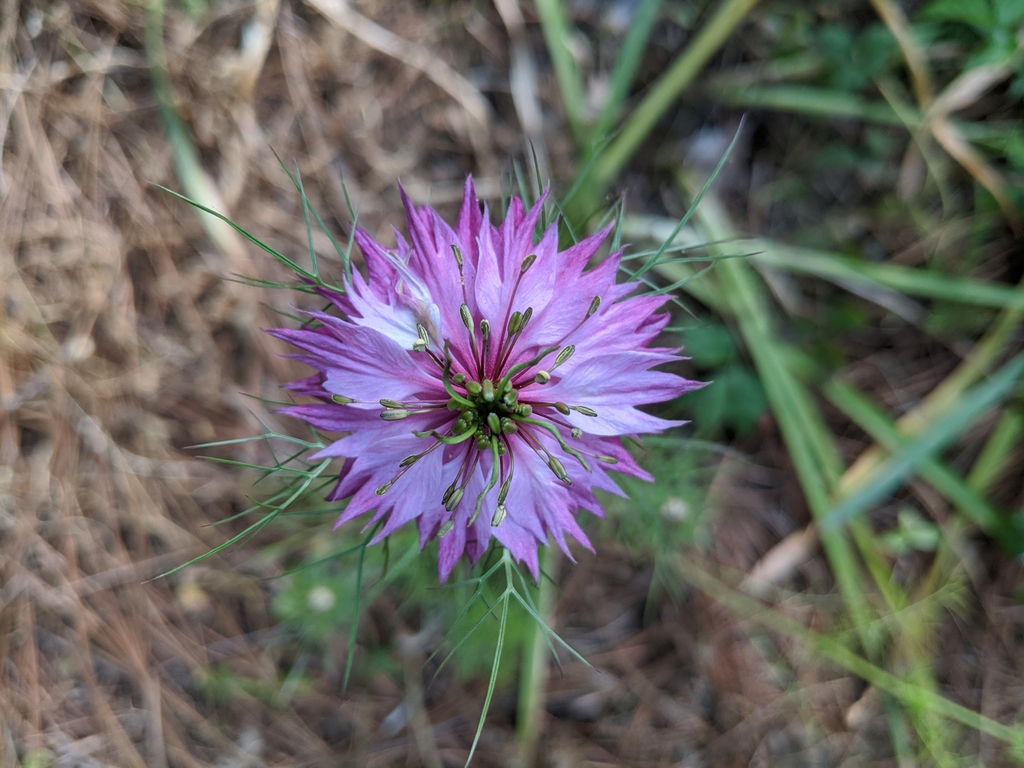
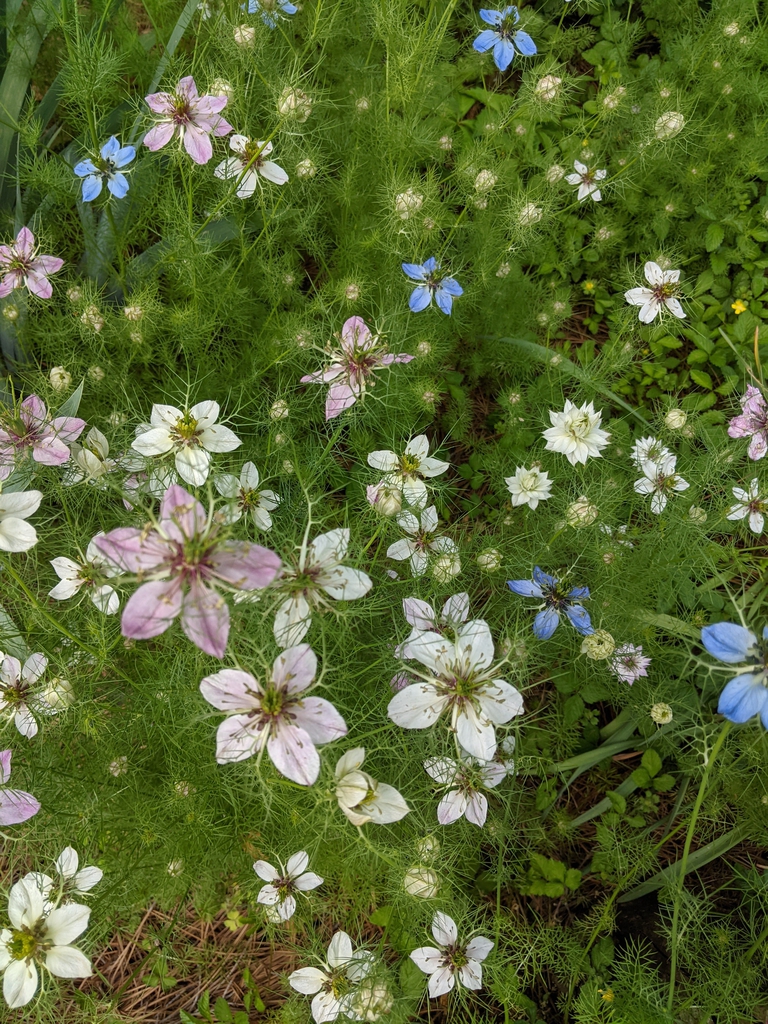
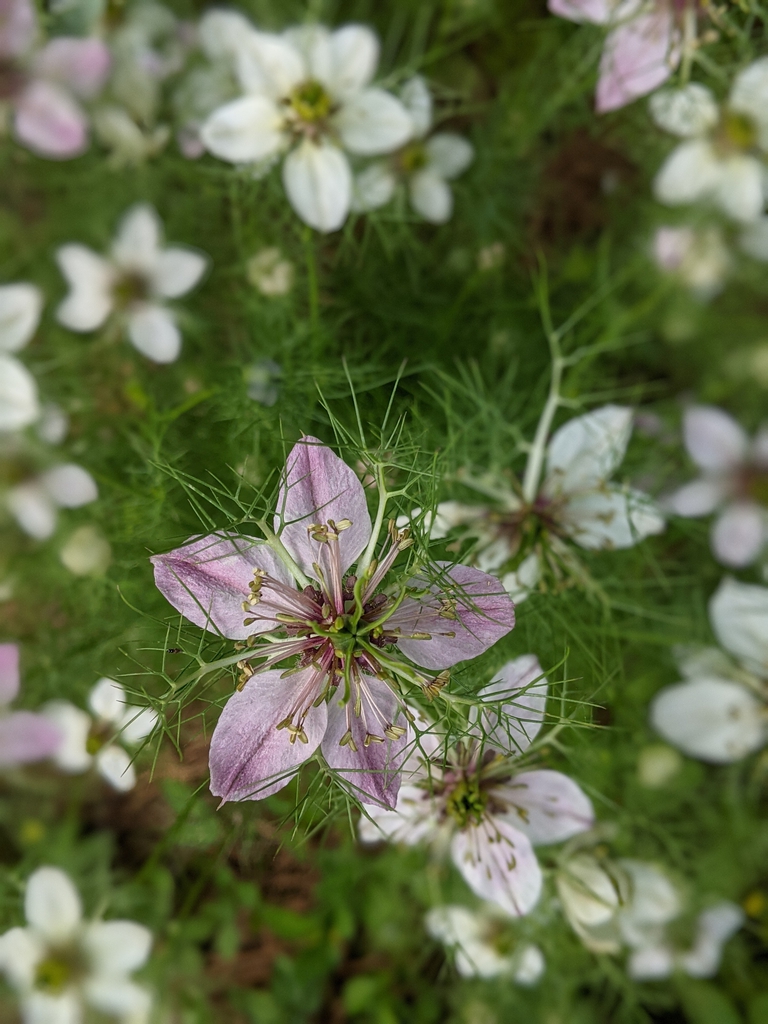
The blossoms of the parent plant are typically blue, but many cultivars in white, pink, rose, and purple are available.
Diseases, Insect Pests, and Other Plant Problems:
No known diseases or insect pests.
- See this plant in the following landscape :
- Cultivars / Varieties:
-
- 'Albion Black Pod'
White flowers with green centers, decorative seed pods. - 'Dwarf Moody Blue'
Six inches high. - 'Miss Jekyll'
Pale blue flowers. - 'Miss Jekyll Alba'
Double white flowers. - 'Mulberry Rose'
Pale to rosy pink flowers, attracts pollinators. - 'Oxford Blue'
Deep blue flowers - 'Persian Jewels'
Mixture of white, pink, lavender and blue flowers. - 'Persian Rose'
Pale pink flowers.
- 'Albion Black Pod'
- 'Albion Black Pod', 'Dwarf Moody Blue', 'Miss Jekyll', 'Miss Jekyll Alba', 'Mulberry Rose', 'Oxford Blue', 'Persian Jewels', 'Persian Rose'
- Tags:


- Cultivars / Varieties:
-
- 'Albion Black Pod'
White flowers with green centers, decorative seed pods. - 'Dwarf Moody Blue'
Six inches high. - 'Miss Jekyll'
Pale blue flowers. - 'Miss Jekyll Alba'
Double white flowers. - 'Mulberry Rose'
Pale to rosy pink flowers, attracts pollinators. - 'Oxford Blue'
Deep blue flowers - 'Persian Jewels'
Mixture of white, pink, lavender and blue flowers. - 'Persian Rose'
Pale pink flowers.
- 'Albion Black Pod'
- 'Albion Black Pod', 'Dwarf Moody Blue', 'Miss Jekyll', 'Miss Jekyll Alba', 'Mulberry Rose', 'Oxford Blue', 'Persian Jewels', 'Persian Rose'
- Tags:
-
-
Attributes:
- Genus:
- Nigella
- Species:
- damascena
- Family:
- Ranunculaceae
- Life Cycle:
- Annual
- Recommended Propagation Strategy:
- Seed
- Country Or Region Of Origin:
- Macaronesia, Northern Africa, Southern Europe
- Distribution:
- Introduced to Eastern Canada, Northeastern United States, Britain, France, and the Caucasus.
- Dimensions:
- Height: 1 ft. 0 in. - 2 ft. 0 in.
- Width: 1 ft. 0 in. - 1 ft. 6 in.
-
-
Whole Plant Traits:
- Plant Type:
- Annual
- Habit/Form:
- Erect
- Multi-stemmed
- Growth Rate:
- Rapid
- Maintenance:
- Low
- Texture:
- Fine
-
-
Cultural Conditions:
- Light:
- Full sun (6 or more hours of direct sunlight a day)
- Soil Texture:
- Clay
- Loam (Silt)
- Sand
- Soil pH:
- Neutral (6.0-8.0)
- Soil Drainage:
- Good Drainage
- Occasionally Wet
- Available Space To Plant:
- Less than 12 inches
- NC Region:
- Coastal
- Mountains
- Piedmont
- USDA Plant Hardiness Zone:
- 2a, 2b, 3a, 3b, 4a, 4b, 5a, 5b, 6a, 6b, 7a, 7b, 8a, 8b, 9a, 9b, 10a, 10b, 11a, 11b
-
-
Fruit:
- Fruit Value To Gardener:
- Good Dried
- Showy
- Display/Harvest Time:
- Fall
- Summer
- Fruit Type:
- Capsule
- Fruit Width:
- < 1 inch
- Fruit Description:
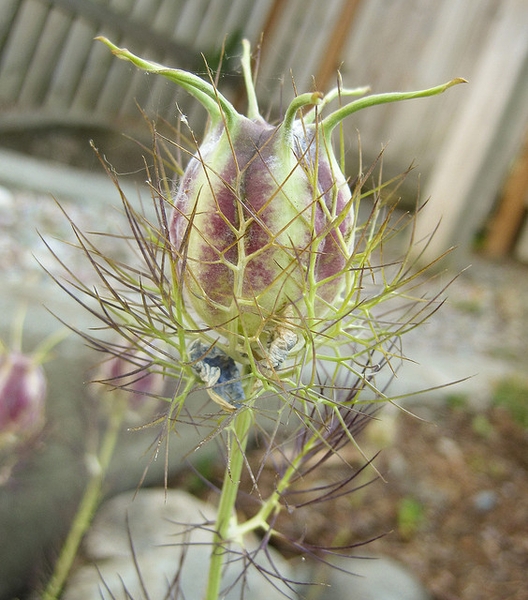
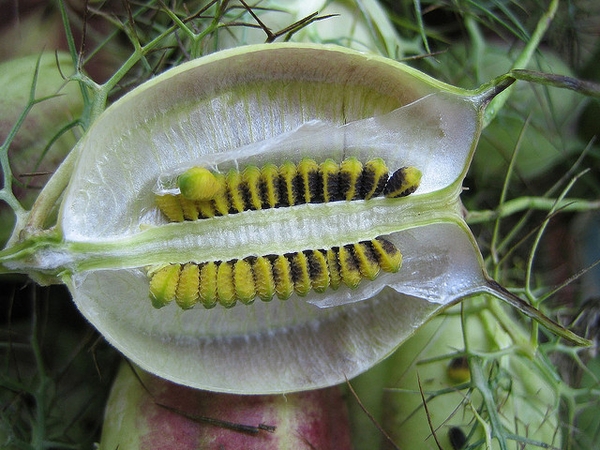
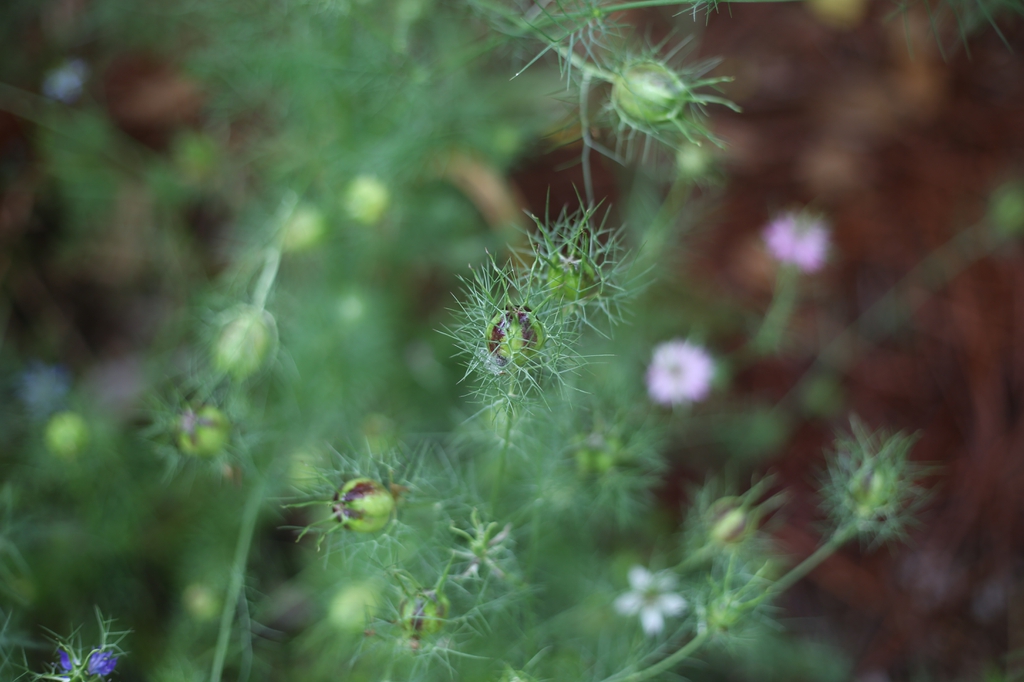
- Egg-shaped, horned seed capsules (to 1 inch in diameter) are covered with bristles. Stems with dried seed capsules make excellent additions to dried flower arrangements.
-
-
Flowers:
- Flower Color:
- Blue
- Purple/Lavender
- White
- Flower Inflorescence:
- Head
- Solitary
- Flower Value To Gardener:
- Good Cut
- Good Dried
- Showy
- Flower Bloom Time:
- Summer
- Flower Shape:
- Crown
- Flower Petals:
- 7 - 20 petals/rays
- Colored Sepals
- Flower Size:
- 1-3 inches
- Flower Description:
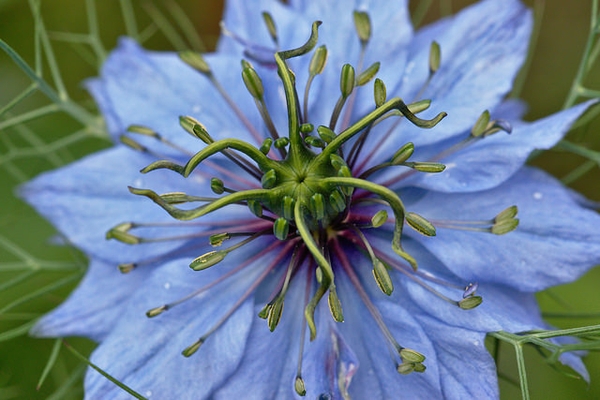
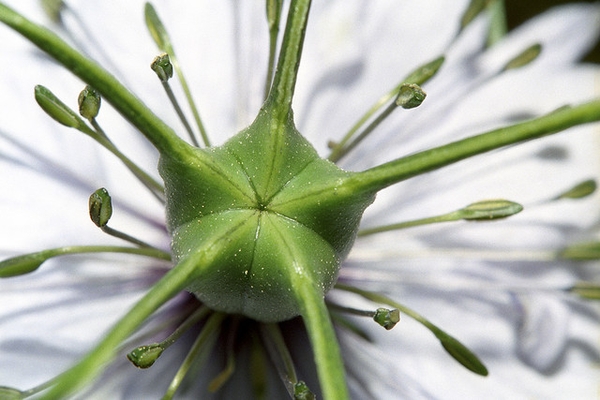
- Each solitary 1 1/2 inch blue flower appears to sit on a bed of lacy (and misty) foliage. Each flower has 5 petal-like sepals, 5 insignificant petals, 5 carpels that are joined together, and numerous stamens. Underneath each flower, there is a whorl of about 5 bracts that are very similar to the leaves. The blooming period usually occurs from late spring to mid-summer and lasts about 1-2 months for a colony of plants.
-
-
Leaves:
- Leaf Color:
- Green
- Leaf Type:
- Simple
- Leaf Arrangement:
- Alternate
- Leaf Shape:
- Filiform
- Linear
- Hairs Present:
- No
- Leaf Length:
- 1-3 inches
- Leaf Width:
- 1-3 inches
- Leaf Description:
- Finely-cut, thread-like leaves cover the flower stems. The leaves are up to 3 inches long and 1½ inches across. The lobes of mature leaves have a worm-like and cross-section; however, the lobes of young leaves during the spring are often flattened in cross-section.
-
-
Stem:
- Stem Color:
- Green
- Stem Is Aromatic:
- No
- Stem Surface:
- Smooth (glabrous)
- Stem Description:
- Hairless stems are medium green, terete, and often slightly grooved. The upper stems terminate in individual flowers.
-
-
Landscape:
- Landscape Location:
- Container
- Patio
- Walkways
- Landscape Theme:
- Cottage Garden
- Cutting Garden
- Design Feature:
- Border
- Small groups