



Compact Grape Hyacinth Muscari botryoides
Other Common Name(s):
- Phonetic Spelling
- mus-KAR-ee bot-ROY-dees
- Description
-
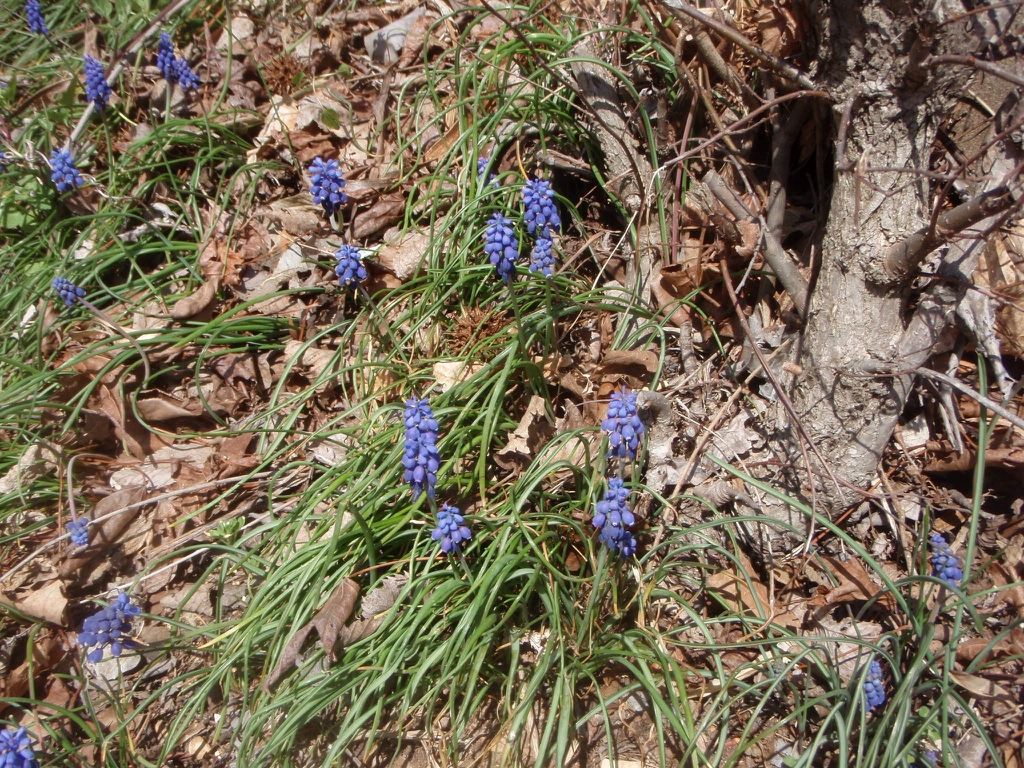
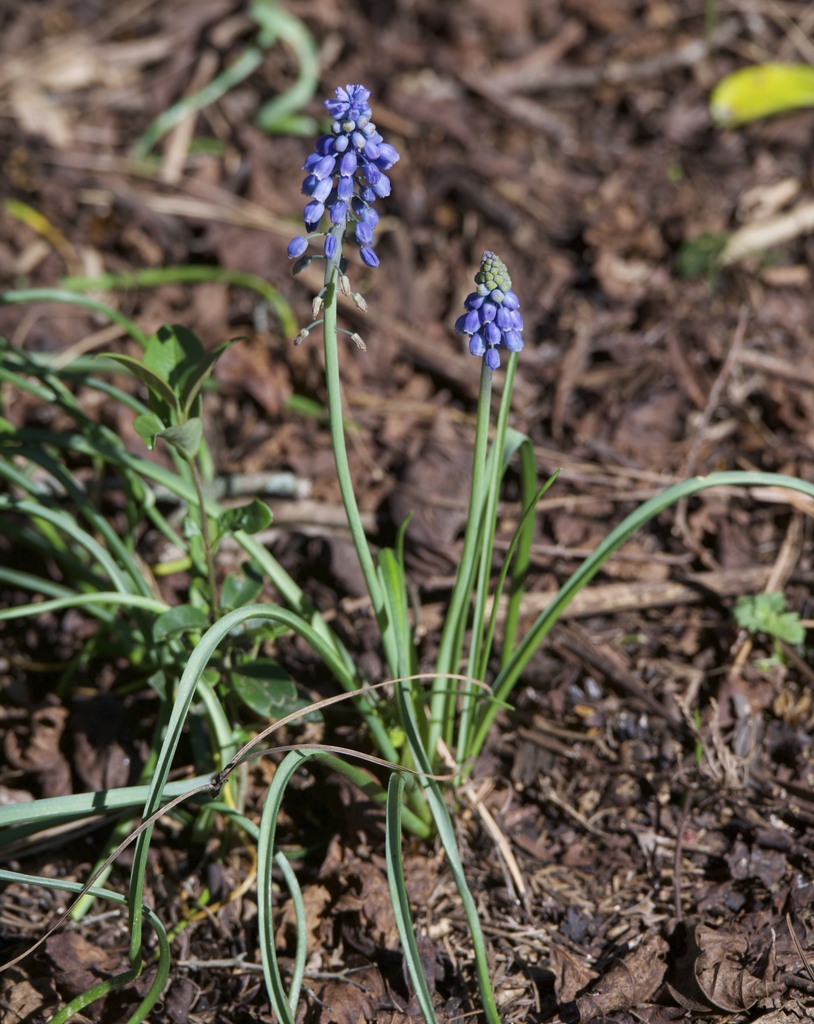
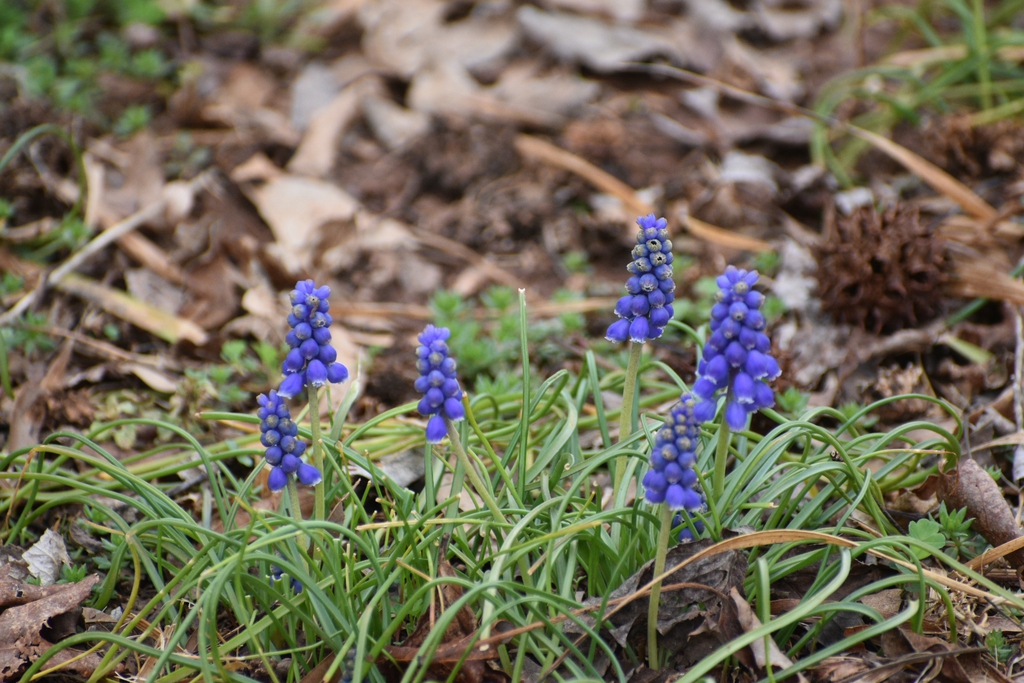
Compact grape hyacinth is a small, purple and white, clump-forming, flowering spring bulb in the asparagus family (Asparagaceae) native to central and southern Europe. The species epithet means "like clusters of grapes" and refers to the appearance of the flowers on the inflorescence.
Compact grape hyacinth bulbs are easy to grow and should be planted in the fall, spacing 3 inches apart and 2 inches deep in well-drained soil and sited in full sun to partial shade. Grape hyacinth tolerates most soil types, including clay. Keep the soil moist during the spring growing season, but reduce watering after foliage begins to die back. Plants will remain dormant from late spring to autumn when leaves again appear.
Mass plantings of Compact grape hyacinth along walkways, in border fronts, or near patios are a popular application of these ornamental flowers. They also look especially lovely planted along with daffodils as their color contrasts nicely with the yellow flowering bulbs. They can be divided to restore vigor to the plant.
It naturalizes easily and is often seen along roadsides and disturbed areas, meadows, and thickets in Eastern North America, where it is a garden escape. However, it is said to be much less invasive than M. atlanticum.
Insects, Diseases, and Other Plant Problems:
No serious diseases or insect problems.
- See this plant in the following landscape :
- Cultivars / Varieties:
- 'Album'
- Tags:

 Download Image


- Cultivars / Varieties:
- 'Album'
- Tags:
-
-
Attributes:
- Genus:
- Muscari
- Species:
- botryoides
- Family:
- Asparagaceae
- Life Cycle:
- Bulb
- Perennial
- Recommended Propagation Strategy:
- Division
- Seed
- Country Or Region Of Origin:
- France, central Europe, Ukraine
- Distribution:
- England, Netherlands, eastern Canada, eastern United States south to North Carolina, west to Texas, and California.
- Edibility:
- Bulbs are ornamental and should not be eaten.
- Dimensions:
- Height: 0 ft. 4 in. - 0 ft. 6 in.
- Width: 0 ft. 2 in. - 0 ft. 6 in.
-
-
Whole Plant Traits:
- Plant Type:
- Bulb
- Ground Cover
- Herbaceous Perennial
- Habit/Form:
- Clumping
- Columnar
- Erect
- Growth Rate:
- Medium
- Maintenance:
- Low
-
-
Cultural Conditions:
- Light:
- Dappled Sunlight (Shade through upper canopy all day)
- Full sun (6 or more hours of direct sunlight a day)
- Partial Shade (Direct sunlight only part of the day, 2-6 hours)
- Soil Texture:
- Clay
- High Organic Matter
- Loam (Silt)
- Sand
- Soil pH:
- Acid (<6.0)
- Alkaline (>8.0)
- Neutral (6.0-8.0)
- Soil Drainage:
- Good Drainage
- Moist
- Occasionally Dry
- Available Space To Plant:
- Less than 12 inches
- NC Region:
- Coastal
- Mountains
- Piedmont
- USDA Plant Hardiness Zone:
- 3a, 3b, 4a, 4b, 5a, 5b, 6a, 6b, 7a, 7b, 8a, 8b
-
-
Fruit:
- Fruit Type:
- Capsule
-
-
Flowers:
- Flower Color:
- Purple/Lavender
- White
- Flower Inflorescence:
- Raceme
- Spike
- Flower Value To Gardener:
- Fragrant
- Showy
- Flower Bloom Time:
- Spring
- Flower Shape:
- Urn
- Flower Description:
- Flowers are bright blue with white lobes, bunched together and almost totally round. Spikes become looser as the flowers mature. The lower fertile flowers point downwards, while upper ones, usually paler and sterile, point upwards. The flowers have a scent that resembles the honey-musk scent of buddleia.
-
-
Leaves:
- Leaf Color:
- Green
- Leaf Type:
- Simple
- Leaf Shape:
- Linear
- Leaf Margin:
- Entire
- Hairs Present:
- No
- Leaf Description:
- Narrow, linear green leaves with incurved margins.
-
-
Stem:
- Stem Is Aromatic:
- No
-
-
Landscape:
- Landscape Location:
- Container
- Patio
- Small Space
- Walkways
- Landscape Theme:
- Cottage Garden
- English Garden
- Fairy Garden
- Rock Garden
- Design Feature:
- Border
- Mass Planting


