


Marshallia obovata
Common Name(s):
- Phonetic Spelling
- mar-SHALL-ee-uh ob-oh-VAY-tuh
- Description
-
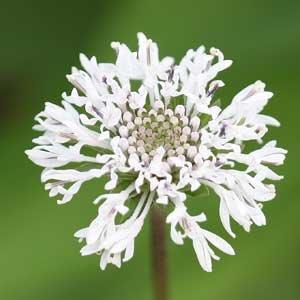
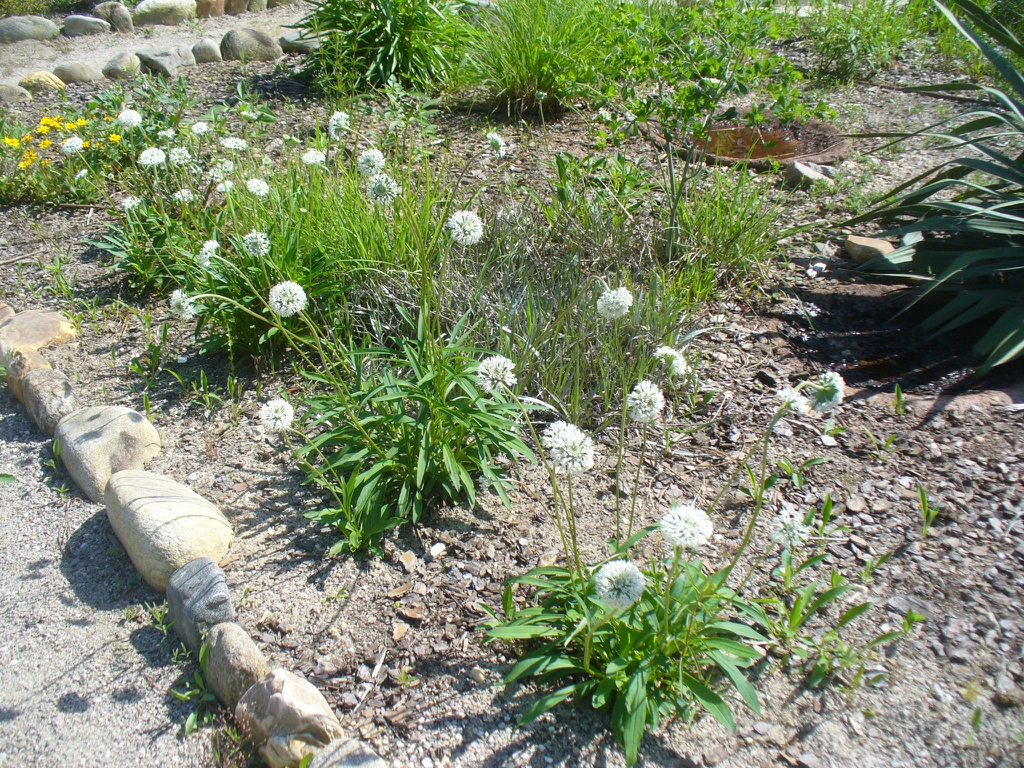
Piedmont Barbara's Buttons is a flowering herbaceous perennial in the Aster family. This clump-forming plant with flowering stems and basal leaves appears in spring and can reach up to 2 feet tall at maturity. The plant is native to the southeastern piedmont of North Carolina and is usually found in open woodlands and along roadsides throughout the southeast.
Piedmont Barbara's Buttons does best in evenly moist to dry, well-drained soils in full sun to part shade. It will tolerate some drought once established and most soil types as long as they are well draining. It will self sow in ideal conditions.
This plant was selected as the 2009 NC Wildflower of the Year, a program managed by the North Carolina Botanical Garden with some financial support from the Garden Club of North Carolina. It is good for rock gardens and in the front of beds.
Diseases, Insect Pests, and Other Plant Problems
No known diseases or insect pests.
- See this plant in the following landscape :
- Cultivars / Varieties:
-
- Marshallia obovata var. obovata
- Marshallia obovata var. obovata
- Marshallia obovata var. obovata
- Tags:


- Cultivars / Varieties:
-
- Marshallia obovata var. obovata
- Marshallia obovata var. obovata
- Marshallia obovata var. obovata
- Tags:
-
-
Attributes:
- Genus:
- Marshallia
- Species:
- obovata
- Family:
- Asteraceae
- Life Cycle:
- Perennial
- Recommended Propagation Strategy:
- Division
- Seed
- Country Or Region Of Origin:
- Southeastern United States
- Distribution:
- Open woodlands and along roadsides from Virginia south to Florida.
- Play Value:
- Attracts Pollinators
- Particularly Resistant To (Insects/Diseases/Other Problems):
- Heat and drought
- Edibility:
- no
-
-
Whole Plant Traits:
- Plant Type:
- Herbaceous Perennial
- Native Plant
- Wildflower
- Woody Plant Leaf Characteristics:
- Broadleaf Evergreen
- Deciduous
- Habit/Form:
- Clumping
- Growth Rate:
- Medium
- Maintenance:
- Low
-
-
Cultural Conditions:
- Light:
- Full sun (6 or more hours of direct sunlight a day)
- Partial Shade (Direct sunlight only part of the day, 2-6 hours)
- Soil Texture:
- Clay
- Sand
- Shallow Rocky
- Soil Drainage:
- Good Drainage
- Moist
- Available Space To Plant:
- Less than 12 inches
- NC Region:
- Coastal
- Piedmont
- USDA Plant Hardiness Zone:
- 5a, 5b, 6a, 6b, 7a, 7b, 8a, 8b
-
-
Fruit:
- Display/Harvest Time:
- Summer
- Fruit Type:
- Achene
- Fruit Description:
- Displays from May to June. The fruit is technically a cypsela.
-
-
Flowers:
- Flower Color:
- White
- Flower Inflorescence:
- Head
- Flower Bloom Time:
- Spring
- Summer
- Flower Shape:
- Crown
- Dome
- Tubular
- Flower Size:
- 1-3 inches
- Flower Description:
- Dense white flower heads are discoid (only disk flowers with no ray flowers). The numerous, tiny disk florets are compacted into solitary, terminal, pincushion-like, dome-shaped flower heads (1 to 3 inches in diameter) atop long, rigid, slender stems. Blooms from April to May
-
-
Leaves:
- Woody Plant Leaf Characteristics:
- Broadleaf Evergreen
- Deciduous
- Leaf Color:
- Green
- Leaf Type:
- Simple
- Leaf Arrangement:
- Alternate
- Rosulate
- Leaf Shape:
- Oblong
- Hairs Present:
- No
- Leaf Description:
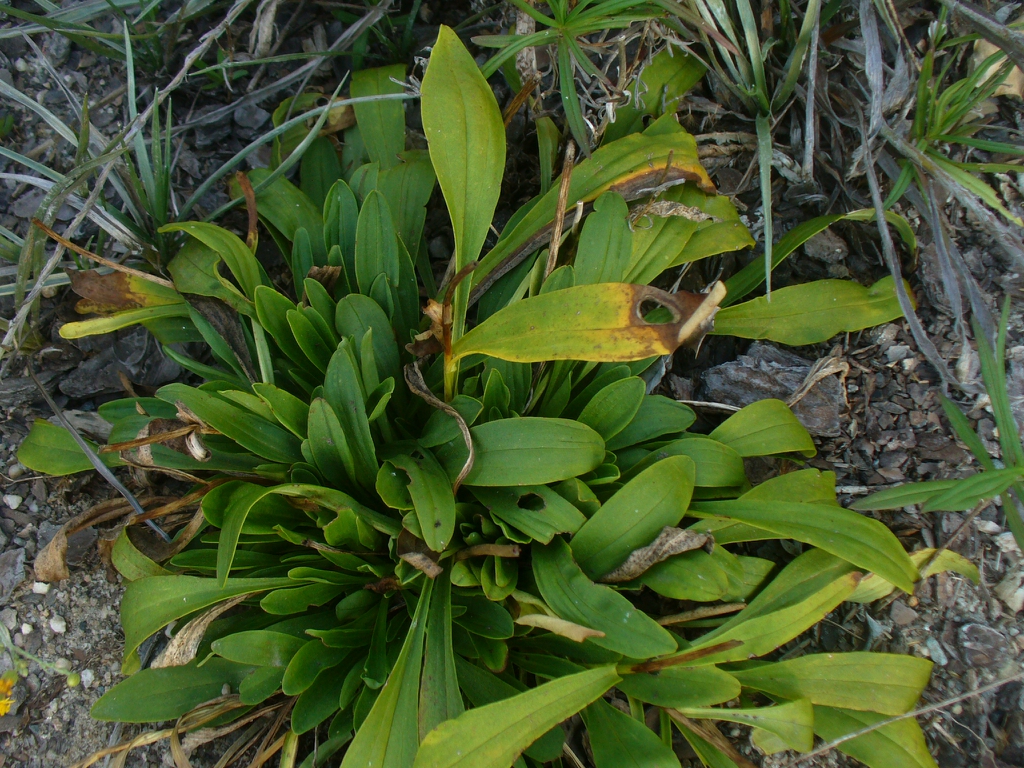
- Long, narrow, veined green leaves form a flat evergreen rosette.
-
-
Stem:
- Stem Is Aromatic:
- No
-
-
Landscape:
- Landscape Location:
- Meadow
- Landscape Theme:
- Butterfly Garden
- Native Garden
- Pollinator Garden
- Rock Garden
- Design Feature:
- Border
- Attracts:
- Bees
- Butterflies
- Hummingbirds
- Pollinators
- Songbirds
- Resistance To Challenges:
- Drought
- Dry Soil
- Poor Soil