



Linaria maroccana
- Phonetic Spelling
- lin-AIR-ee-ah mar-oh-KAN-ah
- Description
-
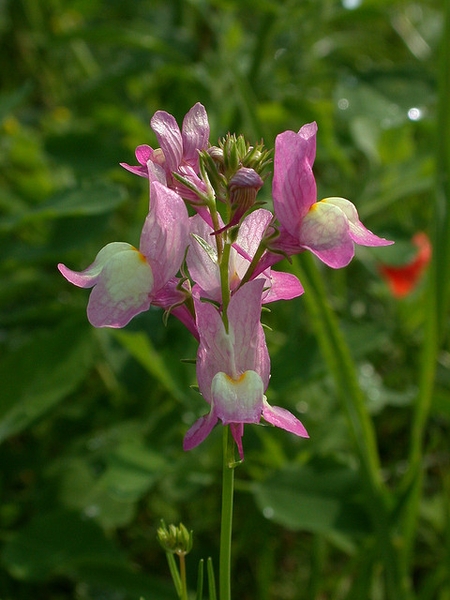
Toadflax is a cool weather, branching annual in the fig wort family with snapdragon-like flowers. It is native to Morocco, as the species name suggests, and blooms in the cool days of spring into early summer. It will, however, stop blooming in the heat of summer. The genus name comes from the the Greek word linon referring to the flax like leaves.
Toadflax does best in consistently moist, well-drained, humusy to sandy-loam soil in full sun. The plant tends to fade in hot summer weather, but siting it in an area where it will get afternoon shade can encourage summer blossoms. Alternatively, you can sow seeds in late summer for a fall bloom.
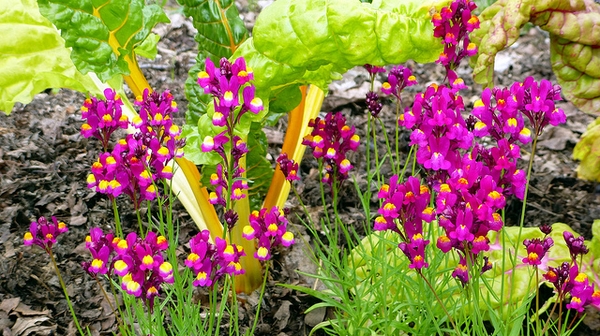
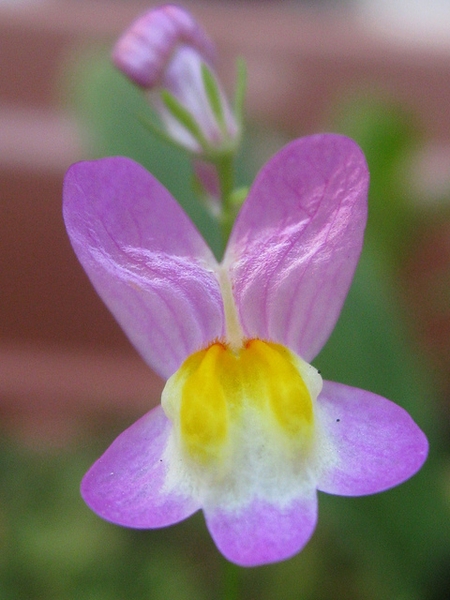
Cultivars are available in a range of colors including shades of lavender, yellow, orange, pink, red and white, usually with contrasting color blotches on the palates. You can cut the plant back after initial flowering to encourage additional blooms. The plant does self-seed in optimum growing conditions.
Diseases, Insect Pests, and Other Plant Problems
Watch for aphids. Powdery mildew can also be a problem.
- See this plant in the following landscape :
- Cultivars / Varieties:
-
- Tags:


- Cultivars / Varieties:
-
- Tags:
-
-
Attributes:
- Genus:
- Linaria
- Species:
- maroccana
- Family:
- Plantaginaceae
- Life Cycle:
- Annual
- Recommended Propagation Strategy:
- Seed
- Country Or Region Of Origin:
- Morocco
- Distribution:
- Introduced to parts of Canada, northeastern United States south to North Carolina, Spain, France, and Britain.
- Dimensions:
- Height: 0 ft. 9 in. - 1 ft. 6 in.
- Width: 0 ft. 6 in. - 0 ft. 9 in.
-
-
Whole Plant Traits:
- Plant Type:
- Annual
- Habit/Form:
- Erect
- Multi-stemmed
- Growth Rate:
- Medium
- Maintenance:
- Medium
-
-
Cultural Conditions:
- Light:
- Full sun (6 or more hours of direct sunlight a day)
- Partial Shade (Direct sunlight only part of the day, 2-6 hours)
- Soil Texture:
- Clay
- Loam (Silt)
- Sand
- Soil pH:
- Acid (<6.0)
- Alkaline (>8.0)
- Neutral (6.0-8.0)
- Soil Drainage:
- Good Drainage
- Moist
- Available Space To Plant:
- Less than 12 inches
- NC Region:
- Mountains
- USDA Plant Hardiness Zone:
- 2a, 2b, 3a, 3b, 4a, 4b, 5a, 5b, 6a, 6b, 7a, 7b, 8a, 8b, 9a, 9b, 10a, 10b, 11a, 11b
-
-
Fruit:
- Fruit Type:
- Capsule
- Fruit Description:
- Dry fruit that splits open.
-
-
Flowers:
- Flower Color:
- Gold/Yellow
- Orange
- Pink
- Red/Burgundy
- White
- Flower Inflorescence:
- Raceme
- Flower Value To Gardener:
- Showy
- Flower Bloom Time:
- Spring
- Summer
- Flower Shape:
- Cup
- Tubular
- Flower Petals:
- 4-5 petals/rays
- Flower Size:
- < 1 inch
- Flower Description:
- Long spurred (a nectar spur longer than the rest of the flower), two-lipped, miniature, snapdragon-like blossoms appear in April through June. Flowers in upright-terminal racemes. Produces colorful blooms in purple-violet with a yellow blotch.
-
-
Leaves:
- Leaf Color:
- Green
- Leaf Type:
- Simple
- Leaf Arrangement:
- Alternate
- Opposite
- Whorled
- Leaf Shape:
- Linear
- Hairs Present:
- No
- Leaf Length:
- 1-3 inches
- Leaf Description:
- Narrow linear green leaves (to 1.5 inches long). Can be lobed or not, but not separated. Leaf arrangement can vary depending on the number of leaves per node on the stem.
-
-
Stem:
- Stem Is Aromatic:
- No
-
-
Landscape:
- Landscape Location:
- Meadow
- Walkways
- Landscape Theme:
- Cottage Garden
- Design Feature:
- Border
- Resistance To Challenges:
- Deer
- Drought



