



Common Globe Amaranth Gomphrena globosa
Other Common Name(s):
Previously known as:
- Amaranthoides globosa
- Gomphrena tumida
- Phonetic Spelling
- gom-FREE-nah glo-BOH-sa
- Description
-
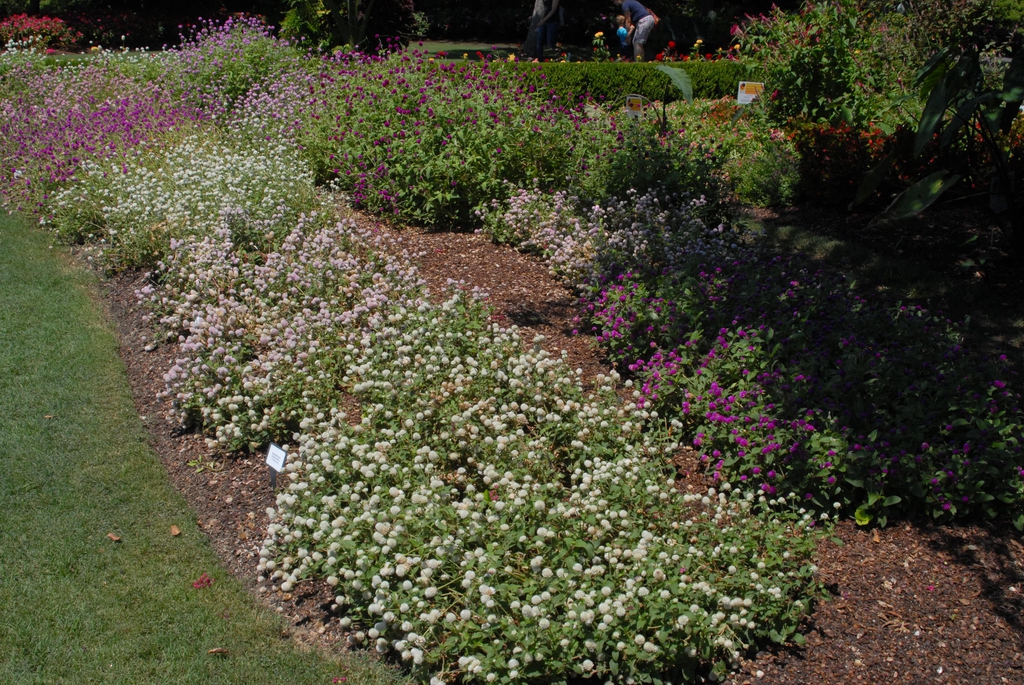
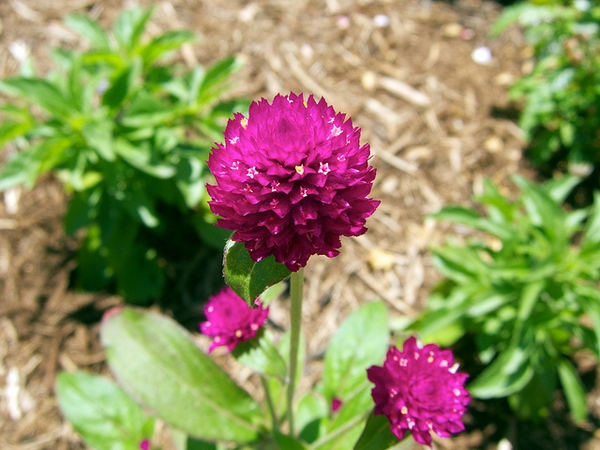
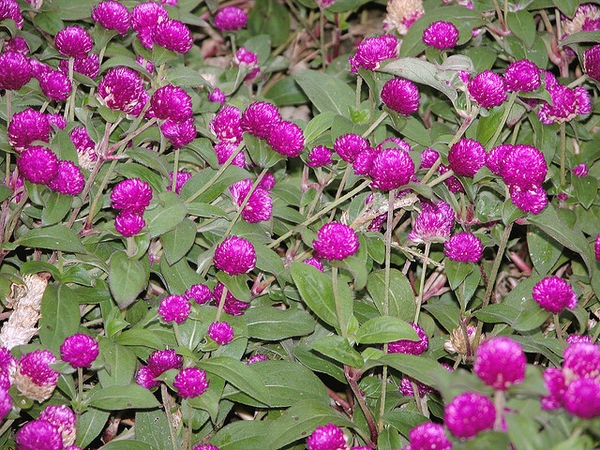
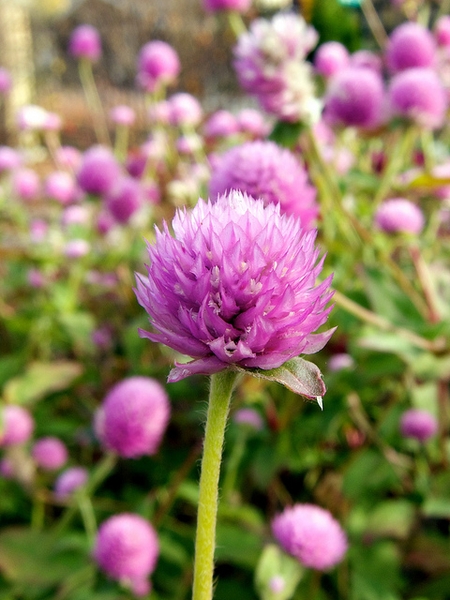
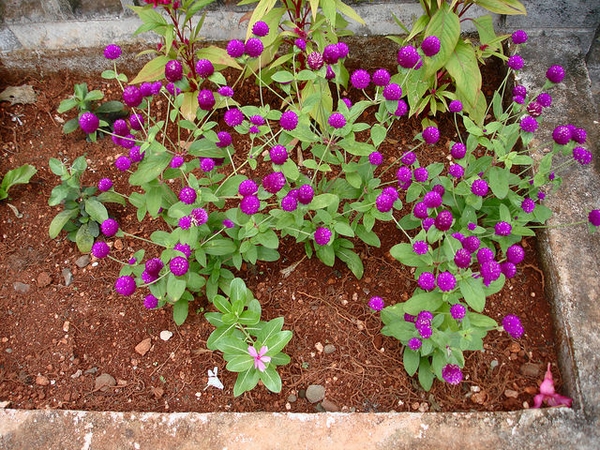
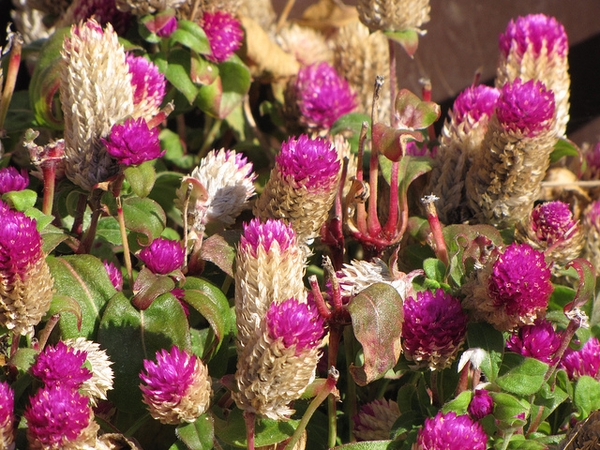
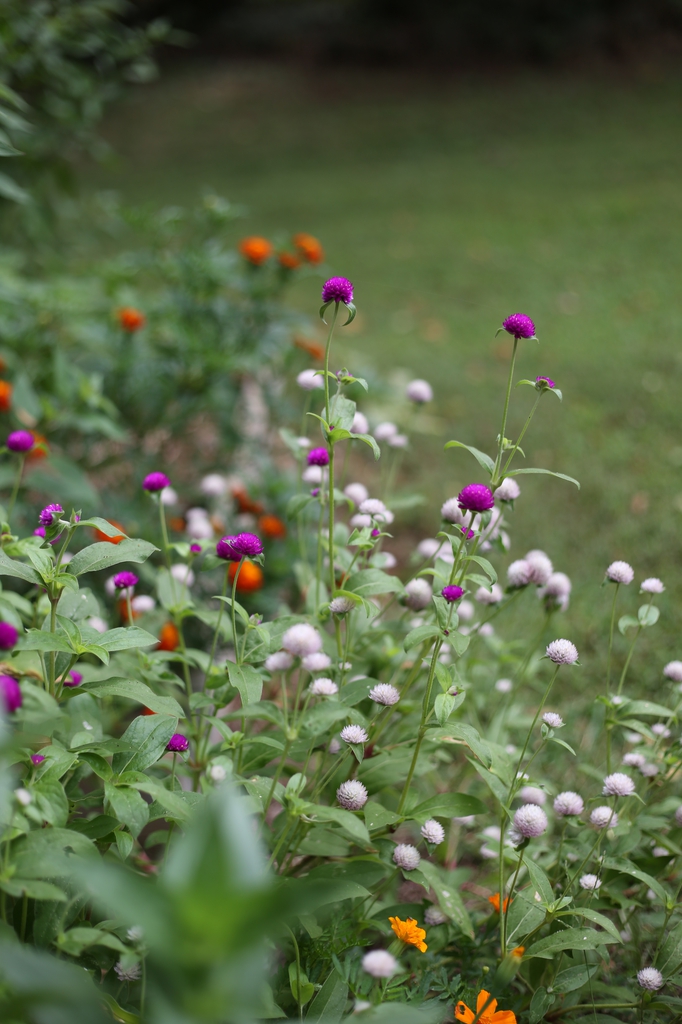
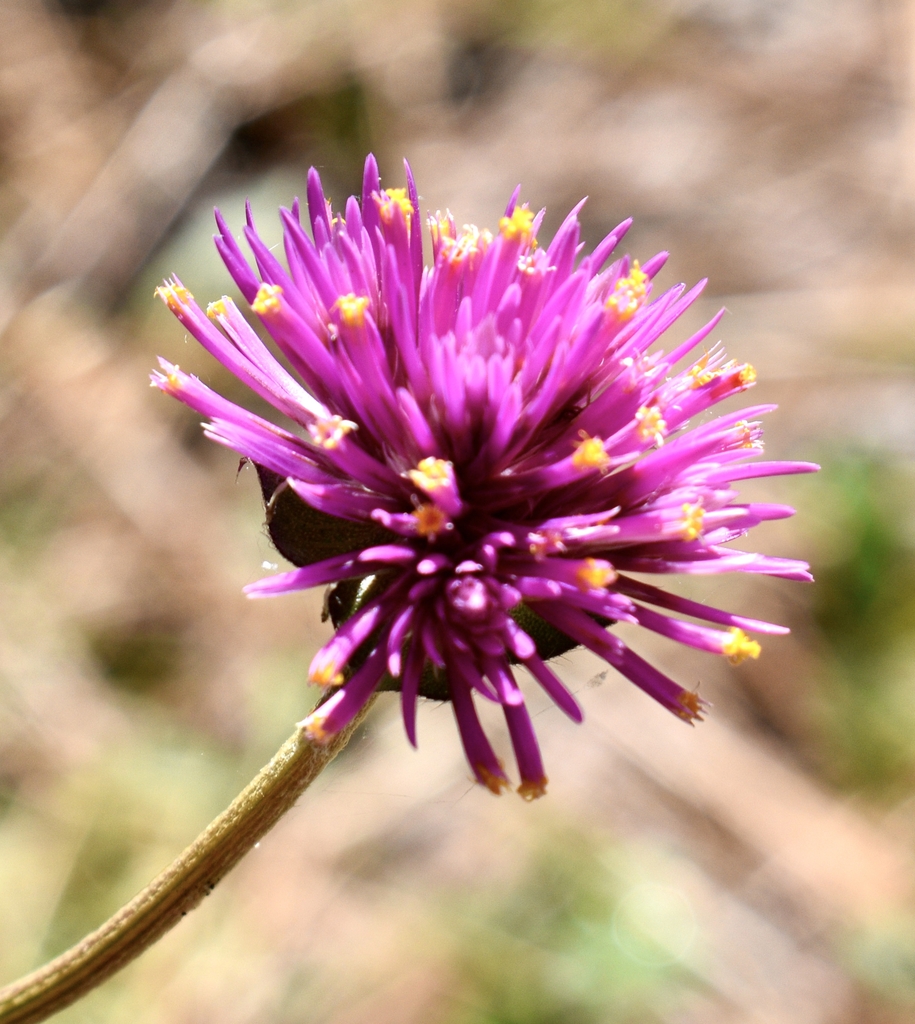
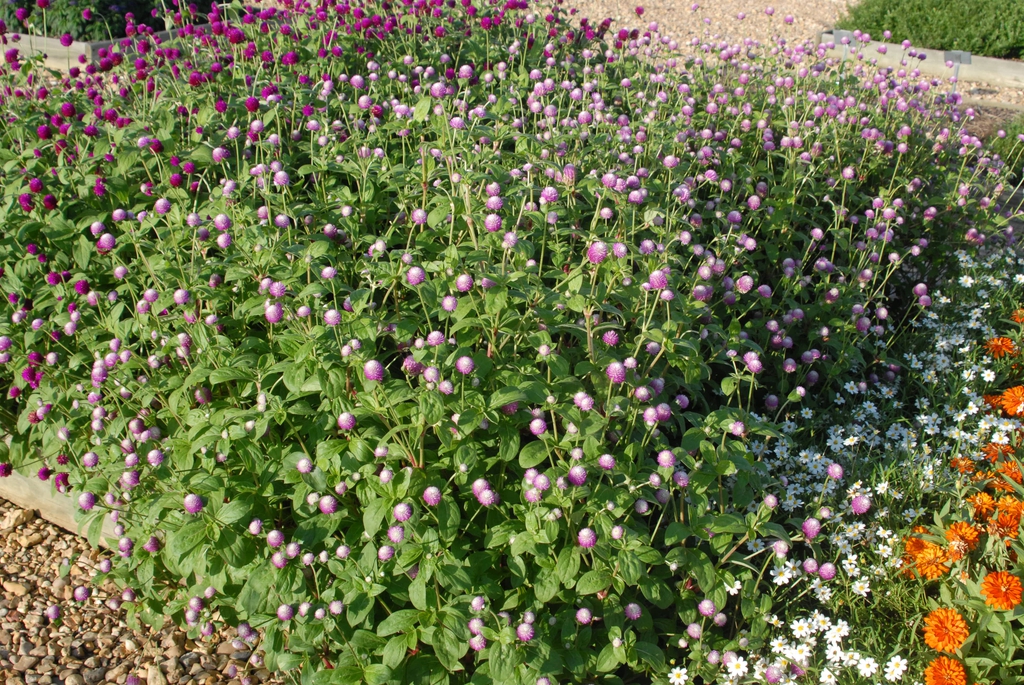
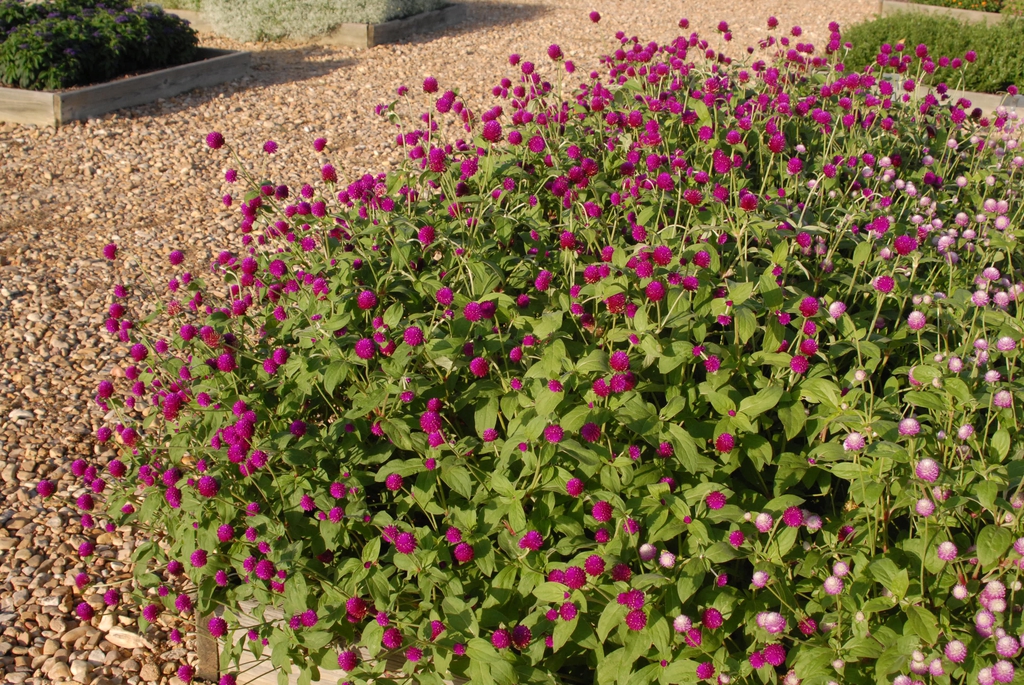
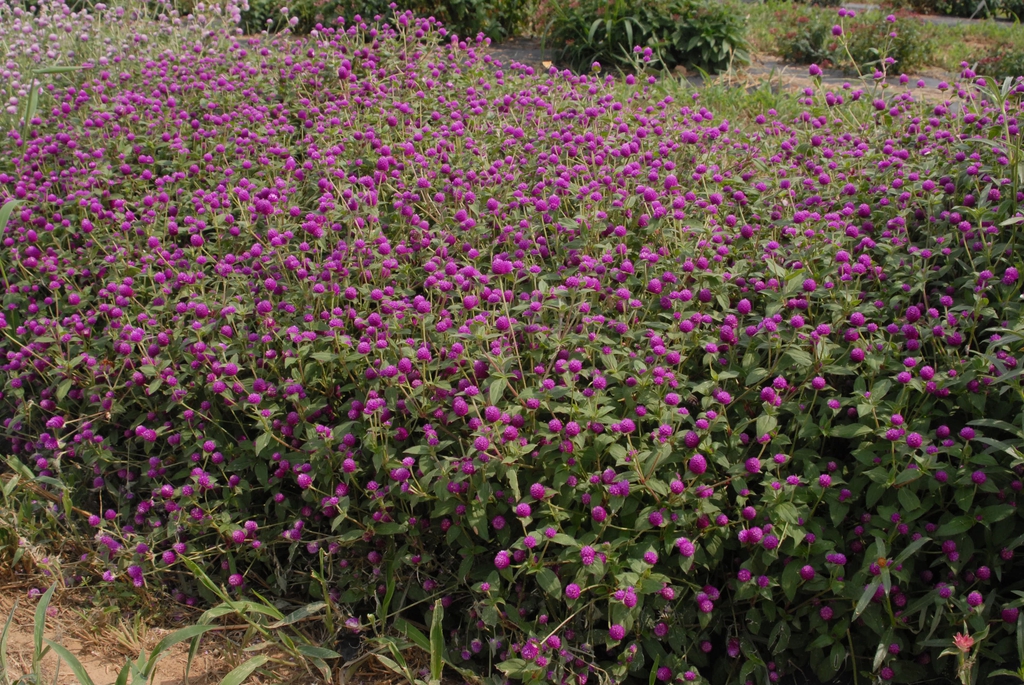
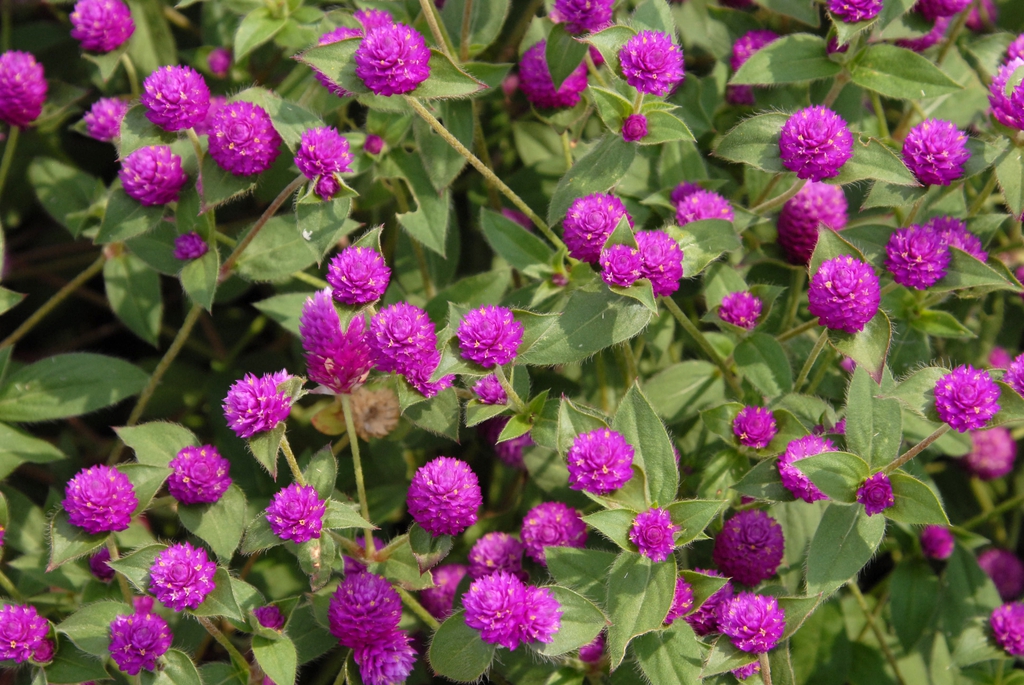
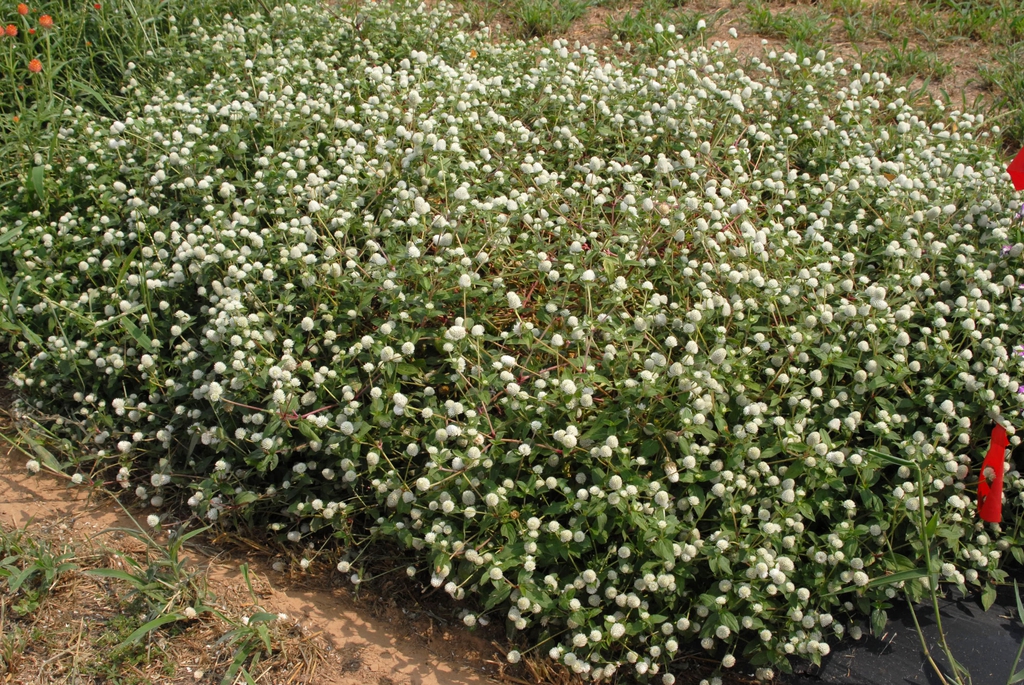
Globe amaranth is a tropical flowering, summer annual native to Central and South America. It grows 0.5 to 2 feet tall and 0.5 to 1 foot wide, with a dense, compact habit. It produces globe-shaped or clover-like flower heads in shades of pink, purple, or white with paper-like bracts. The flowers are borne on upright stems, and the leaves are green, narrow, oblong to elliptical, and up to 4 inches long. The blooms attract pollinators including bees, butterflies, and other insects. Its flowers retain color well, and they can be dried at the end of the summer and used in floral arrangements. Globe amaranth is a member of the amaranth family (Amaranthaceae). The genus name Gomphrena is Latin and named for a type of amaranth. The specific epithet globosa means round and refers to the shape of its flowers.
Thrives in full sun and moist, well-drained, fertile, acidic soil. It is drought-tolerant once it is established. It is also heat-tolerant, dry-soil-tolerant, and clay-soil-tolerant, with the added benefit that deer are not fond of this plant. This plant is low maintenance and easy to grow. It is winter hardy in zones 9 through 11, where it can be grown as a perennial. As an annual, globe amaranth may be grown in zones 2 to 11. The germination rate of this annual can be low; therefore, it is best to be generous when sowing seeds. The seeds may be sown directly or started earlier indoors, about 6 to 8 weeks before the last frost.
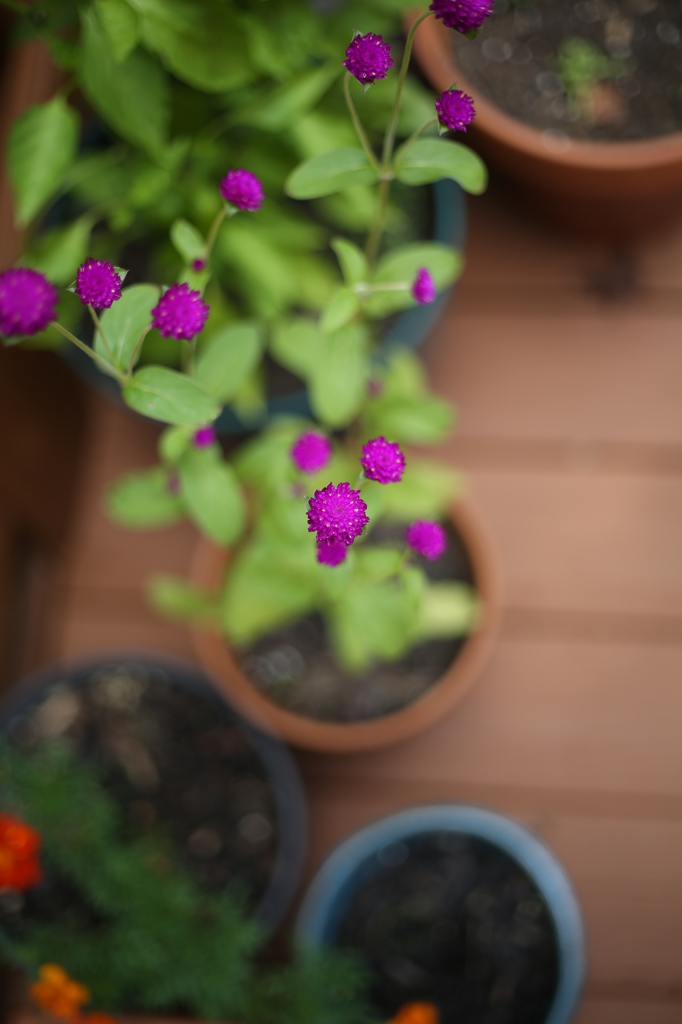
Globe amaranth is grown for its charming flowers; it is often used in flower beds or borders, cutting gardens, cottage gardens, on patios, and in containers. It can be planted anywhere in North Carolina as an annual.
Insects, Diseases, and Other Plant Problems: No significant insect or disease problems. Cultivars may be susceptible to gray mold, root rot, stem rot, powdery mildew, and leaf spots.
- See this plant in the following landscape s :
- Vegetable, Herb and Mostly Native Pollinator Garden Cabarrus County Poolside Garden
- Cultivars / Varieties:
-
- 'Bicolor Rose'
Rose colored blooms with white centers - Buddy™ Series: 'Buddy Purple,' 'Buddy Rose,' 'Buddy White'
Dwarf series, 9 to 12 inches tall, bright violet-purple, rose, or white flowers - 'Cosmic Flare'
Grows 15 to 24 inches tall, with raspberry pink flowers and lime green foliage
'Fireworks'
- Gnome™ Series: 'Gnome Pink,' 'Gnome Purple,' 'Gnome White'
extra dwarf series, grows up to 6 to 10 inches tall, pink, purple or white blooms
Pinball™ Series: 'Pinball Lavender,' 'Pinball Purple,' Pinball White'
- Ping Pong™ Series: 'Ping Pong Pink,' 'Ping Pong Purple,'
Grows 16 to 20 inches tall, lavender-pink, bright purple, or pure white flowers

pink-magenta bracts with a very long blooming season
Up to 10 to 14 inches tall, with soft lavender, bright purple, or snowy-white blooms - 'Bicolor Rose'
- 'Bicolor Rose', Buddy™ Series: 'Buddy Purple,' 'Buddy Rose,' 'Buddy White', 'Cosmic Flare', 'Fireworks', Gnome™ Series: 'Gnome Pink,' 'Gnome Purple,' 'Gnome White', Pinball™ Series: 'Pinball Lavender,' 'Pinball Purple,' Pinball White', Ping Pong™ Series: 'Ping Pong Pink,' 'Ping Pong Purple,'
- Tags:


- Cultivars / Varieties:
-
- 'Bicolor Rose'
Rose colored blooms with white centers - Buddy™ Series: 'Buddy Purple,' 'Buddy Rose,' 'Buddy White'
Dwarf series, 9 to 12 inches tall, bright violet-purple, rose, or white flowers - 'Cosmic Flare'
Grows 15 to 24 inches tall, with raspberry pink flowers and lime green foliage
'Fireworks'
- Gnome™ Series: 'Gnome Pink,' 'Gnome Purple,' 'Gnome White'
extra dwarf series, grows up to 6 to 10 inches tall, pink, purple or white blooms
Pinball™ Series: 'Pinball Lavender,' 'Pinball Purple,' Pinball White'
- Ping Pong™ Series: 'Ping Pong Pink,' 'Ping Pong Purple,'
Grows 16 to 20 inches tall, lavender-pink, bright purple, or pure white flowers
pink-magenta bracts with a very long blooming season
Up to 10 to 14 inches tall, with soft lavender, bright purple, or snowy-white blooms - 'Bicolor Rose'
- 'Bicolor Rose', Buddy™ Series: 'Buddy Purple,' 'Buddy Rose,' 'Buddy White', 'Cosmic Flare', 'Fireworks', Gnome™ Series: 'Gnome Pink,' 'Gnome Purple,' 'Gnome White', Pinball™ Series: 'Pinball Lavender,' 'Pinball Purple,' Pinball White', Ping Pong™ Series: 'Ping Pong Pink,' 'Ping Pong Purple,'
- Tags:
-
-
Attributes:
- Genus:
- Gomphrena
- Species:
- globosa
- Family:
- Amaranthaceae
- Uses (Ethnobotany):
- Has been used in traditional medicine for respiratory problems, as an anti-inflammatory agent, diuretic, or for diabetes. It is worn as a garland in tribal ceremonies in Nepal.
- Life Cycle:
- Annual
- Perennial
- Recommended Propagation Strategy:
- Seed
- Country Or Region Of Origin:
- Mexico to Brazil
- Distribution:
- Native: Bolivia, Brazil North, Brazil Northeast, Brazil Southeast, Brazil West-Central, Colombia, Ecuador, Guatemala, Guyana, Honduras, Mexico Gulf, Mexico Northeast, Mexico Southeast, Mexico Southwest, Nicaragua, and Panamá. Introduced: United States--AL, AR, HI, LA, MD, NJ, NY, PA, SC, TX, and VA; Angola, Bahamas, Bangladesh, Borneo, Bulgaria, Cambodia, Central African Republic, China, Costa Rica, Cuba, East Himalaya, Ethiopia, Haiti, India, Jamaica, Japan, Kenya, Korea, Mozambique, Myanmar, Nepal, New Guinea, New South Wales, Nigeria, Northern Provinces, Northern Territory, Pakistan, Paraquay, Peru, Philippines, Puerto Rico, Queensland, Romania, Samoa, Saudi Arabia, Somalai, Uganda, Uzbekistan, Venezueal, Vietnam, Western Australia, Xinjiang, Yemen, and Zambia.
- Wildlife Value:
- Attracts butterflies, bees, and other beneficial insects.
- Play Value:
- Attractive Flowers
- Attracts Pollinators
- Colorful
- Easy to Grow
- Dimensions:
- Height: 0 ft. 6 in. - 2 ft. 0 in.
- Width: 0 ft. 6 in. - 1 ft. 0 in.
-
-
Whole Plant Traits:
- Plant Type:
- Annual
- Perennial
- Habit/Form:
- Dense
- Erect
- Rounded
- Growth Rate:
- Medium
- Maintenance:
- Low
- Texture:
- Medium
-
-
Cultural Conditions:
- Light:
- Full sun (6 or more hours of direct sunlight a day)
- Soil Texture:
- Clay
- Loam (Silt)
- Sand
- Soil pH:
- Acid (<6.0)
- Soil Drainage:
- Good Drainage
- Occasionally Dry
- Available Space To Plant:
- Less than 12 inches
- USDA Plant Hardiness Zone:
- 9a, 9b, 10a, 10b, 11a, 11b
-
-
Fruit:
- Fruit Type:
- Achene
- Fruit Length:
- < 1 inch
- Fruit Description:
- The fruit is a dry, tiny, oval achene and usually contains one seed.
-
-
Flowers:
- Flower Color:
- Gold/Yellow
- Pink
- Purple/Lavender
- White
- Flower Inflorescence:
- Head
- Flower Value To Gardener:
- Good Cut
- Good Dried
- Showy
- Flower Bloom Time:
- Fall
- Summer
- Flower Shape:
- Dome
- Flower Petals:
- Bracts
- Flower Size:
- 1-3 inches
- Flower Description:
- The true flowers are insignificant, tiny, white to yellow trumpets. It is the bright colored bracts arranged in globose, papery-textured, clover-like flowerheads that attract attention. Blooms from June until the first frost in the fall.
-
-
Leaves:
- Leaf Color:
- Green
- Leaf Feel:
- Velvety
- Leaf Type:
- Simple
- Leaf Arrangement:
- Opposite
- Leaf Shape:
- Elliptical
- Oblong
- Leaf Margin:
- Entire
- Hairs Present:
- Yes
- Leaf Length:
- 3-6 inches
- Leaf Description:
- The leaves are green, simple, opposite, elliptical to oblong, measuring 2 to 4 inches long with entire margins.
-
-
Stem:
- Stem Color:
- Green
- Stem Is Aromatic:
- No
- Stem Cross Section:
- Round
- Stem Form:
- Straight
- Stem Surface:
- Hairy (pubescent)
- Stem Description:
- The stems are green, upright, hairy, and stiff. The cross-section of the stem is circular.
-
-
Landscape:
- Landscape Location:
- Meadow
- Small Space
- Landscape Theme:
- Butterfly Garden
- Children's Garden
- Cottage Garden
- Cutting Garden
- Drought Tolerant Garden
- Pollinator Garden
- Rock Garden
- Design Feature:
- Accent
- Border
- Attracts:
- Bees
- Butterflies
- Pollinators
- Resistance To Challenges:
- Drought
- Dry Soil
- Heat



