


Fargesia nitida
Common Name(s):
Previously known as:
- Arundinaria nitida
- Fargesia demissa
- Sinarundinaria nitida
- Phonetic Spelling
- far-GHEE-zee-uh NI-ti-duh
- Description
-
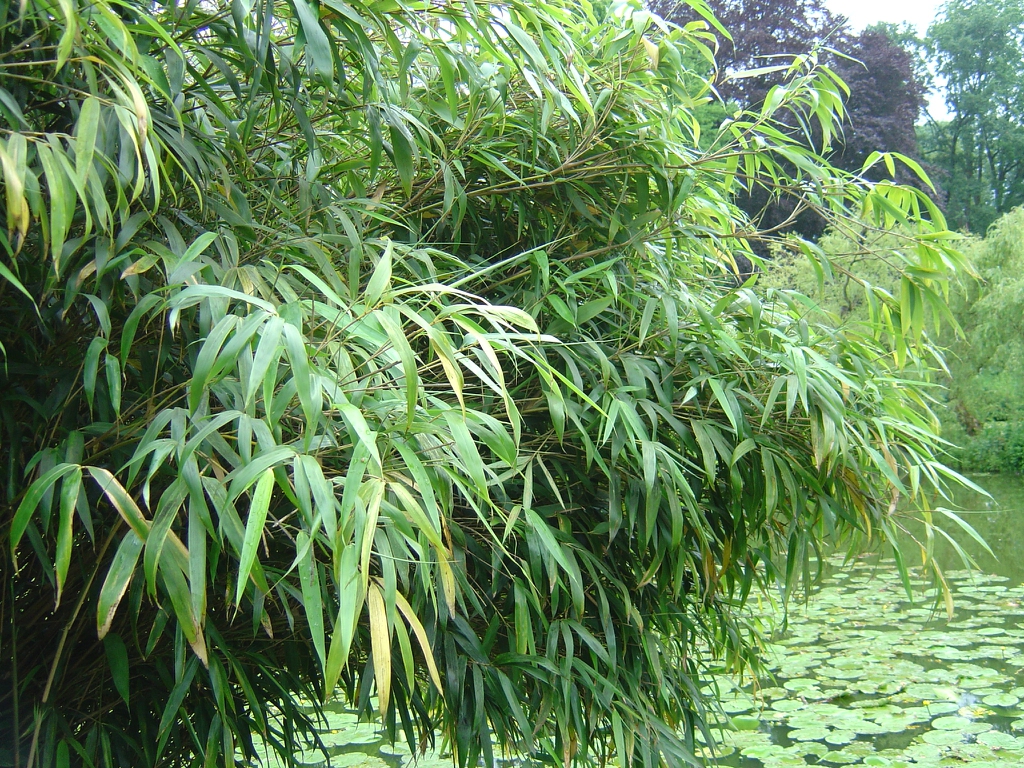
Chinese fountain bamboo is a slow-growing, evergreen, clumping, upright or arching bamboo native to Qinghai, Northern China, and Central China. It grows 10 to 15 feet tall and 3 to 5 feet wide, and has tall, thin, erect, purplish-green canes or culms. The foliage is narrow, dark gray-green on the upper surface, and grayish-green on the underside, measuring up to 4 inches long. The weight of the foliage causes the canes to arch and take on a weeping form, giving the plant its common name, fountain bamboo. The plant is a non-invasive bamboo and is easy to grow. It is a member of the grass family (Poaceae). The genus name, Fargesia, honors Paul Guillaume Farges, a botanist and French missionary in Central China. The specific epithet, nitida, is Latin and means "shining or bright."
Prefers partial shade and tolerates a wide range of soils and conditions, but thrives in damp, rich, organic matter or well-drained loam. Remove dead or damaged stems, and remove flower shoots as soon as possible. Propagated by division or rhizomatous root cuttings in the spring. It flowers very infrequently and can die after expending all of its energy towards reproduction.
Chinese fountain bamboo is very hardy and is the primary food source for the giant pandas. The first year, the stems are leafless, dark purple, round, and hollow. In the second year of growth, there is branching of the stems, and the leaves are dense at the top of the stem. The plant then develops an arching and weeping form.
This plant may be used as an ornamental hedge, screen, or container planting.
Quick ID
- Clump-forming bamboo with cane-like growth
- Long, sheathed, linear leaves with ciliate ligules
- Purplish stems/culms
Insects, Diseases, and Other Plant Problems: No significant insect or disease issues. Monitor for slugs, aphids, mealybugs, and spider mites. It is usually disease-resistant, but root rot can occur. Plant in a location that protects the plant from direct afternoon sun and harsh winter winds. The leaves can curl from the intense sunlight.
- See this plant in the following landscape :
- Cultivars / Varieties:
-
- 'Black Pearl'
up to 10 to 13 feet tall, deep purple-black canes, and green foliage - 'Jiuzhaigou'
8 to 12 feet tall, 4 to 6 feet wide, red canes that turn yellow as the plant ages, with green leaves - 'Nymphenburg'
5 to 8 feet tall, compact, clumping, dense, green stems flushed with purple, and narrow, green leaves - 'Winter Joy'
thin, upright green canes with reddish sheaths, and green feathery leaves
- 'Black Pearl'
- 'Black Pearl', 'Jiuzhaigou', 'Nymphenburg', 'Winter Joy'
- Tags:


- Cultivars / Varieties:
-
- 'Black Pearl'
up to 10 to 13 feet tall, deep purple-black canes, and green foliage - 'Jiuzhaigou'
8 to 12 feet tall, 4 to 6 feet wide, red canes that turn yellow as the plant ages, with green leaves - 'Nymphenburg'
5 to 8 feet tall, compact, clumping, dense, green stems flushed with purple, and narrow, green leaves - 'Winter Joy'
thin, upright green canes with reddish sheaths, and green feathery leaves
- 'Black Pearl'
- 'Black Pearl', 'Jiuzhaigou', 'Nymphenburg', 'Winter Joy'
- Tags:
-
-
Attributes:
- Genus:
- Fargesia
- Species:
- nitida
- Family:
- Poaceae
- Uses (Ethnobotany):
- Used in making lightweight fences, baskets, and sieves. This plant is the primary food source for the giant pandas.
- Life Cycle:
- Perennial
- Recommended Propagation Strategy:
- Division
- Root Cutting
- Country Or Region Of Origin:
- Qinghai to North and Central China
- Distribution:
- Native: China North-Central, China South-Central, Inner Mongolia, and Qinghai. Introduced: France, Great Britain, and Ireland.
- Wildlife Value:
- Food source for the giant pandas.
- Play Value:
- Easy to Grow
- Screening
- Wildlife Food Source
- Wind Break
- Particularly Resistant To (Insects/Diseases/Other Problems):
- Honey fungus
- Dimensions:
- Height: 10 ft. 0 in. - 15 ft. 0 in.
- Width: 3 ft. 0 in. - 5 ft. 0 in.
-
-
Whole Plant Traits:
- Plant Type:
- Ornamental Grasses and Sedges
- Woody Plant Leaf Characteristics:
- Broadleaf Evergreen
- Habit/Form:
- Arching
- Clumping
- Erect
- Weeping
- Growth Rate:
- Slow
- Maintenance:
- Medium
- Texture:
- Medium
-
-
Cultural Conditions:
- Light:
- Dappled Sunlight (Shade through upper canopy all day)
- Partial Shade (Direct sunlight only part of the day, 2-6 hours)
- Soil Texture:
- Clay
- High Organic Matter
- Loam (Silt)
- Soil pH:
- Acid (<6.0)
- Alkaline (>8.0)
- Neutral (6.0-8.0)
- Soil Drainage:
- Good Drainage
- Moist
- Occasionally Wet
- Available Space To Plant:
- 3 feet-6 feet
- 6-feet-12 feet
- NC Region:
- Coastal
- Mountains
- Piedmont
- USDA Plant Hardiness Zone:
- 5b, 6a, 6b, 7a, 7b, 8a, 8b, 9a
-
-
Fruit:
- Fruit Color:
- Brown/Copper
- Gold/Yellow
- Fruit Type:
- Caryopsis
- Fruit Description:
- The fruit is an oval, smooth, yellowish-brown to dark brown caryopsis.
-
-
Flowers:
- Flower Inflorescence:
- Raceme
- Flower Description:
- Wind pollinated, dioecious (has both male and female flowers on the same plant). Flowers only appear after long intervals (years). They put all of their energy into their flowers and sometimes plants die after flowering, but they will often recover after looking ragged for a few years.
-
-
Leaves:
- Woody Plant Leaf Characteristics:
- Broadleaf Evergreen
- Leaf Color:
- Gray/Silver
- Green
- Leaf Value To Gardener:
- Showy
- Leaf Type:
- Sheath
- Leaf Shape:
- Linear
- Leaf Margin:
- Entire
- Hairs Present:
- No
- Leaf Length:
- 1-3 inches
- Leaf Width:
- < 1 inch
- Leaf Description:
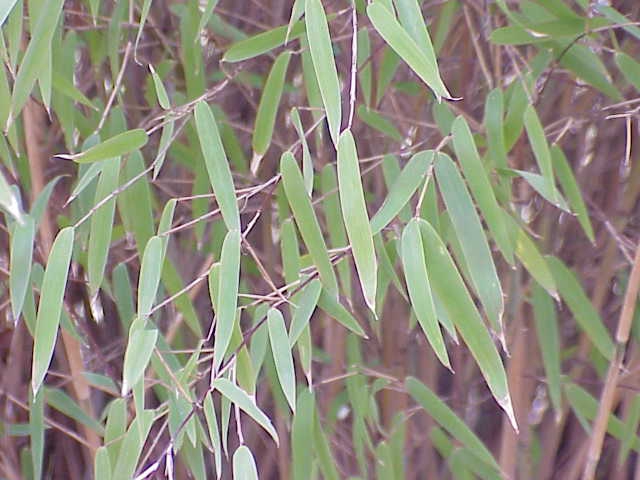
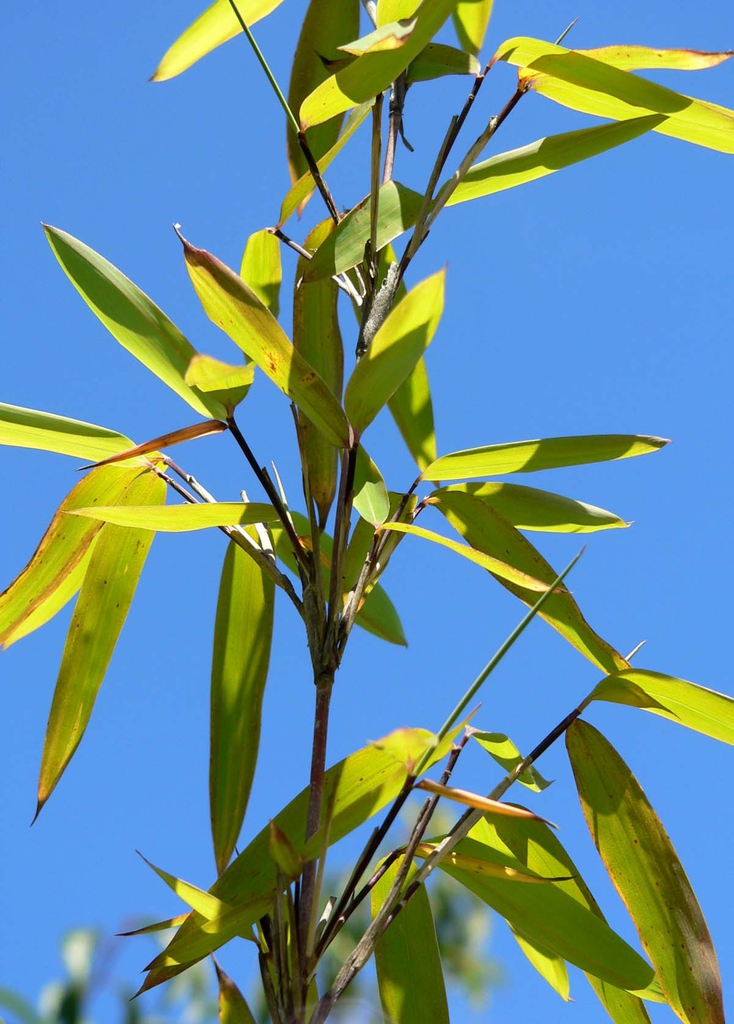
- The foliage is dark gray-green on the upper surface, grayish-green on the underside, linear, and 2 to 3.5 inches long and less than 0.5 inches wide. The base of the leaf is rounded, and the tip is pointed. The margins have tiny bristles on one side.
-
-
Stem:
- Stem Color:
- Green
- Purple/Lavender
- Stem Is Aromatic:
- No
- Stem Cross Section:
- Round
- Stem Surface:
- Smooth (glabrous)
- Stem Description:
- Stems or culms are tall, thin, erect, round, and purplish-green. The canes are in up to 0.5 inches in diameter. The culm sheath is purple to purplish-brown, leathery, and measures 2 to 4 inches long.
-
-
Landscape:
- Landscape Location:
- Container
- Patio
- Pond
- Landscape Theme:
- Asian Garden
- Shade Garden
- Design Feature:
- Hedge
- Screen/Privacy
- Specimen
- Resistance To Challenges:
- Deer
- Heavy Shade