


Klivia Clivia
Other Common Name(s):
- Phonetic Spelling
- KLIV-ee-ah
- This plant has low severity poison characteristics.
- See below
- Description
-
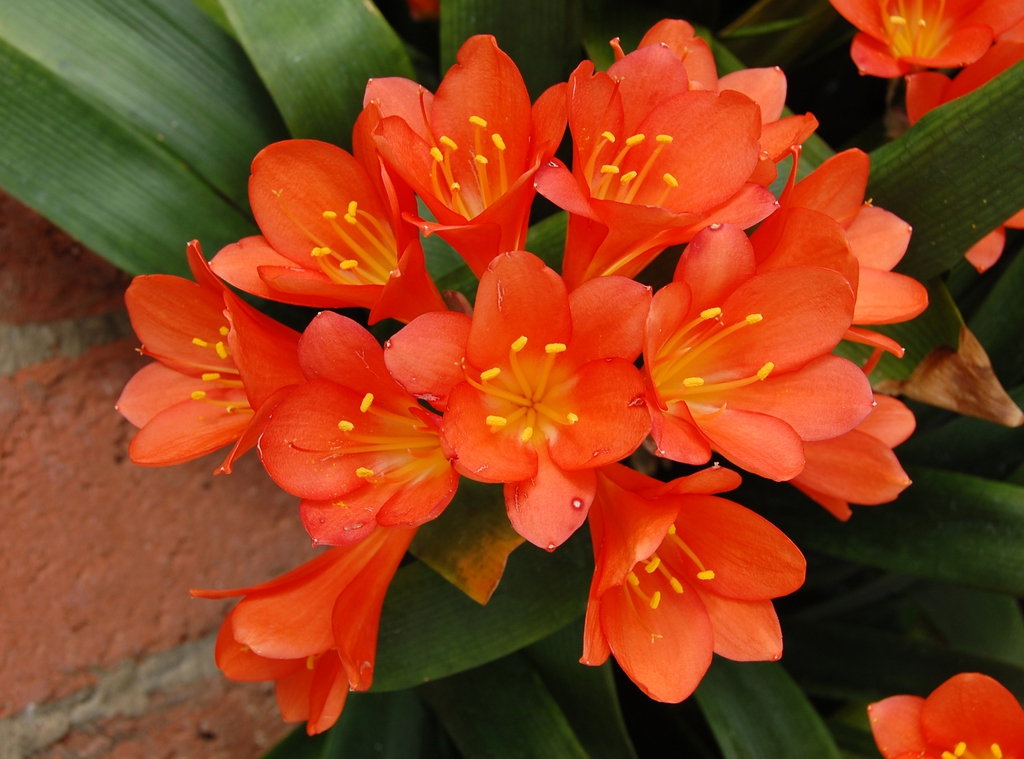
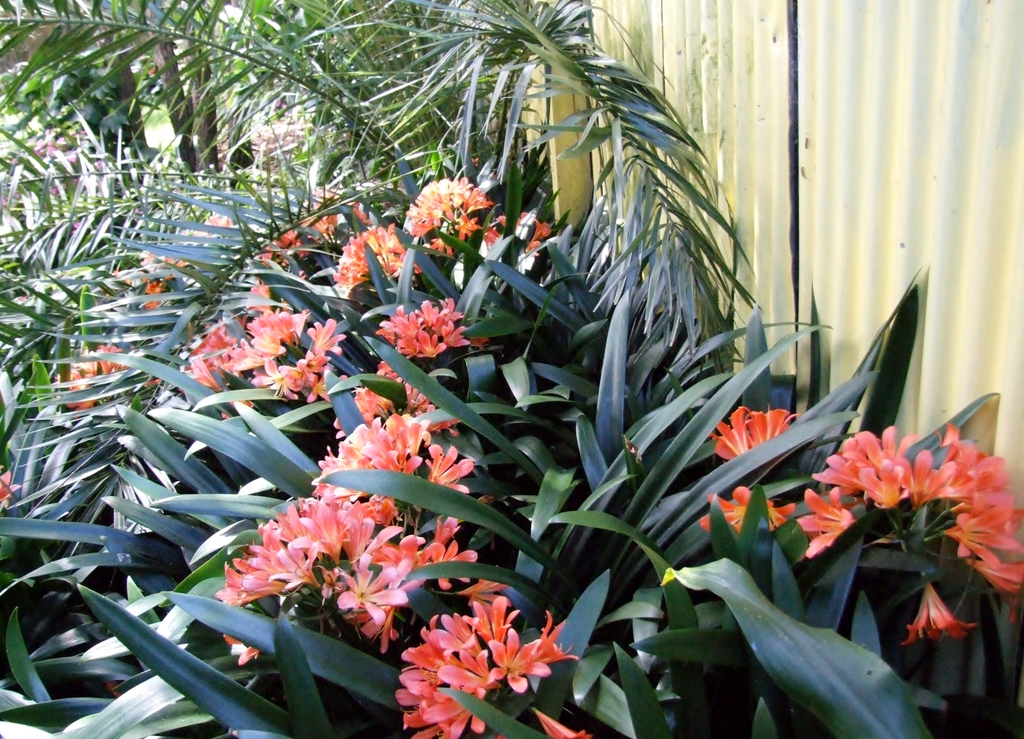
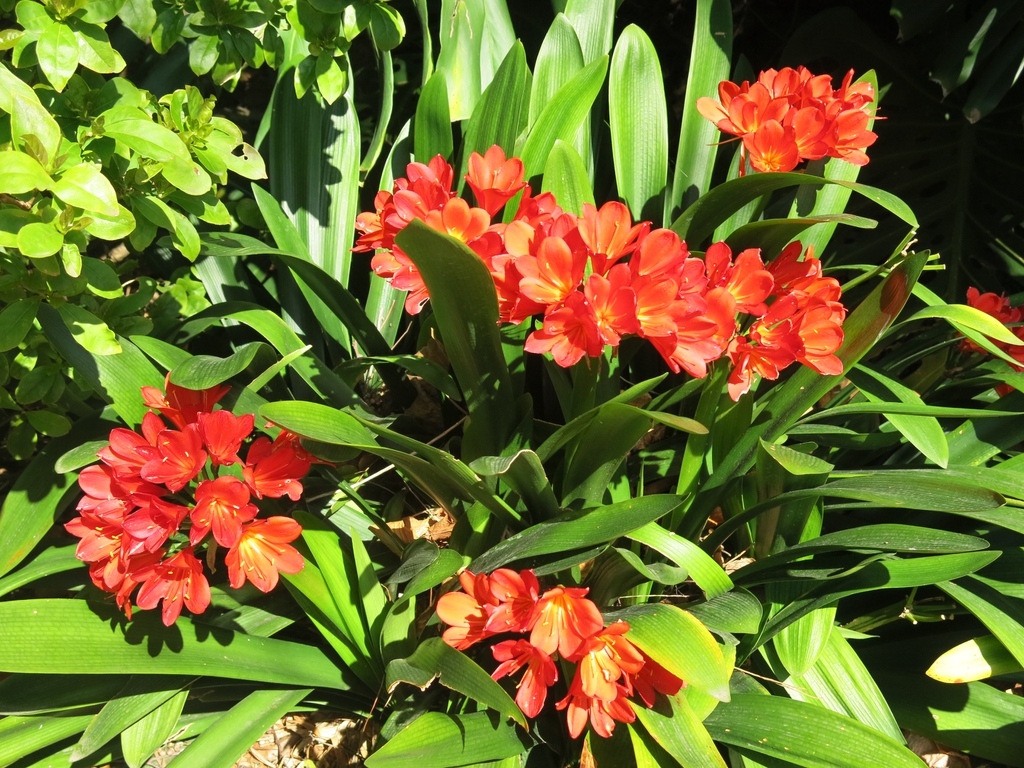
Clivia is a genus of herbaceous perennial flowering plants native to southern Africa in the Amaryllis family. The vibrant orange to reddish flowers makes this bulb stand out. It is commonly used as a houseplant but can be mass planted outdoors in mild climates along a border or walkway.
When grown as container plants, give it bright light indoors but mostly shady outdoors. For proper flowering, keep in a lighted area at 50-60 degrees F in the fall or early winter and withhold water and fertilizer to allow a rest period. This plant tolerates drought well. It prefers to be root-bound and can stay in the same pot for 3- 5 years. Allow the plant to dry slightly between waterings and fertilize monthly during the active growing period.
Plant bulbs 6"-12" apart at a depth of 1". Clivias can take 3-5 years to bloom from seed so it is best to buy a mature plant.
Quick ID Hints:
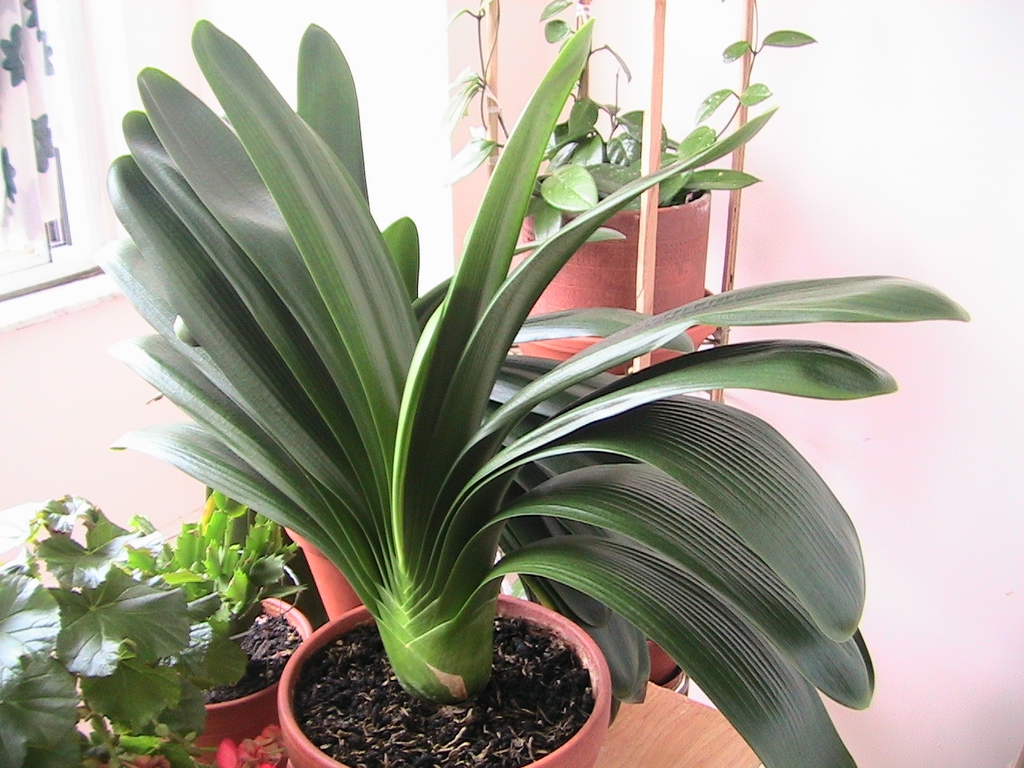
- Leaves are dark green, thick, and strap-like.
- Leaves are glossy with a leathery texture.
Insects, Diseases, and Other Plant Problems: Overwatering can cause crown rot. Overhead watering can cause leaf diseases such as rust. It can be difficult to propagate
- See this plant in the following landscape :
- Cultivars / Varieties:
-
- C. miniata
- C. miniata
- C. miniata
- Tags:


- Cultivars / Varieties:
-
- C. miniata
- C. miniata
- C. miniata
- Tags:
-
-
Attributes:
- Genus:
- Clivia
- Family:
- Amaryllidaceae
- Life Cycle:
- Bulb
- Recommended Propagation Strategy:
- Seed
- Country Or Region Of Origin:
- South Africa
- Dimensions:
- Height: 2 ft. 0 in. - 3 ft. 0 in.
- Width: 2 ft. 0 in. - 3 ft. 0 in.
-
-
Whole Plant Traits:
- Plant Type:
- Bulb
- Woody Plant Leaf Characteristics:
- Broadleaf Evergreen
- Habit/Form:
- Clumping
- Growth Rate:
- Slow
- Maintenance:
- Low
- Texture:
- Coarse
-
-
Cultural Conditions:
- Light:
- Partial Shade (Direct sunlight only part of the day, 2-6 hours)
- Soil Texture:
- High Organic Matter
- Soil Drainage:
- Good Drainage
- Moist
- Occasionally Dry
- Available Space To Plant:
- Less than 12 inches
- 12 inches-3 feet
- USDA Plant Hardiness Zone:
- 9a, 9b, 10a, 10b
-
-
Fruit:
- Fruit Color:
- Red/Burgundy
- Fruit Type:
- Berry
- Fruit Description:
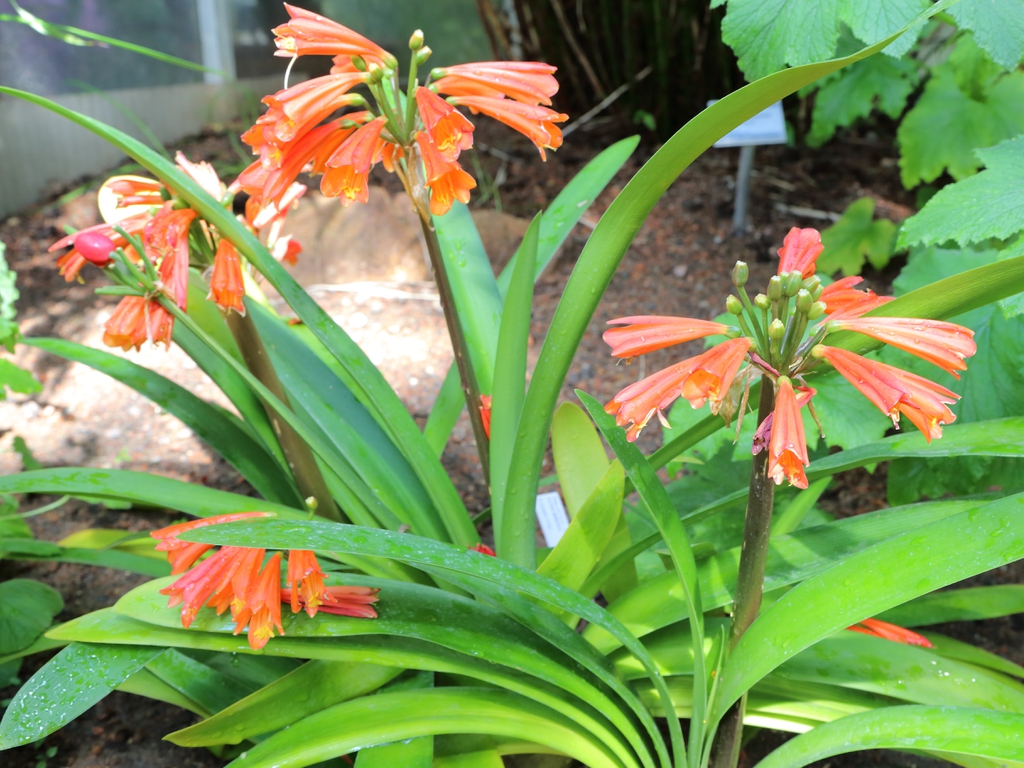
- Red round fruits after flowering
-
-
Flowers:
- Flower Color:
- Gold/Yellow
- Orange
- Red/Burgundy
- Flower Inflorescence:
- Umbel
- Flower Value To Gardener:
- Good Cut
- Long-lasting
- Showy
- Flower Bloom Time:
- Summer
- Flower Shape:
- Bell
- Cup
- Funnel
- Flower Petals:
- 6 petals/rays
- Flower Size:
- 1-3 inches
- Flower Description:
- Yellow to orange to almost red cup to bell to funnel-shaped flowers in clusters called umbrels. The flowers are showy and can occur in clusters held in the foliage or held above the foliage. Different varieties bloom at different times
-
-
Leaves:
- Woody Plant Leaf Characteristics:
- Broadleaf Evergreen
- Leaf Color:
- Green
- Variegated
- Leaf Feel:
- Fleshy
- Leathery
- Leaf Value To Gardener:
- Long-lasting
- Showy
- Leaf Type:
- Simple
- Leaf Arrangement:
- Rosulate
- Leaf Shape:
- Lanceolate
- Linear
- Leaf Margin:
- Entire
- Hairs Present:
- No
- Leaf Length:
- > 6 inches
- Leaf Width:
- 1-3 inches
- Leaf Description:
- Strappy long sword-like leaves arise from the bulb opposite from each other and are up to 2 feet long and 4 inches wide. They can be green to variegated.
-
-
Stem:
- Stem Color:
- Green
- Stem Is Aromatic:
- No
- Stem Description:
- Thick green stems
-
-
Landscape:
- Landscape Location:
- Container
- Houseplants
- Design Feature:
- Border
- Mass Planting
- Attracts:
- Butterflies
- Hummingbirds
- Songbirds
- Resistance To Challenges:
- Drought
- Problems:
- Problem for Cats
- Problem for Dogs