


Borago officinalis
Common Name(s):
Previously known as:
- Borago advena
- Borago aspera
- Borago hortensis
- Phonetic Spelling
- bor-AY-go oh-fish-ih-NAH-liss
- This plant has low severity poison characteristics.
- See below
- Description
-
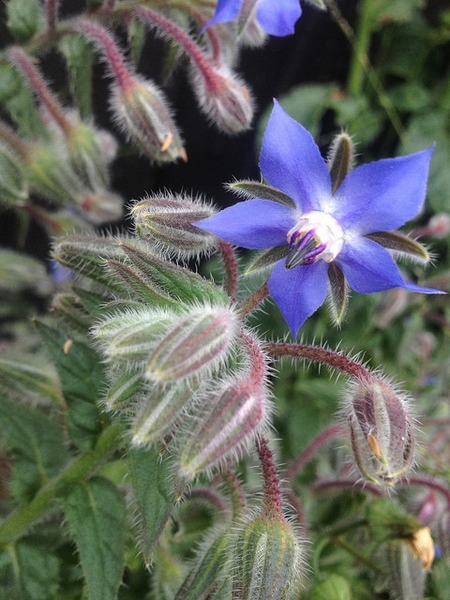
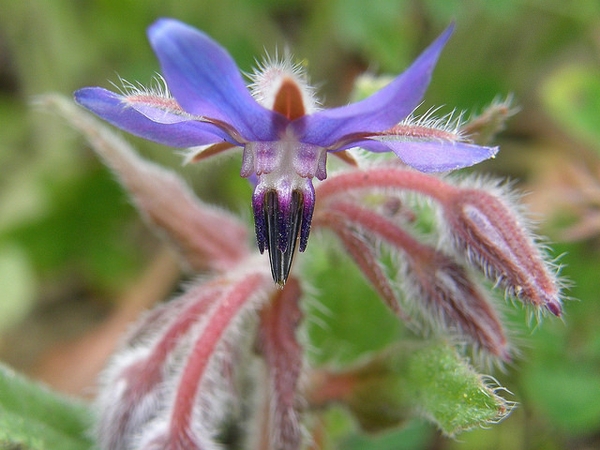
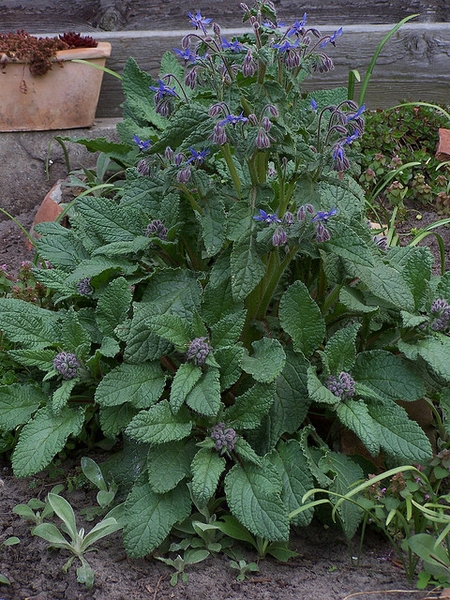
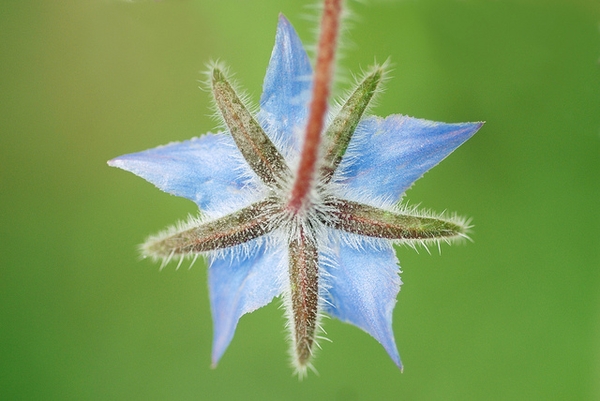
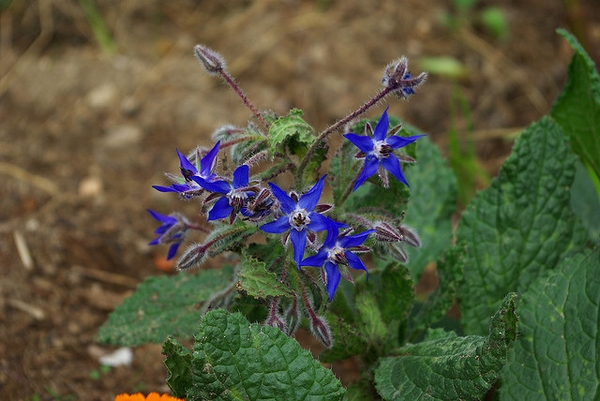
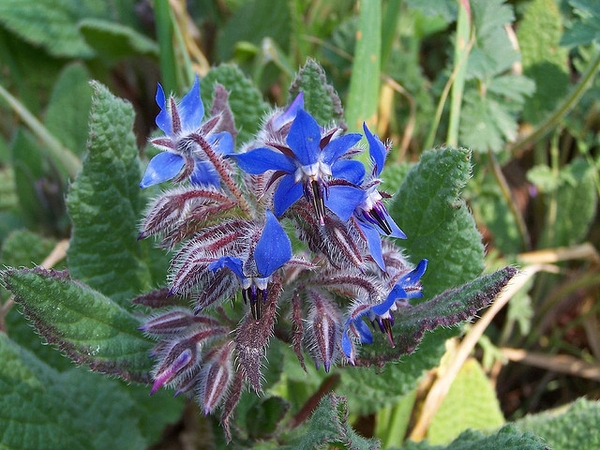
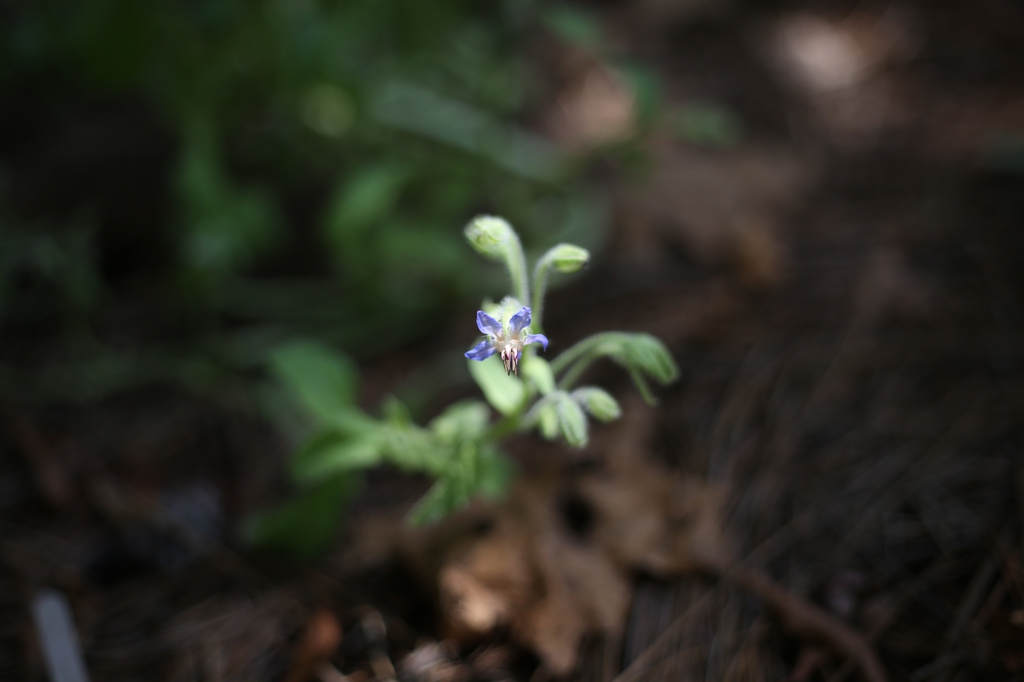
Starflower is an annual plant in the forget-me-not or Boraginaceae family native to the Mediterranean region boasting bright, blue star shaped flowers. The wrinkled, dull gray-green leaves that are covered with bristly hairs are edible.
This plant grows at its best in full sun but will not be adversely affected by light shade. It will do well in all types of soil, including nutritionally poor soil. Cut the plant back by a half in mid-summer for new growth for the fall. For propagating, you can grow this plant from seed: the plant is also self-seeding and will remain in your garden year after year.
The stems and tender leaves are edible and taste and smell like cucumber although the leaves lose their flavor when they are dried.
It can be planted in all types of gardens including a vegetable garden, herb garden, wildflower garden, containers and a cottage garden.
Insects, Diseases, and Other Plant Problems: No specific insect or disease problems although powdery mildew can sometimes occur.
- See this plant in the following landscape :
- Cultivars / Varieties:
-
- Tags:


- Cultivars / Varieties:
-
- Tags:
-
-
Attributes:
- Genus:
- Borago
- Species:
- officinalis
- Family:
- Boraginaceae
- Uses (Ethnobotany):
- The flowers are used for creating a blue dye. Once added to an acid, it will turn pink.
- Life Cycle:
- Annual
- Recommended Propagation Strategy:
- Seed
- Country Or Region Of Origin:
- Mediterranean
- Wildlife Value:
- Attracts bees and other wildlife.
- Play Value:
- Attracts Pollinators
- Wildlife Food Source
- Particularly Resistant To (Insects/Diseases/Other Problems):
- poor soil
- Edibility:
- In general, the flowers (used as edible flowers) and leaves (used in salads, teas, and sandwiches) are edible. They should only be usred sparingly as liver damage can occur. Only use borage seed oil that is certified as PA-free.
- Dimensions:
- Height: 1 ft. 7 in. - 3 ft. 2 in.
- Width: 1 ft. 0 in. - 1 ft. 4 in.
-
-
Whole Plant Traits:
- Plant Type:
- Annual
- Edible
- Herb
- Woody Plant Leaf Characteristics:
- Deciduous
- Habit/Form:
- Spreading
- Growth Rate:
- Medium
- Maintenance:
- Low
- Texture:
- Medium
-
-
Cultural Conditions:
- Light:
- Full sun (6 or more hours of direct sunlight a day)
- Partial Shade (Direct sunlight only part of the day, 2-6 hours)
- Soil Texture:
- Clay
- Loam (Silt)
- Sand
- Soil pH:
- Acid (<6.0)
- Alkaline (>8.0)
- Neutral (6.0-8.0)
- Soil Drainage:
- Good Drainage
- Occasionally Dry
- Available Space To Plant:
- Less than 12 inches
- NC Region:
- Coastal
- Mountains
- Piedmont
- USDA Plant Hardiness Zone:
- 2a, 2b, 3a, 3b, 4a, 4b, 5a, 5b, 6a, 6b, 7a, 7b, 8a, 8b, 9a, 9b, 10a, 10b, 11a, 11b
-
-
Flowers:
- Flower Color:
- Blue
- Flower Inflorescence:
- Cyme
- Flower Value To Gardener:
- Edible
- Showy
- Flower Bloom Time:
- Fall
- Summer
- Flower Shape:
- Star
- Flower Petals:
- 4-5 petals/rays
- Flower Size:
- < 1 inch
- Flower Description:
- Drooping, star-shaped, bright blue flowers in summer. Flowers can serve as an attractive garnish in dishes.
-
-
Leaves:
- Woody Plant Leaf Characteristics:
- Deciduous
- Leaf Color:
- Gray/Silver
- Green
- Leaf Value To Gardener:
- Edible
- Leaf Type:
- Simple
- Leaf Shape:
- Obovate
- Ovate
- Hairs Present:
- Yes
- Leaf Length:
- 3-6 inches
- Leaf Description:
- Edible, wrinkled, ovate, dull gray-green leaves grow up to 6" long. They taste like cucumber. The leaves are covered with bristly hairs.
-
-
Stem:
- Stem Color:
- Brown/Copper
- Green
- Red/Burgundy
- Stem Is Aromatic:
- Yes
- Stem Surface:
- Hairy (pubescent)
- Stem Description:
- The branched stems are covered with bristly hairs and smell and taste like cucumbers.
-
-
Landscape:
- Landscape Location:
- Coastal
- Container
- Patio
- Slope/Bank
- Small Space
- Walkways
- Landscape Theme:
- Edible Garden
- Pollinator Garden
- Design Feature:
- Border
- Mass Planting
- Small groups
- Attracts:
- Bees
- Pollinators
- Resistance To Challenges:
- Deer
- Diseases
- Insect Pests
- Poor Soil
- Rabbits
- Problems:
- Poisonous to Humans
- Problem for Cats
- Problem for Children
- Problem for Dogs
- Problem for Horses