



Anemonoides quinquefolia
Common Name(s):
Previously known as:
- Anemone quinquefolia
- Anemone quinquefolia var. minima
- Phonetic Spelling
- uh-nem-on-OY-deez kwin-kway-FOH-lee-uh
- This plant has low severity poison characteristics.
- See below
- Description
-
Wood anemone is a herbaceous perennial in the buttercup family (Ranunculaceae) native to North America. It is related to and sometimes confused with the European variety that go by the same common names.
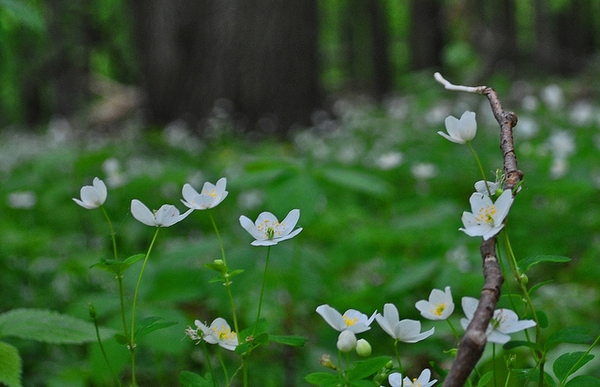
When in flower, it will reach 8 and sometimes 12 inches tall. The plant spreads by underground rhizomes and spreads up to 1 foot in a thick mat. Wood anemone likes fertile, moist, well-drained, acidic soil in part shade to dappled shade. Propagation is by division and seeds.
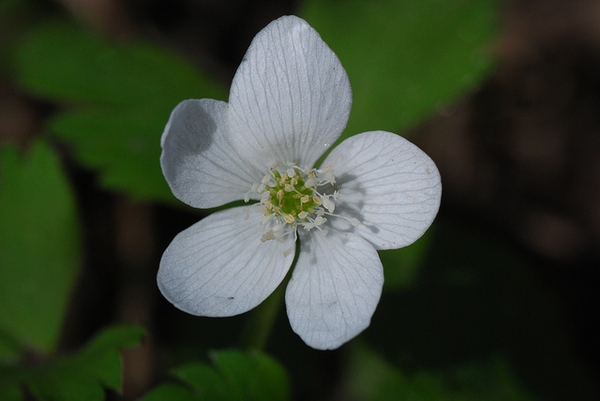
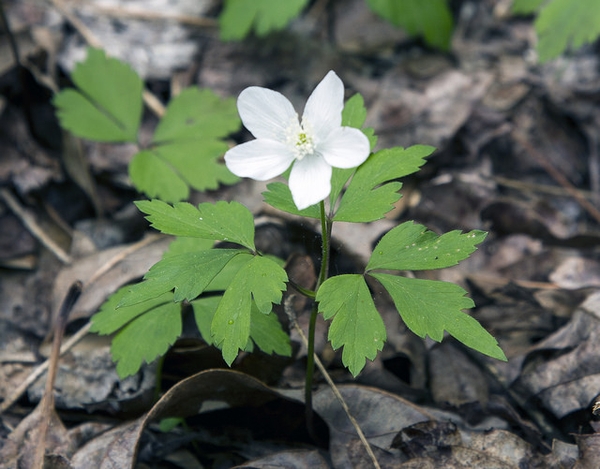
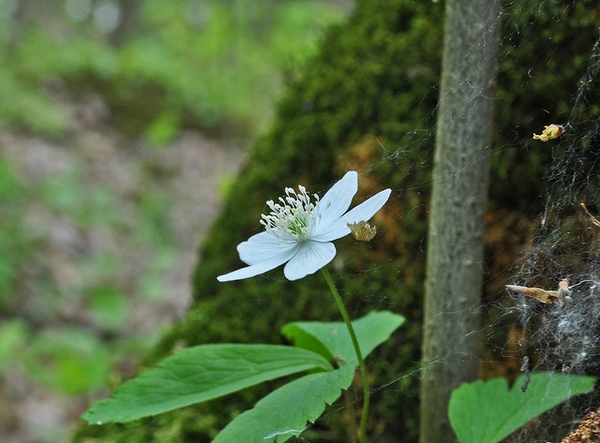
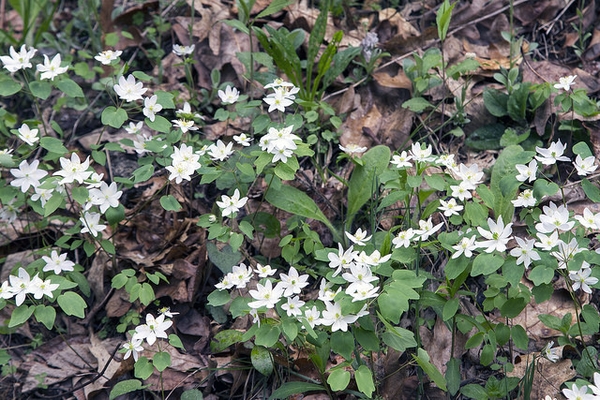
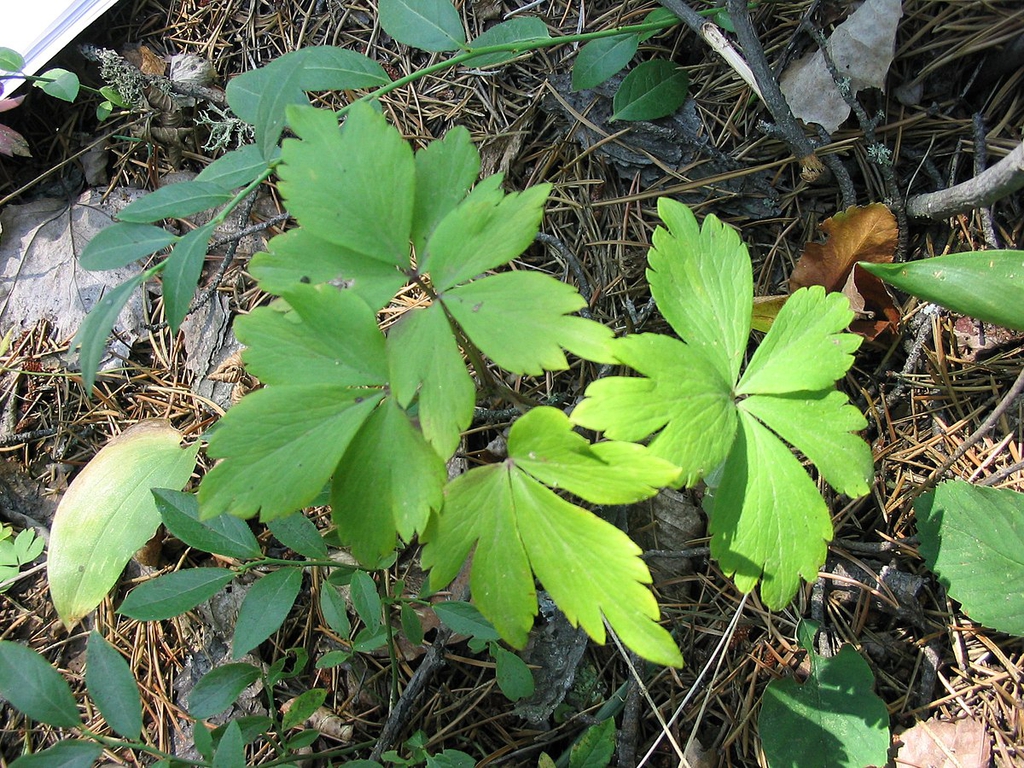
The spring flowers are white or sometimes pink with usually 5 petals surrounding a green center with numerous white-tipped stamens. The flowers close at night or during a cloudy day. The compound leaves occur in a whorl of three and can be lobed or deeply divided. They can take up to 5 years to begin flowering.
Use wood anemone as a ground cover for shady areas or woodland gardens with deciduous trees. They will attract bees to a native pollinator garden.
Insects, Diseases, and Other Plant Problems: No significant problems. Watch for powdery mildew and leaf spot. Spider mites and aphids are potential pests. Keeping the soil moist helps prevent problems.
- See this plant in the following landscape :
- Cultivars / Varieties:
-
- Tags:


- Cultivars / Varieties:
-
- Tags:
-
-
Attributes:
- Genus:
- Anemonoides
- Species:
- quinquefolia
- Family:
- Ranunculaceae
- Life Cycle:
- Perennial
- Recommended Propagation Strategy:
- Division
- Root Cutting
- Seed
- Country Or Region Of Origin:
- Central & E. Canada to N. Central & E. U.S.A
- Wildlife Value:
- Flowers attract bees
- Dimensions:
- Height: 0 ft. 6 in. - 1 ft. 9 in.
- Width: 0 ft. 6 in. - 1 ft. 10 in.
-
-
Whole Plant Traits:
- Plant Type:
- Ground Cover
- Herbaceous Perennial
- Native Plant
- Poisonous
- Wildflower
- Habit/Form:
- Creeping
- Dense
- Spreading
- Growth Rate:
- Slow
- Maintenance:
- Low
- Texture:
- Fine
-
-
Cultural Conditions:
- Light:
- Dappled Sunlight (Shade through upper canopy all day)
- Partial Shade (Direct sunlight only part of the day, 2-6 hours)
- Soil Texture:
- High Organic Matter
- Soil pH:
- Acid (<6.0)
- Soil Drainage:
- Good Drainage
- Moist
- Available Space To Plant:
- Less than 12 inches
- NC Region:
- Coastal
- Mountains
- Piedmont
- USDA Plant Hardiness Zone:
- 4a, 4b, 5a, 5b, 6a, 6b, 7a, 7b, 8a, 8b
-
-
Fruit:
- Display/Harvest Time:
- Summer
- Fruit Type:
- Achene
- Fruit Description:
- This plant has small round head of beaked oval seeds 1/8" long often with plumose tails. Displays from June to July.
-
-
Flowers:
- Flower Color:
- Pink
- Purple/Lavender
- Red/Burgundy
- White
- Flower Inflorescence:
- Solitary
- Flower Value To Gardener:
- Showy
- Flower Bloom Time:
- Spring
- Flower Shape:
- Cup
- Radial
- Flower Petals:
- 4-5 petals/rays
- Flower Size:
- < 1 inch
- Flower Description:
- 1-in. terminal flower with 5 to 7 white, petal-like sepals. Although mainly white, the flowers can have a pink or purple flush. They are cup-shaped with 5-many petal-like parts and many stamens. Flowers bloom from March to May.
-
-
Leaves:
- Leaf Color:
- Green
- Purple/Lavender
- Leaf Type:
- Compound (Pinnately , Bipinnately, Palmately)
- Leaf Arrangement:
- Alternate
- Whorled
- Leaf Shape:
- Orbicular
- Leaf Margin:
- Lobed
- Serrate
- Hairs Present:
- Yes
- Leaf Length:
- 1-3 inches
- Leaf Description:
- Alternate or whorled, finely divided compound leaves. More specifically, it has a terminal whorl of three leaves divided into three to five narrow, sharply toothed segments. The basal leaves may not be present at flowering time. Leaflets are up to 2 inches long and bright green to purplish green. and nearly round in outline.
-
-
Stem:
- Stem Color:
- Green
- Stem Is Aromatic:
- No
- Stem Description:
- Slender green stalk may have hairs.
-
-
Landscape:
- Landscape Location:
- Meadow
- Naturalized Area
- Woodland
- Landscape Theme:
- Cottage Garden
- Native Garden
- Shade Garden
- Design Feature:
- Mass Planting
- Small groups
- Attracts:
- Bees
- Resistance To Challenges:
- Deer
- Problems:
- Contact Dermatitis
- Poisonous to Humans
-
-
Poisonous to Humans:
- Poison Severity:
- Low
- Poison Symptoms:
- Toxic only if eaten in large quantities. All parts when fresh. Symptoms may include: Inflammation and blistering upon contact with fresh sap; irritation of mouth, vomiting and diarrhea following ingestion.
- Poison Toxic Principle:
- Protoanemonin
- Causes Contact Dermatitis:
- Yes
- Poison Part:
- Flowers
- Fruits
- Leaves
- Roots
- Seeds
- Stems



